Ghita Schwarz - Displaced Persons
Здесь есть возможность читать онлайн «Ghita Schwarz - Displaced Persons» весь текст электронной книги совершенно бесплатно (целиком полную версию без сокращений). В некоторых случаях можно слушать аудио, скачать через торрент в формате fb2 и присутствует краткое содержание. Жанр: Современная проза, на английском языке. Описание произведения, (предисловие) а так же отзывы посетителей доступны на портале библиотеки ЛибКат.
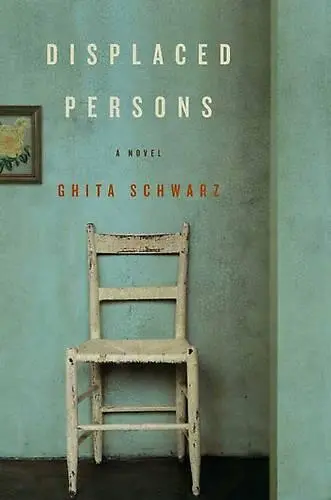
- Название:Displaced Persons
- Автор:
- Жанр:
- Год:неизвестен
- ISBN:нет данных
- Рейтинг книги:5 / 5. Голосов: 1
-
Избранное:Добавить в избранное
- Отзывы:
-
Ваша оценка:
Displaced Persons: краткое содержание, описание и аннотация
Предлагаем к чтению аннотацию, описание, краткое содержание или предисловие (зависит от того, что написал сам автор книги «Displaced Persons»). Если вы не нашли необходимую информацию о книге — напишите в комментариях, мы постараемся отыскать её.
In May 1945, Pavel Mandl, a Polish Jew recently liberated from a concentration camp, lands near a displaced persons camp in the British occupation zone of newly defeated Germany. Alone, possessing nothing but a map, a few tins of food, a toothbrush, and his identity papers, he must scrape together a new life in a chaotic community of refugees, civilians, and soldiers.
Gifted with a talent for black-market trading, Pavel soon procures clothing, false documents, and a modest house, where he installs himself and a pair of fellow refugees – Fela, a young widow who fled Poland for Russia at the outset of the war, and Chaim, a resourceful teenage boy whose smuggling skills have brought him to the Western zones. The trio soon form a makeshift family, searching for surviving relatives, railing against their circumscribed existence, and dreaming of visas to America.
Fifteen years later, haunted by decisions they made as "DPs," Pavel and Fela are married and living in Queens with their young son and daughter, and Chaim has recently emigrated from Israel with his wife, Sima. Pavel opens a small tailoring shop with his scheming brother-in-law while Fela struggles to establish peace in a loosely traditional household; Chaim and Sima adapt cheerfully to American life and its promise of freedom from a brutal past. Their lives are no longer dominated by the need to endure, fight, hide, or escape. Instead, they grapple with past trauma in everyday moments: taking the children to the municipal pool, shopping for liquor, arguing with landlords.
For decades, Pavel, Fela, and Chaim battle over memory and identity on the sly, within private groups of survivors. But as the Iron Curtain falls in the 1990s, American society starts to embrace the tragedy as a cultural commodity, and survivor politics go public. Clever and stubborn, tyrannical and generous, Pavel, Fela, and Chaim articulate the self-conscious strivings of an immigrant community determined to write its own history, on its own terms.
In Displaced Persons, Ghita Schwarz reveals the interior despairs and joys of immigrants shaped by war – ordinary men and women who have lived through cataclysmic times – and illuminates changing cultural understandings of trauma and remembrance.
Displaced Persons — читать онлайн бесплатно полную книгу (весь текст) целиком
Ниже представлен текст книги, разбитый по страницам. Система сохранения места последней прочитанной страницы, позволяет с удобством читать онлайн бесплатно книгу «Displaced Persons», без необходимости каждый раз заново искать на чём Вы остановились. Поставьте закладку, и сможете в любой момент перейти на страницу, на которой закончили чтение.
Интервал:
Закладка:
But Fela was happy for company, and happy to bring the dessert, her specialty. An excellent cook she wasn’t, but as a baker she was gifted. Everyone said so-she could start her own business, make a killing by selling to the orthodox bakeries in Kew Gardens. But business she didn’t want. Work was all right, work in the home, work was for love; but business, that was something else entirely. Fela saw the troubles her husband had with his brother-in-law in making a business. It pressured the heart. Besides, the kosher bakeries liked only cakes made parve, no dairy. Fela did not like to substitute margarine or oil or the white packaged shortening that looked like shaving cream for butter. Fela liked butter. Butter and Coca-Cola: sometimes she thought these were her favorite foods.
Fela’s sister had liked butter too. They all did, the whole family in Poland, though of course then those desserts came only with meals made from fish. It never happened, never, that they ate their mother’s cream-filled desserts when there was meat for dinner. The home of Fela’s mother had been pristine, perfectly kosher, perfectly clean. Plates for dairy, plates for meat. And two additional sets just for Passover, hidden away for the rest of the year so as not to expose them to risen bread. If her mother could see the way Fela was living now, with the milk in her tea after dinner, the seafood she tried in cafés with her son, she would simply collapse. And the Passover plates! Now that the children lived on their own, Fela had abandoned the system. Separate dishes were for company; otherwise, she used the gold trim for meat, the flowers for dairy. And even these she allowed on occasion to be mixed.
Her sister had been even worse. Fela had inherited at least a fraction of their mother’s neatness. All the household rules had been less of a priority for Bluma, who had her own ideas. She had left before anyone else had thought to try. An idealist, a Zionist, and-though the family hadn’t been sure, they suspected-a passionate person. She had a lover she followed to Palestine in 1935; only Fela and another sister had been taken into confidence about Bluma’s secret plans. It had seemed desperate, unimaginably wild at the time-they were a good family!-but Bluma had survived, the only one but Fela among the children of their mother and father.
Fela’s sister hadn’t cooked; on the kibbutz she had eaten in communal kitchens. But at home she still baked. The same recipes, the same timing, the same ingredients, the same restraint with sugar and generosity with butter, but a slightly different tang to her cookies, something softer in her cakes. At home before the war, a similar phenomenon had occurred at the tables of the older sisters who had already married. A stranger wouldn’t have noticed, but inside the family one could tell the difference, one could identify each baker’s mark even on a plate where everyone’s pastries were mixed together. Each cake came with a sister’s own flavoring. The unmarried sisters worked at the store, selling linens and hardware; they baked for pleasure. And because of the pleasure, the family excelled. Now that Bluma had died, leaving only sons, it was up to Fela to take care of the family creations, the buttery progeny Helen refused to acknowledge.
Well, so what! Fela could bake by herself. It was a lot of work, but good work. Though now it was quite a bit, what with all the invitations. She felt people expected her to bring, because she always brought. So when Sima Traum called to invite her to coffee, Fela thought it best to say no.
My calendar is crowded, answered Fela. I have something tonight, and something next week-Mina, you know, is having a dinner-you don’t have to worry for me-
That’s not so busy, said Sima. I can come out there-
No, no, no, said Fela. But now that she spoke with Sima, she felt a desire for her company. Actually, since you mention it, I had a plan to go to B. Altman’s on Saturday. They have a special on a perfume I like. When you buy a small bottle, they give you a lotion, and some other little things.
See? said Sima. That’s a wonderful time. Saturday’s very convenient. And Fela, I am providing. Everything. Please.
I take the bus straight to you after I shop; I won’t have much to carry.
Good, said Sima. Good. See you then. But please, Fela, bring nothing. I will be insulted if you do.
IT WAS NOTHING TO carry, Fela said, no longer out of breath. Just a box of cookies and a few blueberry pastries wrapped in paper. She was sitting in Sima’s kitchen, her back to the window overlooking Riverside Drive. What Fela preferred was the view of Sima’s kitchen, the white-and-blue wallpaper, the copper containers for coffee and sugar arranged, in order of size, on high wooden shelves. They were in private.
I told you not to bring them, but of course I am glad. So delicious.
My sister’s were even more delicious. She really-but no, we were all good.
Who could be better than you?
I don’t like to compare, Simale, but really, she was excellent, when she put the time to it. Ah, Sima. It is said that the tie between sisters is the closest in the world, closer than mother and daughter. The tie between sister and brother, also close.
I don’t know, said Sima. But of course often I thought, perhaps it would be less-I would have company. I think, now, especially, since my father died, that to share would have-and of course Chaim has almost no one-
I feel like you are my niece or my sister, said Fela. Like Chaim is my brother. Pavel feels this too. Not just about you, about the Belsener people, the people from after the war.
I was just a child there, said Sima.
Still, said Fela. That is why you and Chaim are so close.
Sima looked at her, then got up. Had Fela said too much?
I’m just bringing some lemon and honey, Sima called. Is it hard for you without Pavel? said Sima, reentering the room.
Hard? said Fela. It’s a rest!
Sima laughed. She placed a soft lemon on a board on the table and quartered it.
No, said Fela. Of course, I miss him. I worry. But-it’s not for so long. And it’s not the same when-
Sima interrupted. When you’re older? Please.
No, no, said Fela, sensing the beginning of a blush at her neck. No, I wasn’t going to say that.
Forgive me, said Sima.
No, no, said Fela. I was going to say-was Chaim your first, your first love?
Sima paused.
I don’t ask for you to tell me your life before him, Simale. Israel, who knows what they do there?
Sima laughed. It’s true. The army, no one escapes intact, you understand.
Fela understood. They both giggled, uneasily. Then silence. Sima looked like she was thinking, the folds at her mouth deepening.
Yes, said Sima. He was my first love. The words came out soft, almost strangled.
Fela felt a sudden remorse for having asked. She should apologize, she thought, for having tried to dig. But she didn’t. Instead she said, I had a husband. A husband before the war.
Sima said nothing, and Fela felt a small hot circle underneath her ribs, like a match had been struck and lit in the darkness of her chest.
He was my husband, but we didn’t have a wedding. You understand? I was sixteen.
Sima nodded, her mouth slightly open.
We ran to Russia before the Germans invaded the town. We had heard. Before they came in, we were gone. My parents, they must have gone crazy with shame. But it was only I, and another sister who left to Palestine, before, who lived.
What happened? said Sima.
He died, said Fela. He was taken by the Russians into the army and he died. I heard, and I was-I was pregnant, I was pregnant and I lost the baby. A miscarriage.
The match had taken the air in her chest and gone out. It was a lie Fela was telling Sima, for the baby had been born, had lived, and had wailed before dying, but it was enough for Sima to make out the picture. The lie was easier to say than the real fact, the fact that no one on earth knew, now that her sister had died. No one on earth, not Pavel, not the children.
Читать дальшеИнтервал:
Закладка:
Похожие книги на «Displaced Persons»
Представляем Вашему вниманию похожие книги на «Displaced Persons» списком для выбора. Мы отобрали схожую по названию и смыслу литературу в надежде предоставить читателям больше вариантов отыскать новые, интересные, ещё непрочитанные произведения.








Обсуждение, отзывы о книге «Displaced Persons» и просто собственные мнения читателей. Оставьте ваши комментарии, напишите, что Вы думаете о произведении, его смысле или главных героях. Укажите что конкретно понравилось, а что нет, и почему Вы так считаете.