Ghita Schwarz - Displaced Persons
Здесь есть возможность читать онлайн «Ghita Schwarz - Displaced Persons» весь текст электронной книги совершенно бесплатно (целиком полную версию без сокращений). В некоторых случаях можно слушать аудио, скачать через торрент в формате fb2 и присутствует краткое содержание. Жанр: Современная проза, на английском языке. Описание произведения, (предисловие) а так же отзывы посетителей доступны на портале библиотеки ЛибКат.
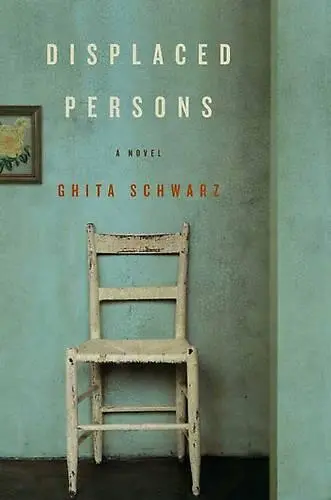
- Название:Displaced Persons
- Автор:
- Жанр:
- Год:неизвестен
- ISBN:нет данных
- Рейтинг книги:5 / 5. Голосов: 1
-
Избранное:Добавить в избранное
- Отзывы:
-
Ваша оценка:
Displaced Persons: краткое содержание, описание и аннотация
Предлагаем к чтению аннотацию, описание, краткое содержание или предисловие (зависит от того, что написал сам автор книги «Displaced Persons»). Если вы не нашли необходимую информацию о книге — напишите в комментариях, мы постараемся отыскать её.
In May 1945, Pavel Mandl, a Polish Jew recently liberated from a concentration camp, lands near a displaced persons camp in the British occupation zone of newly defeated Germany. Alone, possessing nothing but a map, a few tins of food, a toothbrush, and his identity papers, he must scrape together a new life in a chaotic community of refugees, civilians, and soldiers.
Gifted with a talent for black-market trading, Pavel soon procures clothing, false documents, and a modest house, where he installs himself and a pair of fellow refugees – Fela, a young widow who fled Poland for Russia at the outset of the war, and Chaim, a resourceful teenage boy whose smuggling skills have brought him to the Western zones. The trio soon form a makeshift family, searching for surviving relatives, railing against their circumscribed existence, and dreaming of visas to America.
Fifteen years later, haunted by decisions they made as "DPs," Pavel and Fela are married and living in Queens with their young son and daughter, and Chaim has recently emigrated from Israel with his wife, Sima. Pavel opens a small tailoring shop with his scheming brother-in-law while Fela struggles to establish peace in a loosely traditional household; Chaim and Sima adapt cheerfully to American life and its promise of freedom from a brutal past. Their lives are no longer dominated by the need to endure, fight, hide, or escape. Instead, they grapple with past trauma in everyday moments: taking the children to the municipal pool, shopping for liquor, arguing with landlords.
For decades, Pavel, Fela, and Chaim battle over memory and identity on the sly, within private groups of survivors. But as the Iron Curtain falls in the 1990s, American society starts to embrace the tragedy as a cultural commodity, and survivor politics go public. Clever and stubborn, tyrannical and generous, Pavel, Fela, and Chaim articulate the self-conscious strivings of an immigrant community determined to write its own history, on its own terms.
In Displaced Persons, Ghita Schwarz reveals the interior despairs and joys of immigrants shaped by war – ordinary men and women who have lived through cataclysmic times – and illuminates changing cultural understandings of trauma and remembrance.
Displaced Persons — читать онлайн бесплатно полную книгу (весь текст) целиком
Ниже представлен текст книги, разбитый по страницам. Система сохранения места последней прочитанной страницы, позволяет с удобством читать онлайн бесплатно книгу «Displaced Persons», без необходимости каждый раз заново искать на чём Вы остановились. Поставьте закладку, и сможете в любой момент перейти на страницу, на которой закончили чтение.
Интервал:
Закладка:
ALL OVER THE NEWS, people were reuniting. At card games, at work, over sandwiches at the local luncheonette, everyone worried. How long could a people remain so excited about a wall? It had fallen more than a month ago. Cousins who had not seen cousins in years crossed over to greet their families in the West, to be tourists, to find jobs. The governments insisted there would be no major change, no reunification of East and West. It shouldn’t happen in our lifetimes, Vladka Budnik had once said at a dinner-and Sima remembered that all had agreed-it shouldn’t happen that Germans should be so happy in our lifetimes. Let them wait for our deaths! Then let them be happy.
At Sima’s workplace, the immigrant center, the number of Russians coming for help had grown in the last two years. Now it seemed all of Eastern Europe would start coming too. The center didn’t have so many languages, though Sima could be relied upon for those who spoke Yiddish and Polish and Russian. But how many Jews had remained in Eastern Europe? Almost all the Jews coming emigrated from the Soviet Union.
On the Monday after her coffee with Fela, Sima arrived at work to find several files on her desk. She gathered them up, went to the desk of the receptionist, a twenty-year-old college student they had hired the month before.
“Gloria is sick,” said Carmen, not looking up from her novel. “She called in and said to give her interviews to you.”
“But I have my own! My job is not to do hers,” said Sima. “It is Monday-I don’t think she really is sick.”
“That’s what she told me,” said Carmen. “Am I supposed to question her?” The phone rang, and she picked up, switched to Spanish. No, she sighed to the phone. You need the legal office. This is counseling, not immigration.
Sima peeked out from behind Carmen’s station. Already the waiting room was beginning to fill up.
By eleven, Sima was almost done with her list as well as Gloria’s. She was in need of another coffee. She looked at the list of clients. Two more, then a break; she’d be only a half hour behind.
A small man, jowled and plump, with a full head of white hair, waddled into her office.
What language is most comfortable for you? she said in Russian. Yiddish or Russian?
Russian, said the man. I prefer Russian.
But Sima heard the tight sound at the vowels; it wasn’t, she thought, his mother tongue. From another part of the Soviet Union? Elsewhere? She liked to be friendly before giving the little speech about housing and food stamps, welfare and jobs.
Where are you from?
Where do you think? said the man, abruptly. I last lived in Kiev.
No, said Sima. Before Kiev. Before Russia.
From Poland, said the man. Poland, before the war.
Poland, said Sima. I was born there too.
Yes, said the man.
But they continued speaking in Russian. Sima gave him a list of applications for elderly housing. He looked at the pages while she examined the copies of his application for refugee assistance.
When she looked up, he was staring at her, almost angry. I don’t know where any of these places are.
She returned the sharp look. We’ll give you directions to find them, after they process your applications.
He snorted.
All these people complaining! thought Sima. As if they came from a country of luxury. Gloria’s clients were always rude. Sima suspected Gloria didn’t treat them so well at the intake. But it hurt Sima to be blamed, and so she continued in a cold tone. You waited in Russia to emigrate here, when you could have left before. Why not Israel?
The man shrugged. My daughter was here. I wanted to be here.
Sima glanced again through the top pages in the file. Something struck her on one form. Place of Birth: Mlawa, Poland.
I know someone from Mlawa.
No, said the man, I doubt it.
Yes, I do, said Sima. Fela Mandl-her family name was Berlinka.
Ah! The man’s face changed. The mouth that was straight, moved up, showing gray teeth in what Sima wanted to believe was a smile. The sisters Berlinka. Of course I remember them. And now that I think of it, you know, I heard that one or two had survived. I had a friend in Israel, went to a reunion of the Mlawer, those who had left before the war, and he met one of them. We all knew them, of course. Prosperous family: a dry goods store.
It’s a coincidence, said Sima. She’s a friend of mine. Should I say hello?
Yes, said the man. Tell her hello. Hello from Baruch Sosnower. My father worked at the lumberyard.
SIMA TOOK A SPECIAL interest in the fate of Baruch Sosnower. Normally the interns did the follow-up from the office, with the clients coming in to report on their adjustment after a month, then, if they remembered, after two. But neither of the interns Sima currently supervised was particularly reliable, and Sima thought she could expend a little more effort. She sensed that Baruch had little help from his daughter, who was married with her own children, and Sima worried that it was too late for a man like him to acquire a new set of habits appropriate to New York. She drove him herself to his food stamp interviews and made special calls to several women who ran the lists at senior housing developments in Brighton Beach, in Jackson Heights, places where Baruch could get by all day speaking Russian. She exaggerated the situation to Gloria, told her the man was an emergency case. Gloria could not be relied on for everything, but she knew how to pull a string in an emergency.
She did not feel comfortable telling Fela of the discovery just yet. Pavel was back-a new man, Fela said, he had fixed his mother’s gravestone-and it seemed wrong to Sima to bring up the topic of Fela’s life before him. And Baruch was still at odd ends, unsettled, a public charge-it would diminish his dignity for Sima to talk about him while he remained in low straits, while he was still so clearly a man in need, unromantic, unburnished. She wished almost that he was someone else entirely, someone who could dissolve the older woman’s pain. It was a child’s wish, the kind of dream Lola had about her own parents’ separation. But Lola’s dream had come true. Wouldn’t it be something, if the man from Mlawa were really the Moshe of legend, if the first love were alive to remind Fela of first life? Sima began to spin a story in her head, how it would have happened. Fela, alone, not yet discovering herself pregnant, working two miles from home on the Siberian steppe, hiding flour in her shoes to bake in secret at night, just as Sima’s father had done. Waiting for word of her lover, who had been drafted away from his home, with poor Fela watching.
When Sima was a child, her parents had been separated. Her father had been caught for dealing on the black market, sent to hard labor, an open field on the steppe. Her mother had taken over the work that her father had done, a nightwatch in the hospital. But Sima was alone, five years old in their cold hut, and Sima’s mother would steal away from the job to watch over her daughter. One night her mother was seen leaving her post. Sima had woken up early that morning, alone in the hut, no sign, no smell, no sound of her mother. She had gone outside to wait for her: nothing, no horses, no people, no one passed their isolated road. And so she had tripped a mile to the hospital steps; perhaps her mother had fallen asleep. But no one was there. It was daylight; the hospital buzzed with loud adult movement.
It had been terrifying, those hours alone. Sitting with her case files, remembering, Sima thought she could imitate to herself what Fela had experienced: the uncertainty and constant fear of being without the last loved one left in the world. But it was hard for Sima to glimpse even her own past life now. Her adult griefs were fresh; her infant ones were not. She tried to think of her memories as animals hiding inside a small hut on the steppe, a hut made of mud and stone but hung with the stiff muslin curtains her mother had found on the black market.
Читать дальшеИнтервал:
Закладка:
Похожие книги на «Displaced Persons»
Представляем Вашему вниманию похожие книги на «Displaced Persons» списком для выбора. Мы отобрали схожую по названию и смыслу литературу в надежде предоставить читателям больше вариантов отыскать новые, интересные, ещё непрочитанные произведения.









Обсуждение, отзывы о книге «Displaced Persons» и просто собственные мнения читателей. Оставьте ваши комментарии, напишите, что Вы думаете о произведении, его смысле или главных героях. Укажите что конкретно понравилось, а что нет, и почему Вы так считаете.