Ghita Schwarz - Displaced Persons
Здесь есть возможность читать онлайн «Ghita Schwarz - Displaced Persons» весь текст электронной книги совершенно бесплатно (целиком полную версию без сокращений). В некоторых случаях можно слушать аудио, скачать через торрент в формате fb2 и присутствует краткое содержание. Жанр: Современная проза, на английском языке. Описание произведения, (предисловие) а так же отзывы посетителей доступны на портале библиотеки ЛибКат.
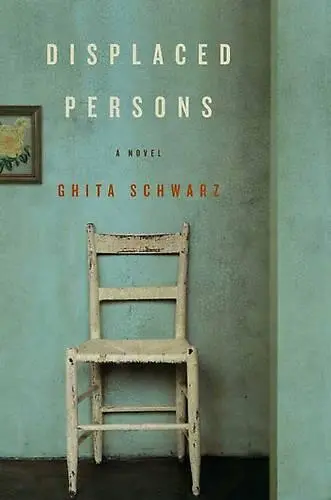
- Название:Displaced Persons
- Автор:
- Жанр:
- Год:неизвестен
- ISBN:нет данных
- Рейтинг книги:5 / 5. Голосов: 1
-
Избранное:Добавить в избранное
- Отзывы:
-
Ваша оценка:
Displaced Persons: краткое содержание, описание и аннотация
Предлагаем к чтению аннотацию, описание, краткое содержание или предисловие (зависит от того, что написал сам автор книги «Displaced Persons»). Если вы не нашли необходимую информацию о книге — напишите в комментариях, мы постараемся отыскать её.
In May 1945, Pavel Mandl, a Polish Jew recently liberated from a concentration camp, lands near a displaced persons camp in the British occupation zone of newly defeated Germany. Alone, possessing nothing but a map, a few tins of food, a toothbrush, and his identity papers, he must scrape together a new life in a chaotic community of refugees, civilians, and soldiers.
Gifted with a talent for black-market trading, Pavel soon procures clothing, false documents, and a modest house, where he installs himself and a pair of fellow refugees – Fela, a young widow who fled Poland for Russia at the outset of the war, and Chaim, a resourceful teenage boy whose smuggling skills have brought him to the Western zones. The trio soon form a makeshift family, searching for surviving relatives, railing against their circumscribed existence, and dreaming of visas to America.
Fifteen years later, haunted by decisions they made as "DPs," Pavel and Fela are married and living in Queens with their young son and daughter, and Chaim has recently emigrated from Israel with his wife, Sima. Pavel opens a small tailoring shop with his scheming brother-in-law while Fela struggles to establish peace in a loosely traditional household; Chaim and Sima adapt cheerfully to American life and its promise of freedom from a brutal past. Their lives are no longer dominated by the need to endure, fight, hide, or escape. Instead, they grapple with past trauma in everyday moments: taking the children to the municipal pool, shopping for liquor, arguing with landlords.
For decades, Pavel, Fela, and Chaim battle over memory and identity on the sly, within private groups of survivors. But as the Iron Curtain falls in the 1990s, American society starts to embrace the tragedy as a cultural commodity, and survivor politics go public. Clever and stubborn, tyrannical and generous, Pavel, Fela, and Chaim articulate the self-conscious strivings of an immigrant community determined to write its own history, on its own terms.
In Displaced Persons, Ghita Schwarz reveals the interior despairs and joys of immigrants shaped by war – ordinary men and women who have lived through cataclysmic times – and illuminates changing cultural understandings of trauma and remembrance.
Displaced Persons — читать онлайн бесплатно полную книгу (весь текст) целиком
Ниже представлен текст книги, разбитый по страницам. Система сохранения места последней прочитанной страницы, позволяет с удобством читать онлайн бесплатно книгу «Displaced Persons», без необходимости каждый раз заново искать на чём Вы остановились. Поставьте закладку, и сможете в любой момент перейти на страницу, на которой закончили чтение.
Интервал:
Закладка:
Chaim turned around to face the back of the auditorium. What a mistake this had been, mixing into Pavel’s work. How had he let himself be talked into it? The auditorium doors were open, and he could see into the hallway. Sima and Fela were not coming.
So she spoke to me! So what?
She doesn’t trust my brother-in-law! She doesn’t trust my own sister!
It’s not a matter of trust, it’s just a natural-
I said I wanted nothing to do with it, that’s all. The truth is that this kind of negotiation is not my most-it is not where I-but then I decided I wanted to participate, but he already had set up the meetings, I don’t feel-if I interfere now, what will he think?
Perhaps he will think, Good! Pavel wants to be involved.
No, Chaim. Pavel sighed. Kuba will not think this. He will think I worry he will not do right by the business. He will think I try to control him. Perhaps he even will think I don’t trust him to-to do right by me!
Pavel’s jaw was jutting forward, his teeth clenched. Chaim put his hand on his shoulder. I’m sorry I mixed in.
My sister! Pavel breathed. My own sister!
But it’s your business too.
We have separate roles! How do you think I survived all these years with him? He does his part, I do mine. If I don’t trust him, almost my own blood, I cannot-I cannot trust anyone!
It’s not my affair, I just-
Chaim, they are coming. Look, they are coming! Not a word!
All right, Pavel.
Here. Take another mint. Then they won’t wonder why we don’t talk.
PAVEL STOOD UP WHEN Fela and Sima came to their row. He could not look at Fela. Instead he took Sima by the shoulders and gave her another kiss on the cheek. I’m so glad you are here! Your husband and I are catching up on old times.
Give me your coat check, Pavel. Let me hold it in my purse before you lose it.
Since when do I lose anything? He pushed his hand into his front jacket pocket. No, it was in the inside pocket, for safety. He stretched his hand toward Fela, still without looking at her. If it makes you happy, here it is.
She had been very unhappy with him, this week and the last. But one had to be optimistic. One could not give in to one’s worst beliefs. To give in was to say that nothing meant anything, that one could throw away one’s own family as easily as one sent an old suit to charity, that a human was nothing more than an animal, alone.
A sister was the only thing that held him to the past. There were people who came out with no one, not a bone left to say Kaddish for the whole tribe, only these gatherings and memorials filled with strangers who prayed to sanctify the dead. Look at Chaim! Chaim had nothing, only a cousin in Israel, now mooning over her grandchildren. But Pavel was one of the lucky ones. He had his sister. He had Mayer, his cousin on his mother’s side. He had friends who were not his blood but were like blood, more than blood. He had, he had.
So why, why was everything so difficult with Kuba? They had different ideas, that was all. But now they had the same idea. Pavel felt an excitement over it, gladness that Kuba had finally stopped disagreeing, that Kuba and he saw the same way for the first time since they had moved their operations to the center of the garment district fifteen years ago, when the economy was terrible and rents were cheaper than cheap. Pavel had been right in his way, delaying until the time was right, and Kuba had been right in his way too, because the business had grown since the move to the center. And now Pavel felt the same sense of agreement. It was good to have a partner. Others were alone-Fishl, but he had done very well-and others had worked for bigger men their whole lives. Perla’s husband Tulek had never left the box factory he had first worked in when he came to America. But it was good to have a partner to share the burden with, even if relations were not always so smooth, even if there had been times they did not speak to each other for days at a time. To make a family business, to be solid into one’s retirement, that was something that showed they had survived. Perhaps this young professor, who thought he knew the secrets of the Warsaw Ghetto uprising, might not agree, but making a new business, a new life in a new language, this too was resistance.
Not that it was more important than other things. Having a grandchild, that was the great resistance. It would be nice, very nice, if Larry and Helen would understand that, too. Helen was almost thirty-five! Did she not know how old he was? What was the delay? And Larry, his wife a doctor too-she did not seem to have the time.
That was something Hinda and Kuba had already, with Michael and Joel already fathers. And if Pavel criticized Hinda for not joining a little more in the community, he could also privately sympathize. It had not been the same since-well, really, since Yidl had gone. Tsipora still came, even now she was so sick, but the younger ones who had taken over for Yidl did not give the ceremonies the same feeling of importance.
Pavel went, he listened, he gave. But these acts did not give him the same comfort. Yidl made it all seem like a way of saving the world again, even for all his faults, not just the gambling, not just the speculation that had allowed Yidl to live as he did. He had died without warning. And suddenly everything had become coarse, the way friends had dropped Tsipora completely, dropped her except to come by the apartment and pick up a painting in return for money Yidl owed.
Pavel had become very close with Tsipora, speaking with her twice a week, coming by her home almost as often, bringing her flowers, a luxury she used to take for granted. Now she put the tulips in the refrigerator for the night to make them live longer. She had nothing. Not even life insurance from Yidl. She moved to a small apartment where her lawyer son paid her rent. Pavel himself put her on the payroll of the business so she could have health insurance.
Incredible, that it should come to this, these people who had cared for everyone suddenly dependent. If something like this happened to him-but it couldn’t. He had a business that made things, and unlike Yidl he had been cautious when he came to the United States, he had shed the habit of risk that had allowed him to survive and, after the war, almost thrive. Now his goals were more modest. All he wanted was a good price for the business and the ability to work for the new company a few more years. If Fela thought he acted stupidly in giving his trust to Kuba, to his sister, even-his sister, his last connection to his parents-well, then-Fela was wrong.
SIMA HELD A COPY of the professor’s book. Already they were selling it out front. Fela had bought one too. She passed it to Chaim. An orange cover, the faint outline in black of a bonfire.
“It looks very interesting, no?” Fela said. “I’m sure Lola will be interested too.”
“Perhaps.”
“Pavel, did I ever tell you?” Sima smiled broadly. “You won’t believe it. I was telling Fela in the ladies’ room. She once took a class on the history of genocide! Can you imagine?”
Pavel looked at her. What? At Yale?
At Yale!
I imagine they explain, Pavel said.
Explain! said Fela. What is to explain? I always hope, whenever I go somewhere, that they will explain. But every time-
So why did you want to come to this? Chaim saw Pavel glare at her, jaw stiff. It was your idea.
Pavel, I thought it would be interesting. For Chaim and Sima. They like it when it’s professors. Chaim did not see even a blink of nervousness on her face. She was used to keeping calm with Pavel. Perhaps she lied often.
Sima continued speaking, Lola’s past studies, Lola’s old successes. Now that Lola was out of school, still casting about, working with homeless people, singing in a band, refusing to go to graduate school, Sima found a little less to brag about and a little more to criticize, Lola’s activities, her long-haired boyfriend-not Jewish, Chaim too had felt the panic, had forced himself not to say anything-but still, Sima could weave around the problems and present to Pavel and Fela a fact that would make them happy. Lola had studied genocide at Yale University, years ago. What Chaim would not discuss at home, she discussed in class, read in books, wrote in papers. Sometimes, when she was home for vacation, he would steal a look at them.
Читать дальшеИнтервал:
Закладка:
Похожие книги на «Displaced Persons»
Представляем Вашему вниманию похожие книги на «Displaced Persons» списком для выбора. Мы отобрали схожую по названию и смыслу литературу в надежде предоставить читателям больше вариантов отыскать новые, интересные, ещё непрочитанные произведения.









Обсуждение, отзывы о книге «Displaced Persons» и просто собственные мнения читателей. Оставьте ваши комментарии, напишите, что Вы думаете о произведении, его смысле или главных героях. Укажите что конкретно понравилось, а что нет, и почему Вы так считаете.