Ghita Schwarz - Displaced Persons
Здесь есть возможность читать онлайн «Ghita Schwarz - Displaced Persons» весь текст электронной книги совершенно бесплатно (целиком полную версию без сокращений). В некоторых случаях можно слушать аудио, скачать через торрент в формате fb2 и присутствует краткое содержание. Жанр: Современная проза, на английском языке. Описание произведения, (предисловие) а так же отзывы посетителей доступны на портале библиотеки ЛибКат.
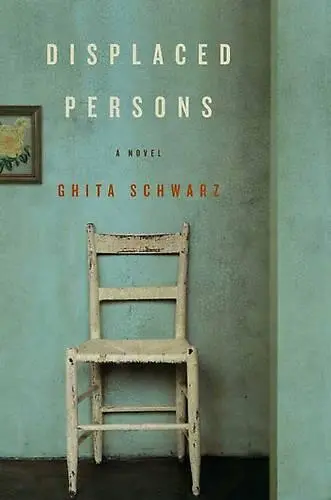
- Название:Displaced Persons
- Автор:
- Жанр:
- Год:неизвестен
- ISBN:нет данных
- Рейтинг книги:5 / 5. Голосов: 1
-
Избранное:Добавить в избранное
- Отзывы:
-
Ваша оценка:
Displaced Persons: краткое содержание, описание и аннотация
Предлагаем к чтению аннотацию, описание, краткое содержание или предисловие (зависит от того, что написал сам автор книги «Displaced Persons»). Если вы не нашли необходимую информацию о книге — напишите в комментариях, мы постараемся отыскать её.
In May 1945, Pavel Mandl, a Polish Jew recently liberated from a concentration camp, lands near a displaced persons camp in the British occupation zone of newly defeated Germany. Alone, possessing nothing but a map, a few tins of food, a toothbrush, and his identity papers, he must scrape together a new life in a chaotic community of refugees, civilians, and soldiers.
Gifted with a talent for black-market trading, Pavel soon procures clothing, false documents, and a modest house, where he installs himself and a pair of fellow refugees – Fela, a young widow who fled Poland for Russia at the outset of the war, and Chaim, a resourceful teenage boy whose smuggling skills have brought him to the Western zones. The trio soon form a makeshift family, searching for surviving relatives, railing against their circumscribed existence, and dreaming of visas to America.
Fifteen years later, haunted by decisions they made as "DPs," Pavel and Fela are married and living in Queens with their young son and daughter, and Chaim has recently emigrated from Israel with his wife, Sima. Pavel opens a small tailoring shop with his scheming brother-in-law while Fela struggles to establish peace in a loosely traditional household; Chaim and Sima adapt cheerfully to American life and its promise of freedom from a brutal past. Their lives are no longer dominated by the need to endure, fight, hide, or escape. Instead, they grapple with past trauma in everyday moments: taking the children to the municipal pool, shopping for liquor, arguing with landlords.
For decades, Pavel, Fela, and Chaim battle over memory and identity on the sly, within private groups of survivors. But as the Iron Curtain falls in the 1990s, American society starts to embrace the tragedy as a cultural commodity, and survivor politics go public. Clever and stubborn, tyrannical and generous, Pavel, Fela, and Chaim articulate the self-conscious strivings of an immigrant community determined to write its own history, on its own terms.
In Displaced Persons, Ghita Schwarz reveals the interior despairs and joys of immigrants shaped by war – ordinary men and women who have lived through cataclysmic times – and illuminates changing cultural understandings of trauma and remembrance.
Displaced Persons — читать онлайн бесплатно полную книгу (весь текст) целиком
Ниже представлен текст книги, разбитый по страницам. Система сохранения места последней прочитанной страницы, позволяет с удобством читать онлайн бесплатно книгу «Displaced Persons», без необходимости каждый раз заново искать на чём Вы остановились. Поставьте закладку, и сможете в любой момент перейти на страницу, на которой закончили чтение.
Интервал:
Закладка:
Sima was more open. She liked that Lola looked for a theory, that Lola investigated on her own. We should be happy she is interested! We should be happy some goyische boyfriend is interested! My father always said-
The truth was, he was not sure he wanted his daughter to have a theory. There was no theory to cover everything, to explain. Fela was right. Nothing could be explained, and trying to explain caused even more pain. He had a daughter who graduated from the Ivy League, Pavel had a son who was a doctor, but others had children who had terrible drug addictions, friends who betrayed and stole, who threw money away for fancy commemorations and extravagant dinners only to make themselves feel big. Some people made good, some people did not. Some people came out so close they were almost one body, some people came out with a passion to push themselves forward, never mind the suffering it caused to someone else. Look at Pavel, his body broken by another survivor, sitting in the aisle seat next to Fela. Once Sima had stood on a chair in the kitchen to put away a dish, and had fallen and broken her shinbone. She had been in a cast and on crutches almost eight weeks. How long, she had asked Pavel, how long does it take for the pain to go away, completely? And Pavel had looked at her, genuinely surprised, and said, But it doesn’t. You just get used to it.
He opened his program, looked at the description of Sima’s book. Resistance in Everyday Acts: Cultural Life in the Warsaw Ghetto . The author must be Israeli, he thought, where one had to resist to be worthy of survival, or pity, or memory. In the back of the book the professor looked solemnly out at him, his black hair wavy and dashing. The same photograph-no doubt ten years old, if not more-graced the program.
Oh, God. He snorted.
Sima turned from Fela. You don’t have to pay attention, she said softly. I’ll pay attention. If there’s something worth hearing I’ll wake you up.
He lifted up the program and pointed to the song. This idiot was going to make them sing as a group. I told you! He wanted to say.
She answered in English, as if he had said the words aloud. “Not everything has to be a philosophical dilemma, Chaim. Just sing it, that’s all.” He looked at her to see if she was angry. But she was smiling.
THE VICE PRESIDENT OF the memorial committee come toward the front, passing by their little row. Pavel nodded as he passed, but the man did not stop. Not even a hello. What suddenly made him so important? He shook his head at Fela, forgetting for a moment his fury at her.
Yidl remembered everyone, he said.
Even if Yidl did not remember, said Fela, he pretended.
The auditorium grew more full. It was not a large crowd, but certainly a respectable showing, and there would be opportunity to talk of the lecture at the next card game.
Pavel stood up for a moment to stretch his leg. A man brushed against him. Pavel turned to see who it was, and the olive-skinned face, the sunken eyes, gave Pavel a chill of familiarity. The man returned Pavel’s glance but without recognition. Pavel pressed his glasses farther up his nose and squinted to look at the name tag.
Then he stood up, his heart thick in his chest. It could not be.
Rembishevski, he said.
The man looked startled, almost afraid. Yes! Do I know you? He had asked in Yiddish.
Pavel breathed out. Pavel, he said. Pavel Mandl.
But the man did not blink. Saul Rembishevski, he said.
Pavel’s hands, so warm a moment before, had cooled. He had waited for this-he had waited for the sight of a Rembishevski. In 1980 Pavel had gone to the world gathering of survivors, the first one in Israel, with Fela. She had not seen her sister in ten years, he had not seen his mother’s cousin in more than that. It had been a beautiful trip. They had toured the sights, and they had filled their days wandering from seminar to speech to meal, Fela on her sister’s arm and Pavel walking beside them. Pavel had had hope-hope of something, some kind of miracle, a miracle he did not even dare name to himself-but in the end all he found were acquaintances he had lost touch with since the war, and one neighbor from childhood whom he had not immediately recognized. He had found nothing. But he had sat and talked and prayed with his friends, who had come to Jerusalem all together, who played cards together in the evening when there were no events, who stayed late into the night at the memorial ceremonies. And behind Pavel’s hope had been his dark wishes to see him, Marek Rembishevski, to show that he, Pavel Mandl, was alive and in possession of a beautiful family, or perhaps only to look the thief in the eye and say nothing. Pavel had even looked him up in the registry when he had a moment away from Fela. But Rembishevski had not shown his face.
Now, looking at the man in the lecture hall, Pavel said, his voice very quiet, I knew a Rembishevski, just after the war.
Oh, tell me-I had only one brother who I knew came out from the war, only one from all my-just Marek, and now that he has gone-
Gone?
Terrible! A cancer of the throat, how he suffered. To tell you, but I don’t need to tell you-Pavel recognized the man’s patterns of speech-I don’t need to tell you, but to die as he did, alone, with no wife even, no sons to say Kaddish-he lived in Los Angeles-but you-you say you knew a Rembishevski-perhaps another-do you? There were tears in the man’s eyes. I hope always to find someone who knew something about my family, I hope to find.
Pavel was silent, and he felt the silence all around him, the other three a small circle of quiet amid the noise of the auditorium. It was so quiet he thought he could hear his own blood moving through his veins. But he was not hot, he was not trembling. He was steady. There were no words in his head. He bent forward and pretended to squint again at the man’s name tag.
I’m sorry, Pavel said, the words flowing from his mouth. I-I knew a Retishevsky. I-I saw your name and was confused.
The man’s face changed-disappointment? Or was it-yes, it was relief. Pavel could see it. Relief that Pavel had not added to the rumors.
You did not know a Rembishevski?
I-I am sorry, said Pavel.
He sat down. Fela’s hand went to his knee. Now he was trembling. But he did not turn his face. He breathed.
A small man came onto the podium. A microphone whistled, and Pavel put his fingers to his ear to block out the noise and to stop his hand from shaking. The other three looked at him with grave faces. He wanted them to pass over it. Perhaps they wanted him to relieve them. He felt all right. He felt good. One had to believe in a brother, even the memory of a terrible brother, one had to believe that it was not all blood and dirt and shit and bone. One had to believe.
Everyone here, I trust, Pavel said. It is family.
A half-smile spread on Chaim’s face, and Pavel felt himself filled again with the heat in his chest, like what he felt for his son, but different, almost closer.
Chaml, Pavel said.
Chaim nodded at him, perhaps about to answer. But the microphone stopped screeching, and a man’s voice pushed through the mutters and rustles. Then the auditorium fell quiet. The professor would begin.
Oral Histories
W ITH HIS EAR FOR a tune and facility with languages, Chaim should have excelled at eavesdropping, but he did not. Something went wrong in the step between deciphering and understanding, a failure to move inside the conversation and string all the fragmented phrases together. Sima was more skilled. Through their daughter’s adolescence, she had made daily collections and nightly summaries of small grimaces, soft mutterings, detritus from book bags and coat pockets, little scraps of nothing that maternal interpretation transformed into overwhelming evidence of boyfriends, drugs, minor transgressions. Lola was already thirty, no longer a teenager, but the information Chaim gleaned from listening to her on the phone was no greater than when she had lived with them, making secret plans.
Читать дальшеИнтервал:
Закладка:
Похожие книги на «Displaced Persons»
Представляем Вашему вниманию похожие книги на «Displaced Persons» списком для выбора. Мы отобрали схожую по названию и смыслу литературу в надежде предоставить читателям больше вариантов отыскать новые, интересные, ещё непрочитанные произведения.






Обсуждение, отзывы о книге «Displaced Persons» и просто собственные мнения читателей. Оставьте ваши комментарии, напишите, что Вы думаете о произведении, его смысле или главных героях. Укажите что конкретно понравилось, а что нет, и почему Вы так считаете.