Hermann Hesse - The Glass Bead Game
Здесь есть возможность читать онлайн «Hermann Hesse - The Glass Bead Game» весь текст электронной книги совершенно бесплатно (целиком полную версию без сокращений). В некоторых случаях можно слушать аудио, скачать через торрент в формате fb2 и присутствует краткое содержание. Год выпуска: 1969, Жанр: Современная проза, Социально-психологическая фантастика, на английском языке. Описание произведения, (предисловие) а так же отзывы посетителей доступны на портале библиотеки ЛибКат.
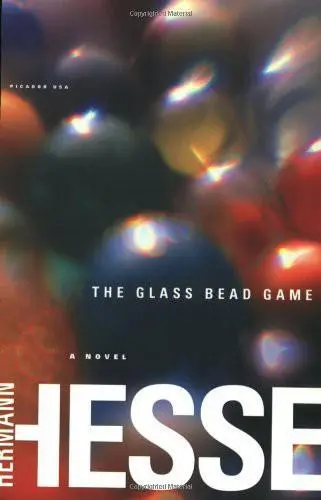
- Название:The Glass Bead Game
- Автор:
- Жанр:
- Год:1969
- ISBN:нет данных
- Рейтинг книги:4 / 5. Голосов: 2
-
Избранное:Добавить в избранное
- Отзывы:
-
Ваша оценка:
The Glass Bead Game: краткое содержание, описание и аннотация
Предлагаем к чтению аннотацию, описание, краткое содержание или предисловие (зависит от того, что написал сам автор книги «The Glass Bead Game»). Если вы не нашли необходимую информацию о книге — напишите в комментариях, мы постараемся отыскать её.
Something like chess but far more intricate, the game of Magister Ludi known as the Glass Bead Game is thought in its purest form, a synthesis through which philosophy, art, music and scientific law are appreciated simultaneously. The scholar-players are isolated within Castalia, an autonomous elite institution devoted wholly to the mind and the imagination…
The Glass Bead Game — читать онлайн бесплатно полную книгу (весь текст) целиком
Ниже представлен текст книги, разбитый по страницам. Система сохранения места последней прочитанной страницы, позволяет с удобством читать онлайн бесплатно книгу «The Glass Bead Game», без необходимости каждый раз заново искать на чём Вы остановились. Поставьте закладку, и сможете в любой момент перейти на страницу, на которой закончили чтение.
Интервал:
Закладка:
With a small sigh the Magister ceased pacing the room. “That is what happened to me, and to this day I am still a little ashamed to talk about it. But the fact is, Joseph, that the more we demand of ourselves, or the more our task at any given time demands of us, the more dependent we are on meditation as a wellspring of energy, as the ever-renewing concord of mind and soul. And — I could if I wished give you quite a few more examples of this — the more intensively a task requires our energies, arousing and exalting us at one time, tiring and depressing us at another, the more easily we may come to neglect this wellspring, just as when we are carried away by some intellectual work we easily forget to attend to the body. The really great men in the history of the world have all either known how to meditate or have unconsciously found their way to the place to which meditation leads us. Even the most vigorous and gifted among the others all failed and were defeated in the end because their task or their ambitious dream seized hold of them, made them into persons so possessed that they lost the capacity for liberating themselves from present things, and attaining perspective. Well, you know all this; it’s taught during the first exercises, of course. But it is inexorably true. How inexorably true it is, one realizes only after having gone astray.”
This story had just enough effect upon Joseph for him to apprehend the risk he himself was running, so that he turned to his meditation exercises with renewed seriousness. What really impressed him was the fact that the Master had for the first time revealed to him something of his personal life, of his youth and early studies. For the first time Joseph fully realized that even a demigod, even a Master, had once been young and capable of erring. He felt gratitude, too, for the confidence the revered Master had placed in him by making this confession. It was possible for one to go astray, to flag, to make mistakes, to break rules, and still to deal with all such difficulties, to find one’s way back, and in the end even to become a Master. Joseph overcame the crisis.
During the two or three years at Waldzell during which the friendship between Plinio and Joseph continued, the school watched the spectacle of these combative friends like a drama in which everyone had at least some small part, from the headmaster to the youngest freshman. The two worlds, the two principles, had become embodied in Knecht and Designori; each stimulated the other; every disputation became a solemn and symbolic contest which concerned everyone at the school. From every contact with his native soil on the holiday visits home Plinio would bring back new energy; and from every withdrawal for reflection, from every new book, every meditation exercise, every meeting with the Magister Musicae Joseph also derived new energy, made himself better fitted to be the representative and advocate of Castalia. As a child he had experienced his first vocation. Now he experienced the second. These years shaped and forged him into the perfect Castalian.
He had also some time ago completed his elementary lessons in the Glass Bead Game and even then, during holidays and under the eye of a Games Director, had begun sketching out his own Glass Bead Games. In this activity he now discovered one of the most abundant sources of joy and relaxation. Not since he had insatiably practiced harpsichord and piano pieces with Carlo Ferromonte had anything done him so much good, so refreshed, strengthened, reassured, and delighted him as did these first advances into the starry firmament of the Glass Bead Game.
During these same years young Joseph Knecht wrote those poems which have been preserved in Ferromonte’s copy. It is quite possible that there were originally more of them than have come down to us, and it may be assumed that the poems, the earliest of which dates back to a time before Knecht’s introduction to the Glass Bead Game, helped him to carry out his role and to withstand the many tests of those critical years. Here and there in these poems, some skillfully wrought and some hastily scribbled, every reader will discover traces of the profound upheaval and crisis through which Knecht was then passing under the influence of Plinio. A good many of the lines sound a note of profound disturbance, of fundamental doubts about himself and the meaning of his life — until, in the poem entitled “The Glass Bead Game” he seems to have attained belief and surrender. Incidentally, a measure of concession to Plinio’s world, an element of rebellion against certain unwritten laws of Castalia, is contained in the mere fact that he wrote these poems and even on occasion showed them to several schoolmates. For while Castalia has in general renounced the production of works of art (even musical production is known and tolerated there only in the form of stylistically rigid composition exercises), writing poetry was regarded as the most impossible, ridiculous, and prohibited of conceivable acts. Thus these poems were anything but a game, anything but an idle calligraphic amusement; it took high pressure to start this flow of productivity, and a certain defiant courage was required to admit to the writing of these verses.
It should also be mentioned that Plinio Designori likewise underwent considerable change and development under the influence of his antagonist. This was reflected in more than the refinement of his methods of argument. During the comradely rivalry of those school years Plinio saw his opponent steadily rising and maturing into an exemplary Castalian. The figure of his friend more and more vigorously and vividly embodied for him the spirit of the Province. Just as he himself had infected Joseph with some of the atmospheric turbulence of his own world, he for his part inhaled the Castalian air and succumbed to its charm and power. In his last year at the school, after a two-hour disputation on the ideals and perils of monasticism, fought out in the presence of the highest Glass Bead Game class, Plinio took Joseph out for a walk and made a confession to him. We quote it from a letter of Ferromonte’s:
“Of course I’ve known for a long time, Joseph, that you are not the credulous Glass Bead Game player and Castalian saint whose part you have been playing so splendidly. Each of us stands at an exposed spot in this battle, and each of us probably knows that what he is fighting against rightfufiy exists and has its undeniable value. You yourself take the side of intensive cultivation of the mind, I the side of natural life. In our contest you have learned to track down the dangers of the natural life and have made them your target. Your function has been to point out how natural, naive living without discipline of the mind is bound to become a mire into which men sink, reverting to bestiality. And I for my part must remind you again and again how risky, dangerous, and ultimately sterile is a life based purely upon mind. Good, each defends what he believes to be primary, you mind and I nature. But don’t take offense — it sometimes seems to me that you actually and naively consider me an enemy of your Castalian principles, a fellow who fundamentally regards your studies, exercises, and games as mere tomfoolery, even though he briefly joins in them for one reason or another. How wrong you would be if you really believed that, my friend. I’ll confess to you that I am infatuated with your hierarchy, that it often enthralls me like happiness itself. I’ll confess to you that some months ago, when I was at home with my parents for a while, I had it out with my father and won his permission for me to remain a Castalian and enter the Order if this should be my desire and decision at the end of my schooldays. I was happy when he at last gave his consent. As it happens, I shall not make use of his permission; I’ve recently realized that. Not that I’ve lost my taste for it, not at all. But I more and more see that for me to remain among you would mean escaping. It would be a fine, a noble escape perhaps, but still an escape. I shall return and become a man of the outside world, but one who continues grateful to your Castalia, who will go on practicing a good many of your exercises, and will come every year to join in the celebration of the great Glass Bead Game.”
Читать дальшеИнтервал:
Закладка:
Похожие книги на «The Glass Bead Game»
Представляем Вашему вниманию похожие книги на «The Glass Bead Game» списком для выбора. Мы отобрали схожую по названию и смыслу литературу в надежде предоставить читателям больше вариантов отыскать новые, интересные, ещё непрочитанные произведения.








Обсуждение, отзывы о книге «The Glass Bead Game» и просто собственные мнения читателей. Оставьте ваши комментарии, напишите, что Вы думаете о произведении, его смысле или главных героях. Укажите что конкретно понравилось, а что нет, и почему Вы так считаете.