Hermann Hesse - The Glass Bead Game
Здесь есть возможность читать онлайн «Hermann Hesse - The Glass Bead Game» весь текст электронной книги совершенно бесплатно (целиком полную версию без сокращений). В некоторых случаях можно слушать аудио, скачать через торрент в формате fb2 и присутствует краткое содержание. Год выпуска: 1969, Жанр: Современная проза, Социально-психологическая фантастика, на английском языке. Описание произведения, (предисловие) а так же отзывы посетителей доступны на портале библиотеки ЛибКат.
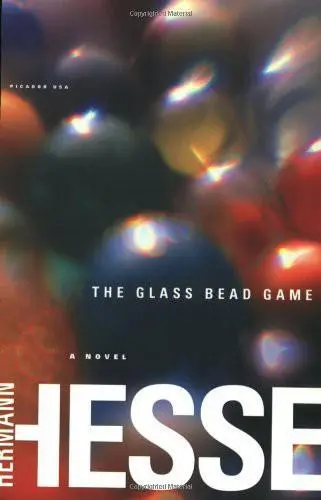
- Название:The Glass Bead Game
- Автор:
- Жанр:
- Год:1969
- ISBN:нет данных
- Рейтинг книги:4 / 5. Голосов: 2
-
Избранное:Добавить в избранное
- Отзывы:
-
Ваша оценка:
The Glass Bead Game: краткое содержание, описание и аннотация
Предлагаем к чтению аннотацию, описание, краткое содержание или предисловие (зависит от того, что написал сам автор книги «The Glass Bead Game»). Если вы не нашли необходимую информацию о книге — напишите в комментариях, мы постараемся отыскать её.
Something like chess but far more intricate, the game of Magister Ludi known as the Glass Bead Game is thought in its purest form, a synthesis through which philosophy, art, music and scientific law are appreciated simultaneously. The scholar-players are isolated within Castalia, an autonomous elite institution devoted wholly to the mind and the imagination…
The Glass Bead Game — читать онлайн бесплатно полную книгу (весь текст) целиком
Ниже представлен текст книги, разбитый по страницам. Система сохранения места последней прочитанной страницы, позволяет с удобством читать онлайн бесплатно книгу «The Glass Bead Game», без необходимости каждый раз заново искать на чём Вы остановились. Поставьте закладку, и сможете в любой момент перейти на страницу, на которой закончили чтение.
Интервал:
Закладка:
We must now give some account of that other fellow student who played a significant part in Knecht’s life at Waldzell: the hospitant Plinio Designori. Hospitants were boys who went through the elite schools as guests, that is, without the intention of remaining permanently in the Pedagogic Province and entering the Order. Such hospitants turned up every so often, although they were quite rare, for the Board of Educators was naturally averse to the idea of educating students who intended to return home and into the world after they finished their studies at the elite schools. However, the country had several old patrician families who had performed notable services for Castalia at the time of its foundation and in which the custom still prevailed (it has not entirely died out to this day) of having one of the sons educated as a guest in the elite schools. It had become an established prerogative for those few families, although of course the boys in question had to be gifted enough to meet the standards of the schools.
These hospitants, although in every respect subject to the same rules as all elite students, formed an exceptional group within the student body if only because they did not grow increasingly estranged from their native soil and their families with each passing year. On the contrary, they spent all the holidays at home and always remained guests and strangers among their fellow students, since they preserved the habits and ways of thinking of their place of origin. Home, a worldly career, a profession and marriage awaited them. Only on very rare occasions did it happen that such a guest student, captivated by the spirit of the Province, would obtain the consent of his family and after all remain in Castalia and enter the Order. On the other hand, in the history of our country there have been several statesmen who were guest students in their youth, and now and then, when public opinion for one reason or another had turned against the elite schools and the Order, these statesmen came stoutly to the defense of both.
Plinio Designori, then, was one such hospitant whom Joseph Knecht — slightly his junior — encountered in Waldzell. He was a talented young man, particularly brilliant in talk and debate, fiery and somewhat restive in temperament. His presence often troubled Headmaster Zbinden, for although he was a good student and gave no cause for reprimands, he made no effort to forget his exceptional position as a hospitant and to fall into line as inconspicuously as possible. On the contrary, he frankly and belligerently professed a non-Castalian, worldly point of view.
Inevitably, a special relationship sprang up between these two students. Both were extremely gifted and both had a vocation; these qualities made them brothers, although in everything else they were opposites. It would have required a teacher of unusual insight and skill to extract the quintessence from the problem that thus arose and to employ the rules of dialectics to derive synthesis from the antitheses. Headmaster Zbinden did not lack the talent or will; he was not one of those teachers who find geniuses an embarrassment. But for this particular case he lacked the important prerequisite: the trust of both students. Plinio, who enjoyed the role of outsider and revolutionary, remained permanently on his guard in his dealings with the headmaster; and unfortunately the headmaster had clashed with Joseph Knecht over that question of his private studies, so that Knecht, too, would not have turned to Zbinden for advice.
Fortunately, there was the Music Master. Knecht did turn to him with a request for help and advice, and the wise old musician took the matter seriously and directed the course of the game with masterly skill, as we shall see. In the hands of this Master the greatest danger and temptation in young Knecht’s life was converted into an honorable task, and the young man proved able to cope with it. The psychological history of the friendship-and-enmity between Joseph and Plinio — a sonata movement on two themes, or a dialectical interplay between two minds — went somewhat as follows.
At first, of course, it was Designori who attracted his opponent. He was the elder; he was a handsome, fiery, and well-spoken young man; and above all he was one of those “from outside,” a non-Castalian, a boy from the world, a person with father and mother, uncles, aunts, brothers, and sisters, one for whom Castalia with all its rules, traditions, and ideals represented only a stage along the road, a limited sojourn. For this rara avis Castalia was not the world; for him Waldzell was a school like any other; for him the “return to the world” was no disgrace and punishment; the future awaiting him was not the Order but career, marriage, politics, in short that “real life” which every Castalian secretly longed to know more about. For the “world” was the same thing for a Castalian that it had long ago been for the penitents and monks: something inferior and forbidden, no doubt, but nonetheless mysterious, tempting, fascinating. And Plinio truly made no secret of his attachment to the world; he was not in the least ashamed of it. On the contrary, he was proud of it. With a zeal still half boyish and histrionic, but also half consciously propagandistic, he stressed his own differentness. He seized every pretext for setting his secular views and standards against those of Castalia, and contending that his own were better, juster, more natural, more human. In these arguments he bandied about words like “nature” and “common sense,” to the discredit of the overrefined, unworldly spirit of the school. He made use of slogans and hyperbole, but had the good taste and tact not to descend to crude provocations, but more or less to give the methods of disputation customary in Waldzell their due. He wanted to defend the “world” and the unreflective life against the “arrogant scholastic intellectuality” of Castalia, but he also wanted to prove that he could do so with his opponents’ weapons. He did not want to be thought the dull-witted brute blindly trampling around in the flower garden of culture.
Now and again Joseph Knecht had stood, a silent but attentive listener, on the edges of small groups of students whose center was Designori. Plinio usually did most of the talking. With curiosity, astonishment, and alarm Joseph had heard Plinio excoriating all authority, everything that was held sacred in Castalia. He heard everything questioned, everything he believed in exposed as dubious or ridiculous. Joseph soon noted that many in the audience did not take these speeches seriously; some, it was clear, listened only for the fun of it, as people listen to a barker at a fair. Frequently, too, he heard some of the boys answer Plinio’s charges sarcastically or seriously. Still there were always several schoolmates gathered around this boy Plinio; he was always the center of attention, and whether or not there happened to be an opponent in the group, he always exerted an attraction so strong that it was akin to seduction.
Joseph himself was as much stirred as those others who gathered around the lively orator and listened to his tirades with astonishment or laughter. In spite of the trepidation and even fear that he felt during such speeches, Joseph was aware of their sinister attraction for him. He was drawn to them not just because they were amusing. On the contrary, they seemed to concern him directly and seriously. Not that he would inwardly have agreed with the audacious orator, but there were doubts whose very existence or possibility you had only to know about and you instantly began to suffer them. At the beginning it was not any serious suffering; it was merely a matter of being slightly disturbed, uneasy — a feeling compounded of powerful urge and guilty conscience.
The time had to come, and it came, when Designori noticed that among his listeners was one to whom his words meant more than rousing entertainment and the fun of argument: a fair-haired boy who looked handsome and finely wrought, but rather shy, and who blushed and gave terse, embarrassed replies when Plinio said a friendly word to him. Evidently this boy had been trailing after him for some time, Plinio thought, and decided to reward him with a friendly gesture and win him over completely by inviting him to his room that afternoon. To Plinio’s surprise the boy held off, would not linger to talk with him, and declined the invitation. Provoked, the older boy began courting the reticent Joseph. Possibly he did so at first only out of vanity, but later he went about it in all seriousness, for he sensed an antagonist who would be perhaps a future friend, perhaps the opposite. Again and again he saw Joseph hanging around near him, and noted the intensity with which Joseph listened, but the shy boy would always retreat as soon as he tried to approach him.
Читать дальшеИнтервал:
Закладка:
Похожие книги на «The Glass Bead Game»
Представляем Вашему вниманию похожие книги на «The Glass Bead Game» списком для выбора. Мы отобрали схожую по названию и смыслу литературу в надежде предоставить читателям больше вариантов отыскать новые, интересные, ещё непрочитанные произведения.










Обсуждение, отзывы о книге «The Glass Bead Game» и просто собственные мнения читателей. Оставьте ваши комментарии, напишите, что Вы думаете о произведении, его смысле или главных героях. Укажите что конкретно понравилось, а что нет, и почему Вы так считаете.