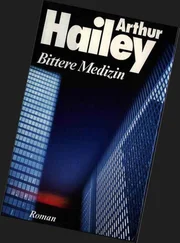
Arthur Hailey - Strong Medicine
Здесь есть возможность читать онлайн «Arthur Hailey - Strong Medicine» весь текст электронной книги совершенно бесплатно (целиком полную версию без сокращений). В некоторых случаях можно слушать аудио, скачать через торрент в формате fb2 и присутствует краткое содержание. Жанр: Современная проза, на английском языке. Описание произведения, (предисловие) а так же отзывы посетителей доступны на портале библиотеки ЛибКат.
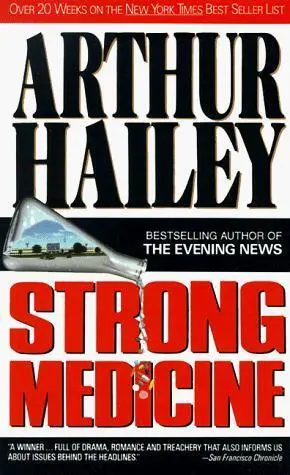
- Название:Strong Medicine
- Автор:
- Жанр:
- Год:неизвестен
- ISBN:нет данных
- Рейтинг книги:5 / 5. Голосов: 1
-
Избранное:Добавить в избранное
- Отзывы:
-
Ваша оценка:
Strong Medicine: краткое содержание, описание и аннотация
Предлагаем к чтению аннотацию, описание, краткое содержание или предисловие (зависит от того, что написал сам автор книги «Strong Medicine»). Если вы не нашли необходимую информацию о книге — напишите в комментариях, мы постараемся отыскать её.
Strong Medicine — читать онлайн бесплатно полную книгу (весь текст) целиком
Ниже представлен текст книги, разбитый по страницам. Система сохранения места последней прочитанной страницы, позволяет с удобством читать онлайн бесплатно книгу «Strong Medicine», без необходимости каждый раз заново искать на чём Вы остановились. Поставьте закладку, и сможете в любой момент перейти на страницу, на которой закончили чтение.
Интервал:
Закладка:
Celia unfolded several blueprints.”I've brought the plans. I've also talked with a contractor.”
"While you co-workers are poring over that dull stuff," Lilian announced, "I'm going shopping at Harrods.”
Two days later Sam and Celia drove together to Harlow. As Sam threaded a rented Jaguar through early morning traffic out of London, heading north, Celia read that day's International Herald Tribune. Vietnam peace talks, which had been stalled, would soon resume in Paris, a'front-page report predicted. In a Maryland hospital, a bullet had been removed successfully from the spine of Governor George Wallace of Alabama, shot a month before by a would-be assassin. President Nixon, offering his own assessment of the Vietnam war, assured Americans, "Hanoi is losing its desperate gamble.”
One item, from Washington, D.C., which appeared to receive unusual attention, described a burglary-a break-in at Democratic Party national headquarters at a place called Watergate. It seemed a minor matter. Celia, uninterested, put the newspaper away. She asked Sam, "How have your latest interviews been going?" He grimaced.”Not well. You've made better progress than L" "Places and buildings are easier than people," she reminded him. Sam had been working his way through Vincent Lord's list of potential candidates to head the research institute.”Most of them I've seen so far," he confided to Celia, "are a little too much like Vince-set in their ways, status-conscious, with their best research years probably behind them. What I'm looking for is someone with exciting ideas, highly qualified of course, and possibly young.”
"How will you know when you've found someone like that?" 'I'll know," Sam said. He smiled.”Maybe it's like falling in love. You're not sure why. When it happens, you just know.”
The twenty-three miles between London and Harlow were amid increasing traffic. Then, leaving the A414 main road, they entered an area of wide grass boulevards with pleasant homes, separated in many cases by open fields. The industrial areas were discreetly apart, concealed from residential and recreational portions of the town. Some old structures had been preserved. As they passed an eleventh-century church, Sam stopped the car and said, "Let's get out and walk around.”
"This is ancient ground," Celia told him as they strolled, surveying the combined rural-modem scene.”Old Stone Age relics have been found from two hundred thousand years ago. The Saxons were here; the name Harlow is from Saxon words meaning 'the hill of the army.' And in the first century A.D., the Romans had a settlement and built a temple.”
"We'll try to add some history ourselves," Sam said.”Now, where's that plant we've come to see?" Celia pointed to the west.”Over there, behind those trees. It's in an industrial park called Pinnacles.”
"Okay, let's go.”
By now it was midmorning. Sam surveyed the silent, unoccupied building as he halted the Jaguar outside. A portion of it, intended as showroom and offices, was of concrete and glass, divided into two floors. The remainder, a metal-clad steel frame, was on one level and designed as a spacious workshop. Even from the outside, Sam could see that what Celia had reported was true-the whole could be readily converted to research laboratories. A short distance ahead of them another car was parked. Now a door opened and a pudgy middle-aged man got out and approached the Jaguar. Celia introduced him as Mr. LaMarre, a real estate company representative she had arranged to have meet them. After shaking hands, LaMarre produced a bunch of keys and jangled them. "No sense in buying the barn without looking at the hay," he said amiably. They moved to the main doorway and went in. A half hour later Sam took Celia aside and told her quietly, "It'll do very well. You can let this man know we're interested, then instruct our lawyers to get started with negotiations. Tell them to wind up everything as quickly as possible.”
While Celia went back to talk with LaMarre, Sam returned to the Jaguar. A few minutes later, when she rejoined him, he said, "I forgot to tell you that we're going on to Cambridge. Because Harlow is halfway there, I arranged to meet Dr. Peat-Smith-he's the one doing research on brain aging and Alzheimer's disease, who has asked for a grant.”
"I'm glad you found time for him," Celia said.”You thought you might not.”
After an hour's drive through more countryside, in bright sunshine, they entered Trumpington Street, Cambridge, soon after midday.”This is a lovely, venerable town," Sam said.”That's Peterhouse on your left-the oldest college. Have you been here before?"
Celia, fascinated by a succession of ancient, historic buildings cheek by jowl, answered, "Never.”
Sam had stopped en route to telephone and arrange luncheon at the Garden House Hotel. Martin Peat-Smith would join them there. The picturesque hotel was in an idyllic location, close to the "Backs"-the landscaped gardens that provide a superb rear view of many colleges-and alongside the River Cam on which boaters in punts poled their leisurely, sometimes uncertain way. In the hotel lobby Peat-Smith spotted them first and came forward. Celia had a swift impression of a stocky, solidly built young man with a shock of untidy blond hair that needed trimming, and a sudden, boyish smile that creased a rugged, square-jawed face. Whatever else Peat-Smith might be, she thought, he wasn't handsome. But she had a sense of facing a strong, purposeful personality. "Mrs. Jordan and Mr. Hawthorne, I presume?" The incisive, cultured but unaffected voice matched Peat-Smith's ingenuous appearance. "That's right," Celia responded.”Except, in terms of importance, it's the other way around.”
The quick smile once more.”I'll try to remember that.”
As they all shook hands, Celia noticed Peat-Smith was wearing an old Harris Tweed jacket with patched elbows and frayed cuffs, and unpressed, stained gray slacks. Instantly reading her mind, he said without embarrassment, "I came directly from the lab, Mrs. Jordan. I do own a suit. If we meet out of working hours, I'll wear it.”
Celia flushed.”I'm embarrassed. I apologize for my rudeness.”
"No need.”
He smiled disarmingly.”I just like to clear things UP.”
"A good habit," Sam pronounced.”Shall we go in to lunch?" At their table, which provided a view of a rose garden and the river beyond, they ordered drinks. Celia, as usual, had a daiquiri, Sam a martini, Peat-Smith a glass of white wine. "I have a report from Dr. Lord about your current research," Sam said. "I understand you've asked for a grant from Felding-Roth which would let you continue it.”
"That's right," Peat-Smith acknowledged.”My project-the study of, mental aging and Alzheimer's disease-is out of money.
The university doesn't have any, at least not for allocation to me, so I've bad to took elsewhere.”
Sam assured him, "That's not unusual. Our company does give grants for academic research if we think it's worthwhile, so let's talk about it.”
"All right.”
For the first time Dr. Peat-Smith showed a trace of nervousness, probably, Celia thought, because a grant was important to him. He asked, "To start with Alzheimer's-how much do you know about it?" "Very little," Sam said.”So assume we know nothing.”
The young scientist nodded.”It isn't one of the fashionable diseases-at least, not yet. Also there's no knowledge, only theories, about what causes it.”
"Doesn't it affect old people mostly?" Celia asked. "Those over fifty-yes; more particularly the age group over sixty-five. But Alzheimer's can affect someone younger. There have been cases in people aged twenty-seven.”
Peat-Smith sipped his wine, then continued.”The disease begins gradually, with lapses of memory. People forget simple things, like how to tie their shoelaces, or what a light switch is for, or where they usually sit at mealtime. Then, as it gets worse, more and more memory goes. Often the person can't identify anyone, even their husband or wife. They may forget how to eat and have to be fed; when thirsty, they may not know enough to ask for water. They're often incontinent, in bad cases violent and destructive. Eventually they die of the disease, but that takes ten to fifteen years-years which are hardest on anyone living with an Alzheimer's victim.”
Читать дальшеИнтервал:
Закладка:
Похожие книги на «Strong Medicine»
Представляем Вашему вниманию похожие книги на «Strong Medicine» списком для выбора. Мы отобрали схожую по названию и смыслу литературу в надежде предоставить читателям больше вариантов отыскать новые, интересные, ещё непрочитанные произведения.








Обсуждение, отзывы о книге «Strong Medicine» и просто собственные мнения читателей. Оставьте ваши комментарии, напишите, что Вы думаете о произведении, его смысле или главных героях. Укажите что конкретно понравилось, а что нет, и почему Вы так считаете.