Arthur Hailey - Evening News
Здесь есть возможность читать онлайн «Arthur Hailey - Evening News» весь текст электронной книги совершенно бесплатно (целиком полную версию без сокращений). В некоторых случаях можно слушать аудио, скачать через торрент в формате fb2 и присутствует краткое содержание. Жанр: Современная проза, на английском языке. Описание произведения, (предисловие) а так же отзывы посетителей доступны на портале библиотеки ЛибКат.
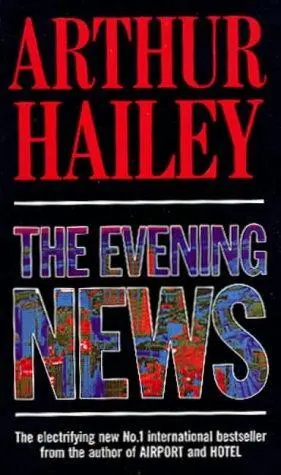
- Название:Evening News
- Автор:
- Жанр:
- Год:неизвестен
- ISBN:нет данных
- Рейтинг книги:3.5 / 5. Голосов: 2
-
Избранное:Добавить в избранное
- Отзывы:
-
Ваша оценка:
Evening News: краткое содержание, описание и аннотация
Предлагаем к чтению аннотацию, описание, краткое содержание или предисловие (зависит от того, что написал сам автор книги «Evening News»). Если вы не нашли необходимую информацию о книге — напишите в комментариях, мы постараемся отыскать её.
Evening News — читать онлайн бесплатно полную книгу (весь текст) целиком
Ниже представлен текст книги, разбитый по страницам. Система сохранения места последней прочитанной страницы, позволяет с удобством читать онлайн бесплатно книгу «Evening News», без необходимости каждый раз заново искать на чём Вы остановились. Поставьте закладку, и сможете в любой момент перейти на страницу, на которой закончили чтение.
Интервал:
Закладка:
After Chippingham had gone, Margot realized with satisfaction that, when necessary, she could be as tough as Theo Elliott.
* * *
Back at CBA News headquarters, knowing he was procrastinating, Les Chippingham attended to several routine matters before instructing his secretary, shortly before 3 P.m., that he was not to be disturbed and to hold telephone calls until further notice. He needed time to think.
Closing his office door from inside, he sat down in the conference area away from his desk, facing one of his favorite paintings—a desolate Andrew Wyeth landscape. But today Chippingham barely saw the painting; all he was aware of was the crucial decision he faced.
He knew he had reached a crisis in his life.
If he did as Margot had ordered and fired Harry Partridge without apparent cause, he would forfeit his self-respect. He would have done something shameful and unjust to a decent, highly skilled and respected human being, a friend and colleague, merely to satisfy another person's whim. Who that other person was and whatever was the whim, Chippingham didn't know, though he was sure that he and others would find out eventually. Meanwhile, all he was certain of was that Theodore Elliott was somehow involved—a thrust which, judging by Margot's reaction, had gone home.
Could Chippingham live with having done all that? Applying the standards he had tried to live his life by, he ought not to be able to.
On the other hand—and there was another side—if he, Les Chippingham, didn't do it, someone else would. Margot had made that clear. And she would have no trouble finding someone. There were too many ambitious people around, including some in CBA News, for it not to happen.
So Harry Partridge was going down the drain anyway—at least at CBA.
That was an important point: at CBA.
When word got around, as it quickly would, that Harry Partridge was leaving CBA and was available, he need not be unemployed for fifteen minutes. Other networks would fall over themselves vying for his services. Harry was a star, a "Big Foot"—with a reputation as a nice guy, too, which didn't harm him.
Nothing, absolutely nothing, would keep Harry Partridge down. In fact, with a new contract at a fresh network he would probably be better off.
But what about a fired and fallen news president? That was a totally different story, and Chippingham knew what he was facing if Margot kept her —word—as he knew she would—assuming he did not do as she wished.
As news president, Chippingham had a contract too, and tinder it would receive roughly a million dollars in severance payments, which sounded a lot but actually wasn't. A substantial amount would disappear in taxes. After that, because he was deeply in debt, his creditors would attach most of the remainder. And whatever was left, the lawyers handling Stasia's divorce would scrutinize covetously. So in the end, if he was left with enough for dinner for two at the Four Seasons, he would be surprised.
Then there was the question of another job. Unlike Partridge, he would not be sought out by other networks. One reason was, there could only be one news president at a network and he had heard no rumor of an opening anywhere else. Apart from that, networks wanted news presidents who were successes, not someone dismissed in doubtful circumstances; there were enough living ex-news presidents around to make that last point clear.
All of which meant that he would have to settle for a lesser job, almost certainly with a lot less money, and Stasia would still want some of that.
The prospect was daunting.
Unless— unless he did what Margot wanted.
If he expressed in dramatic terms what he was now doing, Chippingham thought, he was peeling away the layers of his soul, looking inside and not liking what he saw.
Yet a conclusion was inescapable: There were moments in life when self-preservation came first.
I hate to do this to you, Harry, he attested silently, but I don't have any choice.
* * *
Fifteen minutes later, Chippingham read over the letter he had typed personally on an old, mechanical Underwood he kept—for old times' sake — on a table in his office. It began:
Dear Harry:
It is with great regret I have to inform you that your employment by CBA News is terminated, effective immediately.
Under the terms of your contract with CBA . .
Chippingham knew, because he had had occasion to review it recently, that Partridge's contract had a "pay-or-play” clause, which meant that while the network could terminate employment, it was obligated to pay full benefits until the contract's end. In Partridge's case, this was a year away.
Also in the same contract was a "non-compete” clause under which Partridge, in accepting the "pay-or-play” arrangement, agreed not to work for another network for at least six months.
In his letter, Chippingham waived the "non-compete” clause, leaving Partridge with his benefits intact but free— to accept other employment at once. Chippingham believed that in the circumstances, it was the least he could do for Harry.
He intended the letter to go by fax machine to Lima. There was a machine in his outer office and he would use it himself He had decided earlier that he could not bring himself to telephone.
About to sign what he had written, Chippingham heard a knock at his office door and saw the door open. Instinctively, he turned the letter face down.
Crawford Sloane entered. He was holding a press wire printout in his hand. When he spoke, his voice was choked. Tears were coursing down his cheeks.
”Les,” Sloane said, "I had to see you. This just came in.”
He proffered the printout which Chippingham took and read. It repeated a Chicago Tribune report from Lima. describing the finding of Angus Sloane's dismembered head.
”Oh, Christ! Crawf, I'm . . .”Unable to finish the words, Chippingham shook his head, then held out his arms and, in a spontaneous gesture, the two embraced.
As they separated, Sloane said, "Don't say anything more. I'm not sure I can handle it. I can't do the news tonight. I told them outside to call Teresa Toy . . .”
"Forget everything, Crawf!” Chippingham told him.”We'll take care of it.”
"No!” Sloane shook his head.”There's something else, something I must do. I want a Learjet to Lima. While there's still a chance . . . for Jessica and Nicky . . . I must be there.” Sloane paused, struggling for control, then added, "I'll go to Larchmont first, then to Teterboro.”
Chippingham said doubtfully, "Are you sure, Crawf? Is this wise?”
"I'm going, Les,” Sloane said.”Don't try to stop me. If CBA won't pay for an airplane, I will.”
"That won't be necessary. I'll order the Lear,” Chippingham said.
Later, he did. It would leave Teterboro that night and be in Peru by morning.
* * *
Because of the sudden, tragic news of Angus Sloane, Chippingham's letter to Partridge did not get signed and faxed to Lima until late that afternoon. After his secretary had left, Chippingham sent it to a fax number he had for Entel Peru, from where it would be delivered to the CBA booth in the same building. He added a note to the transmission, asking for the letter to be placed in an envelope addressed to "Mr. Harry Partridge”and marked "Personal.”
Chippingham had considered informing Crawford Sloane about the letter, then decided Crawf had had all the shocks he could handle in a single week. He knew the letter would outrage Crawf, as well as Partridge, and expected indignant telephone calls with demands for explanations. But that would be another day and Chippingham would have to cope with it as best he could.
Finally, Chippingham telephoned Margot Lloyd-Mason who was still in her office at 6:15 P.m. He told her first, "I have done what you asked,” then gave her the news about Crawford Sloane's father.
Читать дальшеИнтервал:
Закладка:
Похожие книги на «Evening News»
Представляем Вашему вниманию похожие книги на «Evening News» списком для выбора. Мы отобрали схожую по названию и смыслу литературу в надежде предоставить читателям больше вариантов отыскать новые, интересные, ещё непрочитанные произведения.




Обсуждение, отзывы о книге «Evening News» и просто собственные мнения читателей. Оставьте ваши комментарии, напишите, что Вы думаете о произведении, его смысле или главных героях. Укажите что конкретно понравилось, а что нет, и почему Вы так считаете.