Joseph O'Neill - Blood-Dark Track
Здесь есть возможность читать онлайн «Joseph O'Neill - Blood-Dark Track» — ознакомительный отрывок электронной книги совершенно бесплатно, а после прочтения отрывка купить полную версию. В некоторых случаях можно слушать аудио, скачать через торрент в формате fb2 и присутствует краткое содержание. Год выпуска: 2010, ISBN: 2010, Издательство: Knopf Doubleday Publishing Group, Жанр: Современная проза, на английском языке. Описание произведения, (предисловие) а так же отзывы посетителей доступны на портале библиотеки ЛибКат.
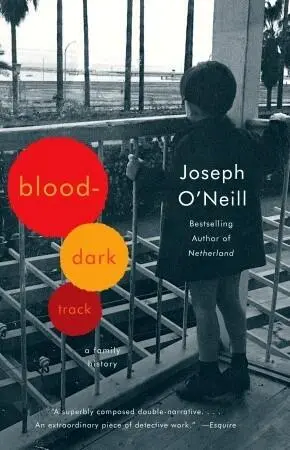
- Название:Blood-Dark Track
- Автор:
- Издательство:Knopf Doubleday Publishing Group
- Жанр:
- Год:2010
- ISBN:978-0-307-74265-0
- Рейтинг книги:4 / 5. Голосов: 1
-
Избранное:Добавить в избранное
- Отзывы:
-
Ваша оценка:
Blood-Dark Track: краткое содержание, описание и аннотация
Предлагаем к чтению аннотацию, описание, краткое содержание или предисловие (зависит от того, что написал сам автор книги «Blood-Dark Track»). Если вы не нашли необходимую информацию о книге — напишите в комментариях, мы постараемся отыскать её.
, a fascinating, personal, and beautifully crafted family history.
Joseph O'Neill's grandfathers-one Turkish, one Irish-were both imprisoned for suspected subversion during the Second World War. The Irish grandfather, a handsome rogue from a family of small farmers, was an active member of the IRA. O'Neill's other grandfather, a debonair hotelier from the tiny and threatened Turkish Christian minority, was interned by the British in Palestine on suspicion of being an Axis spy.
With intellect, compassion, and grace, O'Neill sets the stories of these individuals against the history of the last century's most inhuman events.
Blood-Dark Track — читать онлайн ознакомительный отрывок
Ниже представлен текст книги, разбитый по страницам. Система сохранения места последней прочитанной страницы, позволяет с удобством читать онлайн бесплатно книгу «Blood-Dark Track», без необходимости каждый раз заново искать на чём Вы остановились. Поставьте закладку, и сможете в любой момент перейти на страницу, на которой закончили чтение.
Интервал:
Закладка:
In the end, it was decided to travel in Brendan’s car, not only because it was more roadworthy than mine but because Brendan — although he didn’t say so in such terms — was uncomfortable with the connotations of entering the Six Counties in an English vehicle. His sensitivity to symbolic acts was evident as soon as we set off, when he switched on the radio to a pre-set Irish language station; and later, to pass the time as we drove through the counties of Limerick, Clare, Mayo, and Sligo, we listened to tapes of various artists singing songs in Irish about emigration and drinking and the Great Famine. Brendan was himself full of snatches of lyrics and verse that he uttered from time to time with emotion that contrasted with the dry and precise tone he liked to use in speaking about his unusual life. He was emphatically intellectually independent and unafraid to challenge orthodoxy. The 1957 Border Campaign, for example, he coldly described as ‘dumb. The strategy was to create no-go areas, so that the British would sue for peace and settle. We had too much manpower — there must have been a hundred of us up — and we didn’t involve local people. And I always had difficulty with the narrowness of the republican outlook. There was a lack of socialist policy, and the movement often gave the impression that it was only interested in getting the Brits out and handing the North to the employing classes.’
During the Border Campaign, Brendan said, it was a very difficult for outsiders not to be conspicuous. The IRA men had to move from safe-house to safe-house, where they might stay for days or even weeks, subsisting and only sporadically carrying out discreet reconnaissance work. One of these safe-houses was a farm near Kinlough, a village in that wild, littoral sliver of Co. Leitrim that insinuates itself between the counties of Sligo and Donegal. That was the first place that Brendan was taking me.
Leitrim is perhaps the poorest county in Ireland, and it is a saying that even the crows in its skies go hungry. Brendan, relying on topographical memories that were decades old, drove the car along a series of long, forgettable lanes flanked by trees and bushes. The soil was more fertile here than near Sligo, where the fields were separated by rocks unearthed from the land, but there was barely a house to be seen, and no traffic. We drove on, the sense of remoteness increasing as the presence of the Dartry Mountains, bleak, flat-topped heights, grew to the south-east. Then we stopped by concrete gate-posts set into a low hedge that served as a boundary of a farm. ‘This is it,’ Brendan said.
We got out of the car. There was a closed gate; a field of coarse grass with a black cow and a white cow; a pair of gravel wheel-tracks that led crookedly into a copse about a hundred and fifty yards away, where two small stone cottages could be glimpsed; a looming table-mountain rising behind the farm; and, in the dim far distance — it was an overcast, colourless afternoon — another flat-topped mountain, Ben Bulben, on the far side of which was the grave of W.B. Yeats. There was no sign of anyone at the farm. Brendan said that the brothers — if they were still alive — might be out in one of the fields.
We climbed over the gate. Under a knot of trees to the left was a monument. A succession of cement slabs rose in steps to a shoulder-high platform where there was an inscribed stone and a Celtic cross. The inscription, in Irish, was in memory of a grandfather of the Connolly brothers shot dead on 14 September 1920 by the Black and Tans, and of an uncle shot dead on 20 March 1922 by Free State soldiers. We walked up to the farmhouse in the copse. It was a small, untidy, unfeminized place, and the door was unlocked. Brendan called out into the musty air of the house and then called out in the yard. There was no response. We turned back.
As we drove north from Kinlough, Brendan reminisced about his last trip to the North in 1969. It was a time of protests led by the Northern Ireland Civil Rights Association against systematic anti-Catholic discrimination in housing and employment and political representation, demonstrations, civil disobedience, riots, police crackdowns and sectarian hostilities. Events culminated in the explosive violence of August 1969, when the Catholics of the Bogside threw up defensive barricades in the face of attacks from Protestant mobs. Barricades also went up in Belfast, which by mid-August was a war-zone with over a hundred gunshot casualties in hospital. As civil war and the pogrom of Catholics threatened, the government in the Republic set up army hospitals along the border, and Jack Lynch, the Taoiseach, said, ‘We won’t stand idly by.’ ‘When Lynch said that we felt untouchable,’ Brendan recalled. ‘In August, Eddie Williams (then OC in Cork) and Jim Lane showed up at the back door, ready to go up, but your uncle Declan was getting married, so I said I couldn’t go until Wednesday. At that time Rosalie was about to give birth and Father advised me not to go up; but if I hadn’t gone, I might have regretted it all my life. We got Tom Barry to get us submachine guns, known as can-openers, and they were sent north. They came from sympathizers inside the Irish army in Tipperary. It was £75 for an unwrapped Thompson submachine gun and £75 for a thousand rounds. My pseudonym was Jimmy Neilson, and I wore spectacles with plain glass and my hair brushed down.’
Brendan spent three weeks in Derry that summer, organizing: he wasn’t involved in the petrol bombs and stone-throwing, which was for the kids. ‘It was a carnival atmosphere,’ he said. Some of the Corkmen treated the whole thing like an excursion and had to be sent back.
In December 1969, when a measure of civil order had gradually returned, the IRA Convention, acting in response to the developments in the North, voted to end abstentionism, the policy by which seats won by Sinn Féin in Westminster and the two Irish parliaments were not taken up. Not everybody favoured the change, and the dissident faction split from the official IRA — which, in the eyes of many, was already fatally distracted by Marxist-Leninist notions of unifying the island through class struggle — to form the Provisional IRA.
While he was up in the North in 1969, Brendan stayed for a time with a couple who had sheltered him in the late ’fifties, Frank and Mary Morris. They lived in Convoy, a small market town in Donegal which lies in green, undulating land near the border towns of Derry, Letterkenny and Strabane. We drove there from Kinlough.
Frank and Mary Morris owned a shop and warehouse in the centre of Convoy, and a grocers’ wholesale business now largely run by their two sons. Frank was seventy-six years old, a slight, trim, gentle man with a faint voice; he devoted a lot of energy to the Local Enterprise Scheme, he said, and in the recent UK elections he had canvassed for Sinn Féin. Mary was younger, large-eyed, and calm-spoken. She said she was a great admirer of John Hume, the future Nobel Laureate and leader of the (non-violent) nationalist party, the SDLP, and of Mrs Hume, a personal friend. The couple — very kindly, very pleased to see Brendan — looked back fondly but unsentimentally on the days when their place was a safe-house and packed like a fish-barrel with Corkmen. ‘The Cork boys were the best and the Dubliners the worst,’ Mary said.
After dinner with Frank and Mary, we visited Theresa Peoples, who gave Brendan shelter in the late ’fifties and again in 1969. She lived outside Convoy in a handsome farmhouse filled with unusually fine items of furniture and china. We found Theresa, who was in her eighties, devastated by the death of her brother John-Joe seven months previously; she had not left the house in all that time. Theresa was immensely heartened and moved to see Brendan, and asked anxiously after the mother-of-pearl rosary she’d given him forty years ago. She had recently celebrated her golden anniversary as a Pioneer and she showed us the photograph of the bishop congratulating her. ‘The present-day IRA are not like the ’fifties crowd at all,’ Theresa said.
Читать дальшеИнтервал:
Закладка:
Похожие книги на «Blood-Dark Track»
Представляем Вашему вниманию похожие книги на «Blood-Dark Track» списком для выбора. Мы отобрали схожую по названию и смыслу литературу в надежде предоставить читателям больше вариантов отыскать новые, интересные, ещё непрочитанные произведения.


Обсуждение, отзывы о книге «Blood-Dark Track» и просто собственные мнения читателей. Оставьте ваши комментарии, напишите, что Вы думаете о произведении, его смысле или главных героях. Укажите что конкретно понравилось, а что нет, и почему Вы так считаете.