Joseph O'Neill - Blood-Dark Track
Здесь есть возможность читать онлайн «Joseph O'Neill - Blood-Dark Track» — ознакомительный отрывок электронной книги совершенно бесплатно, а после прочтения отрывка купить полную версию. В некоторых случаях можно слушать аудио, скачать через торрент в формате fb2 и присутствует краткое содержание. Год выпуска: 2010, ISBN: 2010, Издательство: Knopf Doubleday Publishing Group, Жанр: Современная проза, на английском языке. Описание произведения, (предисловие) а так же отзывы посетителей доступны на портале библиотеки ЛибКат.
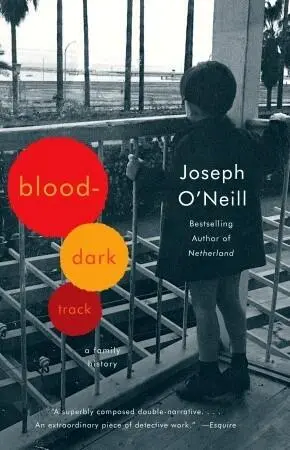
- Название:Blood-Dark Track
- Автор:
- Издательство:Knopf Doubleday Publishing Group
- Жанр:
- Год:2010
- ISBN:978-0-307-74265-0
- Рейтинг книги:4 / 5. Голосов: 1
-
Избранное:Добавить в избранное
- Отзывы:
-
Ваша оценка:
Blood-Dark Track: краткое содержание, описание и аннотация
Предлагаем к чтению аннотацию, описание, краткое содержание или предисловие (зависит от того, что написал сам автор книги «Blood-Dark Track»). Если вы не нашли необходимую информацию о книге — напишите в комментариях, мы постараемся отыскать её.
, a fascinating, personal, and beautifully crafted family history.
Joseph O'Neill's grandfathers-one Turkish, one Irish-were both imprisoned for suspected subversion during the Second World War. The Irish grandfather, a handsome rogue from a family of small farmers, was an active member of the IRA. O'Neill's other grandfather, a debonair hotelier from the tiny and threatened Turkish Christian minority, was interned by the British in Palestine on suspicion of being an Axis spy.
With intellect, compassion, and grace, O'Neill sets the stories of these individuals against the history of the last century's most inhuman events.
Blood-Dark Track — читать онлайн ознакомительный отрывок
Ниже представлен текст книги, разбитый по страницам. Система сохранения места последней прочитанной страницы, позволяет с удобством читать онлайн бесплатно книгу «Blood-Dark Track», без необходимости каждый раз заново искать на чём Вы остановились. Поставьте закладку, и сможете в любой момент перейти на страницу, на которой закончили чтение.
Интервал:
Закладка:
And so, in September 1958, three O’Neill brothers — Brendan, Jim (who had resigned from the IRA in sympathy with Brendan) and Kevin — drove up to Dublin with their uncle Jack Lynch and Brendan’s friend Jim Lane. The boot of the car was filled with weapons retrieved from dumps in West Cork. The plan was to spend the night in Dublin with Tadhg Lynch and the next day drive on to the Six Counties, where Jim and Brendan O’Neill and Jim Lane were to engage the enemy. Kevin, who according to uncle Jim had been ‘roped’ into going along, was to drive the car back to Cork, even though he barely knew how to drive.
Tadhg was not home when the five men reached Dublin, so they stopped in O’Connell Street and had a meal at a pub called the Green Rooster. At midnight they got back into the car and headed back towards Tadhg’s. Driving through Dublin at that time of night was a hazardous business, since the laws against drinking and driving made an exception in favour of persons deemed to be travellers — i.e., persons returning home from their ‘bona fide’, a pub five miles or more from their home — and consequently the roads after closing-time were full of cars weaving their way homeward across the city. The O’Neills were driving along the Ballymun Road when a van suddenly cut across them. There was a smash. Jim and Brendan went through the windscreen, breaking their noses and, in Jim’s case, losing consciousness. The van driver immediately restarted his engine and drove away from the scene. Then guards appeared, asking questions and nosing around the scene of the accident. The Corkmen had no option but to keep calm and answer the questions asked of them and hope that the boot of the car was not examined. Eventually the guards completed their inquiries and set off after the hit-and-run driver. My father quickly removed the weapons from the boot and stowed them under the hedge of a nearby garden.
The police caught up with the driver of the van, Connolly, and brought charges against him. At the trial, a barman gave evidence that Connolly had been drinking at his establishment for many years and customarily drank a few whiskies and five or six pints in a night; Connolly’s counsel accordingly submitted that his client, with such a pedigree and experience as a drinker, could not have been intoxicated on the night in question, during which his consumption of alcohol had not exceeded his regular quota. The submission was accepted by the judge, and the accused was acquitted of driving whilst drunk and convicted of the less serious charge of dangerous driving. My uncles Jim and Brendan, and great-uncle Jack Lynch, who had broken a wrist, received compensation for the injuries they suffered in the crash, though it was not until 1977 that Brendan discovered that in flying head-first through the windscreen he had fractured his neck in four places.
Despite their injuries, Brendan and Jim checked themselves out of hospital on the night of the accident. Jim was too hurt to travel on and spent three days recuperating at Tadhg’s place before returning to Cork by train; Kevin also turned back for Cork. Brendan and Jim Lane, meanwhile, continued north in a hired car. But the car turned out to be defective and would only go in first gear, and the two guerrillas were forced to dump their weapons and return home.
After their exploits became known, the IRA issued a statement disassociating itself from Brendan O’Neill. When my grandfather raised the matter with an IRA man at a republican commemoration, the IRA man, a cigarette dangling from his lip, answered with an insolent air; and the next thing he knew, an open hand had slapped him across the face and knocked his cigarette from his mouth. The hand belonged to my grandmother.
On Christmas Eve of 1958, only three months after the crash in Dublin, Brendan and Jim Lane set off to the North once more, determined to carry out the Belleek ambush the next day. ‘But it was a white Christmas,’ Brendan said, ‘and the action had to be aborted because the snow cracked underfoot like glass and the target would have been alerted to our approach. We walked the seventeen miles back to Kinlough, hoping for another day. That day never came, and we headed back to Cork.’
Brendan and Jim Lane did not give up there, though. They returned to the North the following year, and, with their friend Charlie Ronayne, participated unofficially in the IRA’s Border Campaign. All told, Brendan said, he went up three or four times. Aside from a reference to setting fire to a Territorial Army building in Garrison, Brendan was not inclined to detail the actions his unit had taken. A lot of time was spent subsisting, he said, moving from house to house. When the IRA officially abandoned the Border Campaign in January 1962 (the number of fatal casualties of the campaign — eight IRA men; two civilians; two men from the republican splinter group Saor Uladh; six RUC men — said something about its relatively ineffectual nature), Brendan joined another group and continued his underground activities until 1963. He was involved in securing control of arms that others proposed to give away to Welsh nationalists, and, finally, in a fruitless scheme to capture the newly appointed Unionist Prime Minister of Northern Ireland, Captain Terence O’Neill (no relation).
My father’s flirtation with the armed struggle against the British ended with the disastrous venture with his brothers, an episode that afterwards took shape in his mind as pure comedy. As for Uncle Jim, although he never re-enlisted after his resignation from the IRA in 1958, he remained a republican, and when the violence in the North began he sympathized with the Provisional IRA. He never became involved with the Provos but supported them in parades, commemorations, and collections for prisoners’ dependants. Then something happened that changed his political outlook. Jim — a gentle man who, after retiring from a long career as a quality controller for Ford, drove a van for disabled people — told me his story when I visited him and his wife, my aunt Kitty, at their house in Cork. My uncle, who began by telling me that Kitty’s uncle, Billy Horgan, was shot dead by the Black and Tans, spoke softly and fluently, at dictation speed.
‘In 1984, when I was hospitalized for three days for a minor matter, Jim said, I learned from Kitty that the wife of a neighbour, John Cochrane, was looking for me. John was forty-five and a father of eight; he belonged, I knew, to some republican organization — either the IRA or the INLA. When I came out of hospital on Thursday, Eileen Cochrane (who neither supported nor objected to John’s politics) said John had been missing since Tuesday. She asked whether I could find out if he was away on IRA business. So I tried to help, and was up till 2 a.m. trying to contact people in the movement; but to no avail. The following day, I went to another contact, who put me in touch with another fellow, who put me in touch with the No. 2 of the Cork Brigade. I met the No. 2. I told him we were worried because John Cochrane suffered from epilepsy. He said he’d look into it. “I’ll call you when the Angelus bells stop ringing,” he said. At six o’clock, the phone rang. The voice said, “There’s no match this weekend, and even if there was, the man you’re looking for wouldn’t even be a sub.” I passed this on to Eileen, and then I accompanied her to the Gardai station at Union Quay. We asked whether John Cochrane was being held; they assured me he wasn’t. So we went to the Cork Examiner offices with a photograph of John and took out a missing person’s notice. The next day, at lunchtime, I heard screaming outside the house. It was Eileen, screaming that they’d found a body on the silage heap at Ballincollig; and straightaway we were fairly sure. By this stage, I’d learned that John had been an IRA information officer for two years but that he’d been relieved of his post because of his epilepsy. On Sunday morning, the guards came round to ask whether I’d identify the body at the morgue. John’s father and brother-in-law came with me. They were not allowed into the morgue, where Dr John Horbison, the State pathologist, was still working on the body. I went in alone. There was so much damage to the head that I had to walk out of the mortuary to compose myself. Then I went back in and identified John. He’d been shot through the temple. They had shot him as an informer. I went back to my contacts to throw a few fucks into their faces and tell them what I thought of their organization. They tried to reassure me that they knew what they were doing, but I later found out that it was a fellow called O’Callaghan from the North who was the informant and to cover his tracks he’d fingered John Cochrane. It was a crowd from Belfast that came down to shoot Cochrane. All the while, the OC here continued to insist that Cochrane was the informer.’ Jim paused. His arms were crossed and resting on the table. He said, in the same measured tone he used when reminiscing about his childhood, ‘I heard that on Tuesday John was seen running through a department store, running through coat-racks. They left him on a pile of dung and tyres. And that’s why I think my father’s five years at the Curragh were a waste of time.’
Читать дальшеИнтервал:
Закладка:
Похожие книги на «Blood-Dark Track»
Представляем Вашему вниманию похожие книги на «Blood-Dark Track» списком для выбора. Мы отобрали схожую по названию и смыслу литературу в надежде предоставить читателям больше вариантов отыскать новые, интересные, ещё непрочитанные произведения.


Обсуждение, отзывы о книге «Blood-Dark Track» и просто собственные мнения читателей. Оставьте ваши комментарии, напишите, что Вы думаете о произведении, его смысле или главных героях. Укажите что конкретно понравилось, а что нет, и почему Вы так считаете.