Joseph O'Neill - Blood-Dark Track
Здесь есть возможность читать онлайн «Joseph O'Neill - Blood-Dark Track» — ознакомительный отрывок электронной книги совершенно бесплатно, а после прочтения отрывка купить полную версию. В некоторых случаях можно слушать аудио, скачать через торрент в формате fb2 и присутствует краткое содержание. Год выпуска: 2010, ISBN: 2010, Издательство: Knopf Doubleday Publishing Group, Жанр: Современная проза, на английском языке. Описание произведения, (предисловие) а так же отзывы посетителей доступны на портале библиотеки ЛибКат.
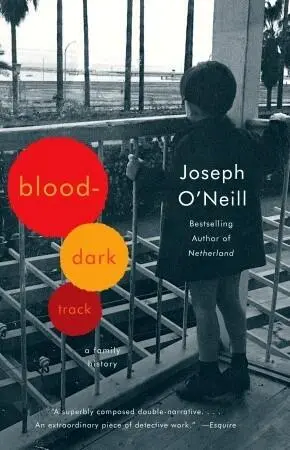
- Название:Blood-Dark Track
- Автор:
- Издательство:Knopf Doubleday Publishing Group
- Жанр:
- Год:2010
- ISBN:978-0-307-74265-0
- Рейтинг книги:4 / 5. Голосов: 1
-
Избранное:Добавить в избранное
- Отзывы:
-
Ваша оценка:
Blood-Dark Track: краткое содержание, описание и аннотация
Предлагаем к чтению аннотацию, описание, краткое содержание или предисловие (зависит от того, что написал сам автор книги «Blood-Dark Track»). Если вы не нашли необходимую информацию о книге — напишите в комментариях, мы постараемся отыскать её.
, a fascinating, personal, and beautifully crafted family history.
Joseph O'Neill's grandfathers-one Turkish, one Irish-were both imprisoned for suspected subversion during the Second World War. The Irish grandfather, a handsome rogue from a family of small farmers, was an active member of the IRA. O'Neill's other grandfather, a debonair hotelier from the tiny and threatened Turkish Christian minority, was interned by the British in Palestine on suspicion of being an Axis spy.
With intellect, compassion, and grace, O'Neill sets the stories of these individuals against the history of the last century's most inhuman events.
Blood-Dark Track — читать онлайн ознакомительный отрывок
Ниже представлен текст книги, разбитый по страницам. Система сохранения места последней прочитанной страницы, позволяет с удобством читать онлайн бесплатно книгу «Blood-Dark Track», без необходимости каждый раз заново искать на чём Вы остановились. Поставьте закладку, и сможете в любой момент перейти на страницу, на которой закончили чтение.
Интервал:
Закладка:
My last appointment in Israel was at Shamelech Boulevard, Tel Aviv, where the office of Yitzhak Shamir was situated. Shamir had agreed to see me after I had written to him briefly explaining my inquiries into my grandfathers and asking whether he knew anything about Desmond Doran, the British agent killed by the ultra right-wing guerrilla organization of which he had been a member, Lehi (also known as the Stern Gang). He faxed me back, granting my request for an interview. He added:
A man by the name of Doran was killed in Tel Aviv during 1946–47, when a British intelligence building was blown up in Tel Aviv, as part of the actions against British offices. He worked in this building.
I was already a little surprised at Shamir’s readiness to meet me — ‘he treats his past like a state secret,’ an Israeli historian had cautioned me — and when I reached his office, on the tenth floor of a modern office block, it struck me how low-key, and apparently lax, was the security for a man who presumably knew something about assassination and blowing up buildings. I was shown directly to his room, which was sparsely decorated with a bust of John F. Kennedy, a large flag of Israel that drooped from a pole, and a shofar in a case. Bright sunlight filtered through the lowered blinds. Shamir, dressed in a grey suit, blue shirt and dark tie, stood up from his chair with a shy hospitable smile, and I immediately saw that this tiny eighty-one-year-old man was in terrific shape — trim, energetic, mobile and, judging by his handshake, strong.
Shamir didn’t have much to say about Doran. ‘Doran personally didn’t interest us,’ he said. ‘The operation was directed against the British intelligence office. It was nothing personal.’ He raised his hands slightly. ‘I wasn’t involved in the operation,’ he said. ‘At that time I was already out of the country, in East Africa.’ In the summer of 1946, Shamir explained, he was deported to Eritrea. He had already, in 1943, escaped from an internment in Palestine, and in Africa, the British felt, the arch-terrorist would be out of harm’s way once and for all. But they were wrong, because Shamir escaped again. Stowed in a compartment in the container of an oil truck, he travelled over a thousand miles across British-controlled Ethiopia to Addis Ababa; and then he traversed another thousand miles to one of the hottest places in the world, the French Overseas Territory of Djibouti. Granted political asylum, he lingered in Djibouti until the French authorities approved his papers and transported him to Toulouse. From Toulouse he went to Paris, and from Paris, via Czechoslovakia, he returned to Palestine.
I was naturally struck, as Shamir told me his story, by the extreme contrast between the prison careers of Yitzhak Shamir and Joseph Dakak — a contrast that corresponded to the extreme differences in their personal qualities and in their relationship to the political world. On the other hand, Yitzhak Shamir did have much in common with another fearless, politically monomaniacal and possibly lethal military internee, Jim O’Neill — a similarity which even extended to membership of guerrilla movements that had friendly dealings with the Nazis.
In its anti-British zeal, Lehi attempted to form an alliance with the Nazis, who were viewed as mere ‘persecutors’. Towards the end of 1940, the leader of Lehi, Joseph Stern, sent an agent, Naftali Lubenchik, to Beirut to meet with von Hentig, a German Foreign Office official based in Vichy Syria. The meeting apparently resulted in Stern’s agreement to active participation in the war on the German side on the condition that the aspirations of the Israeli freedom movement were recognized. After the Allied invasion of Syria in June 1941, Stern decided on a second mission to the Germans; he had in mind the very possible scenario of the Germans invading Egypt, the Turks surrendering to Hitler, and the British as a consequence being forced to evacuate Palestine. But the mission failed. The Lehi agent despatched to meet the Germans in December 1941 was arrested near Aleppo, and a few days later Joseph Stern was killed. Yitzhak Shamir, meanwhile, had joined the Stern Gang at precisely the time when Stern decided to continue his pro-German orientation.
I put to Shamir a remark attributed to him: A man who goes forth to take the life of another whom he does not know must believe one thing and one thing only — that by his act he will change the course of history . Looking straight at me, Shamir said, ‘Active people in the underground are convinced it’s their duty to fight. It is very dangerous, and when people expose themselves to dangerous missions they have to be doubly convinced they are right.’ ‘Was every single one of the killings perpetrated by Lehi justified?’ ‘Without doubt,’ he said unhesitatingly. Shamir’s eyes were fixed on mine in a steady, practically hypnotic gaze. ‘We would not be here without that. We had to fight for the recognition by the world of our right to be masters of this country. Nobody was going to give us recognition. And we got it. When I came here as a twenty-year-old student in 1935, there were 300,000 Jews here — now there are four million. We have made large progress in spite of the fact that the British army, then an imperialist army, was against us, and all our Arab neighbours attacked us. In spite of this, we won the war. It’s a miracle: this is our country!’ He gave me a happy smile. ‘It is written in the Bible that all would come back, and it became true.’
That was quite an accomplishment he credited himself with, I thought — and a quite stunning act of narrative to place himself, in effect, alongside the legendary protagonists of the Bible. I asked him about the Palestinians. ‘There are twenty Arab countries here,’ Shamir said calmly. ‘They are all full of Arabs. They are all part of the Arab movement. If an Arab wants to live in an Arab independent country, he can go there. Jordan was a part of Palestine and now it is an independent Arab country with a Palestinian majority. There is not, therefore, a Palestinian nation without a state. But if they want to live here,’ Shamir said, ‘they have to live in a dignified way. We accept autonomy, and we propose self-government in a federal state, not an independent state. The Palestinians can handle their own rules and rights except for two issues: foreign relations and security matters.’ He leaned forward and gently battered the table with a closed fist. ‘This country belongs to us historically. We have the right to bring in Jewish people.’ Shamir leaned back in his chair. ‘We had a double aim: the independence and assembly of the Jewish people in this country. This has still not been implemented. We only have a third of the people. We have to bring in the other two-thirds’ — here he leaned forward and once more began thumping his desk — ‘otherwise we will not be able to resist. It is quite a mission, to bring everyone back. I believe in it. I believe we will get it done.’
I sensed what a formidable, single-minded adversary this octogenarian would still be. I was also struck by how seductive he was. I had never spent a morning tête-à-tête with a famous former head of state before, one who listened carefully to what I said and agreeably asked for my opinions from time to time. I didn’t feel like mentioning Lehi’s involvement with the Nazis, or pressing him about his strange ideas concerning the rights of Palestinians, whom he had once compared to cockroaches. It occurred to me that the last time a member of my family had been exposed to this brand of charisma was when Joseph Dakak had found himself with Franz von Papen.
‘Do you know the Irish language?’ Shamir asked with a smile. ‘It interests me. We had the same phenomenon with Hebrew, and now, as you see, it’s alive.’ He gave me another cordial smile and asked whether I was myself involved in the Republican movement. I shook my head. ‘You know,’ Shamir said, ‘when you are in the underground, the support of the community is most important.’ He gave me a slow twinkling grin, and it seemed for a moment that he was going to wink. ‘A lot of the British police in those days were Irishmen — and not all were very devoted to their service.’ After a slight pause for effect, he continued: ‘We have been very interested by the IRA. When I was in the underground, I read everything I could about the Irish confrontation with Britain, since Britain, at that time, was our common enemy. I read a lot about 1916, I read about de Valera and Collins. My pseudonym in the underground was Michael, you know, after Michael Collins.’ Shamir said, ‘They fought a long time, without result. All the Irish resistance movement was full of tragedies.’
Читать дальшеИнтервал:
Закладка:
Похожие книги на «Blood-Dark Track»
Представляем Вашему вниманию похожие книги на «Blood-Dark Track» списком для выбора. Мы отобрали схожую по названию и смыслу литературу в надежде предоставить читателям больше вариантов отыскать новые, интересные, ещё непрочитанные произведения.










Обсуждение, отзывы о книге «Blood-Dark Track» и просто собственные мнения читателей. Оставьте ваши комментарии, напишите, что Вы думаете о произведении, его смысле или главных героях. Укажите что конкретно понравилось, а что нет, и почему Вы так считаете.