Joseph O'Neill - Blood-Dark Track
Здесь есть возможность читать онлайн «Joseph O'Neill - Blood-Dark Track» — ознакомительный отрывок электронной книги совершенно бесплатно, а после прочтения отрывка купить полную версию. В некоторых случаях можно слушать аудио, скачать через торрент в формате fb2 и присутствует краткое содержание. Год выпуска: 2010, ISBN: 2010, Издательство: Knopf Doubleday Publishing Group, Жанр: Современная проза, на английском языке. Описание произведения, (предисловие) а так же отзывы посетителей доступны на портале библиотеки ЛибКат.
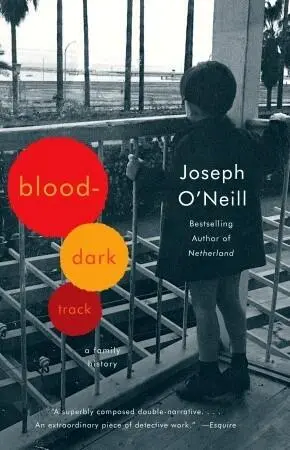
- Название:Blood-Dark Track
- Автор:
- Издательство:Knopf Doubleday Publishing Group
- Жанр:
- Год:2010
- ISBN:978-0-307-74265-0
- Рейтинг книги:4 / 5. Голосов: 1
-
Избранное:Добавить в избранное
- Отзывы:
-
Ваша оценка:
Blood-Dark Track: краткое содержание, описание и аннотация
Предлагаем к чтению аннотацию, описание, краткое содержание или предисловие (зависит от того, что написал сам автор книги «Blood-Dark Track»). Если вы не нашли необходимую информацию о книге — напишите в комментариях, мы постараемся отыскать её.
, a fascinating, personal, and beautifully crafted family history.
Joseph O'Neill's grandfathers-one Turkish, one Irish-were both imprisoned for suspected subversion during the Second World War. The Irish grandfather, a handsome rogue from a family of small farmers, was an active member of the IRA. O'Neill's other grandfather, a debonair hotelier from the tiny and threatened Turkish Christian minority, was interned by the British in Palestine on suspicion of being an Axis spy.
With intellect, compassion, and grace, O'Neill sets the stories of these individuals against the history of the last century's most inhuman events.
Blood-Dark Track — читать онлайн ознакомительный отрывок
Ниже представлен текст книги, разбитый по страницам. Система сохранения места последней прочитанной страницы, позволяет с удобством читать онлайн бесплатно книгу «Blood-Dark Track», без необходимости каждый раз заново искать на чём Вы остановились. Поставьте закладку, и сможете в любой момент перейти на страницу, на которой закончили чтение.
Интервал:
Закладка:
I left the house and drove around Canada Park, looking for a sign of vanished Emuas. Following a trail inside the park, I travelled through an almost dreamlike setting of limestone escarpments, cultivated terraced hillsides, copses, and wild meadows where storks paused in the grass and cows and sheep grazed. During twenty minutes of driving through a landscape apparently untouched since biblical times, no human being appeared other than soldiers of the Israeli army packed into a patrol jeep.
Back in the clamour of Jerusalem the following day, I paid a visit to Haidar Husseini, who, I’d been told, was a member of the famous family of the old Mufti, Haj Amin el-Husseini. I found Mr Husseini in his office at the Lawrence Travel Agency, which was situated on the ground floor of the Lawrence Hotel, on Salah-a-Din Street in East Jerusalem. A distinguished-looking man in his sixties wearing a blazer, a grey-checked cardigan and a purple tie, he was not familiar with the names of Mustapha and Olga Husseini. However, when I mentioned that Mustapha and Olga liked to meet with Arab nationalists at the Modern Hotel, he interrupted me and said, ‘The Modern Hotel? I remember it well. It was on Mamilla Street, and if I remember rightly it was the property of the Islamic waqf; the lease was in the name of Hassan Ahweida. Mamilla in those days was the centre of Arab Jerusalem, a very busy place,’ Mr Husseini said. ‘Near the hotel there used to be a patisserie and a coffee house, and every day there was a card-game next door, at the house of Zeronian, whose children, Jerry and Diana, I knew well. They fled after the occupation in 1948. We all left the area at that time, of course. I was young, fourteen or fifteen years old; my father had been a judge in the High Court of Justice under the British Mandate.’ Haidar Husseini picked up a pen and paper. Prominently displayed behind his chair, I noticed, was a photograph of the travel agent shaking hands with Yasser Arafat. ‘The Modern Hotel would have ceased to operate in 1948, I believe,’ Mr Husseini continued. ‘It was a three-star hotel, in today’s terms. You’ll see it if you go to Mamilla street; it is still standing, but it is old and empty. I think the Israelis intend to knock it down.’ Mr Husseini drew me a map. ‘This is Mamilla, here,’ he said, sketching. ‘And here’ — he made an X — ‘is the building you are looking for.’
I walked back to the New Imperial Hotel and, sitting in its gloomy, chair-infested old saloon, I reread my grandfather’s testimony for any mention of Mamilla Street. There was no such reference, but something else did catch my attention. When my grandfather had been ‘poisoned’ by the oranges he’d eaten, he was taken to see a Dr Dajani, whose surgery was about 100 metres from the Modern Hotel. Dajani: wasn’t that the name of the proprietor of the very hotel I was sitting in? It was a long shot, but I went to see him in his office and asked him if, by chance, he could throw light on the matter. He said unhesitatingly, ‘that doctor would be my uncle, Dr Mahmoud Dajani.’ ‘Did he speak German, or did he study in Germany?’ I asked, remembering my grandfather’s assertions to this effect. ‘He spoke a little German, perhaps,’ Mr Dajani said doubtfully, ‘but he was not educated in Germany. But I am sure my uncle would be your doctor,’ Mr Dajani said conclusively. ‘There would be no other Dr Dajani. He had a large house, now knocked down. He ran a clinic from there. It was down below, on Mamilla Street.’
Mamilla Street was a five-minute walk west and downhill from the New Imperial. It ran east from the junction of King David and Agron streets to Jaffa Road. Completely blocked off from pedestrians and road traffic by metal barricades, Mamilla was a street of ruins. Its western side had been completely razed, leaving nothing but mounds of weedy earth, and only a handful of buildings on its eastern side were standing: crumbling arcades, commercial premises and houses that dated back, I guessed, to the last decades of the Ottoman empire. The Modern Hotel was an elegant stone wreck. Shuttered-up old shops took up the ground floor, and the hotel, running to a width of seven shops, occupied the two storeys above. Immediately behind it was a wasteland, and next door was a fine, square, gutted house — the Zeronian place that Mr Husseini had mentioned? — with tired red tiles still adhering to its rooftop. All that remained of the Modern Hotel’s roof was a disintegrating lattice of timber beams. The arching windows of the hotel were tall and windowless and dark, and empty doorways opened onto the vestiges of balconies. The occupants of the west-facing rooms had no doubt sat on those balconies looking down on the crowded road and pavements below, a spectacle of urban vitality that, peering on tiptoes over the barricade from the street below fifty years after the event, was hard to envisage. My difficulty was more than topographical. Mamilla Street not only fizzled out into a cul-de-sac of barriers and earthworks but also, it seemed, into a historical deadend. For nearly fifty years, the ghostly thoroughfare had borne witness to the territorial and moral convulsions of 1948, when Mamilla, the venue of anti-Jewish riots, became a dangerous no-man’s-land occupied by squatters and overshadowed by Jordanian guns; and 1967, when Jerusalem was ‘reunified’ by Israeli forces and the Mamilla squatters were controversially and forcibly removed to high-rise buildings on the edge of the city. But now a decisive rescripting seemed afoot. I could see that a road-building operation was underway at the bottom of Mamilla Street, and the long, spindly arm of a red crane hovered in the sky, a wire line dropping from its tip like a line of ink from a nib in flow. The line reached down into a body of pale concrete rising just below Mamilla Street, where signs in Hebrew and English announced the construction of a new, truly modern hotel. The plan, I discovered from the Jerusalem Post , was that within two years the Mamilla neighbourhood — a century ago ‘the beating social and commercial heart of Jerusalem’ where ‘Jews and Arabs once cohabited as merchants, shopkeepers and customers’ — would ‘once again brim with stores, hotels, entertainments and sidewalk cafés’. Supermarkets, a park, hotels, underground car-parks and luxury apartments with German kitchens would be built on the sites of old Israeli and Jordanian sniper outposts. It remained to be seen, the Post reported, to what extent the development would, as was hoped, form a bridge between the Arab and Jewish communities. There was no mention of the fate of the building of the Modern Hotel.
On the morning of 12 April 1996, I met Florent Arnaud, whom Yves-Marie Villedieu had advised me to speak to about the home at Emmaus. Monsieur Arnaud worked at the offices of the Pilgrims’ Commission in a building across the road from the New Gate, next to the church of Notre Dame de France. He was a man in his fifties, and in his fonctionnaire ’s blazer and tie and goldrimmed glasses he displayed a Gallic neatness that set him apart from the sartorial jamboree taking place in the street outside. For eighteen years, he explained, he had been the secretary of the commission that had established relations between Israel and the Vatican. ‘Dakak,’ he said, as he began to flick through the pages of the testimony, ‘is a commonplace name — un nom banal . There are plenty of Dakaks in Bethlehem, Muslims, I believe, who mainly work in tourism and often marry foreigners; and are there not Christian Dakaks in Aleppo?’ He read on for a little while, sometimes skipping pages and at other times lingering on paragraphs with eyebrows at a critical arch. I suddenly felt embarrassed for my exposed grandfather. ‘There are certain things about this document that immediately strike me as bizarre,’ Monsieur Arnaud said decisively. ‘Opening an import — export office in late 1941? Applying for a visa to go to Egypt? You’ll excuse me, but that seems to me a little.…’ He pointed a whirling index finger at his temple. Then Arnaud retrieved some typed notes of his own from his desk and, consulting these, began to speak in the manner of somebody giving a lecture. ‘The story of the property of Emmaus-Latrun really begins in the nineteenth century,’ Monsieur Arnaud said. ‘The Crimean War (1856) and the construction of the Suez Canal (1860) led to a great influx of westerners to this area. Among these was the Princesse La Tour d’Auvergne, who lies buried in the Mount of Olives. She summoned a French architect, Bernard Guillemot, from France. It was Guillemot who, in 1885, carried out the dig which resulted in the discovery of the ruins of the Old Church which you now see at the entrance to the property. At that time, the land, owned by the Carmelites of Bethlehem, was marshy and, aside from a small building occupied by a hermit, deserted.’ Monsieur Arnaud cleared his throat. ‘The Pères de Betharran —’ Monsieur Arnaud said, ‘Betharran being near Lourdes — established themselves in Bethlehem as a consequence of the separation of church and state in France. In 1932 or 1933, they built the house at Emmaus as a holiday retreat. Perhaps it is not quite accurate, therefore, to speak of it as a monastery. At the back of the mind of those building the house was the thought that a carmel might also be built in the grounds; but nothing came of that, apart from a door and archway which you will find in the perimeter walls. I have done a little research of my own,’ Monsieur Arnaud said, ‘into the somewhat neglected architects of the church buildings in the Holy Land. The house at Emmaus was designed by a very fine architect, Favier, whose other buildings include the French consulate in Jerusalem and the carmel of Haifa. The house at Emmaus has several notable features — including, as you will have seen, the magnificent silverwork on the door, made possible by a gift from the Belgian court. Unfortunately, the building is poorly constructed. The land there is at a sharp incline and the earth is unstable and slippery. As a consequence, the house is a danseuse . The cellars are now dangerous and have had to be closed, and all of the dividing walls are cracked or broken. Indeed, it is perhaps not an exaggeration to say that the building is in danger of falling down. In 1940,’ Arnaud said, ‘the Pères de Betharran were deported to France or to Italy and the English requisitioned the building. They used it not as a prison camp but, to be exact, as a concentration camp; and it must have been the place where your grandfather was held. After the war ended,’ Monsieur Arnaud said, ‘the Pères did not return. So you see, the drama of the house at Emmaus is perhaps this: that it has never fulfilled its vocation.’
Читать дальшеИнтервал:
Закладка:
Похожие книги на «Blood-Dark Track»
Представляем Вашему вниманию похожие книги на «Blood-Dark Track» списком для выбора. Мы отобрали схожую по названию и смыслу литературу в надежде предоставить читателям больше вариантов отыскать новые, интересные, ещё непрочитанные произведения.






Обсуждение, отзывы о книге «Blood-Dark Track» и просто собственные мнения читателей. Оставьте ваши комментарии, напишите, что Вы думаете о произведении, его смысле или главных героях. Укажите что конкретно понравилось, а что нет, и почему Вы так считаете.