Joseph O'Neill - Blood-Dark Track
Здесь есть возможность читать онлайн «Joseph O'Neill - Blood-Dark Track» — ознакомительный отрывок электронной книги совершенно бесплатно, а после прочтения отрывка купить полную версию. В некоторых случаях можно слушать аудио, скачать через торрент в формате fb2 и присутствует краткое содержание. Год выпуска: 2010, ISBN: 2010, Издательство: Knopf Doubleday Publishing Group, Жанр: Современная проза, на английском языке. Описание произведения, (предисловие) а так же отзывы посетителей доступны на портале библиотеки ЛибКат.
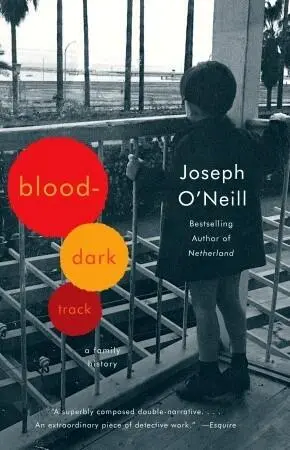
- Название:Blood-Dark Track
- Автор:
- Издательство:Knopf Doubleday Publishing Group
- Жанр:
- Год:2010
- ISBN:978-0-307-74265-0
- Рейтинг книги:4 / 5. Голосов: 1
-
Избранное:Добавить в избранное
- Отзывы:
-
Ваша оценка:
Blood-Dark Track: краткое содержание, описание и аннотация
Предлагаем к чтению аннотацию, описание, краткое содержание или предисловие (зависит от того, что написал сам автор книги «Blood-Dark Track»). Если вы не нашли необходимую информацию о книге — напишите в комментариях, мы постараемся отыскать её.
, a fascinating, personal, and beautifully crafted family history.
Joseph O'Neill's grandfathers-one Turkish, one Irish-were both imprisoned for suspected subversion during the Second World War. The Irish grandfather, a handsome rogue from a family of small farmers, was an active member of the IRA. O'Neill's other grandfather, a debonair hotelier from the tiny and threatened Turkish Christian minority, was interned by the British in Palestine on suspicion of being an Axis spy.
With intellect, compassion, and grace, O'Neill sets the stories of these individuals against the history of the last century's most inhuman events.
Blood-Dark Track — читать онлайн ознакомительный отрывок
Ниже представлен текст книги, разбитый по страницам. Система сохранения места последней прочитанной страницы, позволяет с удобством читать онлайн бесплатно книгу «Blood-Dark Track», без необходимости каждый раз заново искать на чём Вы остановились. Поставьте закладку, и сможете в любой момент перейти на страницу, на которой закончили чтение.
Интервал:
Закладка:
Bon voyage and good luck.
Best wishes
G. Dakak
In May 1945, the European war ended. Still Georgette waited for her husband. Four months later, she was in the mountains, in Gözne, when she received a letter informing her of Joseph’s release. She was so absorbed by the letter that she didn’t notice a creature slithering in the vine overhead, and didn’t even flinch when the serpent suddenly fell and landed at her feet. My grandmother enjoyed telling her daughters this story, with its connotation of Eden regained.
The northern extremities of the Red Sea consist of two fingers of water that point, respectively, at the Mediterranean Sea and the Israel — Jordan border; and wedged between them is the triangle of the Sinai desert. The easternmost finger is the Gulf of Aqaba and at its very tip is the Israeli holiday destination of Eilat, a conglomeration of hotels, purpose-built lagoons and concrete apartment blocks generated by the proximity of coral reefs and submarine wildlife. I flew there from London on 7 April 1996, Easter Sunday. The British capital was passing through a tense, unpleasant phase, and I was glad to be leaving. A few days before, special stop and search laws, rushed through parliament that same week, had come into force: it was the eightieth anniversary of the Easter Rising, and intelligence reports suggested that the IRA planned to mark the occasion with violence. Londoners feared the worst. The IRA ceasefire had ended on 10 February with an explosion at South Quay, in the Docklands, in which hundreds had been injured and two killed. The city was subjected to further disruption and violence. Walking home one evening, I found that Soho was blocked off to traffic and that an ‘explosive device’ was being defused in a telephone booth I passed every morning on my way into work. Then, on Sunday 18 February, the 171 bus (which I used to take daily when I lived in south London) blew up at the Aldwych near Bush House, again at a place I walked by most working days. The explosion injured six and killed the carrier of the bomb, Eddie O’Brien, a twenty-one-year-old from Gorey, Co. Wexford. For a few days after, the spectacular carcass of the bus remained on the road, a fantastically mangled mass of strawberry metal coated with flakes of fine snow.
But the place I was flying into was far more dangerous than the one I was leaving. In nine days in February and March, Hamas suicide bombers had killed sixty-one people in Jerusalem and Tel Aviv. These events triggered — as they were probably designed to — measures from the Israeli government that were as retaliatory as they were defensive, most notably the imposition of very strict restrictions on the movement of Arabs out of the West Bank and Gaza. With many thousands separated from their families and jobs, the military and political crisis grew ever more bitter, and it seemed that further bomb attacks were imminent.
But there was no sign of trouble as I drove out of Eilat and across the stony heights and crumbling sandy hills of the Negev desert — only of ostriches, donkeys, camels and hovering hawks. I drove through Sodom and then, passing Masada, along the western shore of the Salt Sea into Judea. When the Salt Sea came to an end I turned westward; for some distance now (my map told me) I had been travelling in the Autonomous Territories. The desert was now freckled with bushes. Grazing lambs and nomad encampments appeared on the hills, and the roadside bloomed with poppies and shrubs with mustard- and lavender-coloured flowers. I passed through a couple of Israeli army checkpoints, and then, abruptly, I was in Jerusalem.
Jerusalem was more beautiful than I had ever imagined: a place of elevations and drops and, at its centre, where the walled Old City rose out of the green, bucolic depths of sheep-strewn valleys, extraordinary juxtapositions of pastoral and urban scenes. There was something else that I hadn’t anticipated. Because of planning regulations introduced by the British and evidently still in force seventy-five years later, buildings in the central districts of the city were constructed, or at least clad, in limestone, and as a consequence Jerusalem still presented to the world the pale stone exterior that used until a few decades ago to be so typical of the cities of the Levant. Ambling in tranquil, sunlit nineteenth-century districts in the New and Old Cities, I was overcome by visual and atmospheric echoes of old Mersin. It felt faintly absurd to apprehend the city in such humble terms, but as I walked amongst the dramatic throngs in the Old City — outlandishly outfitted monks and clerics, minuscule and bonneted old Greek women dressed entirely in black, East African pilgrims in long robes and turbans — and noted with amazement that the Arab, Christian, Jewish and Armenian quarters actually contained ancient populations of Arabs, Christians, Jews and Armenians (each attired in distinctive robes and hats and shawls), it occurred to me that this was precisely the vivid commingling of races and nationalities and religions and languages that had so powerfully struck travellers to nineteenth-century Mersin. The link between this city and the little Turkish port of my childhood became clear: they were both profoundly Ottoman places. The gulf between modern, uniform Turkey and the culturally variegated Levant in which my grandfather grew up revealed itself. To trace his fate, I was beginning to realize, I needed to look deeper into that Ottoman world — in which, after all, Joseph Dakak had passed the first third of his life.
I stayed in the New Imperial Hotel, an attractive edifice in the Parisian style situated just by Jaffa Gate, in the Christian quarter of the Old City. Built in 1889 for Greek Orthodox pilgrims, the hotel was still the base for flocks of Greek women arriving for the Greek Orthodox Easter, who every morning and evening cawed and rustled in the hotel’s cavernous salon. There were remnants of the ‘Deli’ that used to operate here, and a sign persisted in proclaiming the availability of non-existent BEVERAGES! and SHAKES and DELI-SANDWICHES. On the balcony, lantern spheres advertised the croissants, brioches, cakes and ice-creams of yesteryear. The hotel motto — in English, like the other old signs — was painted on the wall of the ground floor entranceway: Yesterday is already a dream and tomorrow is only a vision, but today well lived, makes every yesterday a dream of happiness and every tomorrow a vision of hope .
My main objective in coming to Israel was to track down, first, the Modern Hotel in Jerusalem, and second, the monastery at ‘Emuas’ where my grandfather had been locked up for the best part of three years. With respect to the former, I held out little hope: investigations I’d made from England had made it pretty clear that the Modern Hotel was no longer in business and had, as far as one could tell, entirely disappeared. The owner of the New Imperial Hotel, a courteous man in his fifties named Mr Dajani, had no knowledge of the Modern Hotel, and neither had the people I spoke to at the Ron Hotel or the Golden Jerusalem Hotel or the Kaplan Hotel or the American Colony Hotel or the King David Hotel.
Meanwhile, I ran into an unexpected difficulty regarding the monastery: there was no sign, on the detailed maps I consulted, of a village called Emuas or Emwas on the road between Jerusalem and Ramle, and all that the young Jewish woman I spoke to at the Tourist Information Office could suggest was that I go to Damascus Gate. ‘Ask the Arabs there,’ she said; ‘they may be able to help you.’ Although puzzled about why she would think that random Arabs might know more than a tourist information expert, I went to Damascus Gate, a crowded, rowdy place where minibuses to Ramallah and other Palestinian destinations gathered. Fairly soon, a scrum of experts had gathered around my road map; but none could point to the place called Emuas. ‘Go here,’ one man said; ‘go there,’ another said, indicating different points in the map. Confused, I thanked my would-be helpers and returned to my car to mull over the conflicting advice I’d received. Just as I was opening the door of the car, a man who had not previously spoken urgently approached me and said with conviction, ‘Go to Latrun; Emuas [he pronounced it Amwas] is there’; and having no better lead, I followed his advice.
Читать дальшеИнтервал:
Закладка:
Похожие книги на «Blood-Dark Track»
Представляем Вашему вниманию похожие книги на «Blood-Dark Track» списком для выбора. Мы отобрали схожую по названию и смыслу литературу в надежде предоставить читателям больше вариантов отыскать новые, интересные, ещё непрочитанные произведения.



Обсуждение, отзывы о книге «Blood-Dark Track» и просто собственные мнения читателей. Оставьте ваши комментарии, напишите, что Вы думаете о произведении, его смысле или главных героях. Укажите что конкретно понравилось, а что нет, и почему Вы так считаете.