Joseph O'Neill - Blood-Dark Track
Здесь есть возможность читать онлайн «Joseph O'Neill - Blood-Dark Track» — ознакомительный отрывок электронной книги совершенно бесплатно, а после прочтения отрывка купить полную версию. В некоторых случаях можно слушать аудио, скачать через торрент в формате fb2 и присутствует краткое содержание. Год выпуска: 2010, ISBN: 2010, Издательство: Knopf Doubleday Publishing Group, Жанр: Современная проза, на английском языке. Описание произведения, (предисловие) а так же отзывы посетителей доступны на портале библиотеки ЛибКат.
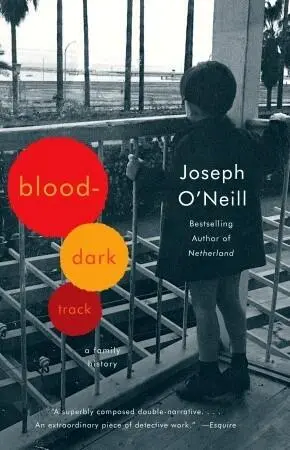
- Название:Blood-Dark Track
- Автор:
- Издательство:Knopf Doubleday Publishing Group
- Жанр:
- Год:2010
- ISBN:978-0-307-74265-0
- Рейтинг книги:4 / 5. Голосов: 1
-
Избранное:Добавить в избранное
- Отзывы:
-
Ваша оценка:
Blood-Dark Track: краткое содержание, описание и аннотация
Предлагаем к чтению аннотацию, описание, краткое содержание или предисловие (зависит от того, что написал сам автор книги «Blood-Dark Track»). Если вы не нашли необходимую информацию о книге — напишите в комментариях, мы постараемся отыскать её.
, a fascinating, personal, and beautifully crafted family history.
Joseph O'Neill's grandfathers-one Turkish, one Irish-were both imprisoned for suspected subversion during the Second World War. The Irish grandfather, a handsome rogue from a family of small farmers, was an active member of the IRA. O'Neill's other grandfather, a debonair hotelier from the tiny and threatened Turkish Christian minority, was interned by the British in Palestine on suspicion of being an Axis spy.
With intellect, compassion, and grace, O'Neill sets the stories of these individuals against the history of the last century's most inhuman events.
Blood-Dark Track — читать онлайн ознакомительный отрывок
Ниже представлен текст книги, разбитый по страницам. Система сохранения места последней прочитанной страницы, позволяет с удобством читать онлайн бесплатно книгу «Blood-Dark Track», без необходимости каждый раз заново искать на чём Вы остановились. Поставьте закладку, и сможете в любой момент перейти на страницу, на которой закончили чтение.
Интервал:
Закладка:
It was a faultless, warm day. The drive to Latrun was on the Tel Aviv highway, a poppy-lined road that ran through a series of gulches and ravines, their sun-bleached rockfaces decked out with cypress groves, clusters of pines, and acacia bushes with flowers the colour of New York taxis. Eventually this rocky landscape suddenly gave way to a vast plain of chequered farmland. LATRUN, a signboard announced. I swung off the highway. Before me, on a raised plateau, stood an unpleasant block-like building with two watchtowers and fortified perimeters. I decided to drive over.
I stopped in the car-park of the military base. There were many Jewish families around, unpacking picnics and trooping through an entrance in the fifteen-foot-high stone wall that surrounded the base; above the wall, a row of tanks loomed and flags of Israel hung from thirty flagpoles. ‘Is there a place here called Emuas?’ I asked an official-looking middle-aged woman standing at the entrance with a walkie-talkie. The woman shook her head. ‘There is somewhere called Emmaus , I think, over there, maybe’ — she pointed back across the highway — ‘but not Emuas . Emuas I don’t know about. This place, Latrun,’ she said, ‘was the fort and detention centre of the British in the Mandate days. Prisoners of war — Germans, Italians — and Zionist guerillas were held captive here during the Second World War. Nowadays, it is a tank museum and memorial to the valour of the Armoured Corps Division of the Israeli Defence Forces. Desperate and repeated efforts were made to capture Latrun from the Arabs in 1948,’ my guide said, ‘but these failed, and many men lost their lives. Over there’ (the woman gave an indication with her head) ‘is a wall where you will see the names of those who died. In the museum is a computer where family and friends have typed in their memories of the dead soldiers. Not all of the dead have been remembered,’ the woman said, adjusting her glasses. ‘Many of the forces that attacked Latrun were fresh from Europe and had not even been officially registered anywhere before they came here and were killed.’ The woman’s speech was blunt and grooved, and she had plainly made this talk before. ‘It was not until the Six Day War in 1967,’ she said, ‘that Latrun, and the Latrun corridor to Jerusalem, fell to Jewish troops. Latrun was a strategically crucial spot, since it controlled the main supply route into West Jerusalem.’ She pointed back at the highway I had driven down, where the road entered a narrow pass between two wooded hills. Then I noticed on the southern hill, gleaming amongst trees, a spectacular brick building with over forty west-facing windows, a red roof, and a towering chapel: a monastery, surely.
I thanked the woman for her help and went quickly back to my car. In a state of some excitement, I drove into the monastery’s grounds and went slowly uphill through beautifully tended gardens dense with trees and vivid flowers. Then shadowy cloisters and huge columns appeared; this was a grand, almost palatial place. In the reception area, I found a young man, a French speaker, selling wine and honey produced by the Trappist monks who, he told me, had inhabited the monastery since its foundation in the 1890s. He flatly denied that the place had been a British camp during the war. ‘Never. Impossible.’ I was baffled. So where was the village of Emuas, then? ‘On the other side of the highway,’ he said, confirming what the woman at Fort Latrun had said. He gave me a careful look. ‘To be accurate, it’s not a village any more. It is a park. I think that the Israelis destroyed the village in 1967.’ ‘Is there nothing left, nothing at all?’ ‘There’s an ancient basilica there,’ the young man told me, ‘and, I think, a house.’
I got back into the car and, a couple of minutes later, crossed the highway. After coming to the park mentioned by the receptionist at Latrun Monastery — Canada Park, built and planted thanks to the donations of Canadian Jews — I doubled back on myself. Not far from the highway, I noticed for the first time a gateway to a property. There was a sign — La Communité des Béatétudes, Emmaus Nicopolis — and, beyond an open gate, an ancient ruin of some sort, in which a priest and a group of tourists bowed their heads in prayer. That ruin was, presumably, the basilica that the man at the Trappist monastery had mentioned. Then, as I got out of the car, I caught a glimpse of something further up on the hill: an elegant building of white stone, surrounded by cypress trees. I walked past the tourists up the steep and curved gravel path that led to the yard at the front of the building, a two-storey block flanked by two protruding towers. On the ground floor were eight arched and barred windows and a huge front door. On the first floor, a handsome terrace, fronted by a series of columns and arches, was recessed into the building; circular, porthole-like windows gave on to the terrace from the central block. Crenellations ran along the top of the frontage, giving the house — which was in immaculate condition — an austere, embattled look that spoke of Crusades and infidels. I noticed that the stones surrounding the well in the front yard were arranged into the shape of a cross.
I climbed the steps to the front door, a grand affair with enormous silver hinges. I rang the bell hanging by the door. A man in his forties — he introduced himself as Yves-Marie Villedieu — appeared, and I briefly explained the purpose of my visit. Monsieur Villedieu said that the building might indeed have been used by the British during the war but that he himself knew little of its history. In that regard, I ought to speak to Monsieur Florent Arnaud, he said, scribbling a Jerusalem address on a piece of paper. Nowadays, he explained, the building housed a religious community consisting of two French families (whose children attended the French school in Jerusalem), some monks and some nuns. ‘Here, let me show you,’ he said, and he led me to a modern chapel that was incorporated into the west wing of the house, a simple, elegant space with new stained-glass windows. Then I followed Monsieur Villedieu out of the chapel and into the cool of the house’s spacious entrance hall. Monsieur Villedieu said that I could not see the private areas of the building but was welcome to go up to the terrace. We went up the stone staircase to the first floor. Overhead, light flooded through the high porthole windows; underfoot, black and white tiles gleamed. I could have been in a clinic. I came to the terrace, maybe eighty feet lengthways and ten feet deep, and rested my hands against the thick ledge. Below was the gravel yard where I had stood minutes before, and, in the distance, clearly visible between the tops of palm trees, cypresses and fruit trees that grew about the house, Fort Latrun, its shrunken tanks squatting like cockroaches. The Fort was just like its counterpart at the Curragh: the same strategic location and coldly functional set-up, the same phantasmal presence of the British and their internment camps.
The grounds beyond the immediate vicinity of the house consisted of a few acres of thickly overgrown meadowland that ran downhill to a boundary of stone walls. If there had been a prison here during the war, all of this vegetation would have been cut down, which meant that the Latrun detention camps, with their floodlights, barbed wire and trudging columns of prisoners, would have been a constant and oppressive spectacle. I tried to blot out the birdsong, the smell of wildflowers, the all-enfolding serenity. I tried to imagine another scene: the bewildered figure of my grandfather, unaccustomed to manual labour, toiling away on the hillside in the heat, in the rain. I tried to imagine him, with his troublesome heart, struggling up and down the stairs I had just climbed. It was not easy. The flowering greenery, the odours and sounds of nature, the cool, all had a tranquillizing effect; and, of course, I wasn’t even sure that my grandfather had been here at all.
Читать дальшеИнтервал:
Закладка:
Похожие книги на «Blood-Dark Track»
Представляем Вашему вниманию похожие книги на «Blood-Dark Track» списком для выбора. Мы отобрали схожую по названию и смыслу литературу в надежде предоставить читателям больше вариантов отыскать новые, интересные, ещё непрочитанные произведения.



Обсуждение, отзывы о книге «Blood-Dark Track» и просто собственные мнения читателей. Оставьте ваши комментарии, напишите, что Вы думаете о произведении, его смысле или главных героях. Укажите что конкретно понравилось, а что нет, и почему Вы так считаете.