Joseph O'Neill - Blood-Dark Track
Здесь есть возможность читать онлайн «Joseph O'Neill - Blood-Dark Track» — ознакомительный отрывок электронной книги совершенно бесплатно, а после прочтения отрывка купить полную версию. В некоторых случаях можно слушать аудио, скачать через торрент в формате fb2 и присутствует краткое содержание. Год выпуска: 2010, ISBN: 2010, Издательство: Knopf Doubleday Publishing Group, Жанр: Современная проза, на английском языке. Описание произведения, (предисловие) а так же отзывы посетителей доступны на портале библиотеки ЛибКат.
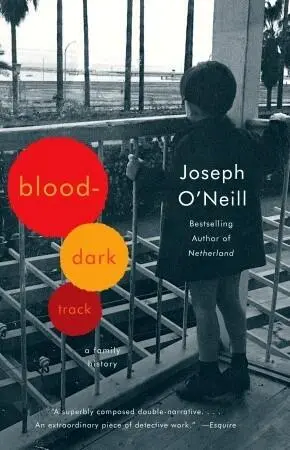
- Название:Blood-Dark Track
- Автор:
- Издательство:Knopf Doubleday Publishing Group
- Жанр:
- Год:2010
- ISBN:978-0-307-74265-0
- Рейтинг книги:4 / 5. Голосов: 1
-
Избранное:Добавить в избранное
- Отзывы:
-
Ваша оценка:
Blood-Dark Track: краткое содержание, описание и аннотация
Предлагаем к чтению аннотацию, описание, краткое содержание или предисловие (зависит от того, что написал сам автор книги «Blood-Dark Track»). Если вы не нашли необходимую информацию о книге — напишите в комментариях, мы постараемся отыскать её.
, a fascinating, personal, and beautifully crafted family history.
Joseph O'Neill's grandfathers-one Turkish, one Irish-were both imprisoned for suspected subversion during the Second World War. The Irish grandfather, a handsome rogue from a family of small farmers, was an active member of the IRA. O'Neill's other grandfather, a debonair hotelier from the tiny and threatened Turkish Christian minority, was interned by the British in Palestine on suspicion of being an Axis spy.
With intellect, compassion, and grace, O'Neill sets the stories of these individuals against the history of the last century's most inhuman events.
Blood-Dark Track — читать онлайн ознакомительный отрывок
Ниже представлен текст книги, разбитый по страницам. Система сохранения места последней прочитанной страницы, позволяет с удобством читать онлайн бесплатно книгу «Blood-Dark Track», без необходимости каждый раз заново искать на чём Вы остановились. Поставьте закладку, и сможете в любой момент перейти на страницу, на которой закончили чтение.
Интервал:
Закладка:
It came as no surprise, then, to learn that the military attaché confessed to Sterndale Bennett that he did not know whether the charges described by Süreyya were in fact correct. The attaché robustly suggested that perhaps the solution lay in deporting Gandour as soon as possible. Helm regretfully responded, ‘I should be afraid that removal to Africa is no longer a cure by itself.’ It was decided, in the end, to ‘choke off’ Gandour’s lawyer. When Süreyya tried to see the British ambassador on 3 November 1942, she was informed that His Excellency was very busy; and on 7 November 1942, the first secretary in Ankara, D.L. Busk, wrote to Colonel Thomson in Istanbul instructing him to ‘continue the choking-off process at every opportunity’.
Meanwhile, the problem of Norman Mayers had returned. The tenacious consul reiterated his ‘conviction’ that Gandour was not guilty of espionage and commented that, although Süreyya blamed Doran entirely for instigating the case against Gandour,
she should lay the blame, unless I am very much mistaken, on other quarters nearer home. It leaves me with my old distaste and sense of shame, for it points to local jealousies and suspicions as the source and origin of Gandour’s troubles.
Quarters nearer home? Jealous locals? Mayers never made explicit what he was hinting at. Instead he made a practical proposal: a reconsideration of the evidence by an independent ‘British legal personality’.
The counsellor, Helm (who noted that ‘Mr Mayers has for years had a bee in his bonnet over such cases’), replied as follows:
I can say at once that, in normal times, we should have complete sympathy with the case which you put up. These times are, however, anything but normal and, whether we like it or not, we have to face the fact that principles which are perfectly good in peace-time have to be scrapped or weakened under the exigencies of war. This applies particularly in matters affecting security and I am sure you will agree that under this head no avoidable risks can or should be run.
This does not mean that I am making any excuses for the handling of the Nazim Gandour case. For perfectly good reasons security is confined to special people and in the case of Gandour we are completely satisfied that this man is by no means as innocent as your letter suggests. Moreover, and also for very good reasons, it is neither practicable nor desirable in matters of this kind, under war conditions, to have the whole story brought out.
Against this background I would just like to emphasize once more that the case against Gandour is not based on information derived solely, or even principally, from Turkey.… If Mlle. Süreyya should return to Mersin and try to discuss the Gandour case with you, we must ask you to take the line that, while you can listen to anything she has to say, you are precluded from discussing it as it is being handled by other authorities.
There, it seemed, the matter effectively came to end — or, perhaps, not. The Gandour file at the Public Records Office contained two blank documents consisting of one page and two pages respectively. They were marked ‘closed until 2018’.
The Nazim Gandour papers made no mention of Joseph Dakak. But they clarified that Gandour was (contrary to my grandfather’s fearful belief) an authentic prisoner and not a British stooge, and also that Gandour had correctly maintained to Joseph that Desmond Doran was instrumental in their arrest and internment. More generally, the Gandour affair undermined any notion that the fact of internment was some kind of indication of the existence of good grounds for internment; because the closer one looked into the matter, the more apparent it became that the smoke surrounding Gandour was traceable not to inculpatory fire but to the fumes produced by the wilful confusions of the attachés and the secretaries and the lieutenant-colonels. In the end there was little doubt that the treatment of Nazim Gandour was, applying normal notions of justice, almost comically unfair. He was not charged with, let alone convicted of, any offence. He was denied access to a lawyer. He was detained indefinitely, by security forces accountable to no one, on the grounds of mere suspicion. He was not properly, if at all, informed of that which he was suspected of having done; and — most bizarrely of all — the suspectors themselves were unsure about what specific wrongs they suspected Gandour of: after all the enquiries and memoranda and Secret letters and consultations and relayed messages, not one of these bureaucratic Chinese whisperers was able to grasp or spell out precisely what the case against Nazim Gandour was. Then again, there was never a case against Gandour as such. He was not the subject of a juridical process. On the contrary: his fate — from his arrest to his eventual release — was in the hands of persons with no real interest in (as Norman Mayers put it) ‘the furtherance of justice’; and Joseph Dakak, it could be assumed, was subject to the same regime.
But there was, it had to be acknowledged, a limit to the criticism that could be levelled against the British authorities. It was true that, once Gandour’s situation was brought to their attention, they acted obtusely and without any regard to the well-being of the ‘Levantine trader’. Against that, however, they were fighting a war — a just war, it might safely be said — and, as is well known, the efficacy of war depends precisely on the massive and systematic infliction (and endurance) of undeserved personal suffering. In such circumstances, the moral sense may only with difficulty be attuned to the lot of any particular individual, which can seem of minuscule significance — particularly if the lot in question is that of wrongful internment, which is not the worst fate to befall a man in times of war.
But this kind of macro-rationalization was unlikely to help or even occur to the wronged individual. Joseph Dakak, certainly, did not regard his situation with philosophical resignation. He experienced his captivity as an unmitigated physical and mental catastrophe. My grandfather was terrified and angry and bemused and incredulous and shocked by what was happening to him. He could not relativize his situation, or go with its flow, or ascribe to it a rational or even, as appeared from the opening words of his first (and only surviving) prison letter home, an earthly cause. The letter — which Amy found and copied to me from Geneva — was written in French and addressed to Ma Georgette chérie, mes petits amours :
The Lord has wished to submit me to the most terrible ordeal to which a human being could be submitted — may His will be done.
My dear Georgette, I received your letter of 15th September in which you express your fears concerning my health. Alas, even the strongest will and the most robust constitution would be shaken by the mental and physical suffering I have endured these past six months.
To have not done a thing, to have a clear conscience and yet to be in the state I am in, that is very hard.
How many times, when I have awakened in the morning, have I asked myself in a half-sleep if I was not dreaming, but alas, hard reality was not slow in affirming itself.
I have wept so much, thinking of you and of the little darlings, that my tears have run dry. Me, to whom their cooing and caresses were a whole world.
Our consul-general has brought me the two flannels, your letter, money. He came to see me and was very kind to me, I did not know how to thank him.
My dear Georgette, don’t weep or fret, what will be will be. Maybe we shall meet again one day, if God permits and adversity is less cruel.
Kiss my little angels and remind Lina not to forget me in her bedtime prayers.
Thank you for all that you are doing on my behalf, and pray for your Joseph, who loves you all and does nothing but think of you, at home in Mersin, day and night.
Читать дальшеИнтервал:
Закладка:
Похожие книги на «Blood-Dark Track»
Представляем Вашему вниманию похожие книги на «Blood-Dark Track» списком для выбора. Мы отобрали схожую по названию и смыслу литературу в надежде предоставить читателям больше вариантов отыскать новые, интересные, ещё непрочитанные произведения.











Обсуждение, отзывы о книге «Blood-Dark Track» и просто собственные мнения читателей. Оставьте ваши комментарии, напишите, что Вы думаете о произведении, его смысле или главных героях. Укажите что конкретно понравилось, а что нет, и почему Вы так считаете.