Joseph O'Neill - Blood-Dark Track
Здесь есть возможность читать онлайн «Joseph O'Neill - Blood-Dark Track» — ознакомительный отрывок электронной книги совершенно бесплатно, а после прочтения отрывка купить полную версию. В некоторых случаях можно слушать аудио, скачать через торрент в формате fb2 и присутствует краткое содержание. Год выпуска: 2010, ISBN: 2010, Издательство: Knopf Doubleday Publishing Group, Жанр: Современная проза, на английском языке. Описание произведения, (предисловие) а так же отзывы посетителей доступны на портале библиотеки ЛибКат.
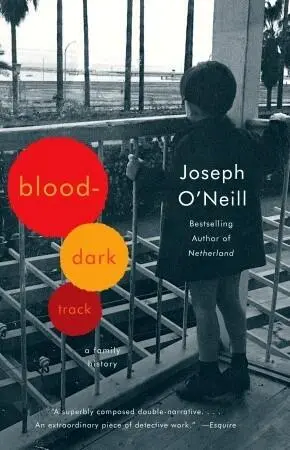
- Название:Blood-Dark Track
- Автор:
- Издательство:Knopf Doubleday Publishing Group
- Жанр:
- Год:2010
- ISBN:978-0-307-74265-0
- Рейтинг книги:4 / 5. Голосов: 1
-
Избранное:Добавить в избранное
- Отзывы:
-
Ваша оценка:
Blood-Dark Track: краткое содержание, описание и аннотация
Предлагаем к чтению аннотацию, описание, краткое содержание или предисловие (зависит от того, что написал сам автор книги «Blood-Dark Track»). Если вы не нашли необходимую информацию о книге — напишите в комментариях, мы постараемся отыскать её.
, a fascinating, personal, and beautifully crafted family history.
Joseph O'Neill's grandfathers-one Turkish, one Irish-were both imprisoned for suspected subversion during the Second World War. The Irish grandfather, a handsome rogue from a family of small farmers, was an active member of the IRA. O'Neill's other grandfather, a debonair hotelier from the tiny and threatened Turkish Christian minority, was interned by the British in Palestine on suspicion of being an Axis spy.
With intellect, compassion, and grace, O'Neill sets the stories of these individuals against the history of the last century's most inhuman events.
Blood-Dark Track — читать онлайн ознакомительный отрывок
Ниже представлен текст книги, разбитый по страницам. Система сохранения места последней прочитанной страницы, позволяет с удобством читать онлайн бесплатно книгу «Blood-Dark Track», без необходимости каждый раз заново искать на чём Вы остановились. Поставьте закладку, и сможете в любой момент перейти на страницу, на которой закончили чтение.
Интервал:
Закладка:
Looking back from the vantage-point of a Turkey that was at least 99 per cent Muslim, the world evoked by Eliot seemed scarcely credible. But the official Ottoman data bore it out. In 1886, for example, Istanbul’s Muslim population (itself by no means exclusively Turkish) stood at 385,000, whereas the combined population of Greeks (153,000), Armenians (150,000), ‘foreigners’ (129,000), Jews (22,000) and miscellaneous Christians and Bulgars exceeded 460,000.
Eliot’s cheerful celebration of this ethnic and religious plurality was exceptional. Until the mid-nineteenth century, a Levantine meant a European national resident in the Levant: Arthur Maltass and William Rickards fell into this category. The term then acquired a broader and pejorative sense, connoting a person — usually a Greek, but he might equally be an Armenian or an Eastern Christian or any half- or pseudo-European generally — who formed part of the transnational commercial scum that floated on the clear seas of pure Turks and Arabs. The Levantine was typically an unwholesome, repellent type — Joe Cairo in The Maltese Falcon , Mr Eugenides in ‘The Waste Land’ — with a malign, tapeworm-like effect on his host society. Sir Mark Sykes (of the Sykes — Picot agreement 1916, by which France and Britain settled on the post-war carve-up of Syria, Lebanon, Iraq and Palestine) described him as ‘this mule-brained jackanapes who is destined to influence and corrupt every attempt that may be made towards raising the fallen people of Asiatic Turkey’, and in January 1920, the magazine Near East pronounced:
The failure of Turkey is the failure of Rome. Rome fell because there remained no Romans, Turkey fell because in Constantinople there remain no Turks. They have become ‘Levantine-y’. A Turk will trace in his family, perhaps, a Circassian mother, an Egyptian grandfather, here a rich Greek, always an Albanian or a Jew. He differs only in this respect, that he forms the aristocracy of ‘Levantinia’. Throughout the centuries many people have come to the city, the city of the Great Whore has sucked most of them in and spat them out Levantines — a people without honour, talking myriad tongues in jargon, the sole people of the world without one virtue.
Joseph Dakak, born in the quintessential Levant port of Iskenderun, undoubtedly qualified as a Levantine in the pejorative sense. He spoke numerous languages, cut a suave figure, ran a hotel, did a bit of opportunistic import — export business, and generally made a living at the intersection of east and west. As a metropolitan, uprooted Syrian he did not count as a proper Arab, who was to be found in the warlike, desert-loving tribes further south. Indeed, ‘The main characteristics of a Syrian,’ a 1902 travel handbook asserted, ‘are ease and courtesy, lightheartedness, hospitality, childishness, indolence and deceit. Under the exterior air of politeness and candour, there lurks in every Syrian an ingrained spirit of deceit. There is a common saying in the East that a Greek will get the better of 10 ordinary Europeans; a Jew will beat 10 Greeks; an Armenian will get over 10 Jews; but that a Greek, a Jew and an Armenian together are no match for a Syrian.’
In their propensity for intrigue and deception, half-Syrian Olga and William Rickards were stereotypically Levantine — and, so far as Joseph Dakak was concerned, destructively so. But, driving back down to London from Patrick Grigsby’s house, I felt no hostility towards these lost, disconnected siblings.
In the middle of December 1941, after John Catton had enlisted with the British army and left his wife Olga to her own devices in Mersin, his successor as consul in Mersin, Norman Mayers, alighted from the Taurus Express at Yenice, a railway junction between Tarsus and Adana at which, a little over a year later, Winston Churchill would meet President Ismet Inönü and vainly urge him to commit the Turkish Republic to the Allied cause. It was six in the morning and raining heavily; blind to the future historic significance of his location, His Majesty’s newly appointed consul felt like a man abandoned at a country junction in Ireland. When Mayers finally reached Mersin on the local train, he was dismayed to discover that the conveyance awaiting him was a dilapidated carriage drawn by two horses. His dejection worsened when he arrived at the consulate — a cold, dark, dank building in the interior of the town that overlooked a small cobbled square in which caravans of camels, led by a braying donkey, would discharge their loads in the morning rain. He decided that the house, which consisted of an office on the ground floor and living quarters above, was the worst thing he’d seen since his posting as a new vice-consul in Beirut.
By the following Sunday, Mayers was feeling a little less sorry for himself. A local British resident, William Rickards, had invited him to a picnic in the orange gardens of a Turkish friend, and on Sunday the three men sat in a wooden kiosk high above the treetops, drinking beer and munching on bread and cheese and tinned fish. They enjoyed the views: the sea to the south, the snow-tipped mountains to the north. The pleasantness of the occasion was made complete when, shortly after Mayers returned home, a basket of lemons and oranges was delivered to the consulate by his Turkish host. The consul turned some of the fruit into candied peel for Christmas pudding and further busied himself making plum-puddings and mincemeat for the consulate Christmas party. Three small turkeys were delivered and kind locals supplied him with fruit salad and Russian salad. Norman Mayers began to dislike Mersin a little less.
On Christmas Eve, the consul went to a party given by William Rickards’ sister, Olga Catton (who was ‘more Syrian than English but very Britannic for all that, [and] who is supposed to have done more damage than ten in Mersin with her tongue, which has a great appetite for scandal’). There was a Christmas tree, good food, good cheer, lots to drink, and some bridge. Then, on Christmas Day, it was Mayers’ turn to entertain. A buffet of turkey, chicken, plum-pudding, cold mince pies, salads, cheese, sweets, various cakes, cold tongue was set out and talc was sprinkled on the tiled floors to encourage dancing. The party, attended by the British flock, went well, thanks in part to the enlivening presence of a few ‘kittenish Syrian-Mersin-Turkish jeune filles ’. On New Year’s Eve, Mayers ran into these girls again at a party given at a ‘Syrian’ house. He was pleased to note that black tie and evening frocks were worn and astonished when, at midnight, the lights were dimmed and the foreigners sang Auld Lang Syne. Everyone then stumbled off to the Club, where the cream of Mersin society was present. At three in the morning, a carriage took the consul home through heavy rain. He later heard that at five in the morning a great bagarre had broken out at the baccarat table which was eventually quelled by the Chief of Police himself.
From the very first day of the new year, Mayers noted, the weather turned extremely cold; and by the twelfth day of 1942, the frost had destroyed the orange crop. Luckily for the consul, he’d already made a large quantity of ‘MMMM’ — Mayers’ Medicinal Mersin Marmalade.
I found Norman Mayers’ letters home at the Middle East Centre of St Antony’s College, Oxford (where the papers of Sir Patrick Coghill and C.T.C. Taylor were also kept). They were filled with vivid, somewhat fiddling accounts of food, furnishings, parties, the weather and the inadvertently hilarious activities of Mersin’s ‘O so provincial’ ‘Syrians’. (There was that unsettling term again.) Christmas festivities notwithstanding, Norman Mayers despaired at the uneventful and inconsequential character of the place to which he had been posted. He devised the humorous theory that Mersin, as a glance at an atlas would confirm, was the motionless hub around which the world at war revolved.
Читать дальшеИнтервал:
Закладка:
Похожие книги на «Blood-Dark Track»
Представляем Вашему вниманию похожие книги на «Blood-Dark Track» списком для выбора. Мы отобрали схожую по названию и смыслу литературу в надежде предоставить читателям больше вариантов отыскать новые, интересные, ещё непрочитанные произведения.




Обсуждение, отзывы о книге «Blood-Dark Track» и просто собственные мнения читателей. Оставьте ваши комментарии, напишите, что Вы думаете о произведении, его смысле или главных героях. Укажите что конкретно понравилось, а что нет, и почему Вы так считаете.