Joseph O'Neill - Blood-Dark Track
Здесь есть возможность читать онлайн «Joseph O'Neill - Blood-Dark Track» — ознакомительный отрывок электронной книги совершенно бесплатно, а после прочтения отрывка купить полную версию. В некоторых случаях можно слушать аудио, скачать через торрент в формате fb2 и присутствует краткое содержание. Год выпуска: 2010, ISBN: 2010, Издательство: Knopf Doubleday Publishing Group, Жанр: Современная проза, на английском языке. Описание произведения, (предисловие) а так же отзывы посетителей доступны на портале библиотеки ЛибКат.
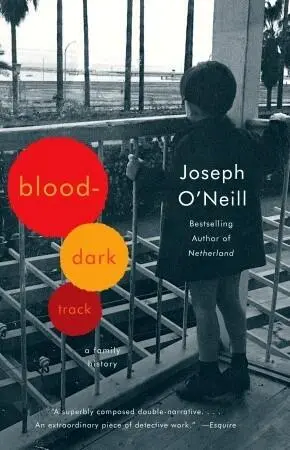
- Название:Blood-Dark Track
- Автор:
- Издательство:Knopf Doubleday Publishing Group
- Жанр:
- Год:2010
- ISBN:978-0-307-74265-0
- Рейтинг книги:4 / 5. Голосов: 1
-
Избранное:Добавить в избранное
- Отзывы:
-
Ваша оценка:
Blood-Dark Track: краткое содержание, описание и аннотация
Предлагаем к чтению аннотацию, описание, краткое содержание или предисловие (зависит от того, что написал сам автор книги «Blood-Dark Track»). Если вы не нашли необходимую информацию о книге — напишите в комментариях, мы постараемся отыскать её.
, a fascinating, personal, and beautifully crafted family history.
Joseph O'Neill's grandfathers-one Turkish, one Irish-were both imprisoned for suspected subversion during the Second World War. The Irish grandfather, a handsome rogue from a family of small farmers, was an active member of the IRA. O'Neill's other grandfather, a debonair hotelier from the tiny and threatened Turkish Christian minority, was interned by the British in Palestine on suspicion of being an Axis spy.
With intellect, compassion, and grace, O'Neill sets the stories of these individuals against the history of the last century's most inhuman events.
Blood-Dark Track — читать онлайн ознакомительный отрывок
Ниже представлен текст книги, разбитый по страницам. Система сохранения места последней прочитанной страницы, позволяет с удобством читать онлайн бесплатно книгу «Blood-Dark Track», без необходимости каждый раз заново искать на чём Вы остановились. Поставьте закладку, и сможете в любой момент перейти на страницу, на которой закончили чтение.
Интервал:
Закладка:
6
Father … was a proud man and a high-principled one, though what his principles were based on was more than I ever discovered.
Frank O’Connor, An Only ChildOnce, while horsing around at home in The Hague, my father grabbed my thirteen-year-old brother by the wrists and held him captive. ‘This is an old IRA trick,’ my father gloated; ‘I’ve got you now.’ My brother responded by simply banging his wrists together and bringing about a stinging collision between my father’s hands. My father let go with a painful howl that turned into laughter — at himself, and at his son’s devastating subversion of the mythic organization he’d invoked.
For my father to identify himself with the IRA, even jokingly, was unprecedented, and for an instant a connection — faint but nevertheless a little shocking — arose between him and the sinister body of men responsible for the bombings, kidnappings, robberies and killings which Dutch TV and BBC Radio brought to our attention. Aside from some incidents in Germany in 1978, the violence all took place in Ireland and Britain — that is, until 22 March 1979, when the British ambassador to The Netherlands, Sir Richard Sykes, and his footman were shot dead in front of the ambassador’s residence in The Hague. As in the Somerville shooting, two unknown gunmen ran away and were never caught. Even though Sykes was, at the time of his death, the Chairman of the Board of Governors of my school, the British School in The Netherlands — whose assembly hall was named the Sir Richard Sykes Memorial Hall — his killing quickly faded from my thoughts. Certainly, I didn’t in any way link my father to that event. I had heard my father once or twice call himself a republican, but he obviously used the term in a loose and private sense, because he certainly didn’t support the Provisional IRA or sing rebel songs or make anti-English cracks or go in for emotional recapitulations of Ireland’s sad history. He would sometimes heatedly point out the hypocrisy of British pronouncements on Ireland, but there his visible embroilment in Irish nationalism would end. There was nothing radical or revolutionary or unlawful about him. My father was not a rebel.
Then, nearly twenty years after his friendly scuffle with my brother, I learned that my father had, after all, been in the Irish Republican Army.
The revelation came towards the end of that drive we took together from London to Oxford in 1996, a couple of intimate hours during which my father — who was reflective and open about his day-to-day thoughts and feelings, but not a man prone to reminiscing — disclosed more to me about the early formative events of his life than he had in the previous thirty years. The disclosures began after I asked him whether he knew that his uncle Jack Lynch had been in charge of the bombing campaign in England in 1939. ‘No, I didn’t know,’ he answered, unamused. After a pause, he added, ‘Did you know that I was in the IRA?’ A silence fell in the car. We were south-east of Oxford, in a deeply English landscape of orderly fields and low, cultivated hills. The silence continued as I mentally circled the new information like a stroller who has happened on one of those old mines, buried for decades, that English beaches occasionally regurgitate. Then my father said, ‘Son, I’d like to talk about how I saw it, about my perspective; I’m afraid you might have a romantic view of the whole business. In reality, it was seedy and mediocre. There was no philosophizing, no discussion, no rational identification of objectives and how to achieve them. Plus, there was incompetence. The officer in charge of one meeting arrived half an hour late — and this was the guy in charge! I said to him, “How are we supposed to accomplish anything if we start half an hour late?” It was a shambles, it was amateurish. After about a month or so, I just stopped going to the meetings.’
I asked my father whether my grandfather had pushed him towards the IRA. He shook his head. ‘No. Nobody asked me to join, or even suggested it to me. I joined by myself, when I was seventeen or so.’ ‘What made you do it?’ I asked, looking straight ahead at the traffic. My father hesitated. ‘I was curious, I suppose,’ he said slowly. ‘Everybody else was involved, and I wanted to find out what it was all about. Also, there was a great upswell of support for Sinn Féin at the time, and I was an idealist, a bit of a dreamer.’ He added, ‘I was never attracted to the violence, though. Maybe I’d seen too much of it growing up.’
We drove on. Not long afterwards, the spires of Oxford appeared in the rainy distance. A few minutes later, we met up with my mother and my sister Elizabeth, and later still we watched my sister receive a postgraduate degree, in law, with others from her college, Somerville.
It was hard to say whether my father’s truest act of rebellion lay in joining the IRA or in quitting it. A story my grandmother told illustrated the depth, and longevity, of his exposure to republicanism. Eileen O’Neill gave birth to my father, her third son, in her bedroom on 26 April 1939. Two nights later, Jim took the baby to see the priest in a borrowed IRA brigade car that was entirely covered in mud and slush: my grandfather had been out that evening in West Cork, leading exercises in snow that fell even as blossoms showed on the apple trees. Father Sheehan was not at the church, so Jim went round to his house. ‘There’s no christening today,’ Father Sheehan said; but after Jim flashed him a wad of money, the priest agreed to perform a baptism. My swaddled infant father was taken from the brigade car to the font and quickly assumed into Christendom — but not, it might be said, before he had first been transported by Irish republicanism and set on a track that would lead, years later, to his presence in a car headed for the North, filled with guns and ammunition and men meaning to use them.
My father’s growth into political consciousness corresponded to his growing awareness of his father’s absence as an IRA internee. After Jim O’Neill returned to Cork in late 1944, when Kevin was five years old, the political clouds thickened still further in the domestic atmosphere — even though Jim, distraught by his experience of ostracism and infighting at the Curragh, did not rejoin the IRA and did not, in the face of his family’s financial crisis and the difficulties of returning to civilian life, have the means or will for activism. But my grandfather’s essential republicanism remained intact, and a couple of years after his release from the Curragh he began to support a party that promised to square the near-circle formed by his aversions for the institutional IRA, de Valera’s government, and British rule in the North. Clann na Poblachta, founded in the summer of 1946, was led by the barrister and IRA veteran (and future Nobel Peace Prize winner) Seán MacBride. Although the Clann recognized the governmental organs of Eire, with the consequence that membership meant expulsion from the IRA, it was dedicated to the unification of Ireland and the downfall of de Valera’s government, and for my grandfather this was enough. In 1948, to great general excitement, Clann na Poblachta had ten men elected to the Dáil and, in one of those bizarre hybrids generated by parliamentary pragmatism, formed a coalition government with the Blueshirt party, Fine Gael. In 1949, the Republic of Ireland came into being. The new State’s constitution laid claim to the whole of Ireland as the national territory, but in many republican eyes the declaration of statehood poured juridical and symbolic cement on the border with Northern Ireland. Jim was confirmed in his bitter distrust of constitutional politics, and by 1950 or so, the link between the IRA and the O’Neill family began to revive.
Читать дальшеИнтервал:
Закладка:
Похожие книги на «Blood-Dark Track»
Представляем Вашему вниманию похожие книги на «Blood-Dark Track» списком для выбора. Мы отобрали схожую по названию и смыслу литературу в надежде предоставить читателям больше вариантов отыскать новые, интересные, ещё непрочитанные произведения.


Обсуждение, отзывы о книге «Blood-Dark Track» и просто собственные мнения читателей. Оставьте ваши комментарии, напишите, что Вы думаете о произведении, его смысле или главных героях. Укажите что конкретно понравилось, а что нет, и почему Вы так считаете.