Joseph O'Neill - Blood-Dark Track
Здесь есть возможность читать онлайн «Joseph O'Neill - Blood-Dark Track» — ознакомительный отрывок электронной книги совершенно бесплатно, а после прочтения отрывка купить полную версию. В некоторых случаях можно слушать аудио, скачать через торрент в формате fb2 и присутствует краткое содержание. Год выпуска: 2010, ISBN: 2010, Издательство: Knopf Doubleday Publishing Group, Жанр: Современная проза, на английском языке. Описание произведения, (предисловие) а так же отзывы посетителей доступны на портале библиотеки ЛибКат.
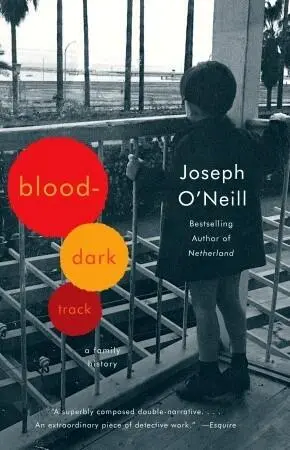
- Название:Blood-Dark Track
- Автор:
- Издательство:Knopf Doubleday Publishing Group
- Жанр:
- Год:2010
- ISBN:978-0-307-74265-0
- Рейтинг книги:4 / 5. Голосов: 1
-
Избранное:Добавить в избранное
- Отзывы:
-
Ваша оценка:
Blood-Dark Track: краткое содержание, описание и аннотация
Предлагаем к чтению аннотацию, описание, краткое содержание или предисловие (зависит от того, что написал сам автор книги «Blood-Dark Track»). Если вы не нашли необходимую информацию о книге — напишите в комментариях, мы постараемся отыскать её.
, a fascinating, personal, and beautifully crafted family history.
Joseph O'Neill's grandfathers-one Turkish, one Irish-were both imprisoned for suspected subversion during the Second World War. The Irish grandfather, a handsome rogue from a family of small farmers, was an active member of the IRA. O'Neill's other grandfather, a debonair hotelier from the tiny and threatened Turkish Christian minority, was interned by the British in Palestine on suspicion of being an Axis spy.
With intellect, compassion, and grace, O'Neill sets the stories of these individuals against the history of the last century's most inhuman events.
Blood-Dark Track — читать онлайн ознакомительный отрывок
Ниже представлен текст книги, разбитый по страницам. Система сохранения места последней прочитанной страницы, позволяет с удобством читать онлайн бесплатно книгу «Blood-Dark Track», без необходимости каждый раз заново искать на чём Вы остановились. Поставьте закладку, и сможете в любой момент перейти на страницу, на которой закончили чтение.
Интервал:
Закладка:
I wondered a little about my uncle’s disillusionment, because in the context of the war in Ireland the shooting of a man wrongly believed to be an informer was not a novel or especially atrocious occurrence; indeed, since practically no lethal military campaign can limit its fatalities to enemy combatants, the killing of John Cochrane, taken in isolation, could even be said to be of little significance in the cold business of deciding whether or not the war, as a whole, was justified. But for Jim, republicanism was not a cold-hearted, unemotional business. And although he gave up supporting the IRA, he did not give up his dream of a united Ireland — literally. My uncle said to me, in a tone of slight amazement, ‘When I was in my teens, I had a very vivid dream that the Six Counties were united with the Twenty-six, and that we were marching in the North on a dead straight, undulating road, and there were throngs of people lining the road. When I finally went to the North, in 1985, on holiday, I came across a place that was intensely familiar. It came to me: these were the roads I’d dreamt of, and these were the throngs, with bands and banners.’
‘Blow him off the road!’ Brendan shouted as a dawdling car in front of us failed to make way. ‘Go on, overtake him now! Go on, Joe!’ But I held back, unsure about the oncoming traffic and all the while anxious to maintain a prudent distance between our car and the one ahead. ‘Keep up, keep up!’ Brendan cried in disbelief, ‘keep up or somebody’ll slip in!’ He shook his head in despair. ‘Ah, Joe, you’ll never make a getaway driver.’
We were on a road trip, heading for the north of the island to revisit some of the places where Brendan had been active, as he put it, in the late ’fifties and early ’sixties and finally in 1969. When I finally overtook the car ahead of us, Brendan’s arm suddenly shot out and his hand slammed on the steering wheel to produce a terrific blast of the horn. ‘You’re nothing but a dirty bastard!’ he furiously yelled as we passed the car, his head thrusting out of the window. I started laughing. My uncle, I had discovered, was a comically bad car passenger.
That this trait in him came as a revelation showed up the limits of our previous acquaintance. I only knew Brendan, the brother with whom my father had maintained the closest and most enduring bonds, in an innocent, avuncular context: as a collector and cracker of terrible corny jokes; as an ex-hurler for Cork (a hard player, not beyond skulduggery); as a runner of marathons (including the New York City marathon); and, especially, as a very useful golfer playing off around a four handicap at the age of sixty and still able to drill a 3-iron a couple of hundreds of yards into the wind blowing through the links of Ballybunion Golf Club, where he was a life member. More recently, I had started to catch sharper views of another, more political life. It turned out that Brendan had been a republican activist from the age of eleven or twelve, when he helped his father campaign for Clann na Poblachta by putting up posters and handing out leaflets. At fourteen, he left school: he found a summer job as a time-clerk on a building site, and when the time came to go back to North Monastery he was determined to stay on. My grandparents, very doubtful about the idea, eventually relented. Brendan’s life came to be dedicated to trade unionism and political action of one kind or another. He went to jail for principled non-payment of service charges imposed by Cork Corporation, and he spent the night before Nelson Mandela’s release from prison stitching a banner of the African National Congress, of which he’d been a member for twenty years. When dawn broke, the banner’s fluttering colours trespassed on the flagpole of Cork County Council. Of course, these stories were irresistible to an establishmentarian and politically sedentary — and politically guilt-ridden — person like me. They revealed my uncle as a driven and adventurous radical who, by his actions, constantly evinced his commitment to the value of political resistance and his distance from the bourgeois conception of life as an economic adventure. So I wasn’t surprised when Brendan said that the old IRA campaigns, and in particular the internment experiences of his father’s generation of IRA men, should be more widely known and written about, or when he suggested that the two of us embark on outing to the North. ‘I’ll show you round, introduce you to a few people,’ he said, ‘and you’ll make of it what you want.’
Setting up the trip was a tricky affair: when I arrived in Cork, in late May 1997, campaigning in the national elections was in full swing, and Brendan was heavily involved on behalf of Paddy Mulcahy, a teacher contesting the impoverished constituency of North Cork Central as an independent candidate. Mulcahy’s platform — ‘DON’T BE SOLD OUT AGAIN — ELECT A PROVEN FIGHTER FOR THE RIGHTS OF ORDINARY PEOPLE.… If you want to hit back at the corrupt political establishment vote for Paddy Mulcahy, the anti-establishment candidate with the best chance of taking a seat in Cork North Central’ — was set out in a leaflet which also contained an endorsement from Brendan O’Neill:
Having given a lifetime of service to workers whether employed or unemployed, I am now calling on all my friends and colleagues to come out on election day and give your number one to Paddy Mulcahy. Paddy Mulcahy has always been a great ally and comrade of mine. He went to jail rather than surrender. Put Paddy in the Dáil — he will be a forceful ally to the labour movement and will fight conscientiously for social justice and the rights of the people.
Brendan was particularly concerned about the welfare of travellers, who, he said, had long been the object of discrimination and prejudice in Ireland, ‘probably one of the most racist countries in the world’. When I met him after he’d paid a canvassing visit to a travellers’ site in North Cork, he was fuming. ‘It’s a disgrace. The conditions they’ve to put up with are a fucking disgrace. I can’t leave it at that. We’ve got to do something about it: keep pushing for their recognition as an ethnic minority, keep at them to organize into committees to enable them to decide what they want.’
A few days after the election (at which, not unexpectedly, Paddy Mulcahy failed to win a seat), I drove round to Brendan’s house in Blackrock, an affluent neighbourhood in south Cork. The tone of the house — an attractive modernist structure of glass and wood that gave on to a large communal lawn — was an appealing mixture of the zoological and the political. Pets (a cat, a dog, a turtle) milled about, their presence largely due to my animal-loving aunt Rosalie; and, as ever, the exposed brick walls were hung with Brendan’s photographically accurate black and white portraits of some of his heroes: Che Guevara, Mandela, Lenin, James Connolly. Brendan’s attachment to political father-figures extended to Jim O’Neill. ‘My father was a socialist,’ he said. ‘I’m surprised he never joined the Communist Party.’ ‘I’m not surprised at all,’ Rosalie commented sharply. ‘It would have meant excommunication from the Church.’
It was early morning. We were heading north that day. The first question that arose was whose car to use — mine, with English number-plates, or Brendan’s, with Republic of Ireland plates. From a security viewpoint, driving in English plates — which closely resembled Northern Ireland plates — was probably safer. A few weeks before, two Catholics had respectively been shot and beaten to death, and it was possible that another loyalist campaign of random sectarian killings had started. On the other hand, in the year since the Dockland and Aldwych explosions in February 1996, violence by republican paramilitary groups had increased dramatically. In June 1996, a huge IRA explosion in the centre of Manchester injured over 200 people; a month later, a bomb blew up an Enniskillen hotel; in September, raids of London houses (in the course of which an IRA man was shot dead) uncovered ten tons of explosives; in October, two large bombs exploded inside the British army’s headquarters in Northern Ireland, injuring thirty-one; in November 1996, a 600lb bomb was discovered outside the RUC headquarters in Derry; in the run-up to the British general election in April 1997, motorway and airport traffic in England was disrupted by bomb warnings; and in May, an RUC officer was shot dead as he drank in a Belfast bar. The IRA was not responsible for all of these actions. The Irish National Liberation Army claimed the killing of the RUC man, and the Enniskillen hotel bombing and the attempted bombing of the Derry RUC headquarters was the work of a republican faction — the ‘Real IRA’, it came to style itself — which disapproved of Sinn Féin-IRA’s continuing attempts to reach a settlement that fell short of a definitive commitment to a united Ireland. It was becoming clearer that the Sinn Féin leadership, whose principal figures were the Provisional IRA veterans Gerry Adams and Martin McGuinness, was located at the flexible end of the spectrum of militaristic republicanism.
Читать дальшеИнтервал:
Закладка:
Похожие книги на «Blood-Dark Track»
Представляем Вашему вниманию похожие книги на «Blood-Dark Track» списком для выбора. Мы отобрали схожую по названию и смыслу литературу в надежде предоставить читателям больше вариантов отыскать новые, интересные, ещё непрочитанные произведения.


Обсуждение, отзывы о книге «Blood-Dark Track» и просто собственные мнения читателей. Оставьте ваши комментарии, напишите, что Вы думаете о произведении, его смысле или главных героях. Укажите что конкретно понравилось, а что нет, и почему Вы так считаете.