Joseph O'Neill - Blood-Dark Track
Здесь есть возможность читать онлайн «Joseph O'Neill - Blood-Dark Track» — ознакомительный отрывок электронной книги совершенно бесплатно, а после прочтения отрывка купить полную версию. В некоторых случаях можно слушать аудио, скачать через торрент в формате fb2 и присутствует краткое содержание. Год выпуска: 2010, ISBN: 2010, Издательство: Knopf Doubleday Publishing Group, Жанр: Современная проза, на английском языке. Описание произведения, (предисловие) а так же отзывы посетителей доступны на портале библиотеки ЛибКат.
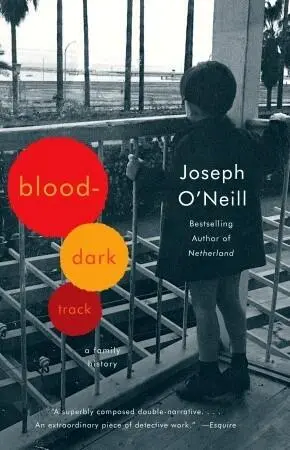
- Название:Blood-Dark Track
- Автор:
- Издательство:Knopf Doubleday Publishing Group
- Жанр:
- Год:2010
- ISBN:978-0-307-74265-0
- Рейтинг книги:4 / 5. Голосов: 1
-
Избранное:Добавить в избранное
- Отзывы:
-
Ваша оценка:
Blood-Dark Track: краткое содержание, описание и аннотация
Предлагаем к чтению аннотацию, описание, краткое содержание или предисловие (зависит от того, что написал сам автор книги «Blood-Dark Track»). Если вы не нашли необходимую информацию о книге — напишите в комментариях, мы постараемся отыскать её.
, a fascinating, personal, and beautifully crafted family history.
Joseph O'Neill's grandfathers-one Turkish, one Irish-were both imprisoned for suspected subversion during the Second World War. The Irish grandfather, a handsome rogue from a family of small farmers, was an active member of the IRA. O'Neill's other grandfather, a debonair hotelier from the tiny and threatened Turkish Christian minority, was interned by the British in Palestine on suspicion of being an Axis spy.
With intellect, compassion, and grace, O'Neill sets the stories of these individuals against the history of the last century's most inhuman events.
Blood-Dark Track — читать онлайн ознакомительный отрывок
Ниже представлен текст книги, разбитый по страницам. Система сохранения места последней прочитанной страницы, позволяет с удобством читать онлайн бесплатно книгу «Blood-Dark Track», без необходимости каждый раз заново искать на чём Вы остановились. Поставьте закладку, и сможете в любой момент перейти на страницу, на которой закончили чтение.
Интервал:
Закладка:
The IRA, at this time, was still trying to recover from the destructive effect of the internment years. No military action of consequence had been taken for the best part of a decade and the membership was fragmented and demoralized. There was little for a volunteer to do other than to participate in commemorations, sell raffle tickets and political literature, and attend apparently pointless meetings. Then things slowly began to pick up. With the Dublin leadership exercising strict ideological control — the socialist activism that characterized pre-Emergency republicanism was no longer tolerated — the organization slowly regrouped. In June 1954, after the famous raid on Gough Barracks in Armagh, in which 250 rifles, seven Sten guns, nine Bren guns and forty training rifles were stolen from the enemy, the IRA once more caught the public imagination. In around August 1954, my uncles Jim (eighteen) and Brendan (seventeen) applied to join the IRA; in September 1954, they were duly sworn in. The brothers joined Cork No. 1 Brigade. ‘Because of who we were,’ Brendan said, ‘we had no problem getting in.’
Like my father, Jim and Brendan said they joined the IRA of their own accord, without their father’s prompting or knowledge, even. ‘But after we joined,’ Brendan said, ‘Father never discouraged us. He would drive us out to the training camps, where we would have theory and practical classes in warfare: dismantling weapons, bombs, unarmed combat, and so on. The poaching gave us good fieldwork experience. It was a very serious thing to do with your life at that age,’ Brendan said. ‘You were liable to be sent off at any moment.’
This was true. Moreover, the success of the Armagh raid was exceptional. In 1953, three volunteers received eight-year prison sentences after being caught in possession of a cache of weapons stolen from Felsted School in Essex; and in October 1954, a month or so after Jim and Brendan joined the IRA, a failed raid on a British army barracks in Omagh, Co. Tyrone, resulted in the capture of eight young volunteers. They were sentenced to ten years’ imprisonment. Among them was Seán O’Callaghan, whose sister, Rosalie, Brendan would later marry.
The republican cause received a great boost in May 1955, when Sinn Féin, since 1950 effectively the civilian wing of the IRA, polled over 150,000 votes in elections in Northern Ireland and won two seats in the Westminster Parliament. This was followed, in June, by a good showing at local elections in the South. Republican exhilaration spread across Ireland, and Kevin O’Neill briefly joined his two older brothers in the IRA.
As for the boys’ father, he was (in Brendan’s words) one of the most reliable unofficial men the IRA had in Cork, someone who could be trusted to dump arms, transport people, raise funds, and quietly put his experience and contacts at the disposal of the movement. Brendan said that Tadhg Lynch, who had also denounced the leadership and placed himself at the periphery of the movement, was likewise able to do much valuable unofficial work.
In 1956, the IRA Army Council decided that the IRA was strong enough to embark on its first major military initiative since the 1939 English campaign. It was resolved that flying columns would penetrate the Six Counties and engage in a guerrilla war. The objective was to disrupt the occupying power’s centres of administration by cutting all its lines of communication — telephone, rail, road — and thereby force British withdrawal from the border regions of Tyrone, Fermanagh and South Derry. The designated enemy was the British army; the overwhelmingly Protestant Irish members of the Royal Ulster Constabulary and the B-Specials (a civilian militia) were not targets and were only to be shot as a last resort of self-defence.
On Friday 7 December 1956, Jim and his brother Brendan received notification that IRA men were to present themselves immediately at a place in Mayfield, in the north of Cork city, for active service. The call-up came as a surprise, and Brendan had to ask Kevin, who lay sick in bed, to look after a dinner date that weekend. As Brendan and Jim were packing their things, their mother came up the stairs to the bedroom with a tray for Kevin. She said, ‘I know you won’t be back this time.’ Brendan said, ‘We will, Mother, we will, we’ll be back on Sunday night at the latest.’ My grandmother said, ‘I don’t care if you get ten years or twenty, but don’t come back cowards.’
However, Uncle Jim returned from Mayfield within a few hours, in tears: the Army would not allow brothers from the same family, or newly married men, to go up, and five such volunteers were sent home. Brendan, though, was one of around twenty Corkmen to leave on the night of 7 December in a truck filled with straw. They were driven to billets in Co. Meath, where they stayed until Tuesday 11 December. Then they crossed into the Six Counties and met up with columns from Limerick and Dublin. The combined forces numbered fifty or sixty men. They were split up into units of eight or nine under the command of men who’d already been planted in the North a month or two previously. They were to go into action that night.
Back in Cork, Jim and Eileen O’Neill waited for news. My grandfather, who knew nothing about the raid in advance, was very upset that his sons had not confided in him. ‘The worst time was the waiting,’ Grandma said. ‘Oh, that was terrible. Then the news broke on the radio of the first attack, and I felt relieved.’
The news was that, in the early hours of 12 December 1956, IRA units had attacked, with varying degrees of success, targets such as a transmitting station, a radar installation, a courthouse, a Territorial Army building, a B-Specials’ hut, a bridge, and an army barracks. The following day, the IRA issued a proclamation announcing that, ‘Spearheaded by Ireland’s freedom fighters, our people in the Six Counties have carried the fight to the enemy.… Out of this national liberation struggle a new Ireland will emerge, upright and free.’ The famous Border Campaign of the winter of 1956/57 had begun.
That first night, Brendan’s unit was given the job of attacking Lissanelly Barracks, which was to the rear of Omagh army barracks, and stealing arms. Brendan’s task was to take the guard room with a man called Bertie Murphy. In order to penetrate the barracks, a breach had to be blown in its wall, and two men drove off to a quarry at Mountfield, seven miles away, to steal gelignite. ‘But,’ Brendan said, ‘the two fellows never returned; and just as we were getting into position to attack, all hell suddenly broke loose: the attacks had started all over the North and the barracks had gone on the alert.’ Brendan’s unit withdrew into the Sperrin Mountains, near Gortin, Co. Tyrone, and waited for a few days and nights in the trees, frozen cold.
Brendan returned to Cork in February 1957. He and other young veterans of the Border Campaign were sent on an intensive training course and made training officers. They trained two nights a week and every weekend: the campaign in the North was still going on and replacements were needed for the large numbers of volunteers who were being arrested. The Border Campaign had not, as had been hoped, decisively swung public opinion behind the IRA, and the security forces in the Republic were proving to be assiduous in their pursuit of IRA men who came within their jurisdiction. To make matters worse, internment at the Curragh was reintroduced in July 1957 by Éamon de Valera, who’d been voted back into power in the March election. All but one of the IRA leadership was picked up in the sweep — Seán Cronin, the IRA Chief of Staff, avoided capture by holing up at the Dublin house of Tadhg Lynch.
A year after the introduction of internment, the Border Campaign was still dragging on — but not, in the view of uncle Brendan, anywhere near boldly enough. When a plan he’d devised to ambush an enemy patrol at the border near Belleek, Co. Fermanagh was not sanctioned, my uncle’s frustration led him to strike out on his own.
Читать дальшеИнтервал:
Закладка:
Похожие книги на «Blood-Dark Track»
Представляем Вашему вниманию похожие книги на «Blood-Dark Track» списком для выбора. Мы отобрали схожую по названию и смыслу литературу в надежде предоставить читателям больше вариантов отыскать новые, интересные, ещё непрочитанные произведения.


Обсуждение, отзывы о книге «Blood-Dark Track» и просто собственные мнения читателей. Оставьте ваши комментарии, напишите, что Вы думаете о произведении, его смысле или главных героях. Укажите что конкретно понравилось, а что нет, и почему Вы так считаете.