Joseph O'Neill - Blood-Dark Track
Здесь есть возможность читать онлайн «Joseph O'Neill - Blood-Dark Track» — ознакомительный отрывок электронной книги совершенно бесплатно, а после прочтения отрывка купить полную версию. В некоторых случаях можно слушать аудио, скачать через торрент в формате fb2 и присутствует краткое содержание. Год выпуска: 2010, ISBN: 2010, Издательство: Knopf Doubleday Publishing Group, Жанр: Современная проза, на английском языке. Описание произведения, (предисловие) а так же отзывы посетителей доступны на портале библиотеки ЛибКат.
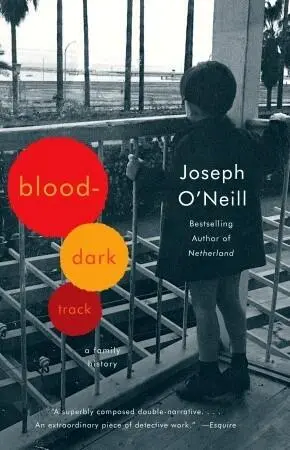
- Название:Blood-Dark Track
- Автор:
- Издательство:Knopf Doubleday Publishing Group
- Жанр:
- Год:2010
- ISBN:978-0-307-74265-0
- Рейтинг книги:4 / 5. Голосов: 1
-
Избранное:Добавить в избранное
- Отзывы:
-
Ваша оценка:
Blood-Dark Track: краткое содержание, описание и аннотация
Предлагаем к чтению аннотацию, описание, краткое содержание или предисловие (зависит от того, что написал сам автор книги «Blood-Dark Track»). Если вы не нашли необходимую информацию о книге — напишите в комментариях, мы постараемся отыскать её.
, a fascinating, personal, and beautifully crafted family history.
Joseph O'Neill's grandfathers-one Turkish, one Irish-were both imprisoned for suspected subversion during the Second World War. The Irish grandfather, a handsome rogue from a family of small farmers, was an active member of the IRA. O'Neill's other grandfather, a debonair hotelier from the tiny and threatened Turkish Christian minority, was interned by the British in Palestine on suspicion of being an Axis spy.
With intellect, compassion, and grace, O'Neill sets the stories of these individuals against the history of the last century's most inhuman events.
Blood-Dark Track — читать онлайн ознакомительный отрывок
Ниже представлен текст книги, разбитый по страницам. Система сохранения места последней прочитанной страницы, позволяет с удобством читать онлайн бесплатно книгу «Blood-Dark Track», без необходимости каждый раз заново искать на чём Вы остановились. Поставьте закладку, и сможете в любой момент перейти на страницу, на которой закончили чтение.
Интервал:
Закладка:
My Ireland was six months spent in Limerick, a sidekick to Mick O’Sullivan, a mechanic, and Eugene Meaney, an electrician, kind and able men who tolerated the boss’ clueless son and patiently milked him at lunch-time poker. By day I lugged toolboxes up tanks, changed the tyres of cranes, and wandered around dazed by tanks, pipes, cables and the innards of malfunctioning machinery. By night, having travelled home in a pick-up truck full of muddied men who made the sign of the cross each time a church or graveyard was passed, I holed up with my father in the Old Rectory of a village called Askeaton. It was a beautiful Georgian house with stables, a faded grass tennis court in the garden, ancient meat-hooks hanging in the cellars, high walls, and a few acres of tall woods where dark birds roosted. My father rented it from the Church of Ireland. It was one of the imposing Anglo-Irish houses whose occupants had for so long thrown a fine net over all Ireland. It was as far away as you could get in Ireland from the Bogside, and I felt at home there.
After Limerick, I went to Cambridge University (in narrow preference to Trinity College, Dublin, which my brother and sister later attended) to study law. Even though I had spent barely a month of my life in England, it was a natural move. My far-off affiliation to Ireland continued as before, and when John Hume came to Cambridge to talk about the need to create an inclusive Ireland (an Ireland that could accommodate a mongrel like me), I was there, cheering him on; and when the time came, in the spring of 1985, my final year, to write a dissertation on ethics and the criminal law, I solemnly set myself the task of answering the question, ‘Is the IRA justified in killing people?’ — thereby becoming the latest in the generations of O’Neills and Lynches to ponder the means and ends of Irish freedom.
As is so often the case with political ideas formed early in one’s life, the conclusions I reached had a lasting influence on me. I concluded, first, that although nationalists in the North might be obliged to obey the laws of Northern Ireland, under no prominent and well-recognized liberal theory of political obligation — theories of social contract and consent (Hobbes, Locke, Rousseau, etc.), or rights theories, or justice and equality theories (Rawls, Dworkin, etc.), or theories of utility — were they obligated to. Second, that Northern Ireland was accordingly a morally wrong political entity. Third, it followed that the unionist devotion to the preservation of the status quo was, prima facie, morally wrong and nationalists had good cause to seek to change the status quo. Fourth (on the footing that nationalists were not racists and affirmed the equal right to autonomy of national groups), any change that failed to take account of unionist autonomy — for example, a Dublin-governed united Ireland brought about by force, without unionist consent — would substitute the oppression of one national group for another. Fifth, violence directed at bringing about the unification of Ireland by force rather than by consensus was accordingly morally wrong. Sixth, violence directed merely at disturbing the status quo so as to provoke change short of unification (i.e., change that would reduce the inequality in the autonomy of the two national groups in Northern Ireland) was also wrong, since it could not be demonstrated that non-homicidal methods would be inadequately provocative. This was the point I’d try to make to Brendan; but as things turned out, I was later to have very real doubts it.
Of course, my analysis diverged from orthodox republican doctrine. Most importantly, it was a tenet not just of republicanism but of nationalism — the non-violent mainstream notion that a united Ireland is desirable and natural end — that the Protestant population did not really form a separate national group; and that, although they perceived themselves to be different from the nationalist Catholic majority (when I wrote my dissertation, only 8 per cent of Protestants identified themselves as ‘Irish’) and strongly asserted the same — on classic grounds: religion, ethnicity (Anglo-Scottish), political history (loyalty to the Crown), language (their national tongue was not Irish) — their self-perception was at bottom the product of false consciousness ‘carefully fostered’, in the words of the 1916 Proclamation of Independence, ‘by an alien government’. This notion might have had some credence in 1916, but in modern times it was so obviously fantastical that, it seemed to me, no rational person could in all honesty subscribe to it — or inhabit the ideological construct it underpinned.
For a long time I believed that the strength of my analysis was that it was rational, deductive, and non-protagonistic. It didn’t well up from inherited feelings of loss and outrage about the division of Ireland or from a received sense that the armed struggle for freedom was prima facie virtuous or evil. Nor did it bother me that I’d never been to the North, because the convictions of many, if not most, Irish people on the subject of the North crystallized before they had set foot there (Jim O’Neill was a case in point). But in the course of my visits to Ireland, I began to have second thoughts. First of all, I realized that the views I’d fastidiously held for a dozen years were inductive and proceeded, in reality, from a gut feeling that the violence I’d observed was for the worst — a gut feeling that could easily have resulted from my participation in British culture; and second, I wondered if I had taken sufficient account of the fact that the virtues of long-term political violence are rarely immediately apparent. What if I had overlooked something — missed, in my narrow rationalism, some wider truth? After all, why should my gut feelings be any more reliable than those of the republicans I’d met? It was not simply that these republicans were obviously kind and good people: it was, as I saw it, that they were undoubtedly superior to me as moral agents . They were conscientious and possessed of a sense of societal duty that was much stronger than mine. My grandmother and my uncle Brendan, for example, had spoken up and acted in relation to apartheid and to the rights of workers and ethnic minorities. I, meanwhile, had followed the self-serving, morally unvigorous paths of the business lawyer and novelist; I had enacted no change, done no good, made no effort on behalf of others. What it came down to was this: if their ethical intuitions were so accurate in civilian life, who was to say they had not got it right in relation to the question of political violence in Ireland?
Sitting in the car with Brendan, stewing on our disagreeable exchange, I gradually calmed down. It didn’t require much of an imaginative leap on my part to see that there was something fundamentally enraging about having foreign soldiers in your country, pointing guns at you and interrogating you and making you account for your movements; and, anxious to mend fences with my uncle — and sensing that it was somehow my place to give ground — I said as much to him.
We drove on towards Dublin and checked into a hotel in Rathmines. We ate dinner together, drank a bottle of wine, and played a couple of games of snooker. Towards the end of the evening, Brendan said, ‘Joseph, I didn’t answer your question today. The truth is, I don’t want the unionists to suffer like nationalists have done; I don’t want to force them. What I meant to say was that there is a foreign army in my country, and I think I have the right to take on that army and to seek to repel it. I claim a right to do that. It’s that basic.’ His eyes were wet. ‘When my father was dying, he told me he’d like to be propped up on a car seat with a machine gun in his hands and to charge that way into British soldiers. He wanted to die like that, usefully, killing as many as he could.’
Читать дальшеИнтервал:
Закладка:
Похожие книги на «Blood-Dark Track»
Представляем Вашему вниманию похожие книги на «Blood-Dark Track» списком для выбора. Мы отобрали схожую по названию и смыслу литературу в надежде предоставить читателям больше вариантов отыскать новые, интересные, ещё непрочитанные произведения.


Обсуждение, отзывы о книге «Blood-Dark Track» и просто собственные мнения читателей. Оставьте ваши комментарии, напишите, что Вы думаете о произведении, его смысле или главных героях. Укажите что конкретно понравилось, а что нет, и почему Вы так считаете.