Joseph O'Neill - Blood-Dark Track
Здесь есть возможность читать онлайн «Joseph O'Neill - Blood-Dark Track» — ознакомительный отрывок электронной книги совершенно бесплатно, а после прочтения отрывка купить полную версию. В некоторых случаях можно слушать аудио, скачать через торрент в формате fb2 и присутствует краткое содержание. Год выпуска: 2010, ISBN: 2010, Издательство: Knopf Doubleday Publishing Group, Жанр: Современная проза, на английском языке. Описание произведения, (предисловие) а так же отзывы посетителей доступны на портале библиотеки ЛибКат.
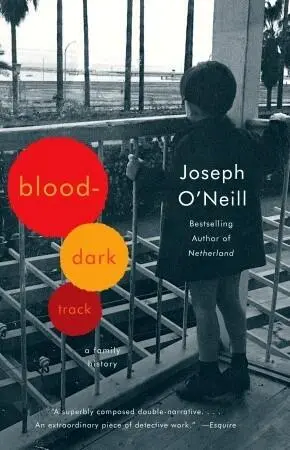
- Название:Blood-Dark Track
- Автор:
- Издательство:Knopf Doubleday Publishing Group
- Жанр:
- Год:2010
- ISBN:978-0-307-74265-0
- Рейтинг книги:4 / 5. Голосов: 1
-
Избранное:Добавить в избранное
- Отзывы:
-
Ваша оценка:
Blood-Dark Track: краткое содержание, описание и аннотация
Предлагаем к чтению аннотацию, описание, краткое содержание или предисловие (зависит от того, что написал сам автор книги «Blood-Dark Track»). Если вы не нашли необходимую информацию о книге — напишите в комментариях, мы постараемся отыскать её.
, a fascinating, personal, and beautifully crafted family history.
Joseph O'Neill's grandfathers-one Turkish, one Irish-were both imprisoned for suspected subversion during the Second World War. The Irish grandfather, a handsome rogue from a family of small farmers, was an active member of the IRA. O'Neill's other grandfather, a debonair hotelier from the tiny and threatened Turkish Christian minority, was interned by the British in Palestine on suspicion of being an Axis spy.
With intellect, compassion, and grace, O'Neill sets the stories of these individuals against the history of the last century's most inhuman events.
Blood-Dark Track — читать онлайн ознакомительный отрывок
Ниже представлен текст книги, разбитый по страницам. Система сохранения места последней прочитанной страницы, позволяет с удобством читать онлайн бесплатно книгу «Blood-Dark Track», без необходимости каждый раз заново искать на чём Вы остановились. Поставьте закладку, и сможете в любой момент перейти на страницу, на которой закончили чтение.
Интервал:
Закладка:
The largest minority, the Alaouites, being poor and inconspicuous, are, though apt to be bullied, left pretty much alone by the Turkish authorities. The same applies to the Jews, Armenians and Greeks, though they are never allowed to forget that they are minorities.
The Syrians, both Moslem and Christian, but principally the latter, are the real focus of minority feeling in this district. They themselves, by their gregariousness and ostentatious behaviour, encourage rather than allay this animosity, and it is for their benefit that notices are permanently displayed in the Mersin Club insisting that ‘Those who know Turkish must speak it.’
The Syrians are, whether they like it or not, the mainstay of all charitable appeals and are expected to pay without demur whatever sum is demanded of them. It is their ‘voluntary contributions’ which will form the bulk of the fund being raised by the Vali for his Five Year Building Plan. They thus buy for themselves an ‘insecure security’, and so balance themselves on the edge of a volcano which they feel may erupt at any moment.
Bewildered by this portrait of a Mersin I didn’t recognize, I rang up my mother and asked her whether she knew of any law compelling the use of the Turkish language. She didn’t recall anything herself, she said, but there was a story about my grandmother’s friend Madame Dora, who was sent to prison for a month for snapping in Turkish at a barking dog, ‘ Türkçi konus! ’ (Speak Turkish!) ‘What about the Varlik Vergisi ?’ I asked. ‘Oh yes,’ my mother said, ‘that was a big thing.’ It happened at the worst time, she said, when her father was away in Palestine. Mamie Dakad was saved by her Muslim friends, whose intervention ensured that the sum demanded, although still grossly excessive, was reduced.
I began to see my grandmother’s taxpaying trophies in a different light. ‘What about Armenian massacres in Adana?’ I asked. Denis Wright’s reference to these had prompted a tiny recollection of something my great-aunt Isabelle had once said to me, many years ago — something about the river in Adana running red with the blood of Armenians. My mother seemed unsure. ‘Well, there were incidents in Adana, a long time ago,’ she said vaguely. My mother hesitated. ‘I remember Mlle Victorine, a friend of the family who was maybe ten years older than my father, speaking about cries and shouts in the street outside her house. She lived in Adana. And I remember Madame Madeleine once saying that the Tahintzi family had a factory in Tarsus where Armenians hid. Nothing happened in Mersin, I don’t think. There weren’t many Armenians living there.’ She added, ‘There were quite a few Armenian girls at my school in Aleppo, including, now that I think of it, the nieces of the man you say was a German agent, Joseph Ayvazian. The Armenian girls spoke Turkish as a first language,’ my mother said.
I didn’t dwell on the subject of the Armenians; didn’t ask myself, for example, what had happened to the now non-existent Armenian settlement in Adana. What I thought about was contrast between the general unpleasantness of the Mersin that Wright described and the stories the Mersin people told of the golden, paradisal old days. Something didn’t add up.
I didn’t know it, but enlightenment was at hand. In the autumn, I caught a train to Paris to meet my second cousin, Olivier Dacade. Olivier, who works as a valuer of antiques and has a strong curatorial streak, had put into order the papers of his grandfather, Joseph Dakak’s brother Georges Dacade, and for some time I had been meaning to visit him. I had once or twice met the famously kind Oncle Georges, who died in 1991, but had not got to know him. I was aware that he’d left Mersin for France as a young man and eventually, in partnership with his brother-in-law René Salendre, built up a successful business as a wholesaler and retailer of cloth, garments and haberdashery. The most I was hoping for were some family photographs or letters.
So I was astonished, when I visited Olivier at his apartment near the Bastille, to find a photo of the Mersin waterfront in 1915 (how narrow and deserted and scruffy the main street looked!) and, more striking still, photographs of a hulking German warship anchored off the shore of the town, and of a row of cheerful German pilots looking handsome and glamorous in their flying jackets. There was a picture of a column of Sikh troops marching along a jetty, and another of British officers saluting the arrival of French soldiers. It dawned on me that my grandfather had grown into adulthood in a Mersin fundamentally different to any place I had known or drowsily imagined, a port teeming with German and French and British military and administrative personnel. Evidently, some of these foreigners rented rooms in the house of Caro Dakak: Olivier showed me pictures of my great-grandmother, a sturdily-built woman with dark eyebrows, happily posing for the camera with lodgers wearing French uniforms.
Perhaps the most intriguing document that Olivier possessed was the manuscript text of a speech delivered by his grandfather on 11 December 1919. Oncle Georges, a fifteen-year-old student at the Collège St Antoine, a humble school for boys in Mersin run by the Capuchin friars, had the honour of addressing the following words of welcome to General Gouraud, the commander-in-chief of France’s Levant Army:
My General,
The year was 1521. The Imperial forces had crossed the Ardennes and now threatened Mézières. Their bravery notwithstanding, the troops of François I were on the retreat, and the king’s advisers had decided to abandon the town, which seemed too weak to withstand a siege. It was then that Bayard exclaimed with heroic ardour, ‘There are no weak places where there are men with heart to defend them!’
My General, you speak with the same voice! You have uttered magnificent words in the course of this horrible war, and you have heroically made them good.
You set foot on our Cilician shore aureoled with glory won in so many battles. In you, we salute a chevalier sans peur et sans reproche [a fearless, faultness knight]; a hero who more than once, when disaster beckoned, led his armies with victorious deeds to the most brilliant success.
My General, all our admiration translates to a sole cry, a cry that travels beyond your glorious person to that distant land you have just left, to that nation that you have defended, which we, too, love with all our hearts:
Vive la France!
Allow us, finally, to express our confidence in you and, if it is not too bold for a mere schoolboy to tamper with historic words, we say to you, as Bayard did, ‘There are no weak places, no desolate regions, where there are brave people to defend and protect them.’
France, Joseph de Maistre said, is the land of astonishing resurrections. Once again, my General, you shall prove that saying true.
Thank you, and vive la France .
I was enough of a Turk for my first reaction to Oncle Georges’ speech to be one of shock. It was astounding that my great-uncle had cheered on the forces of occupation in this way and, indeed, that the schoolmasters who must have penned his words should have exposed a teenager to the possible consequences of siding with Turkey’s enemy in such a public and extreme way: because the comparison of General Gouraud to Chevalier Bayard amounted to an assertion that Mersin was no more Turkish than Mézières, a town in northeastern France. The notion was so extravagantly colonialist as to be comical; but any wry amusement on my part disappeared after I’d looked into the circumstances in which my great-uncle’s speech was made, and the historical spaces opened by his evocation of a battle four centuries past. Then I was simply appalled.
Читать дальшеИнтервал:
Закладка:
Похожие книги на «Blood-Dark Track»
Представляем Вашему вниманию похожие книги на «Blood-Dark Track» списком для выбора. Мы отобрали схожую по названию и смыслу литературу в надежде предоставить читателям больше вариантов отыскать новые, интересные, ещё непрочитанные произведения.










Обсуждение, отзывы о книге «Blood-Dark Track» и просто собственные мнения читателей. Оставьте ваши комментарии, напишите, что Вы думаете о произведении, его смысле или главных героях. Укажите что конкретно понравилось, а что нет, и почему Вы так считаете.