Joseph O'Neill - Blood-Dark Track
Здесь есть возможность читать онлайн «Joseph O'Neill - Blood-Dark Track» — ознакомительный отрывок электронной книги совершенно бесплатно, а после прочтения отрывка купить полную версию. В некоторых случаях можно слушать аудио, скачать через торрент в формате fb2 и присутствует краткое содержание. Год выпуска: 2010, ISBN: 2010, Издательство: Knopf Doubleday Publishing Group, Жанр: Современная проза, на английском языке. Описание произведения, (предисловие) а так же отзывы посетителей доступны на портале библиотеки ЛибКат.
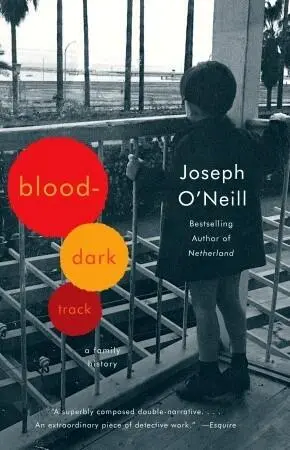
- Название:Blood-Dark Track
- Автор:
- Издательство:Knopf Doubleday Publishing Group
- Жанр:
- Год:2010
- ISBN:978-0-307-74265-0
- Рейтинг книги:4 / 5. Голосов: 1
-
Избранное:Добавить в избранное
- Отзывы:
-
Ваша оценка:
Blood-Dark Track: краткое содержание, описание и аннотация
Предлагаем к чтению аннотацию, описание, краткое содержание или предисловие (зависит от того, что написал сам автор книги «Blood-Dark Track»). Если вы не нашли необходимую информацию о книге — напишите в комментариях, мы постараемся отыскать её.
, a fascinating, personal, and beautifully crafted family history.
Joseph O'Neill's grandfathers-one Turkish, one Irish-were both imprisoned for suspected subversion during the Second World War. The Irish grandfather, a handsome rogue from a family of small farmers, was an active member of the IRA. O'Neill's other grandfather, a debonair hotelier from the tiny and threatened Turkish Christian minority, was interned by the British in Palestine on suspicion of being an Axis spy.
With intellect, compassion, and grace, O'Neill sets the stories of these individuals against the history of the last century's most inhuman events.
Blood-Dark Track — читать онлайн ознакомительный отрывок
Ниже представлен текст книги, разбитый по страницам. Система сохранения места последней прочитанной страницы, позволяет с удобством читать онлайн бесплатно книгу «Blood-Dark Track», без необходимости каждый раз заново искать на чём Вы остановились. Поставьте закладку, и сможете в любой момент перейти на страницу, на которой закончили чтение.
Интервал:
Закладка:
I walked from the cemetery at Arbour Hill to a decrepit hospital in north Dublin. In the wasteland behind this ruin had been built the most spectacular set for Michael Collins , a simulacrum of the O’Connell Street area as it appeared shortly after Easter Sunday, 1916. The set was open to the public, and I joined the sightseers strolling in the dusk on pseudo-cobblestoned streets that were sprinkled with sawdust. We looked at tramlines, a shop selling boaters, a hotel with a hammam, and, of course, a burned-out General Post Office. It was an agreeable way to spend a quarter of an hour. On my way out, a speaker crackled into life and began to broadcast a speech spoken by Liam Neeson in a West Cork accent. It was Michael Collins addressing a street-crowd, but the sounds of his passionate words travelled indistinctly in the unseasonally warm breeze and very few of the people leaving the cardboard Dublin of old paused to listen to what was being said.
Jim O’Neill, who arrived at the Curragh from Mountjoy Prison in March 1940, was among the very first prisoners to be taken to Tintown. He was initially detained in the Glasshouse, a purpose-built cell-block that held fifty-two men and was later used as a punishment centre. In around April, Jim was moved to a settlement of seven wooden huts. He lodged there while a much larger encampment of twenty-four timber huts was completed. In August 1940, when 171 new internees arrived from Cork Gaol, the new camp came into operation. Each hut was divided into two sections that separately contained thirty prisoners, one bucket latrine and a pot-bellied stove. The men slept on beds constructed from the trestles, boards and mattress with which they were issued on arrival. Not all of the huts were residential. Two were cookhouses and others were in use as an infirmary, a chapel, a laundry, and a library, where stool-pigeons would pass on information. Smaller huts served as wash-houses and latrines. Just south of the huts were playing fields with goal-posts for hurling and Gaelic football. The perimeter of the camp was lit up at night and guarded by strips of barbed wire and a wide deep trench. Observation posts looked down on the camp, and prison guards could be heard calling all through the night: ‘Number 1 reporting, all is well.’ ‘Number 2 reporting, all is well.’ The camp held a shifting population of anywhere between 300 to 500 republican prisoners at any one time. In the five years that the internment camp operated, not one managed to escape. An internee was, however, free to leave if he ‘signed out’ — i.e., undertook to desist from republican activism. Jim O’Neill never signed out. He stuck it out until about November 1944, when, following his father’s death the month before, he was granted parole. Most internees were offered and accepted extended parole at around this time. A hardcore of about seventy men, who were regarded as a continuing military threat, remained in Kildare until mid-1945.
Like everybody else, Jim passed his internment in a buttonless Free State army shirt, string-laced boots that forced their wearers to shuffle, and a grey, misshapen Martin Henry suit that was inadequate in the winter and uncomfortable in the summer heat. Not that overheating was a common occurrence. The encampment was situated on a bare, wind-blown, exposed place that always felt chilly, even in summer. The cold may have contributed to the constant hunger from which the prisoners suffered, even though they received the same rations as their guards: a quarter loaf with a lump of butter and an egg for breakfast; for lunch, stew; for dinner, a quarter loaf with a lump of cheese. Food was served in the cookhouse, and since all men had to be inside their huts during hours of darkness, in winter the meals were consumed between 9 a.m. and 4.30 p.m., leaving the men unfed for interminable nights. They went to great lengths to get extra food, plucking wild sorrel from under the barbed wire fence and, in the case of one man, trapping a bird and eating it stuffed and roasted. Once a week the prisoners took a much-needed lukewarm shower. In the smoky, reeking, unsanitary huts, lice was endemic and illnesses, unpleasant rashes and infections were easily communicated. Medical attention was patchy, and the camp doctor was called Dr Doolittle. The shithouse was called Gerry Boland’s, after the Minister of Justice. It was daily hardship rather than mistreatment that was the most trying — although misbehaviour would result in a spell in the Glasshouse, where the prisoner was kept in solitary confinement and fed bread and water. Jim O’Neill and his friend John Varian spent time in the Glasshouse for reasons that were no longer clear.
The prisoners — who had no radio — had a variety of contacts with the outside world. Each hut received one newspaper. Priests came in for Mass on Sundays and confessions on Saturdays. Attendance at Mass was very high, partly because anyone who stayed behind in a hut might be suspected of being an informer. According to my grandmother, the Quaker Society was very good to the men, and brought them gramophone records and other useful items. (If ever Grandma were to change religion, she said, she’d become a Quaker.) Only closed visits were permitted — i.e., visits during which the parties were separated by a wire mesh and not allowed to touch — and the majority of the men refused these. When open visits were finally introduced in around July 1943, Grandma was not able to see her husband. It was a long way to the Curragh, and what with the children, no bus service and money very tight, the journey was simply impracticable. Instead she wrote to Jim every day, posting her letters once a week. Internees were allowed to send one letter a week. Jim wrote to Eileen one week and to his mother the next. The letters Eileen received were censored, and whole sentences would be crossed out.
My grandmother’s situation in Cork was very difficult. She had the boys (four boys with Padraig’s birth in August 1941) to look after, rent to pay and, aside from welfare payments of a few pounds a week, no regular income. For the first six months, Jim’s work colleagues at the Cork Corporation took a collection for her, and a little money came in from the Republican Prisoners’ Dependants Fund. Grandma struggled along with the help of the family. Sometimes she received money (and a bottle of cod liver oil) from Tadhg after his early release from the Curragh and cash-in-hand from Jack (when he was still on the run). Eileen’s parents and her sister Kay Coletta helped out with groceries, and Jim’s parents sent potatoes and parcels of eggs from Ardkitt. Her sister Mae, in Dublin, and her aunt and uncle in Dunmanway, the Kingstons, were also very good to her: they took in young Jim after he had broken his leg and looked after him until her husband’s return from the Curragh. Although Eileen earned extra money by knitting, hunger was not always avoidable; my uncle Brendan remembered a time when the family had five Oxo cubes for three days.
The demands of poverty did not deter Eileen O’Neill from political activity, and Friars Road was used as a safe house for Jack Lynch and others. They would stop for a day or two at a time, staying indoors and sleeping on the ground floor for easy access to the sash windows that gave on to the garden. Grandma also kept a printing press and copies of the republican War News , which carried details of arrests, internments and other matters of interest to republicans that received no coverage in the heavily censored official press. On one occasion Grandma’s place was surrounded by Free State soldiers and she threw the press and the pamphlets over the hedge to her neighbour (the horrified and distinctly non-republican but nevertheless co-operative), Mrs Neenan. The soldiers charged in and trampled over the clothes hanging on the line but found nothing. ‘At Turner’s Cross we were raided morning, noon, and night ,’ Grandma said. ‘I should have charged for all the entertainment I gave them!’
Читать дальшеИнтервал:
Закладка:
Похожие книги на «Blood-Dark Track»
Представляем Вашему вниманию похожие книги на «Blood-Dark Track» списком для выбора. Мы отобрали схожую по названию и смыслу литературу в надежде предоставить читателям больше вариантов отыскать новые, интересные, ещё непрочитанные произведения.









Обсуждение, отзывы о книге «Blood-Dark Track» и просто собственные мнения читателей. Оставьте ваши комментарии, напишите, что Вы думаете о произведении, его смысле или главных героях. Укажите что конкретно понравилось, а что нет, и почему Вы так считаете.