Joseph O'Neill - Blood-Dark Track
Здесь есть возможность читать онлайн «Joseph O'Neill - Blood-Dark Track» — ознакомительный отрывок электронной книги совершенно бесплатно, а после прочтения отрывка купить полную версию. В некоторых случаях можно слушать аудио, скачать через торрент в формате fb2 и присутствует краткое содержание. Год выпуска: 2010, ISBN: 2010, Издательство: Knopf Doubleday Publishing Group, Жанр: Современная проза, на английском языке. Описание произведения, (предисловие) а так же отзывы посетителей доступны на портале библиотеки ЛибКат.
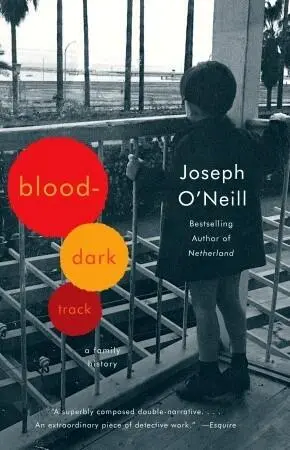
- Название:Blood-Dark Track
- Автор:
- Издательство:Knopf Doubleday Publishing Group
- Жанр:
- Год:2010
- ISBN:978-0-307-74265-0
- Рейтинг книги:4 / 5. Голосов: 1
-
Избранное:Добавить в избранное
- Отзывы:
-
Ваша оценка:
Blood-Dark Track: краткое содержание, описание и аннотация
Предлагаем к чтению аннотацию, описание, краткое содержание или предисловие (зависит от того, что написал сам автор книги «Blood-Dark Track»). Если вы не нашли необходимую информацию о книге — напишите в комментариях, мы постараемся отыскать её.
, a fascinating, personal, and beautifully crafted family history.
Joseph O'Neill's grandfathers-one Turkish, one Irish-were both imprisoned for suspected subversion during the Second World War. The Irish grandfather, a handsome rogue from a family of small farmers, was an active member of the IRA. O'Neill's other grandfather, a debonair hotelier from the tiny and threatened Turkish Christian minority, was interned by the British in Palestine on suspicion of being an Axis spy.
With intellect, compassion, and grace, O'Neill sets the stories of these individuals against the history of the last century's most inhuman events.
Blood-Dark Track — читать онлайн ознакомительный отрывок
Ниже представлен текст книги, разбитый по страницам. Система сохранения места последней прочитанной страницы, позволяет с удобством читать онлайн бесплатно книгу «Blood-Dark Track», без необходимости каждый раз заново искать на чём Вы остановились. Поставьте закладку, и сможете в любой момент перейти на страницу, на которой закончили чтение.
Интервал:
Закладка:
A few days later, Paddy’s letter — which had been held up in a mail strike — arrived.
Dear Joseph,
I was released from the Camp fifty years ago come 3rd of next May. As I was walking across the plains of Kildare, I stopped for a moment, looked back, and said ‘Paddy, everything in there is dead and buried for ever.’ I have no intention to resurrect even one word to anybody.
If you have visions of dialogue between us, hoping to prise me open, it’s not on. End of story.
Some months later, in September 1995, I travelled from Cork to County Kildare. I drove in a bewildering alternation of hard rain and extraordinarily pure sunlight that suddenly turned the plain at Cashel bright as Africa. I passed through grey, half-pretty towns — Fermoy, Urlingford, Durrow — and, taking a detour from the main road, through villages that had not sloughed off the old colonial topography: the long, high wall that runs by the road as you enter the village, with tall woodland behind the wall; the continuation of the wall for an unseemly distance; a gate in the wall with a lodge and a lane leading to a Big House obscured by trees; the resumption of the wall and treetops; then the grey, treeless village: a petrol station, bungalows, and old cottages with pebbledashed walls made of a hotchpotch of brick and mortar and stone.
County Kildare gave the appearance of being devoted entirely to horses and their riding, breeding and training. Signboards advertised pony shows and gymkhanas and race meetings and stud farms, and in places the white railings of gallops ran alongside the road before nimbly curving away into intensely lush grassland. I passed through Kildare town, and not long after I saw a sign giving the direction of the Curragh Camp — still in use, as it had been during the Emergency, as the central military barracks of the army of the Irish State. I had no idea what to expect. I had never been to the Curragh — the plain which gave the Camp its name — and had not yet read anything about the Camp.
I turned down a side-road and moments later was presented with a desolate spectacle. Before me was a broad, featureless belt of heathland traversed by a single empty road. The road led to a distant wood of pine trees. Within the wood and visible above the treetops was the unmistakable silhouette of a military tower. A few sheep stained with turquoise dye grazed on the thin grass of the heath. On the rainy eastern horizon were the Wicklow Mountains, whose charcoal shapes seemed to have smudged the grey sky above them. As I drove slowly across the plain, I began to feel apprehensive. My approach was clearly visible to anyone in the red-brick tower, which looked like the Victorian tower of my Cambridge college, a suicides’ favourite that, student rumour had it, was the work of an architect of prisons and lunatic asylums. A sign asserted, NO PHOTOGRAPHS ON PAIN OF IMPRISONMENT . I came to the wood. Abandoned concrete huts pocked a hollow to my left. I drove on slowly. I stopped at a cross-roads surrounded by a cluster of buildings that included a post office and a general goods store. Young men in civvies and number one haircuts slouched on concrete steps. Barriers blocked the road to the left and right, which were restricted to AUTHORIZED VEHICLES ONLY . I was at the centre of the camp, and I realized what made me so uneasy. It was the proximity of incontestable power.
By leave of the camp commander, I had a meeting arranged with a Corporal Seoirse Devlin at the Curragh Military Museum, which was located in a large, one-roomed brick building. Corporal Devlin was a small, compact, extraordinarily enthusiastic man in his thirties. The Museum, he explained, opened in 1955 after an American millionaire called Chester Beatty donated one of the top eight weapons collections in the world to the Irish nation. Corporal Devlin was the curator of the collection and looked after it practically single-handedly. ‘It was worth the trouble,’ he said, gesturing eagerly at the exhibits. Housed in glass cases was a startling variety of exotic instruments of destruction: African and Dayak swords, daggers from Caucasia and India, clubs from Polynesia, Japanese muskets (especially fine, these, the corporal said), and a whole arsenal of bejewelled, ancient and otherwise precious spears, knives, cutlasses, pistols, scimitars, battle-axes and bludgeons. In addition to the Beatty exhibits, some of Corporal Devlin’s private collection of military memorabilia was on show: handguns, a Lewis machine-gun of the kind Jim O’Neill used to teach his men to assemble and disassemble, military motorbikes, rifles, military uniforms and jackets that included old Irish Volunteer and IRA tunics. It was an extraordinary feat of accumulation, given the limited time and money available to a corporal in the Irish army and the limited interest of his employer in its own cultural history.
I mentioned that there didn’t seem to be anything in the Museum about the old internment camp. There was a certain amount of material, the Corporal said, and he showed me a photograph of a group of cheerful young German officers being served tea by a waiter wearing a white jacket and a bow tie. Seeing my astounded expression, Corporal Devlin explained that from the summer of 1940 onwards, about 40 RAF men (who included Poles, Free French and Canadian fliers) and 60 Germans, mainly Luftwaffe men, were interned at the Curragh in accordance with Ireland’s neutrality policy. These fellows — most of whom had crashed in Ireland or its territorial waters — had it pretty good. The Germans received their salaries in sterling, and every RAF man had his own room and received pay of 35 shillings a week. Food, which included roast beef once a week, was never in short supply, and drink could be bought cheaply by the Allies at a bar stocked by the Dublin British Legation. One man even shipped his wife over to Ireland, spending the days with her in Newbridge, which was just a mile or two away, and returning to the camp in the evening in accordance with the terms of his parole, which allowed internees to leave the camp so long as they came back at night. The internees would cycle into neighbouring towns and work on nearby farms. Once a month they were allowed to catch a bus into Dublin. Although there was no fraternization, the two opposing sides (in the only instance in the war of their co-imprisonment) greeted each other amicably. A schoolboy’s code of honour governed their relations with their Irish captors. If an escaping prisoner knew he had been spotted, in deference to the guards’ lack of ammunition and the obvious pointlessness of any bloodshed, he surrendered on a ‘bang-bang, you’re dead’ principle (an American who bent the parole rules to escape to Belfast was sent back by his superiors). Whereas Allied internees were released in mid-1943, the Germans were held until the end of the war. ‘At first,’ Corporal Devlin said, ‘the Germans plotted and attempted one or two escapes, but soon they settled down. They didn’t have such a bad time of it, in the end.’ Indeed, only a short while ago a group of former German prisoners had revisited the Curragh to relive the old days. All this was fairly well documented, Corporal Devlin said, and two books had been written about the Allied internees alone.
‘What about the war-time Irish internees?’ I asked. The corporal touched his round glasses. ‘Well, that is still a sensitive subject,’ he said. ‘It so happens that I’ve done some digging around, but I haven’t come up with anything. A lot of documents have been burned.’ ‘So there’s no record of the IRA internments? Only of the Allied and German?’ The corporal nodded. ‘And there isn’t a monument or anything of that kind? Some acknowledgement?’ Devlin touched his glasses again. ‘It isn’t talked about,’ he said. ‘It’s a non-subject.’ I asked whether there was any chance that I could see the site of the old republican internment camp. ‘I’m afraid not,’ he said apologetically. ‘It’s in a security area and you’d need authorization to go there. You’re not missing much,’ Corporal Devlin said. ‘There aren’t any huts left.’ Then he retrieved a book and showed me a sketch plan which showed the lay-out of the camps..
Читать дальшеИнтервал:
Закладка:
Похожие книги на «Blood-Dark Track»
Представляем Вашему вниманию похожие книги на «Blood-Dark Track» списком для выбора. Мы отобрали схожую по названию и смыслу литературу в надежде предоставить читателям больше вариантов отыскать новые, интересные, ещё непрочитанные произведения.



Обсуждение, отзывы о книге «Blood-Dark Track» и просто собственные мнения читателей. Оставьте ваши комментарии, напишите, что Вы думаете о произведении, его смысле или главных героях. Укажите что конкретно понравилось, а что нет, и почему Вы так считаете.