Joseph O'Neill - Blood-Dark Track
Здесь есть возможность читать онлайн «Joseph O'Neill - Blood-Dark Track» — ознакомительный отрывок электронной книги совершенно бесплатно, а после прочтения отрывка купить полную версию. В некоторых случаях можно слушать аудио, скачать через торрент в формате fb2 и присутствует краткое содержание. Год выпуска: 2010, ISBN: 2010, Издательство: Knopf Doubleday Publishing Group, Жанр: Современная проза, на английском языке. Описание произведения, (предисловие) а так же отзывы посетителей доступны на портале библиотеки ЛибКат.
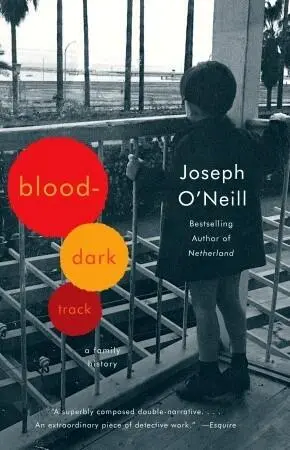
- Название:Blood-Dark Track
- Автор:
- Издательство:Knopf Doubleday Publishing Group
- Жанр:
- Год:2010
- ISBN:978-0-307-74265-0
- Рейтинг книги:4 / 5. Голосов: 1
-
Избранное:Добавить в избранное
- Отзывы:
-
Ваша оценка:
Blood-Dark Track: краткое содержание, описание и аннотация
Предлагаем к чтению аннотацию, описание, краткое содержание или предисловие (зависит от того, что написал сам автор книги «Blood-Dark Track»). Если вы не нашли необходимую информацию о книге — напишите в комментариях, мы постараемся отыскать её.
, a fascinating, personal, and beautifully crafted family history.
Joseph O'Neill's grandfathers-one Turkish, one Irish-were both imprisoned for suspected subversion during the Second World War. The Irish grandfather, a handsome rogue from a family of small farmers, was an active member of the IRA. O'Neill's other grandfather, a debonair hotelier from the tiny and threatened Turkish Christian minority, was interned by the British in Palestine on suspicion of being an Axis spy.
With intellect, compassion, and grace, O'Neill sets the stories of these individuals against the history of the last century's most inhuman events.
Blood-Dark Track — читать онлайн ознакомительный отрывок
Ниже представлен текст книги, разбитый по страницам. Система сохранения места последней прочитанной страницы, позволяет с удобством читать онлайн бесплатно книгу «Blood-Dark Track», без необходимости каждый раз заново искать на чём Вы остановились. Поставьте закладку, и сможете в любой момент перейти на страницу, на которой закончили чтение.
Интервал:
Закладка:
I left Corporal Devlin in his museum and walked back to my car, which was parked by the crossroads at the centre of the camp. I decided to try my luck. I went to reception office and asked for permission to see the old German internment camp. A couple of phone-calls later, I was being driven to the south part of the Curragh Camp by a soldier who’d been detailed to give me five minutes of his time. He led me into a field bespattered with sheepshit. ‘Here we are,’ he said. ‘Here’s the old German camp.’
We were at the perimeter of the camp. To the south was half a mile of open plain where sheep grazed and a horsewoman cantered; tall trees and a village, Brownstown, marked the limit of the plain. To the east were the Wicklow Mountains; to the north, the body of the military camp, with its redbrick buildings; to the west, a misty plain.
I entered the field and walked around for a few minutes. The foundations of the camp buildings, concrete ridges that protruded from the grass, were still visible; the wooden superstructures of the huts had all disappeared. Slabs of concrete marked the locations of the stoves around which the internees had huddled. Nettles, thistles and weeds grew everywhere. The only structure of any size left standing was the red-brick chimney the Germans built for the cookhouse. Then I walked towards the neighbouring field, which was the location of the old republican camp. The two camps were separated by a deep trench that still contained ancient curls of barbed wire. I walked to the edge of the trench and gazed out at the site of my grandfather’s five-year captivity; for unspecified security reasons, I was allowed no closer. I could make out the foundations of the huts in the grass and, in a slight dale at the edge of the campsite, the old playing field.
I turned back and returned to my car with a feeling of relief. The whole of Curragh Camp, not just the old internment grounds, had a charmless, depressingly defective air, and I could understand why the troops nowadays preferred to commute into work from the surrounding towns. Even if they’d wanted to live here, much of the picturesque red-brick Victorian terraced housing designated for their accommodation was no longer fit for human habitation. The camp had been built by the British in 1855, and it seemed to me that the place was still clouded by its years of service as the principal barracks of the foreign power and the headquarters of the Black and Tans.
As if to confirm this thought, the sun emerged from a blue gash of sky as I drove out of the camp. The day was suddenly a glorious one and the clouds white as cricketers. I noticed the grandstand of the Curragh racetrack a mile or two away and the pale H’s of rugby posts rising here and there on the heath.
I drove on to Dublin. I entered the city centre and then, crossing to the Liffey’s northern bank, drove to Arbour Hill, which rose just north of the river and whose atmospheric old working-class housing was becoming fashionable. I paid a visit to Arbour Hill Prison cemetery. It was a peaceful, tree-lined place. There was a carefully tended lawn and a memorial wall inscribed with the Proclamation of the Provisional Government of the Republic of Ireland read out in public by Patrick Pearse to launch the Easter Rising:
Irishmen and Irishwomen, in the name of God and of the dead generations from which she receives her old tradition of nationhood, Ireland, through us, calls her children to her flag and strikes for her freedom.
Having organised and trained her manhood through her secret revolutionary organisation, the Irish Republican Brotherhood, and through her open military organisations, the Irish Volunteers and the Irish Citizen Army, having patiently perfected her discipline, having resolutely waited for the right moment to reveal itself, she now seizes that moment, and, supported by her exiled children in America and by gallant allies in Europe, but relying in the first on her own strength, she strikes in full confidence of victory.
We declare the right of the people of Ireland to the ownership of Ireland, and to the unfettered control of Irish destinies, to be sovereign and indefeasible. The long usurpation of that right by a foreign people and government has not extinguished the right, nor can it ever be extinguished except by the destruction of the Irish people. In every generation the Irish people have asserted their right to national freedom and sovereignty; six times during the past three hundred years they have asserted it in arms. Standing on that fundamental right and again asserting it in arms in the face of the world, we hereby proclaim the Irish Republic as a Sovereign Independent State, and we pledge our lives and the lives of our comrades-in-arms to the cause of its freedom, of its welfare, and of its exaltation among the nations.
The Irish Republic is entitled to, and hereby claims, the allegiance of every Irishman and Irishwoman. The Republic guarantees religious and civil liberty, equal rights and the equal opportunities to all its citizens, and declares its resolve to pursue the happiness and prosperity of the whole nation and all of its parts, cherishing all the children of the nation equally, and oblivious of the differences carefully fostered by an alien government, which have divided a minority from the majority in the past.
Until our arms have brought the opportune moment for the establishment of a permanent National Government, representative of the whole of the people of Ireland and elected by the suffrages of all her men and women, the Provisional Government, hereby constituted, will administer the civil and military affairs of the Republic in trust for the people.
We place the cause of the Irish Republic under the protection of the Most High God, Whose blessing we invoke upon our arms, and we pray that no one who serves that cause will dishonour it by cowardice, inhumanity or rapine. In this supreme hour the Irish nation must, by its valour and discipline and by the readiness of its children to sacrifice themselves for the common good, prove itself worthy of the august destiny to which it is called.
The signatories of the Proclamation — Thomas J. Clarke, Sean MacDiarmada, Patrick Pearse, James Connolly, Thomas MacDonagh, Eamonn Ceannt, Joseph Plunkett — were executed by firing squad and their remains, treated with quicklime, were buried here, at Arbour Hill Prison, where a memorial stone with inscriptions in Irish and English recalled them. When I first came across the text of the Proclamation, as a twenty-one year-old student in a Cambridge University library, the surge of emotion I felt was so strong that my scalp and cheeks and ears prickled, and it’s even possible that my eyes clouded over. I cannot fully account for these intense sensations of patriotic exhilaration, but I know that it’s only once you are buoyantly swept away in their simplifying current that you realize quite what a burden it is to wade through that other, finicky, obstructive, futile, morally muddy world, and what an absolute relief it is to be quickly towed by certainty and feel significant. No matter how familiar I grow with it, I am always moved by the Proclamation of Independence and grateful for it.
It so happened that a film touching on the Easter Rising, Michael Collins , directed by Neil Jordan, was being made in and around Dublin at that time — September 1995. The film was causing great excitement, and not simply because of the presence in Ireland of its stars, Liam Neeson and Julia Roberts. The eponymous hero himself had captured the imagination of the public. Newspaper stories, magazine features and TV programmes about Collins and his times were hungrily absorbed, and the media somewhat bizarrely reported the substance of the movie’s eighty-year-old plot as if it were breaking news. The nation was developing a new appetite for its history. The paramilitary cease-fires of August and September 1994 had just passed their first anniversaries, and it seemed that the events of the Anglo-Irish War and even the Civil War could at last be consumed without distress. When the call went out for unpaid extras to appear in crowd scenes in Michael Collins — notably for the Bloody Sunday scene in which British troops fired into the crowd at a Croke Park football match, killing twelve — large numbers of people from all over the country presented themselves in suitably old-fashioned attire, eager to take part and take fresh narrative possession of the national past. This light-hearted new enthusiasm for history had another consequence: it facilitated the appearance, in 1997, of The IRA in the Twilight Years, 1923–1948 , a book that decisively disturbed the long stillness surrounding the Curragh internments. Published by a former Curragh internee named Uinseann MacEoin, the book contained the reminiscences of more than thirty men about their internment days, and, taken together with information I gathered from Curragh veterans I met in Cork and Dublin, enabled me to piece together something of my grandfather’s experiences in Tintown, as the internment camp was called by the internees.
Читать дальшеИнтервал:
Закладка:
Похожие книги на «Blood-Dark Track»
Представляем Вашему вниманию похожие книги на «Blood-Dark Track» списком для выбора. Мы отобрали схожую по названию и смыслу литературу в надежде предоставить читателям больше вариантов отыскать новые, интересные, ещё непрочитанные произведения.


Обсуждение, отзывы о книге «Blood-Dark Track» и просто собственные мнения читателей. Оставьте ваши комментарии, напишите, что Вы думаете о произведении, его смысле или главных героях. Укажите что конкретно понравилось, а что нет, и почему Вы так считаете.