Joseph O'Neill - Blood-Dark Track
Здесь есть возможность читать онлайн «Joseph O'Neill - Blood-Dark Track» — ознакомительный отрывок электронной книги совершенно бесплатно, а после прочтения отрывка купить полную версию. В некоторых случаях можно слушать аудио, скачать через торрент в формате fb2 и присутствует краткое содержание. Год выпуска: 2010, ISBN: 2010, Издательство: Knopf Doubleday Publishing Group, Жанр: Современная проза, на английском языке. Описание произведения, (предисловие) а так же отзывы посетителей доступны на портале библиотеки ЛибКат.
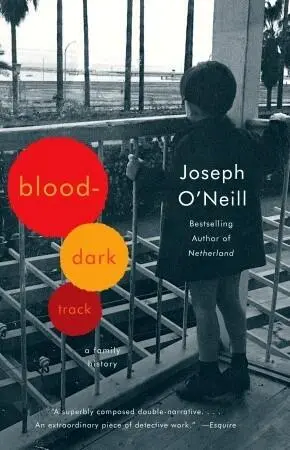
- Название:Blood-Dark Track
- Автор:
- Издательство:Knopf Doubleday Publishing Group
- Жанр:
- Год:2010
- ISBN:978-0-307-74265-0
- Рейтинг книги:4 / 5. Голосов: 1
-
Избранное:Добавить в избранное
- Отзывы:
-
Ваша оценка:
Blood-Dark Track: краткое содержание, описание и аннотация
Предлагаем к чтению аннотацию, описание, краткое содержание или предисловие (зависит от того, что написал сам автор книги «Blood-Dark Track»). Если вы не нашли необходимую информацию о книге — напишите в комментариях, мы постараемся отыскать её.
, a fascinating, personal, and beautifully crafted family history.
Joseph O'Neill's grandfathers-one Turkish, one Irish-were both imprisoned for suspected subversion during the Second World War. The Irish grandfather, a handsome rogue from a family of small farmers, was an active member of the IRA. O'Neill's other grandfather, a debonair hotelier from the tiny and threatened Turkish Christian minority, was interned by the British in Palestine on suspicion of being an Axis spy.
With intellect, compassion, and grace, O'Neill sets the stories of these individuals against the history of the last century's most inhuman events.
Blood-Dark Track — читать онлайн ознакомительный отрывок
Ниже представлен текст книги, разбитый по страницам. Система сохранения места последней прочитанной страницы, позволяет с удобством читать онлайн бесплатно книгу «Blood-Dark Track», без необходимости каждый раз заново искать на чём Вы остановились. Поставьте закладку, и сможете в любой момент перейти на страницу, на которой закончили чтение.
Интервал:
Закладка:
The day before, 15 February 1921, the Examiner carried the following story:
BANDON DOUBLE TRAGEDY— TWO YOUNG MEN SHOT DEAD
Bandon, Monday — Another appalling tragedy is reported today from Breaghna, Desertserges, which is in the neighbourhood of the place where Thomas Bradfield, of Knockacoole House, was found shot about a fortnight ago.
It appears that the two sons, James and Timothy, of a highly respectable farmer named James Coffey, were taken from their beds about two o’clock this morning by masked and armed men and immediately afterwards shots were heard, their dead bodies being found subsequently in a neighbouring field. They were aged 19 and 22 years, and were quiet and inoffensive. Much sympathy is felt for their bereaved parents and relatives.
The question of who killed the Coffey brothers (who, it later emerged, were in fact aged 22 and 25) was raised in the House of Commons on 22 February 1921, but the British government had no information then, or at any subsequent time, as to the identity of the killers. The O’Neills simply said it was the Black and Tans. We had a view on the matter because the Coffeys, who lived very close to Ardkitt, were Jim O’Neill’s first cousins, and, a fact not mentioned by the newspapers, IRA volunteers. Their deaths, not forgotten, were part of the family’s history of itself.
My grandfather was eleven years of age and living in Kilbrittain with his O’Driscoll aunt and uncle when his cousins died. It required a conscious effort on my part to think of him at that age, and all that came to my mind was the cinematic image of a boy in shorts tramping alone across a field in Graunriagh. I could not picture his face or guess what his thoughts were. I knew that he was growing up without his mother and father, that two of his cousins had met death in the most nightmarish circumstances, that at night he heard gunfire and roaring British armoured cars and shouting enemy soldiers; that his name, James O’Neill, appeared on the list of occupants tacked to the front door of Graunriagh by order of the British; that the Kilbrittain company of the IRA was one of the most active in the country; that in a year his uncle would die, and that he would leave school at fourteen and be once more uprooted, and that he never knew life to be easy or certain. These frightening, internecine circumstances were utterly removed from my experience of growing up, and I hesitated to draw too many conclusions from them; but I thought they were a clue to why, by the time he was a man, my grandfather had developed a character and outlook calculated, first and foremost, to withstand and reduce the world.
After Graunriagh, Jim went back to Ardkitt. In his late teens, he quit the farm and went to Cork city. At some point between 1930 and 1932, when he was in his early twenties, he joined the IRA. Although at this time many republicans were throwing their weight behind Fianna Fáil (my grandmother recalled her brother Tadhg campaigning in West Cork in the 1932 election), my grandfather never trusted Éamon de Valera. As the ’thirties passed and de Valera did little to progress the unification of Ireland, my grandfather’s distrust developed into loathing. ‘He hated him; he really, really hated him,’ my grandmother said.
Jim O’Neill threw himself into paramilitary life with characteristic determination. With his single-mindedness, physical strength and easy way with machinery, he was a very competent and respected volunteer and known for being a strict disciplinarian. By the mid-’thirties, he was an IRA company OC and TO (training officer). Training took him away for weekends to special camps, and he would often come home from work in the evenings only to set off immediately for a drilling session in West Cork, where his knowledge of the country complemented his expertise with a Lewis machine-gun. When the civil war in Spain started in July 1936, Jim O’Neill toyed with the idea of fighting against the fascists. But the IRA forbade its members from travelling to Spain (a prohibition of limited effect: around 400 Irishmen, mostly ex-IRA, fought in the International Brigades, 42 dying in action), because volunteers were required for active service in Ireland. Only months after the killing of Admiral Somerville, the first anti-British military campaign since 1921 was to be launched.
The first step was to be a raid on Gough Barracks, in County Armagh, by 26 men from the Cork active service unit. Among the select few was Jim O’Neill.
The Corkmen packed their bags and went to confession and bought train tickets for Dundalk. However, when the women’s republican group Cumann na mBan — which was not supposed to know anything about the raid — requested to participate in the raid, it became apparent that the attack was an open secret. The Armagh raid was cancelled. My grandfather always regretted this lost opportunity, just as he always regretted not having fought for the Spanish Republic — even though its cause was doomed and nothing he could have done would have affected the outcome of that war.
The Armagh raid was the idea of Tom Barry, the new IRA Chief of Staff. His right-hand man was my great-uncle, Tadhg Lynch, the IRA adjutant-general. I knew from family talk that Tadhg was an IRA man but I only learned what a prominent national figure he’d been from reading historical literature. I read, for example, that in May 1937, he marched alongside his friend Frank Ryan, recently returned from the Spanish Civil War, at the head of the anti-Coronation march in Dublin. There was a huge brawl with the police, but the marchers made it to the Smith O’Brien monument in O’Connell Street, where Tadhg, ‘his coat and shirt a mess of blood, but voice, mind and body vibrant with the passion of a great work well done’ ( An Phoblacht ), chaired the meeting. Fighting broke out again and Tadhg was knocked out. Waking up next to Tom Barry in hospital, my great-uncle got out of bed and mobilized the Dublin unit for another march the next day. A New York Times headline read: ‘Dublin Republicans Battle Police in Anti-British Rallies’. Tadhg no doubt appreciated the effect of such media coverage: that year he edited a new series of An Phoblacht , the newspaper that still remains an important IRA mouthpiece.
My grandmother said that Tadhg was an analytical man, into strategy: he wouldn’t be a fellow to go out and do the shooting. Her brother Jack, she implied, was different. Jack was a man of action.
Everybody loved Jack Lynch. They loved his cheerful, straightforward take on the world, they loved his devilment and courage. It was Jack who was always on the run, always getting into scrapes and, most of the time, getting out of them — shooting his way out of a tight spot in Drimoleague from the back of a roaring motorcycle, clambering on to the roof of MacCurtain Hall in Cork as the Special Branch poured into the building. It was Jack, abroad in West Cork, who one night was warned by a ghost not to go to a place surrounded by waiting security forces. It was Jack who holed up in a dugout at Ardkitt and took breakfasts from his great admirer, Peter O’Neill, Jack who was happy-go-lucky. When, during active service in England, his false identity became known to the doctor who removed his appendix, the doctor, a man called Keyes, turned out to be a Dunmanway Protestant and for some reason gave him the wink. Jack was across in England for two or three years, Grandma said, working undercover as a navvy. In 1940, when the police tried to arrest Jack and his friend Denis Griffin in Dunmanway at the rear of O’Driscoll’s pub, Denis Griffin was caught, losing a finger to a bullet; but Jack escaped. ‘Jack was quick,’ Grandma said.
These colourful anecdotes did not reveal the wider significance of great-uncle Jack and, in particular, his activities in England. Jack Lynch was appointed the IRA’s commanding officer for Great Britain in 1937. He was based mainly in Liverpool and Manchester and Birmingham, and his pseudonym was Buckley. On 12 January 1939, the IRA formally served Lord Halifax with a demand for the British military evacuation of Ireland within four days. The demand was not met, and on 16 January 1939 the IRA responded by blowing up electrical lines and power stations. In February, time-bombs were set off at Tottenham Court Road and Leicester Square underground stations, seriously injuring two people; at the end of March, two major explosions struck Hammersmith Bridge, bombs blew up in Birmingham, Liverpool and Coventry, and seven further explosions hit London. In May, fifteen people were treated as a consequence of tear-gas attacks in Liverpool, four explosions shook Coventry, four magnesium bombs were set off in a Birmingham cinema, and London cinemas were damaged. In June, the postal system was attacked: letter bombs were posted, and twenty pillar boxes, a mail van in Birmingham and a sorting office in London were blown up; three banks in central London were smashed by huge explosions, and Madame Tussaud’s was damaged by a balloon bomb. By 24 July 1939, there had been 127 incidents, one fatality, and serious injuries to 55 people. Two days later, bombs went off at Victoria Station and King’s Cross Station, where a man was killed. A day after that, in Liverpool, a bridge was blown up and a post office reduced to rubble. Then, on 25 August 1939, a bomb intended for the destruction of a power station detonated in the middle of a busy Coventry street. Five people were killed. Two members of the Coventry unit of the IRA, Peter Barnes and James McCormack, were arrested and hanged.
Читать дальшеИнтервал:
Закладка:
Похожие книги на «Blood-Dark Track»
Представляем Вашему вниманию похожие книги на «Blood-Dark Track» списком для выбора. Мы отобрали схожую по названию и смыслу литературу в надежде предоставить читателям больше вариантов отыскать новые, интересные, ещё непрочитанные произведения.


Обсуждение, отзывы о книге «Blood-Dark Track» и просто собственные мнения читателей. Оставьте ваши комментарии, напишите, что Вы думаете о произведении, его смысле или главных героях. Укажите что конкретно понравилось, а что нет, и почему Вы так считаете.