Joseph O'Neill - Blood-Dark Track
Здесь есть возможность читать онлайн «Joseph O'Neill - Blood-Dark Track» — ознакомительный отрывок электронной книги совершенно бесплатно, а после прочтения отрывка купить полную версию. В некоторых случаях можно слушать аудио, скачать через торрент в формате fb2 и присутствует краткое содержание. Год выпуска: 2010, ISBN: 2010, Издательство: Knopf Doubleday Publishing Group, Жанр: Современная проза, на английском языке. Описание произведения, (предисловие) а так же отзывы посетителей доступны на портале библиотеки ЛибКат.
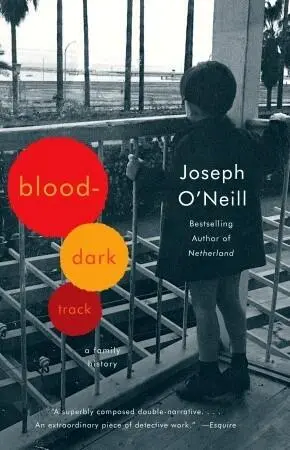
- Название:Blood-Dark Track
- Автор:
- Издательство:Knopf Doubleday Publishing Group
- Жанр:
- Год:2010
- ISBN:978-0-307-74265-0
- Рейтинг книги:4 / 5. Голосов: 1
-
Избранное:Добавить в избранное
- Отзывы:
-
Ваша оценка:
Blood-Dark Track: краткое содержание, описание и аннотация
Предлагаем к чтению аннотацию, описание, краткое содержание или предисловие (зависит от того, что написал сам автор книги «Blood-Dark Track»). Если вы не нашли необходимую информацию о книге — напишите в комментариях, мы постараемся отыскать её.
, a fascinating, personal, and beautifully crafted family history.
Joseph O'Neill's grandfathers-one Turkish, one Irish-were both imprisoned for suspected subversion during the Second World War. The Irish grandfather, a handsome rogue from a family of small farmers, was an active member of the IRA. O'Neill's other grandfather, a debonair hotelier from the tiny and threatened Turkish Christian minority, was interned by the British in Palestine on suspicion of being an Axis spy.
With intellect, compassion, and grace, O'Neill sets the stories of these individuals against the history of the last century's most inhuman events.
Blood-Dark Track — читать онлайн ознакомительный отрывок
Ниже представлен текст книги, разбитый по страницам. Система сохранения места последней прочитанной страницы, позволяет с удобством читать онлайн бесплатно книгу «Blood-Dark Track», без необходимости каждый раз заново искать на чём Вы остановились. Поставьте закладку, и сможете в любой момент перейти на страницу, на которой закончили чтение.
Интервал:
Закладка:
On 3 February 1942, around the time my grandfather was making his fateful visa application to the British consulate in Mersin, Sir Patrick Coghill, the SIME agent based in Adana, visited Beirut. The baronet learned, to his ‘stupefaction and horror,’ that he had been appointed head of the British Security Mission in Syria. The BSM had been founded by Arthur Giles, the head of CID Palestine Police, and had accompanied the invasion force into Vichy-controlled Syria in the summer of 1941 with a view to assuming the counter-espionage activities of the Vichy Sûreté. In the event, the Sûreté records were destroyed before the British could get their hands on them. Coghill noted that, at the time, the loss of the records ‘was a bitter disappointment — but looking back I wonder whether we were not better off without them. As practically all the French agents and informers were Lebanese Christians, all their reports were hopelessly biased and distorted — yet if we had taken them over we would certainly have believed them and relied on them.’ At any rate, it soon became apparent that the Axis had no significant espionage capability in Beirut or elsewhere in the region. Little trouble was experienced from its agents, which, Coghill speculated, was perhaps due to the large number of ‘suspects and known pro-Axis sympathizers’ held in ‘internment camps for Enemy Aliens and Agents and Suspects’.
The administration of the camps — indeed, practically all internal administrative power in Syria — was in Free French hands. Nonetheless, when Sir Patrick Coghill assumed command of the British Security Mission in the summer of 1942, he was from that time on responsible for the continued detention of Joseph Dakak. Not surprisingly, there was no mention of my grandfather in Coghill’s autobiographical papers, which I read in an Oxford library. There was, however, another omission which did strike me as a little curious. Although he referred frequently to his life and home in Castletownshend, West Cork, and to his family, Sir Patrick Coghill made no reference to his uncle, who also lived in the village of Castletownshend, Admiral Somerville.
4
There are crimes of passion and crimes of logic.
— Albert Camus, The RebelShortly after nine o’clock on the evening of Tuesday 24 March 1936, the occupants of The Point, Castletownshend, County Cork — Vice-Admiral Henry Boyle Townshend Somerville and his wife — heard footsteps on the gravel path outside their dining room window. Mrs Somerville said to her husband, ‘Perhaps that’s one of the boys coming to see you’ — the boys, in this case, being the young men of the locality who dropped by to ask the Admiral’s help in joining the British navy. ‘I’ll go and see,’ the Admiral said. He rose to his feet to receive the visitors personally: the cook and the housemaid were out for the evening at a play presented in the village by a travelling company. There was a knocking at the door. Admiral Somerville picked up an oil lamp, crossed the hall, and stepped into the porch at the entrance to the house. Mrs Somerville, who remained in the dining room, heard an indistinct voice outside the glass-panelled front door: ‘Are you Mr Somerville?’ ‘I am Admiral Somerville,’ Somerville replied correctly. Mrs Somerville heard gunshots and the sound of glass shattering. She grabbed a lamp and rushed into the hall. As she entered, a strong gust of wind blew in through the open door of the porch, extinguishing the flame she carried. Mrs Somerville found herself in complete darkness. She called her husband’s name — ‘Boyle! Boyle!’ — but received no response. All that was audible was the sound of footsteps — the steps of two persons, was her impression — retreating down the gravel avenue towards the gate of the house. Mrs Somerville advanced in the darkness towards the porch. She saw her husband lying motionless by the doorway among the broken remains of his lamp.
Alongside the body was a piece of cardboard on which letters cut from newspapers had been glued. The message read, ‘This British agent has sent 52 boys to the British Army in the last few months.’
By order of Chief Superintendent McCarthy, the Corkman initially in charge of the investigation, the body was left untouched until the arrival from Dublin, on Thursday, of Chief Superintendent Woods of the Special Crimes Department, and Chief Superintendent Sheridan, Head of the Technical Bureau of the Civic Guards. Friday saw the arrival of Commandant Stapleton, the Free State army’s ballistics expert, and Dr John McGrath, the State Pathologist, who carried out a post-mortem examination.
At the inquest held later that day in the Somerville home, Dr McGrath gave evidence that the body was that of an elderly man, 5 feet 11 inches in height, dressed in a dinner suit and a bloodstained white dress shirt. On examination, the pathologist found six wounds. The first was a bullet wound in the left groin at the level of the pubis. The direction of the wound was from the left of the deceased towards the right, and downwards. The bullet was extracted from muscles in the right thigh, having travelled through the belly cavity, puncturing the intestine twice, and through the pubic bone. The second wound was situated at the crest of the ilium on the left side. This wound also tracked in a downwards direction. Dr McGrath found the bullet in the muscles on the right side of the small of the back. Wound number three was in the chest, situated 1½ inches to the left of the midline and 2¾ inches above the nipple line. This wound went partly through the breastbone, then through the membranes that covered the heart, then it punctured the left artery of the heart at a point above the heart. Then the track went under the lining and through the back of the chest wall between the third and fourth ribs; it continued through the muscles of the back and the shoulder-blade bone, and terminated in the muscles at the back of the shoulder-blade, where a bullet was lodged. The fourth and fifth wounds (an entrance wound and an exit wound on the left upper arm caused by a bullet passing through and breaking the bone) were the only horizontal wounds. The sixth wound was at the angle of the lower jaw, an inch in front and below the left earlobe. The track of this wound was through the jawbone, which was broken, then downwards and rightwards and through the front of the spine, and through the tissues of the neck and the right shoulder blade, and finally into the muscles on the right side of the spine. Here another bullet was found. In total, at least five shots were fired.
The State Solicitor, a Mr T. Healy, addressed the inquest jury at length. He described Admiral Somerville as ‘the descendant of a proud family, the descendant of people who won distinction at home and abroad, the descendant of one of our incorruptible band who had fought to keep in this country a Parliament which had legislated for the entire country, the descendant of one who had disdained rank and wealth in order to fight for that Parliament which legislated for 32 counties and not for a dismembered and partitioned country.’ This was a reference to a great-grandfather of the deceased, Charles Kendal Bushe (1767–1843), the Lord Chief Justice of Ireland from 1822 to 1842, who in January 1800 spoke in the Dublin parliament against its forthcoming union with the English parliament. People also noted that the Admiral’s father, Tom Somerville, had been a friend of a local republican hero, Jeremiah O’Donovan Rossa (1831–1915). O’Donovan Rossa died in New York, and it was on the occasion of the repatriation of his remains, at Glasnevin Cemetery, that the republican Patrick Pearse famously proclaimed, ‘Life springs from death; and from the graves of patriot men and women spring living nations … [T]he fools, the fools, the fools! They have left us our Fenian dead, and while Ireland holds these graves, Ireland unfree shall never be at peace.’
Читать дальшеИнтервал:
Закладка:
Похожие книги на «Blood-Dark Track»
Представляем Вашему вниманию похожие книги на «Blood-Dark Track» списком для выбора. Мы отобрали схожую по названию и смыслу литературу в надежде предоставить читателям больше вариантов отыскать новые, интересные, ещё непрочитанные произведения.





Обсуждение, отзывы о книге «Blood-Dark Track» и просто собственные мнения читателей. Оставьте ваши комментарии, напишите, что Вы думаете о произведении, его смысле или главных героях. Укажите что конкретно понравилось, а что нет, и почему Вы так считаете.