Joseph O'Neill - Blood-Dark Track
Здесь есть возможность читать онлайн «Joseph O'Neill - Blood-Dark Track» — ознакомительный отрывок электронной книги совершенно бесплатно, а после прочтения отрывка купить полную версию. В некоторых случаях можно слушать аудио, скачать через торрент в формате fb2 и присутствует краткое содержание. Год выпуска: 2010, ISBN: 2010, Издательство: Knopf Doubleday Publishing Group, Жанр: Современная проза, на английском языке. Описание произведения, (предисловие) а так же отзывы посетителей доступны на портале библиотеки ЛибКат.
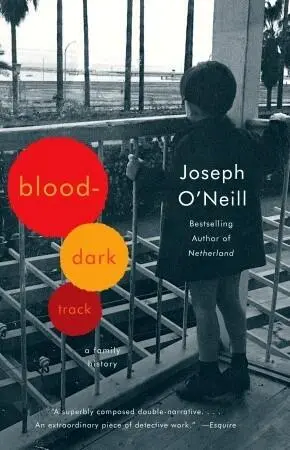
- Название:Blood-Dark Track
- Автор:
- Издательство:Knopf Doubleday Publishing Group
- Жанр:
- Год:2010
- ISBN:978-0-307-74265-0
- Рейтинг книги:4 / 5. Голосов: 1
-
Избранное:Добавить в избранное
- Отзывы:
-
Ваша оценка:
Blood-Dark Track: краткое содержание, описание и аннотация
Предлагаем к чтению аннотацию, описание, краткое содержание или предисловие (зависит от того, что написал сам автор книги «Blood-Dark Track»). Если вы не нашли необходимую информацию о книге — напишите в комментариях, мы постараемся отыскать её.
, a fascinating, personal, and beautifully crafted family history.
Joseph O'Neill's grandfathers-one Turkish, one Irish-were both imprisoned for suspected subversion during the Second World War. The Irish grandfather, a handsome rogue from a family of small farmers, was an active member of the IRA. O'Neill's other grandfather, a debonair hotelier from the tiny and threatened Turkish Christian minority, was interned by the British in Palestine on suspicion of being an Axis spy.
With intellect, compassion, and grace, O'Neill sets the stories of these individuals against the history of the last century's most inhuman events.
Blood-Dark Track — читать онлайн ознакомительный отрывок
Ниже представлен текст книги, разбитый по страницам. Система сохранения места последней прочитанной страницы, позволяет с удобством читать онлайн бесплатно книгу «Blood-Dark Track», без необходимости каждый раз заново искать на чём Вы остановились. Поставьте закладку, и сможете в любой момент перейти на страницу, на которой закончили чтение.
Интервал:
Закладка:
Because he suffered from stomach disorders, Dakak asked Gandour whether he might be able to get hold of some plain boiled potatoes. Gandour was able to oblige. One day, however, the potatoes tasted a little strange, and soon Dakak was seized by intense stomach pain, vomiting and diarrhoea; his heart started beating rapidly and he broke out into a drenching sweat. My grandfather’s agony continued for three days. A doctor from Aleppo who was locked up with him took his pulse and diagnosed an upset stomach; but as he lay ill, Dakak remembered the incident with the oranges in Jerusalem and everything became clear to him: he had been poisoned, and all his fellow inmates, who had not eaten the potatoes but nevertheless had pretended to vomit, were in the pay of the English.
I didn’t know what to make of this. Was it possible that all of my grandfather’s cell-mates were informers?
The leader of this ring of stooges, my grandfather asserted, was Nazim Gandour. Every Saturday morning, when the prisoners were let out to air their blankets, Gandour’s parents would be present a little distance away, play-acting: the mother carried a handkerchief and constantly wiped away tears. Gandour, meanwhile, questioned Dakak about the prominent people of Mersin and about the likelihood of the Germans invading Syria via Rhodes and Cyprus. ‘Not having powers of divination,’ my grandfather noted, ‘there was no way I could possibly answer him.’
‘This charade lasted for a month and a half,’ my grandfather wrote.
All the while, the prisoners circulated terrifying stories about the English: how suspects were made to disappear, how their bodies were hacked up and dumped in the sea. There wasn’t a machination, my grandfather wrote, that wasn’t used to terrorize him and impress on him that he, too, could meet with this fate. On one occasion he overheard an Armenian sergeant in the neighbouring cell loudly declaring that he had worked as a butcher in Adana during the French occupation.
A few days after the poisoning incident, my grandfather continued, a pretext was used to transfer him to a cell in a building used for criminals convicted of serious crimes. Wary of the food, Dakak did not eat anything. He did, however, accept a glass of water that an Armenian orderly had filled up. After taking a mouthful, Dakak registered a strange sensation. His lips and his tongue began to swell and burn, and his breath began to rasp in his chest. He poured away the remaining water.
An hour or so later, my grandfather heard a conversation in the adjoining cell. Two men were giving instructions to the guard. ‘At four in the morning, a car will come. That’s when his time will be up. You’ll put him into a sack and load him into the car. Once on the road, you’ll shoot him twice in the head and finish off the job the poison started. Make sure you run the engine to muffle the sound of gunfire. Once you’ve chopped him up, throw the pieces into the sea off a cliff between Beirut and Tripoli.’ The guard sobbed loudly and cried out, ‘How can you ask me to do such a thing?’
My grandfather snapped. In his pocket was a small metal blade he kept for cleaning his nails. He cut himself with the blade, slashing his skin in twenty-five places. The blade was blunt and he used his teeth to tear his veins further open. With his blood, he smeared on the wall, ‘I AM INNOCENT .’
At five in the morning, a passing soldier noticed the blood and the semi-conscious prisoner. Soon more soldiers arrived and carried my grandfather to a room where his wounds were roughly bandaged. Instead of taking him to a hospital, they returned him to his old cell with Nazim Gandour and his cronies and laid him down on the bare ground with just two blankets.
Dakak was very weak. The spies in the cell tried to take advantage of his condition by gathering around him and asking questions about photographs they thrust before his face. Unable to take it any more, Dakak eventually cried out, ‘I know who you are! I know that you’re all working for the Intelligence Service!’ At that, they stopped their interrogation.
But that same night Dakak awoke to find Gandour and two others looming nearby; and one hurriedly pocketed a gadget the size of a magnifying glass. ‘As you’d been sleeping for so long,’ Gandour bluffed, ‘we thought we’d wake you up.’ ‘I later realized,’ my grandfather wrote, ‘that they’d drugged me in order to extract revelations from me. It wasn’t the first or the last time,’ my grandfather asserted, ‘that this tactic was used on me.’
Three days after Joseph Dakak cut open his veins, he was forcibly removed from his cell and driven to a place called the Prison of the Sands ( Prison des Sables) . Two guards accompanied him. One said, ‘The day after tomorrow, we’re taking you out to sea and we’re not going to waste more than two bullets on you.’
Upon arrival at the Prison of the Sands, Dakak spent half an hour in the infirmary. In spite of his injuries and loss of blood, he was placed alone in a cell equipped only with a pillow and two blankets. Once more, he had no choice but to sleep on the ground.
He was watched day and night. Anybody approaching the cell would be told to move on. From time to time the guard would look through the peephole and whisper, ‘There’s no escape’. After three days, my grandfather — confused, broken in spirit and not really conscious of his actions, he wrote — tried to hang himself from the door using a pyjama belt. The guard quickly realized what was happening and entered the cell to put a stop to it. The next morning, Dakak mutilated himself again, reopening his wounds with a rusty piece of metal ripped from the bottom of the door. On seeing the blood, the guard removed Dakak from the cell. The prisoner’s wounds were bandaged and he was taken to a cell in another building.
The new cell was painted completely black. A large crucifix hung on one wall and at the centre of the crucifix was written, in Turkish, ‘ Tonight ’. That night a guard opened the peephole and said, ‘You see that bearded face on the wall? An Armenian murderer scratched that picture with his nails on the night before his execution. At four in the morning, he was taken away and hanged.’
Dakak, worn out by lack of sleep and malnourishment, spent that night and the days and nights that followed in terror of execution. He also suffered from dehydration: it was August, the black cell was a furnace, and he was given nothing to drink from six in the evening to six in the morning; only in response to his cries would a mouthful of water sometimes be poured through the hole in his door.
He went on hunger strike and shouted for his consul. After ten days of fasting and protest, he was informed that his consul was coming. He stopped his hunger strike. However, when the visitor arrived three days later, Dakak became afraid and did not believe that he was the consul. ‘As a consequence,’ my grandfather wrote, ‘I did not speak freely to the gentleman or voice complaints about how I was being tortured.’
After three months in the Prison of the Sands, Joseph Dakak was returned to the French prison in Beirut and placed in a cell with four other so-called detainees. Although his mental well-being had improved after the consul’s visit, returning to this environment sent Dakak rapidly into reverse. As ever, he had to listen to his cellmates’ horror stories, and on the second day one of them (who claimed to be from Adana) said to the guards in a stage whisper clearly audible to Dakak, ‘Tell the commander that enough is enough, it’s time to finish with this man; hanging, shooting, it doesn’t matter, just so long as it’s done.’ The guard returned a little while later and said, ‘Everything’s arranged. It’s all been set up for four o’clock tomorrow morning.’
Читать дальшеИнтервал:
Закладка:
Похожие книги на «Blood-Dark Track»
Представляем Вашему вниманию похожие книги на «Blood-Dark Track» списком для выбора. Мы отобрали схожую по названию и смыслу литературу в надежде предоставить читателям больше вариантов отыскать новые, интересные, ещё непрочитанные произведения.











Обсуждение, отзывы о книге «Blood-Dark Track» и просто собственные мнения читателей. Оставьте ваши комментарии, напишите, что Вы думаете о произведении, его смысле или главных героях. Укажите что конкретно понравилось, а что нет, и почему Вы так считаете.