Joseph O'Neill - Blood-Dark Track
Здесь есть возможность читать онлайн «Joseph O'Neill - Blood-Dark Track» — ознакомительный отрывок электронной книги совершенно бесплатно, а после прочтения отрывка купить полную версию. В некоторых случаях можно слушать аудио, скачать через торрент в формате fb2 и присутствует краткое содержание. Год выпуска: 2010, ISBN: 2010, Издательство: Knopf Doubleday Publishing Group, Жанр: Современная проза, на английском языке. Описание произведения, (предисловие) а так же отзывы посетителей доступны на портале библиотеки ЛибКат.
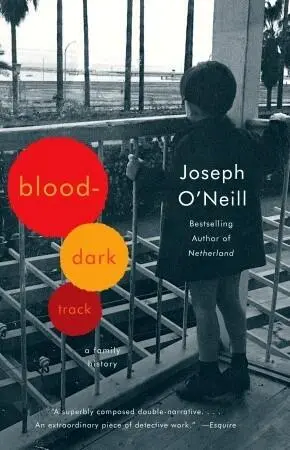
- Название:Blood-Dark Track
- Автор:
- Издательство:Knopf Doubleday Publishing Group
- Жанр:
- Год:2010
- ISBN:978-0-307-74265-0
- Рейтинг книги:4 / 5. Голосов: 1
-
Избранное:Добавить в избранное
- Отзывы:
-
Ваша оценка:
Blood-Dark Track: краткое содержание, описание и аннотация
Предлагаем к чтению аннотацию, описание, краткое содержание или предисловие (зависит от того, что написал сам автор книги «Blood-Dark Track»). Если вы не нашли необходимую информацию о книге — напишите в комментариях, мы постараемся отыскать её.
, a fascinating, personal, and beautifully crafted family history.
Joseph O'Neill's grandfathers-one Turkish, one Irish-were both imprisoned for suspected subversion during the Second World War. The Irish grandfather, a handsome rogue from a family of small farmers, was an active member of the IRA. O'Neill's other grandfather, a debonair hotelier from the tiny and threatened Turkish Christian minority, was interned by the British in Palestine on suspicion of being an Axis spy.
With intellect, compassion, and grace, O'Neill sets the stories of these individuals against the history of the last century's most inhuman events.
Blood-Dark Track — читать онлайн ознакомительный отрывок
Ниже представлен текст книги, разбитый по страницам. Система сохранения места последней прочитанной страницы, позволяет с удобством читать онлайн бесплатно книгу «Blood-Dark Track», без необходимости каждый раз заново искать на чём Вы остановились. Поставьте закладку, и сможете в любой момент перейти на страницу, на которой закончили чтение.
Интервал:
Закладка:
My grandfather explained this dramatic statement by relating the following incident. One evening, Olga was playing cards with some Greek soldiers who had checked into the Modern Hotel. She called Dakak over to her table. ‘Have you heard the latest?’ she said. ‘Turkey has entered the war.’ ‘I hope that isn’t true,’ a Greek colonel said anxiously. ‘It’ll mean an end to the food parcels I send from Istanbul to my parents in Greece. They’ll starve to death.’ Dakak didn’t get excited. ‘Let’s wait for the official news tomorrow,’ he said; and sure enough, the next day saw no report of any Turkish declaration of war. The whole episode, my grandfather asserted, had been Olga’s attempt to trick him into revealing (by his reaction to the bogus news) whether Turkey would enter the war — and, if so, on whose side.
It was here that my aunt Amy’s first chunk of translation came to an end, and here, too, that I realized that I was lost — lost in the intricate, cryptic place into which the testimony had dropped me, a zone in which Arab conspirators, Greek soldiers, Turkish secret policemen, Levantine businessmen, British consular officials and German sympathizers loomed and drifted. What was the connection between the events in Mersin (dealings with the British consulate; conversations with the chief of the secret police; an attempted extortion) and Jerusalem (poisonous oranges; Palestinian intrigues)? What linked Olga Catton at the Toros Hotel to Olga Husseini at the Modern Hotel? And what was the significance of the peripheral figures — pro-German Dr Saliba, the inquisitive stranger on the Jerusalem train, German-speaking Dr Dajani, cousin Alida? Were we to understand that Alida’s son Rico — who had, after all, advised my grandfather to stay at the Modern Hotel — was somehow in collusion with Olga Husseini’s crowd? And with whom was that crowd in cahoots? I assumed that, as I continued to read the testimony, express answers to these questions would be forthcoming. But they weren’t. It was as if my grandfather never succeeded in gaining a clear perspective on the blurred circumstances leading up to his imprisonment, and that, like a moth that has flown into treacle, he remained forever stuck in the opaque, viscous events he described. Certainly, he never satisfactorily answered the unspoken, anguished questions his story raised: What was behind my downfall? What did I do to deserve this?
It was my mother who brought up the name Wright. Mr Wright, she said, had been the British consul in Mersin during the war, and occasionally Mamie Dakad had fondly mentioned that this monsieur had assisted her in the matter of her interned husband. ‘Mr Wright was a young man at the time,’ my mother said. ‘You never know, he might still be alive.’
So in February 1996 — only a few days, incidentally, after a massive explosion in the London Docklands had brought the seventeen-month-old IRA ceasefire to an abrupt and fatal end — I consulted the Diplomatic and Consular Year Book of 1943. I saw that D.A.H. Wright, Vice-Consul in Trebizond, assumed duty as Vice-Consul at Mersin on 5 May 1943, in succession to Norman Mayers.
I took a look at the post-war Foreign Office Lists. Wright served as acting consul in Mersin from 1943 to 1945 and afterwards went on to a distinguished diplomatic career, serving as ambassador in Addis Ababa and Tehran. Could it be that he was still alive? I turned to Who’s Who 1996 . There he was: Sir Denis Arthur Hepworth Wright (born 1911), an Honorary Fellow of St Antony’s College, Oxford, and the author of two books on Anglo-Persian relations. I immediately wrote to him. Three days later, a reply arrived inviting me to visit him; and the following weekend, on 17 February 1996, I drove up to Haddenham, Buckinghamshire.
Haddenham, I discovered, was a large village swollen by modern estates, but its old centre was an extraordinarily idyllic spot where a church with a tower overlooked a pond inhabited by white ducks and a pair of swans. A narrow lane led down from the pond to the ancient low-lying house where Denis Wright lived with his wife, Iona. I was met by a straightforward, initially gruff man — ‘What are you writing, exactly? A novel, or a proper book?’ — who, even in his mid-eighties, was tall and athletic. Wright still wrote and regularly travelled abroad with Iona to places like Russia and Greece. He straightaway led me upstairs to his study and asked me how I had got hold of his name. I recounted what my grandmother had said about the assistance he had given her. ‘I remember your grandmother very well,’ Wright said, much to my surprise. He turned towards his desk and pointed at some volumes. ‘This is what I’ve got.’ There were carefully bound typescripts of his letters home from Mersin; a typed and bound and footnoted autobiography; essays on the politics of wartime Turkey; and albums of carefully annotated photographs and cuttings. As a personal documentary record of wartime Mersin, these papers almost certainly had no equal.
Mersin’s significance in the Second World War, Sir Denis told me, arose out of the wider political situation in Turkey. By a series of non-aggression and friendship treaties, mutual assistance pacts, trade agreements and non-committal manoeuvres, the Turkish Republic, led by President Ismet Inönü, adroitly managed to maintain its neutrality. It wasn’t an easy thing to pull off. Churchill, in particular, had a ‘bee in his bonnet’ about securing Turkish participation in the war — in Wright’s view, this would have been a generally counterproductive development that would have achieved nothing for Turkey other than the destruction of its major cities. Turkey’s diplomatic skill was such that it not only resisted the strong pressure exerted by the Axis and the Allies but also managed to take the benefit of Allied offers to strengthen its military infrastructure — offers to build roads and airfields, and to supply aircraft, tanks, armoured cars, AA guns and training teams. These projects gave rise to a problem: how to ship the necessary materials into the country? With the Italians in Rhodes and the Dodecanese and the Germans in control of Bulgaria and mainland Greece, Turkey’s main ports, Istanbul and Izmir, were within range of Axis aircraft. And so two points of entry into Turkey were identified as safe from the threat of air attacks: the sister ports of Iskenderun and Mersin. It didn’t matter that Mersin did not have a proper harbour and that vessels had to anchor half a mile or so offshore and discharge their cargo into lighters; large quantities of military and other essential equipment were nevertheless shipped in, usually from Alexandria, usually in Greek ships, and usually in secret.
It is a little-known fact, Wright said, that one of the undercover infrastructural projects was based near Mersin. As Axis forces advanced in south-east Europe, the danger arose that they might invade Turkey on their way through to Syria and the oilfields of the Middle East. In response to this threat, the Allies drew up contingency plans with Turkey whereby the line would be held in the Taurus Mountains and reinforcements from Syria and Egypt would be quickly sent up by rail and road. Thus, in July 1941, a party of around forty men of the British Royal Engineers set up camp just outside Mersin with the task of blasting a tank-friendly road through the Taurus Mountains and improving the roads and bridges that connected Mersin, Tarsus and Iskenderun. To keep the operations in ostensible accordance with the neutral status of the host country, the construction party wore civilian clothing and held itself out as Messrs. Braithwaite & Co., Civil Engineers and Contractors of London. There were other sensitive Allied operations in Mersin. These included the exportation, mainly to the United States, of Turkish chrome — vital for manufacturing armaments — and the shipment of timber and railway sleepers from the Findikpinar forest in the Taurus Mountains to the British in the Middle East. Such mercantile activities were overseen by the United Kingdom Commercial Corporation (UKCC), a wartime corporate vehicle for the United Kingdom. The UKCC, Wright said, was represented in the consular staff in Mersin, as were a number of key Whitehall ministries — the Admiralty, the War Office, the Ministry of War Transport, the Ministry of Economic Warfare. The consulate also housed agents of SIME (Security Intelligence Middle East) and MI6. These agents, and indeed practically all British military personnel working in Turkey, entered the country from Syria, on the Taurus Express.
Читать дальшеИнтервал:
Закладка:
Похожие книги на «Blood-Dark Track»
Представляем Вашему вниманию похожие книги на «Blood-Dark Track» списком для выбора. Мы отобрали схожую по названию и смыслу литературу в надежде предоставить читателям больше вариантов отыскать новые, интересные, ещё непрочитанные произведения.







Обсуждение, отзывы о книге «Blood-Dark Track» и просто собственные мнения читателей. Оставьте ваши комментарии, напишите, что Вы думаете о произведении, его смысле или главных героях. Укажите что конкретно понравилось, а что нет, и почему Вы так считаете.