Joseph O'Neill - Blood-Dark Track
Здесь есть возможность читать онлайн «Joseph O'Neill - Blood-Dark Track» — ознакомительный отрывок электронной книги совершенно бесплатно, а после прочтения отрывка купить полную версию. В некоторых случаях можно слушать аудио, скачать через торрент в формате fb2 и присутствует краткое содержание. Год выпуска: 2010, ISBN: 2010, Издательство: Knopf Doubleday Publishing Group, Жанр: Современная проза, на английском языке. Описание произведения, (предисловие) а так же отзывы посетителей доступны на портале библиотеки ЛибКат.
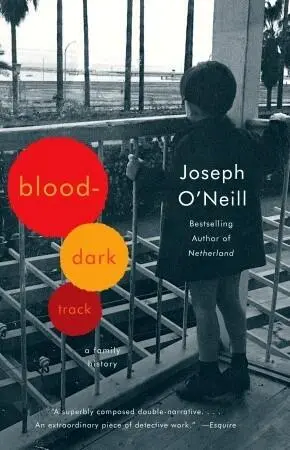
- Название:Blood-Dark Track
- Автор:
- Издательство:Knopf Doubleday Publishing Group
- Жанр:
- Год:2010
- ISBN:978-0-307-74265-0
- Рейтинг книги:4 / 5. Голосов: 1
-
Избранное:Добавить в избранное
- Отзывы:
-
Ваша оценка:
Blood-Dark Track: краткое содержание, описание и аннотация
Предлагаем к чтению аннотацию, описание, краткое содержание или предисловие (зависит от того, что написал сам автор книги «Blood-Dark Track»). Если вы не нашли необходимую информацию о книге — напишите в комментариях, мы постараемся отыскать её.
, a fascinating, personal, and beautifully crafted family history.
Joseph O'Neill's grandfathers-one Turkish, one Irish-were both imprisoned for suspected subversion during the Second World War. The Irish grandfather, a handsome rogue from a family of small farmers, was an active member of the IRA. O'Neill's other grandfather, a debonair hotelier from the tiny and threatened Turkish Christian minority, was interned by the British in Palestine on suspicion of being an Axis spy.
With intellect, compassion, and grace, O'Neill sets the stories of these individuals against the history of the last century's most inhuman events.
Blood-Dark Track — читать онлайн ознакомительный отрывок
Ниже представлен текст книги, разбитый по страницам. Система сохранения места последней прочитанной страницы, позволяет с удобством читать онлайн бесплатно книгу «Blood-Dark Track», без необходимости каждый раз заново искать на чём Вы остановились. Поставьте закладку, и сможете в любой момент перейти на страницу, на которой закончили чтение.
Интервал:
Закладка:
During the two and a half years that I spent in the monastery, they used these and any other ruse you could think of in order to extract from me the slightest piece of information about events that were taking place in every corner of the world and about the people involved in such events. As time went by, I understood better and better what was going on, namely that the English would go to any length to uncover anyone who might have some connection to the Nazis or who might be Anglophobic. Names would be suggested to me in conversations or in the newspapers and magazines that were brought to me, and my reaction would be noted. The spies surrounded me incessantly, and chief among them was, of course, Nazim Gandour. This is how the days passed.
He continued:
Because of the pressure, intimidation, psychological torture and poisonings that I endured, my heart weakened and I contracted the condition which I suffer from to this day. Instead of providing me with medical care, they did everything to wear me out and aggravate my cardiac condition. Every time they found reason for dissatisfaction, they stepped up the torture: they put a spade in my hands and despite my poorly condition made me dig in the field next to the monastery, carry rocks, and unload wood from lorries. To ensure the destruction of my physical and mental health, they made me suffer every torture imaginable, the spies taking it in turn to seize on to the most trivial matter to vex me and pick an argument. This programme was carried out so systematically and relentlessly that it would have been the easiest thing in the world to surrender one’s sanity. They lodged me on the second floor of the building in order to force me to climb up and down the stairs if I wanted to do the slightest thing. When the doctor finally examined me, I was told that there was nothing wrong with me, that it was all in my mind. They did not grant me the privileges that the other spying inmates enjoyed and constantly assigned me the hardest work, inventing pointless and demanding tasks for this purpose.
Joseph Dakak was alone in the basement when a guard told him that the war was over. Three days later, they once again moved him to the upstairs floor, and it was there that he read in the newspapers that the legislation authorizing internment without trial had been repealed and that internees had been freed. However, a month passed and still Dakak was not released. He wrote a letter to the Turkish consul and, when this went unanswered, a second letter. Finally, four months after the end of the European war, he wrote to a letter of protest to Major Prendergast at the Defence Security Office in Jerusalem.
Two nights later, the prison commander, Captain Sylvester, said to him, ‘Get ready, you’re off tomorrow.’ Dakak replied, ‘Could you please inform the head of your office in Jerusalem that I wish to see him.’ ‘I see. Might I ask why?’ ‘For three and a half years, you have kept me imprisoned,’ Dakak said, ‘even though I am innocent. You have caused me great psychological and financial damage, and on top of all this, you’ve made me suffer from this malady of the heart. I wish to claim damages and interest in respect of these losses.’ The Englishman smiled unpleasantly and said, ‘I’m going to give you some advice. Ask your Turkish government for compensation.’
The next morning, Dakak was called into Captain Sylvester’s office and presented with a typed letter to sign. By this point, his belongings were in the waiting lorry outside and they were shouting at him to get a move on. Even so, he cast an eye over the paper and saw that it asserted that he had been well looked after during his detention and that his property had been restored to him in full. My grandfather said, ‘No, I won’t sign that. I cannot betray my conscience. If it was simply concerned with money, I would sign without hesitation. But this letter does not tell the truth about how I have been treated and I will not sign it.’ At this, another document was quickly typed in triplicate. Dakak read it and, seeing that it mentioned money and nothing more, put his name to it. He dashed to the waiting lorry and climbed quickly aboard. It was only after he’d set off that it occurred to him that there were blank spaces on the page he’d signed where the English could insert anything they wished. But it was too late now to do anything about it.
Travelling with my grandfather were Nazim Gandour, a Hungarian Jew, and an Arab. At the Miye Miye camp in Saïda, my grandfather and the Hungarian got off and Nazim Gandour and the Arab were driven on to Beirut. After four days at Miye Miye, Dakak and the Hungarian were driven to Beirut, where they caught a train to Aleppo. There, the two prisoners were placed on board the Taurus Express and accompanied by a soldier and an English sergeant to the border town of Meydan Ekbez. The sergeant observed to Dakak that Turkey had tough laws and pitiless justice. Dakak replied: ‘I am prepared to appear not only before Turkish justice but before any court of justice.’ It was the last trick the English had up their sleeve, my grandfather wrote; had I shown the smallest sign of fear about returning to Turkey, the sergeant would have been convinced of my guilt and would have returned me to the British. This was, after all, his assigned role; and the Hungarian Jew played his part very well, too.
My grandfather’s testimony ended as follows:
I was a prisoner for exactly three and a half years. During my detention not a single cigarette, a single handkerchief or a single piastre were granted me. I was forced to buy everything with my own money, and other valuable possessions were taken from me and stolen. An innocent man, I was unjustly imprisoned. By systematic and unceasing torture, by repeated poisonings in small doses and by the failure to treat to my heart condition, I suffered physical and psychological injury. I was made to suffer by means that contravene the laws of humanity, by methods incompatible with the dignity of mankind. It is worth pointing out that during my entire period of detention only twice did an English commanding officer meet me and only once a French commander, and then but briefly. What most enraged me were the insinuations directed at making me believe that my own government had delivered me to the English. They also wanted me to believe that the reach of the Intelligence Service knew no bounds, and that even in Turkey I was within its grasp.
As a Turkish citizen, it is my duty to inform you of the foregoing.
Accurate or not, the testimony finished on a note of relative coherence and sang-froid, and even the somewhat absurd complaint about the handkerchieflessness of his captivity sounded like a beginning of a return to fastidious form. Most importantly, my grandfather’s grievances came to a point, albeit an unusual one. The testimony was not, as I’d initially suspected, a statement of a claim for compensation. It was simply a notice , addressed to the Turkish authorities, of grievous wrongs committed on a Turkish citizen by ‘the English’ and of loss and injury suffered thereby.
But what was the Turkish government supposed to do about this? Take up the matter with the British on a diplomatic level? Pay compensation for torts it did not commit? Either course seemed very improbable. The more I thought about it, the more puzzled I became by the function of this document and the precise nature of my grandfather’s relations with the Turkish state, to whom the testimony was presumably addressed. As I re-read the final paragraph, one sentence stood out: ‘ What most enraged me were the insinuations directed at making me believe that my own government had delivered me to the English .’ I did not understand the relevance of this strange remark, or why my grandfather had chosen to end his testimony with it.
Читать дальшеИнтервал:
Закладка:
Похожие книги на «Blood-Dark Track»
Представляем Вашему вниманию похожие книги на «Blood-Dark Track» списком для выбора. Мы отобрали схожую по названию и смыслу литературу в надежде предоставить читателям больше вариантов отыскать новые, интересные, ещё непрочитанные произведения.










Обсуждение, отзывы о книге «Blood-Dark Track» и просто собственные мнения читателей. Оставьте ваши комментарии, напишите, что Вы думаете о произведении, его смысле или главных героях. Укажите что конкретно понравилось, а что нет, и почему Вы так считаете.