Joseph O'Neill - Blood-Dark Track
Здесь есть возможность читать онлайн «Joseph O'Neill - Blood-Dark Track» — ознакомительный отрывок электронной книги совершенно бесплатно, а после прочтения отрывка купить полную версию. В некоторых случаях можно слушать аудио, скачать через торрент в формате fb2 и присутствует краткое содержание. Год выпуска: 2010, ISBN: 2010, Издательство: Knopf Doubleday Publishing Group, Жанр: Современная проза, на английском языке. Описание произведения, (предисловие) а так же отзывы посетителей доступны на портале библиотеки ЛибКат.
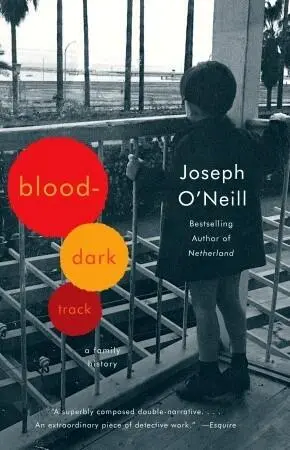
- Название:Blood-Dark Track
- Автор:
- Издательство:Knopf Doubleday Publishing Group
- Жанр:
- Год:2010
- ISBN:978-0-307-74265-0
- Рейтинг книги:4 / 5. Голосов: 1
-
Избранное:Добавить в избранное
- Отзывы:
-
Ваша оценка:
Blood-Dark Track: краткое содержание, описание и аннотация
Предлагаем к чтению аннотацию, описание, краткое содержание или предисловие (зависит от того, что написал сам автор книги «Blood-Dark Track»). Если вы не нашли необходимую информацию о книге — напишите в комментариях, мы постараемся отыскать её.
, a fascinating, personal, and beautifully crafted family history.
Joseph O'Neill's grandfathers-one Turkish, one Irish-were both imprisoned for suspected subversion during the Second World War. The Irish grandfather, a handsome rogue from a family of small farmers, was an active member of the IRA. O'Neill's other grandfather, a debonair hotelier from the tiny and threatened Turkish Christian minority, was interned by the British in Palestine on suspicion of being an Axis spy.
With intellect, compassion, and grace, O'Neill sets the stories of these individuals against the history of the last century's most inhuman events.
Blood-Dark Track — читать онлайн ознакомительный отрывок
Ниже представлен текст книги, разбитый по страницам. Система сохранения места последней прочитанной страницы, позволяет с удобством читать онлайн бесплатно книгу «Blood-Dark Track», без необходимости каждый раз заново искать на чём Вы остановились. Поставьте закладку, и сможете в любой момент перейти на страницу, на которой закончили чтение.
Интервал:
Закладка:
On 2 September 1939, the day after the German invasion of Poland, a state of emergency was declared in Éire (as the Free State was now called). Worried that the IRA’s activities compromised the neutrality of the State, de Valera acted decisively against militant republicans. IRA men were selectively arrested in the autumn of 1939 and the winter of 1940. In a countrywide haul in June 1940 and in continuing arrests thereafter, practically all known republicans were locked up.
Jack Lynch, who returned to Ireland in 1939 to take command of the Cork IRA, managed to avoid capture until 1942. Jim O’Neill was not so lucky. On 2 January 1940, six months before the general round-up, a Special Branch detective arresting Tomás MacCurtain Junior was mortally injured, and in retaliation Cork’s senior IRA men were immediately seized. At three or four in the morning, armed detectives knocked on the door at Friars Road. Jim O’Neill, who had played snooker earlier that night at the fire brigade, was in his bed and in a state of undress. As he fumbled to put on his new Christmas shirt, one of the detectives told him to hurry up. ‘You’ll wait as long as it takes,’ my grandmother snapped. ‘We didn’t send for ye.’
James O’Neill, who refused to recognize the jurisdiction of the court, was found guilty of membership of an unlawful association and was sentenced to three months’ imprisonment. He was taken to Mountjoy Prison in Dublin. During his spell there the Supreme Court declared that the Emergency Powers (Amendment) Bill, which empowered the state to intern Irish citizens without trial, did not contravene the Constitution. The Bill was duly signed by President Douglas Hyde. My grandfather was re-arrested on his release from Mountjoy and taken to the internment camp at the Curragh, in County Kildare. My grandmother was notified by telegram that her husband would remain interned until further notice.
Nine months later, in December 1940, Jim O’Neill was released on parole for a few weeks to receive dental treatment. He was delighted to be home. His teeth were fixed, he visited old friends, and he took his three young sons on outings to West Cork. A fourth son, Padraig, was conceived.
My uncle Jim recalled this interlude with peculiar vividness. He was playing on the street with his kid brother, Brendan, when a black car came down Friars Road. Jim had only ever seen cars stop on the street when a family took delivery of a baby from the hospital, so when the black car halted outside the O’Neill house, he pointed and said to Brendan, ‘Look, we’re getting the baby.’
It was the Special Branch, in a Black Maria. In an instant, armed soldiers were running through the garden and taking positions on rooftops. A jeep screeched to a stop and more soldiers sprang out, holding rifles. The house was surrounded and then occupied. The soldiers waited. My grandfather, returning from an errand to buy cigarettes and records for his fellow internees, was seized before he could set his foot through the door.
A search of the premises was carried out. Under the saddle of a doorway, they found a dismantled machine-gun and rounds of ammunition that (without my grandparents’ knowledge) had been secreted there by Jack Lynch and an IRA carpenter.
The following day, my grandmother went with her three children to see Jim at the Bridewell in Cornmarket Street. They were told that dinner was being served to the prisoners and that they should return in an hour. The young family went outside to wait. Cornmarket Street is adjacent to the North Channel of the river Lee. Young Jim noticed that there was a lot of activity in the Channel, with boats in the water and a crowd gathered round. For some reason a man was in the river, repeatedly diving and resurfacing in the pea-coloured water. A little while later, the O’Neills returned to the Bridewell. As they sat in the waiting-room, the body of a drowned boy was brought in, wrapped in a blanket. My grandmother put her hands over her sons’ eyes.
When my grandfather came into the visiting-room, flea-bites covered his face, his hands, his throat, his ears.
He was transferred to Collins Barracks. My grandmother made him an apple pie and went to visit him with the three boys. No visiting on a Sunday, she was told. The pie, a suspicious object, was not passed on to her husband. The boys ate it.
That night, at three in the morning, there was a hammering at the door. It was Jim Moore, the Special Branch detective notorious for his vindictiveness and lechery. My grandmother refused to let him in. Jim Moore shouted, ‘We’re moving James to the Curragh.’
It was four years before James and Eileen saw each other again. When they looked back on the perplexing circumstances in which the machine-gun had been discovered at Friars Road, they came to the conclusion that a person must have informed on them. They also began to wonder whether Jim’s release had not been a trap and whether he had not all along been a dupe of the Special Branch. Jim had always been a careful man, slow to take people into his confidence, but after his internment this caution turned to suspiciousness. Years without privacy, without respite from the anxiety of being spied on by so-called comrades (‘Your best friend could betray you,’ Grandma said), years of being subjected to false and vicious rumours concerning his wife, and of seeing the worst side of his fellow internees, left him disillusioned and untrusting. ‘He came out very, very bitter,’ Grandma said. ‘He was very bitter about what one Irishman would do to another.’ This fear — of betrayal, of being tricked — stayed with my grandfather. In the late ’forties, money was so unaccountably tight that he concluded that Grandma was being blackmailed — whereas in fact she simply did not have the heart to tell her husband that, even though he was working so hard, there was just not enough to make ends meet. Even in the ’sixties, when he moved into his own house in Douglas, my grandfather’s paranoia continued. The back garden of the new house abutted the garden of Mr Sparrow, the policeman, and this worried him: ‘Draw the curtain,’ he would direct, ‘he might be looking down at us.’ After the Curragh my grandfather was plagued by suspicions — suspicion of his loving wife, suspicion of his neighbours, suspicion of the authorities — and was never entirely free of an inkling that a deception was being played on him and that things were not what they seemed.
In March 1995, I got in touch with my great-uncle Paddy Lynch. Paddy was my grandmother’s younger brother and I knew that he’d been interned at the Curragh with his brothers, Jack and Tadhg, and my grandfather. I had never met Paddy but was told he was a terrific fellow who loved a yarn. He lived in Maynooth, Co. Kildare, with his wife Peig (herself described by my grandmother as ‘a staunch one’), and I wrote to him asking if we might meet. After I’d received no reply, I gave him a call. I wasn’t expecting an especially warm response — I was, after all, a virtual stranger with an English accent — but, even so, the depth of his feeling took me by surprise. Right from the off, he was agitated and antagonized. ‘Haven’t you received my letter?’ he asked. I had not, I told him. ‘Well, I’ve no intention of discussing the camp in any shape or form, or having any dialogue about it whatsoever.’ Before I could think of anything to say, Paddy quickly added, ‘When I left the camp, it was dead and buried and never going to be resurrected. It’s fifty years since I left and you won’t get me to mention one iota about it. I’ve been pestered down the years by fourteen or fifteen people, by people well up in the writing business, offering me a lot of money. I won’t do it. I could do with the money, but I couldn’t take one cent. It would be blood money. If you want to talk about Gaelic games or horseracing, my pet subjects, we could spend three to four days talking about them. But that’s all. You’re perfectly welcome to come round, I wouldn’t want to put you off. But we’d have nothing to talk about except the weather.’
Читать дальшеИнтервал:
Закладка:
Похожие книги на «Blood-Dark Track»
Представляем Вашему вниманию похожие книги на «Blood-Dark Track» списком для выбора. Мы отобрали схожую по названию и смыслу литературу в надежде предоставить читателям больше вариантов отыскать новые, интересные, ещё непрочитанные произведения.




Обсуждение, отзывы о книге «Blood-Dark Track» и просто собственные мнения читателей. Оставьте ваши комментарии, напишите, что Вы думаете о произведении, его смысле или главных героях. Укажите что конкретно понравилось, а что нет, и почему Вы так считаете.