Joseph O'Neill - Blood-Dark Track
Здесь есть возможность читать онлайн «Joseph O'Neill - Blood-Dark Track» — ознакомительный отрывок электронной книги совершенно бесплатно, а после прочтения отрывка купить полную версию. В некоторых случаях можно слушать аудио, скачать через торрент в формате fb2 и присутствует краткое содержание. Год выпуска: 2010, ISBN: 2010, Издательство: Knopf Doubleday Publishing Group, Жанр: Современная проза, на английском языке. Описание произведения, (предисловие) а так же отзывы посетителей доступны на портале библиотеки ЛибКат.
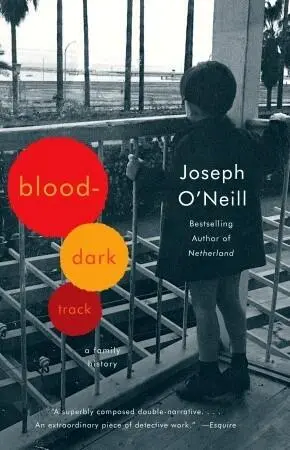
- Название:Blood-Dark Track
- Автор:
- Издательство:Knopf Doubleday Publishing Group
- Жанр:
- Год:2010
- ISBN:978-0-307-74265-0
- Рейтинг книги:4 / 5. Голосов: 1
-
Избранное:Добавить в избранное
- Отзывы:
-
Ваша оценка:
Blood-Dark Track: краткое содержание, описание и аннотация
Предлагаем к чтению аннотацию, описание, краткое содержание или предисловие (зависит от того, что написал сам автор книги «Blood-Dark Track»). Если вы не нашли необходимую информацию о книге — напишите в комментариях, мы постараемся отыскать её.
, a fascinating, personal, and beautifully crafted family history.
Joseph O'Neill's grandfathers-one Turkish, one Irish-were both imprisoned for suspected subversion during the Second World War. The Irish grandfather, a handsome rogue from a family of small farmers, was an active member of the IRA. O'Neill's other grandfather, a debonair hotelier from the tiny and threatened Turkish Christian minority, was interned by the British in Palestine on suspicion of being an Axis spy.
With intellect, compassion, and grace, O'Neill sets the stories of these individuals against the history of the last century's most inhuman events.
Blood-Dark Track — читать онлайн ознакомительный отрывок
Ниже представлен текст книги, разбитый по страницам. Система сохранения места последней прочитанной страницы, позволяет с удобством читать онлайн бесплатно книгу «Blood-Dark Track», без необходимости каждый раз заново искать на чём Вы остановились. Поставьте закладку, и сможете в любой момент перейти на страницу, на которой закончили чтение.
Интервал:
Закладка:
Even after Grandma left Friars Road, Turner’s Cross (rent 12s. 6d.) for the corporation house at Mount Nebo Avenue (rent 3s. 6d.), money was still hard to come by. Republican bazaars would raise money by selling brooches and rings and handbags made by Curragh internees. Rings (often Claddagh rings and snake rings) would be shaped out of spoon heads or coins, which in those days contained a significant element of silver: small rings were made from one-shilling pieces and larger ones from two-shilling pieces. ‘Jim made a lovely wedding ring for an American girl, Eileen O’Reilly,’ Grandma said, ‘and engraved her name on it. They gave Jim old-fashioned clippers,’ Grandma said, ‘and he made a box for them and acted as the camp barber.’
In addition to passing the time with crafts activities, internees had the opportunity to study sociology, economics, history, German and Irish (notable Gaelic scholars were interned at the Curragh). My grandfather did not appear to have taken classes or to have gone down other roads that promised a broadening of intellectual horizons. He did not, for example, join one of the numerous Irish-speaking huts, where any utterance of English was strictly forbidden. He joined a Cork hut, Hut C1, commanded by his brother-in-law Tadhg Lynch. It was a fateful decision, because Tadhg, and Hut C1, came to be at the centre of the most bitter division of the camp.
In early December 1940, a handful of senior IRA officers, including Larry Grogan and Peader O’Flaherty, arrived at the Curragh and took over the camp leadership. Not long afterwards, the internees’ butter ration was cut from one half ounce to one quarter ounce a day. Even though the ration of the camp guards had been reduced by the same quantity, it was decided to stage a protest by burning down huts. Jim O’Neill and Tadhg Lynch suggested to O’Flaherty (who urged the arson with the cry, ‘We’ll show them are we men or are we mice!’) that only huts that were unoccupied and had no escape tunnels beneath them be burned; but in the event, on 14 December 1940, seven huts, some occupied and containing the belongings of the men, were burned to the ground, and an extensive network of tunnels was exposed. The camp authorities responded with predictable aggression. They herded the men into the remaining huts — including a concrete-floored hut known as the Icebox — and locked them in, with no beds or extra clothes or fuel for stoves, for two freezing days and nights. The older men, in particular, found the ordeal very hard. On Monday 16 December 1940, the men were finally allowed out. As they were queuing for a meal at the cookhouse, the guards for some reason shot dead an internee, Barney Casey, as he stood in line. When the internees returned to their huts, the guards continued to their offensive, striking the men, shouting, rattling batons and leaving lights on throughout the night; this practice continued indefinitely, as did the evening roll-call of prisoners in their huts, when even a slight movement of the head led to trouble. Henceforth the internees slept on their palliasses on the floor, since their burnt bedboards were not replaced for two years. Grogan and fifty-one other ringleaders of the fire were taken to the Glasshouse and kept in solitary confinement for ten weeks as they awaited trial for arson. In Grogan’s absence, a man called Liam Leddy was made camp leader.
A great change came over the camp after the fire. Morale worsened and discipline broke down: marching to the cookhouse in military fashion came to an end, as did the closing of ranks around men who signed out. Most significantly, a split appeared between Hut C1 and the new camp leadership. In January 1941, Liam Leddy issued the order that huts should refuse the reduced ration of turf (peat) for their potbellied stoves. Tadhg Lynch, who failed to see the point of such a protest in freezing weather, disobeyed the instruction. As a consequence, Leddy ordered that Tadhg be ostracized for ‘co-operating with the State’; but the rest of Tadhg’s hut, around twenty men (including Jim O’Neill and Paddy Lynch), stood by their OC and disobeyed Leddy’s instruction to leave the hut. They, in turn, were ostracized; which is to say, nobody spoke to them, played Gaelic games with them, responded to their overtures or otherwise acknowledged their presence.
Hut C1 never got out of Coventry. However, others soon fell out with Leddy’s group, and new men arriving at the Curragh often preferred the less rigid, more diverse regime that operated on the dissident side. Some of these were communists, others were men, often regional commanders from the North, who were used to doing things their way and did not relish the idea of surrendering their power or rank (the camp rule was that all men fell back to being ordinary volunteers). In time, the unofficial faction came to outnumber the orthodox group. Tadhg Lynch, meanwhile, was able to avoid much of this unpleasantness. He applied for and obtained extended parole within weeks of the turf incident and was never re-interned. I never understood how or why my great-uncle was able to get out in this way; but it seemed that his release may have been sanctioned by the IRA command, because in 1941 Tadhg and his brother Jack apparently participated in the court-martial proceedings against Stephen Hayes, the IRA Chief of Staff suspected of treason.
Some observers felt that the split between Lynch and Leddy reflected their respective loyalties to Tom Barry and Seán Russell. Seán Russell had been elected leader of the IRA in April 1938. Barry strongly opposed Russell’s election and (on the grounds that there were plenty of targets in British-occupied Ireland) Russell’s plan for the bombing campaign in England. Less clear is what stance, if any, Barry took in relation to Russell’s dealings with Nazi Germany. These began in October 1936, when, during a visit to the United States as the IRA Quartermaster-General, Russell wrote to the German ambassador in Washington regretting the refusal by the ‘puppet Irish Free State government’ of landing rights to German aeroplanes, ‘a right apparently conceded without question to England, the traditional enemy of the Irish race’. This diplomatic overture was followed up in February 1939 when Russell, now IRA Chief of Staff, sent an agent to Berlin to receive instruction in the procurement of small arms and hand grenades and to try to secure the provision of German military supplies. When the Second World War broke out, Seán Russell was on the run from the authorities in the United States, who had served him with a deportation order. He finally escaped that country by accepting a German invitation to travel via Genoa to Berlin, where he arrived in May 1940. Russell took bomb-making classes with the Abwehr and sought out German assistance for the IRA. In August 1940, he set off to Ireland by U-boat. He never made it. On 14 August 1940, the leader of the IRA died from perforated ulcers and was buried at sea wrapped in the flag of the Third Reich.
On board the submarine with Russell when he died was Tadhg Lynch’s old comrade from the 1937 anti-Coronation march, Frank Ryan. Ryan had had an extraordinary few years. In the late summer of 1938, he was captured by fascist forces in Spain. For nine unimaginable months he was one of a group of eighteen prisoners of whom nine were shot dead each morning and replaced by nine others. In July 1940, after representations from the Irish and German governments, the frail and deafened anti-fascist was released to Nazis and driven to Berlin, where he joyfully met up with Russell and accompanied him on the fateful U-boat journey to Ireland. After Russell’s death, Frank Ryan returned to Germany, where he died in a sanatorium in 1944 and was buried in a grave bearing his German cover-name, Francis Richards.
The circumstances of Ryan and Russell’s deaths had, of course, a symbolic resonance. They stood for the ease with which political extremists can lose their way and, in the case of Seán Russell, the fallibility of the tenets of Irish republicanism as a general guide to political conduct. Directed by the imperative of breaking the connection with England, it didn’t occur to Seán Russell — a devout man with no personal vices — that England’s misfortune, in the context of war with Nazi Germany, might have a significance other than Ireland’s opportunity. Once removed from the backwaters of Ireland and Irish America, Russell and the organization he led were in every sense out of their depth.
Читать дальшеИнтервал:
Закладка:
Похожие книги на «Blood-Dark Track»
Представляем Вашему вниманию похожие книги на «Blood-Dark Track» списком для выбора. Мы отобрали схожую по названию и смыслу литературу в надежде предоставить читателям больше вариантов отыскать новые, интересные, ещё непрочитанные произведения.


Обсуждение, отзывы о книге «Blood-Dark Track» и просто собственные мнения читателей. Оставьте ваши комментарии, напишите, что Вы думаете о произведении, его смысле или главных героях. Укажите что конкретно понравилось, а что нет, и почему Вы так считаете.