Joseph O'Neill - Blood-Dark Track
Здесь есть возможность читать онлайн «Joseph O'Neill - Blood-Dark Track» — ознакомительный отрывок электронной книги совершенно бесплатно, а после прочтения отрывка купить полную версию. В некоторых случаях можно слушать аудио, скачать через торрент в формате fb2 и присутствует краткое содержание. Год выпуска: 2010, ISBN: 2010, Издательство: Knopf Doubleday Publishing Group, Жанр: Современная проза, на английском языке. Описание произведения, (предисловие) а так же отзывы посетителей доступны на портале библиотеки ЛибКат.
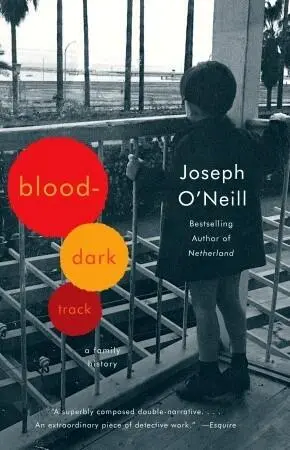
- Название:Blood-Dark Track
- Автор:
- Издательство:Knopf Doubleday Publishing Group
- Жанр:
- Год:2010
- ISBN:978-0-307-74265-0
- Рейтинг книги:4 / 5. Голосов: 1
-
Избранное:Добавить в избранное
- Отзывы:
-
Ваша оценка:
Blood-Dark Track: краткое содержание, описание и аннотация
Предлагаем к чтению аннотацию, описание, краткое содержание или предисловие (зависит от того, что написал сам автор книги «Blood-Dark Track»). Если вы не нашли необходимую информацию о книге — напишите в комментариях, мы постараемся отыскать её.
, a fascinating, personal, and beautifully crafted family history.
Joseph O'Neill's grandfathers-one Turkish, one Irish-were both imprisoned for suspected subversion during the Second World War. The Irish grandfather, a handsome rogue from a family of small farmers, was an active member of the IRA. O'Neill's other grandfather, a debonair hotelier from the tiny and threatened Turkish Christian minority, was interned by the British in Palestine on suspicion of being an Axis spy.
With intellect, compassion, and grace, O'Neill sets the stories of these individuals against the history of the last century's most inhuman events.
Blood-Dark Track — читать онлайн ознакомительный отрывок
Ниже представлен текст книги, разбитый по страницам. Система сохранения места последней прочитанной страницы, позволяет с удобством читать онлайн бесплатно книгу «Blood-Dark Track», без необходимости каждый раз заново искать на чём Вы остановились. Поставьте закладку, и сможете в любой момент перейти на страницу, на которой закончили чтение.
Интервал:
Закладка:
5. My sympathies are and always have been for the Allies and if I had been pro Axis it is quite certain I would not have applied for a visa for Palestine.
6. All the investigations made against me during the 3½ years of my detention proved nothing. With the result I was returned to Turkey which proves my innocence.
7. Previous to my leaving Turkey and being detained I was the owner of an Export and Import office, part owner of Günes and Korum Cinemas, owner of Toros Hotel and Restaurant; but as a consequence of my detention and having no one to look after my various business undertakings, my wife had to 1. Liquidate my Export and Import Office. 2. Close the restaurant at the Toros Hotel. 3. Cancel my partnership in the working of the Günes and Korum Cinemas. Only the Toros Hotel was left to my wife to run and as the income from this was not sufficient to support my wife and three children also to have money sent to me in detention through the British Consulate in Mersin, my savings had to be used.
8. As a consequence of my detention, and my emotions as an innocent man, has left me nervous and also with a weak heart which has disabled me for the rest of my life and which makes it necessary for me to see specialists in Istanbul from time to time.
9. Although my losses are much larger and such questions as mental suffering, loss of health could not be compensated by any amount, I estimate the very lowest and reasonable amount for the losses described in paragraph 7 at £5,000, but I leave it to your judgement and consideration to assess an amount which you may consider has been actually lost owing to my wrongful detention and I am sure you will deal with this on traditional British lines and see that I am justly compensated for the losses I have had.
I am Sir,
Yours obedient servant.
This letter, together with Garstang’s letter and a very few other papers, turned up in my grandfather’s old safe in the Toros Hotel in the spring of 1996. I was impressed by the clarity and conciseness of my grandfather’s letter to the British embassy and, one or two shaky moments aside, by his grasp of English, which extended to a feel for legal phraseology and tone; and I caught a glimpse not only of the appealingly adaptable intelligence for which he was remembered but also of a less commemorated streak of courage. By an act of will, the spooked narrator of the testimony had been discarded and replaced by a self-possessed, measured complainant who made the best of a not very strong case: because, for all of the claim’s careful assertiveness, its central proposition — that the claimant’s innocence was demonstrable from his repatriation — was, of course, flawed.
I called up Amy and asked if she knew anything about this letter. Amy told me what she had learned from Pierre: that, contrary to Garstang’s advice, her father decided to notify the Turkish authorities of his proposed request for compensation because he simply didn’t dare proceed without their assent. When the authorities advised him to drop the matter, Joseph complied, and the letter of claim to the British embassy was never posted. ‘What about the testimony?’ I asked. ‘Was that ever mailed to the powers that be?’ Amy didn’t know, and neither did anyone else. Joseph, it was said, was very cautious with officialdom. When Ginette Salendre (the daughter of his sister, Radié) visited Mersin shortly after the war and became friendly with a woman archaeologist who was mal vue on account of her subversively liberal views, Joseph was anxious and disapproving. ‘Be careful,’ he said to Ginette, ‘they could make trouble for me.’ He took pains to stay on the good side of the mayors and governors and steered clear of non-conformist types. According to my family, Joseph, for all his commercial boldness and authoritarianism and social gravitas, had a timorous nature. He went around in fear of illness, of contamination of his food, of the authorities, of things turning out badly. He was a froussard , in the word used fondly, and with noticeable unanimity, by Ginette, Amy and Pierre to describe him — and to explain why, in their view, he could never have been involved in espionage, an offence that was, after all, punishable in Turkey by death. My grandmother had once said the same thing to my mother: she was convinced of her husband’s innocence because he simply would have been too frightened to become involved in anything.
This assessment of my grandfather was unverifiable and, of course, potentially wishful. Nevertheless, Joseph Dakak’s temperamental frailty was perfectly evident from his testimony; and it seemed pretty unlikely that he would have been able to tolerate the stresses of double-dealing. But not all spies were thieves of top secret information acting under extreme pressure. Take, for example, a man with the job of keeping an eye on the number and kind of vessels anchoring in the roads of Mersin; such an agent would be dealing in sensitive but non-secret information available to anyone with a view of the nautical horizon — the kind of view, it so happened, that could be enjoyed from a south-facing window of the Toros Hotel.
It became clear to me that Joseph Dakak was amazingly well-placed and well-qualified to act as a German spy. First, like Joseph Ayvazian, the German agent in Iskenderun, he was a hotelier and restaurateur, which gave him excellent access to the people and news that passed through the town. Second, from the autumn of 1941 he operated an import — export business — Nazim Gandour’s line of work — an enterprise capable of lending a sheen of commercial legitimacy to inquiries concerning the movement of goods and people in and out of the country. Third, he spoke German, was fond of Germans (and German-speakers: Walther Ülrich’s letter from Weissenfels established that my grandfather was friends with Gioskun Parker, the Austrian rumoured to be a German agent in Mersin) and had a long history of working with Germans. Relevant, here, were two further documents from my grandfather’s safe. The first, in the stationery of the Gesellschaft für den Bau von Eisenbahnen in der Türkei , was in French, and provided detail about a well-known but sketchy episode in my grandfather’s life:
Belemedik, 15 February 1919
We certify that Mr Joseph Dakak has worked as a bookkeeper for Office of the Central Magazine of the 1st Division for the Construction of the Baghdad Railway from 5 September 1916 to 15 February 1919.
During his time with us, Mr Dakak has always been equal to his responsibilities and we can only commend his zeal and application to his work.
Mr Dakak leaves us of his own accord, free of all obligations, by reason of which we present him with this certificate.
Signed: the Chief Magaziner and the Chief Engineer of the 1st Division
Belemedik, I knew, was high up in the Taurus Mountains and was the site of a grave of 43 German and Austrian soldiers, a nurse, and an English corporal who had all died between 1914 and 1918. Two and a half hazardous years in the wilderness, alongside hundreds of men and camels and mules labouring in snow and heat to blast rocks and shift rubble and lay sleepers, had been Joseph’s first real experience of work and the adult world. It would inevitably have been an unforgettable and formative time and, judging from the reference he received, was one in which the teenager struck up a good relationship with his German bosses. My grandfather’s sense of solidarity with and admiration for Germans — his Germanophilia, some said — later stood him in good stead professionally. Also preserved in the safe was a letter written in German on the notepaper of Lenz & Co., a construction company with offices in Kurfürstenstrasse, Berlin, and Istanbul. The letter, dated 10 March 1930, was addressed to Herr Josef Dakak, Mersina:
Читать дальшеИнтервал:
Закладка:
Похожие книги на «Blood-Dark Track»
Представляем Вашему вниманию похожие книги на «Blood-Dark Track» списком для выбора. Мы отобрали схожую по названию и смыслу литературу в надежде предоставить читателям больше вариантов отыскать новые, интересные, ещё непрочитанные произведения.









Обсуждение, отзывы о книге «Blood-Dark Track» и просто собственные мнения читателей. Оставьте ваши комментарии, напишите, что Вы думаете о произведении, его смысле или главных героях. Укажите что конкретно понравилось, а что нет, и почему Вы так считаете.