J. Ledgard - Submergence
Здесь есть возможность читать онлайн «J. Ledgard - Submergence» весь текст электронной книги совершенно бесплатно (целиком полную версию без сокращений). В некоторых случаях можно слушать аудио, скачать через торрент в формате fb2 и присутствует краткое содержание. Год выпуска: 2011, ISBN: 2011, Издательство: Random House UK, Жанр: Современная проза, на английском языке. Описание произведения, (предисловие) а так же отзывы посетителей доступны на портале библиотеки ЛибКат.
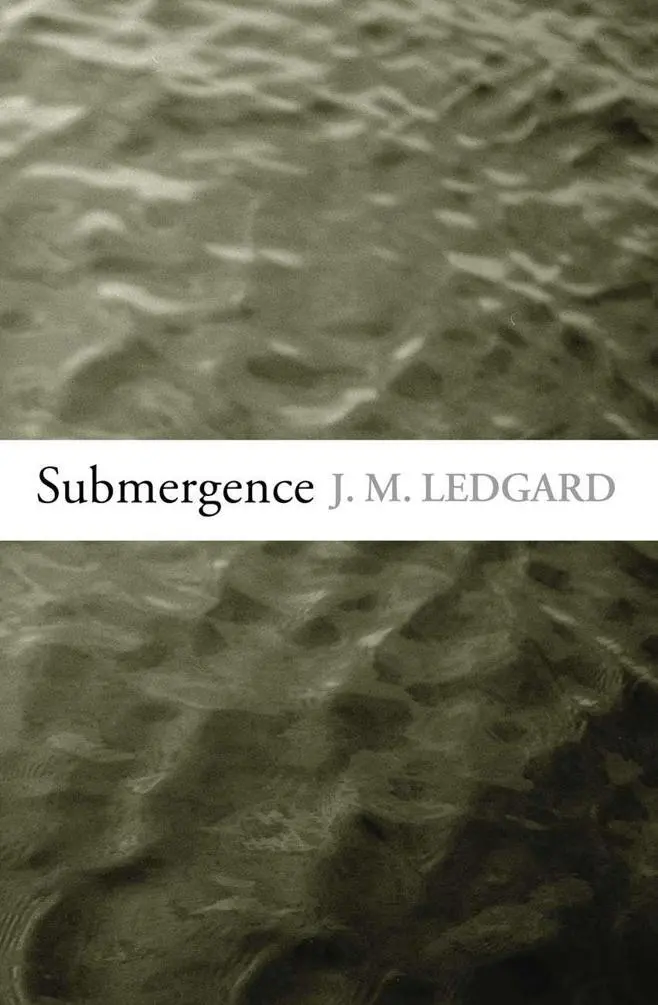
- Название:Submergence
- Автор:
- Издательство:Random House UK
- Жанр:
- Год:2011
- ISBN:9781446496831
- Рейтинг книги:5 / 5. Голосов: 1
-
Избранное:Добавить в избранное
- Отзывы:
-
Ваша оценка:
Submergence: краткое содержание, описание и аннотация
Предлагаем к чтению аннотацию, описание, краткое содержание или предисловие (зависит от того, что написал сам автор книги «Submergence»). Если вы не нашли необходимую информацию о книге — напишите в комментариях, мы постараемся отыскать её.
Both are drawn back to the previous Christmas, and to a French hotel on the Atlantic coast, where a chance encounter on the beach led to an intense and enduring romance. For James, his mind escapes to utopias both imagined and remembered. Danny is drawn back to beginnings: to mythical and scientific origins, and to her own. It is to each other and to the ocean that they most frequently return: magnetic and otherworldly, a comfort and a threat.
Submergence — читать онлайн бесплатно полную книгу (весь текст) целиком
Ниже представлен текст книги, разбитый по страницам. Система сохранения места последней прочитанной страницы, позволяет с удобством читать онлайн бесплатно книгу «Submergence», без необходимости каждый раз заново искать на чём Вы остановились. Поставьте закладку, и сможете в любой момент перейти на страницу, на которой закончили чтение.
Интервал:
Закладка:
They took coffee in the bar. Another guest slotted euros into a vintage jukebox which had on it a picture of Johnny Hallyday.
They had no choice. I believe when I fall in love with you it will be forever .
She rolled her eyes.
‘Even so,’ he said, and raised his cup.
She stared at him. His pupils were dilated, the effect darker. She was a little drunk.
They parted at the foot of the stairs. She went up and he went out into an afternoon that appeared to have no up or down. The snow swirled. He could not see his way forward. He heard the sheep. He thought he had arrived at the railings, but a few more steps brought him back to the hotel. All that was visible of the building was the sign over the entrance spelling out its name in light bulbs, and the green figurines of mermaids backed by dark green tiles of the highest quality purloined from a Persian mosque.
Without warning he was battered with conflicting emotions and identities, as if a train had braked hard and all the baggage had come crashing down on top of him. He took the lift up. He closed the cage door and pressed in the button. It was a rosewood box, slightly larger than a coffin. He tried not to notice the ascent. He sat in his room, staring out of the window and only occasionally shifting his focus from the blankness to the icicles hanging down. He did not draw the curtains when it got dark and allowed the maid who came to turn down his bed only to switch on a lamp and to bring him a bottle of water and a pot of hot chocolate.

She worked into the evening. She was befuddled by the alcohol, by him. Maths was like playing the piano, in a way. You had to keep practising to keep fluent and supple; eventually the discipline became a pleasure.
She turned on the television and watched a tennis match being played at the Albert Hall in London. The acoustics in the hall were such that the man’s serve sounded like a detonation.
He was hauled up by his wrists and made to stand. His legs shook.
‘I’ll shit myself,’ he said.
His bowels softened; a watery mess flowed down the inside of his thighs.
There was shouting in Somali. He was struck in the back of the head and in the face and doused in seawater. He was dragged into an alley. It was blinding. He could not look up. The sand burned and was littered with thorns and with glistening donkey droppings and palm fronds. There were wattle-and-daub shacks on either side. He heard children playing. He sensed the women stopping as he passed. He was nauseous. His head spun. He tried to concentrate on the feet of the man in front of him. He said to himself, the flip-flops are red, they are red, the calloused heel lifts, now it strikes the sand, now it lifts.
They came out into the open. The wind gusted. Crabs scuttled back to holes in the sand. When he finally raised his head and looked at the world he saw surf exploding on a reef and a monumental orange sun hovering over the Indian Ocean.
The fighters got on their knees and prayed to Mecca.
After some minutes one of them stood up. ‘We will kill you now,’ he said, without emotion.
They pushed him towards the sea. He saw it. They would shoot him in the water. There would be no need for a shroud.
When his body was drained they could dump it in the infidels’ cemetery. With what prayer, with what damnable prayer?
The fighters were young and thin, but he was too weak to take advantage. He was a white man in a part of Somalia controlled by jihadists. Even if he cracked heads, snapped necks and took a gun, there was no place to run. So, he straightened himself and prepared to die.
But how does a man do that? Nature is pre-contracted, her demands beyond negotiation. You cannot wish yourself immortal any more than you can bid the apples come in May, or the leaves stick in October. A terminal illness at least gives you a chance to say goodbye to your family, friends and acquaintances. A violent death is something else. It is a maelstrom. Its waters turn quickly, they spiral down, the sky is blotted out and there is no time to make a phone call or take a bow.
He wanted to lay out his memories on the sand like photographs; to leave a message for the world and take a lesson from it. But he was turning, he was going down, the whaleboat was splintering, the waters were freezing. The flotsam people clung to in life, which kept them afloat in the world, were fictions found in stories. He reached for them. He recited the Lord’s Prayer.
They pushed him into deeper water. It was almost up to his waist. Look how the dirt is lifting in filaments from your feet, he said to himself, the filth is lifting, and he glimpsed himself, it was difficult to describe, underwater, in a stovepipe hat, a whaler thrown overboard, sinking to the bottom, an eel roped where his intestines had been, with, in the grainy distance, a whaling vessel going down, in imitation of the slave ship Danny described, perhaps, except with a hawk nailed to its mast, the archangelic shriek silenced … thy will be done, in earth as it is heaven.
They took their hands off him. He looked out over the sea. Submarines go across. They keep to the shallows. There were many things he had not properly imagined. Death was one, the ocean was another. It was fitting, comforting even. The earth really was the ocean. Danny had taught him another way of looking at things, how being made of saline solution, a jelly with pin-like bones, he was yet alien to the greater part of the planet that was saltwater. He looked up. He glimpsed a gull. They lifted their weapons. He had no strength left. He hated them, and was ashamed of himself.
‘ Allah u Akbar !’
There was a burst of gunfire. He fell into the sea. The bullets went into the sky. He was on his knees in the water. He thrashed forward. He cried out and pulled off his soiled kikoi and washed himself between his legs. His tears moved the fighters. One of them waded after him and took off his own headscarf and wrapped it around him, so that he would not be naked when they carried him back to land.
She was a morning person, he was not.
His phone rang before dawn. His first waking word was a profanity. ‘Yes? Who is it?’
‘I’m heading down to the beach for a swim. Will you join me?’
‘At this hour? In the snow?’ He sat up. ‘OK,’ then, ‘I shan’t swim.’
‘See you downstairs,’ she said cheerfully, and rang off.
It was the first light of a clear day. The patches of ice were all covered up. The snow came up over their boots. There were boar hunters in the woods; gunshots could be heard coming from the direction of the church and the village. The pines were rimed with salt, the holly berries shone blood red. On the beach the snow gave way to spindrift and then to the return of long breaking waves. He carried towels and an extra sweater. He was uncertain if she would actually swim. He did not know her travels had taken her in the opposite direction to him, that her voyages had moved her closer to the Inuit and further from the Carib.
The sand was firm. Their footsteps filled with water after them.
‘This is just the place to have a dog,’ he said. ‘They could run for miles.’
‘I don’t like dogs.’
His heart sank. She was harsh. What was he doing on the beach at this hour?
When he was a boy, the family priest, an Irishman, had told him: James, there is never a moment in a life when a selfish heart is satisfied.
He wanted a country life. He wanted a cottage. He wanted a garden. He wanted gundogs and horses. Perhaps it was a feint, a way of dealing with his career. What did he need?
Читать дальшеИнтервал:
Закладка:
Похожие книги на «Submergence»
Представляем Вашему вниманию похожие книги на «Submergence» списком для выбора. Мы отобрали схожую по названию и смыслу литературу в надежде предоставить читателям больше вариантов отыскать новые, интересные, ещё непрочитанные произведения.



Обсуждение, отзывы о книге «Submergence» и просто собственные мнения читателей. Оставьте ваши комментарии, напишите, что Вы думаете о произведении, его смысле или главных героях. Укажите что конкретно понравилось, а что нет, и почему Вы так считаете.