J. Ledgard - Submergence
Здесь есть возможность читать онлайн «J. Ledgard - Submergence» весь текст электронной книги совершенно бесплатно (целиком полную версию без сокращений). В некоторых случаях можно слушать аудио, скачать через торрент в формате fb2 и присутствует краткое содержание. Год выпуска: 2011, ISBN: 2011, Издательство: Random House UK, Жанр: Современная проза, на английском языке. Описание произведения, (предисловие) а так же отзывы посетителей доступны на портале библиотеки ЛибКат.
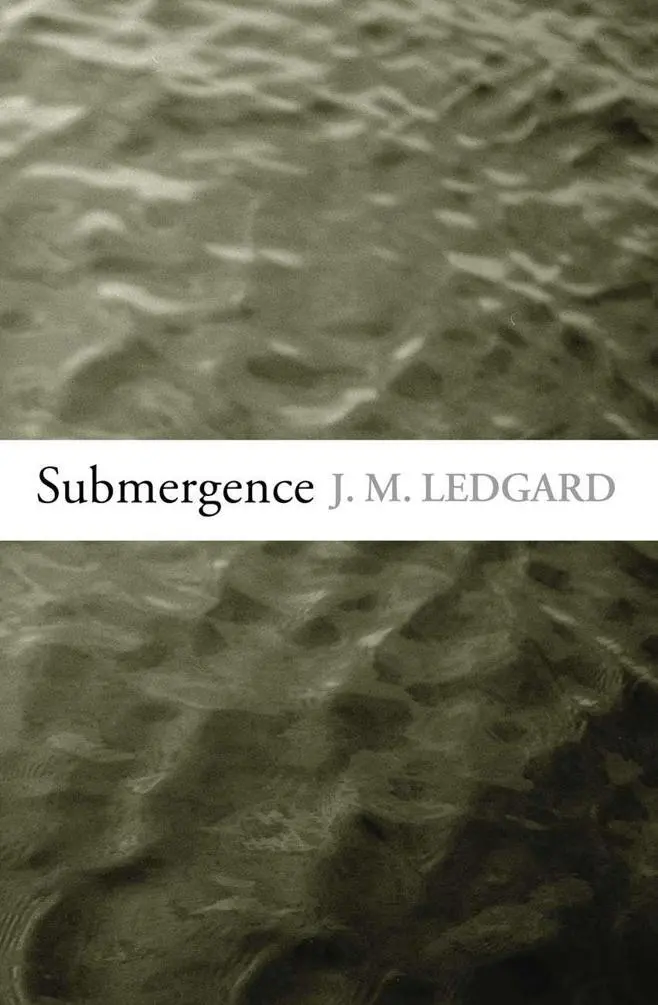
- Название:Submergence
- Автор:
- Издательство:Random House UK
- Жанр:
- Год:2011
- ISBN:9781446496831
- Рейтинг книги:5 / 5. Голосов: 1
-
Избранное:Добавить в избранное
- Отзывы:
-
Ваша оценка:
Submergence: краткое содержание, описание и аннотация
Предлагаем к чтению аннотацию, описание, краткое содержание или предисловие (зависит от того, что написал сам автор книги «Submergence»). Если вы не нашли необходимую информацию о книге — напишите в комментариях, мы постараемся отыскать её.
Both are drawn back to the previous Christmas, and to a French hotel on the Atlantic coast, where a chance encounter on the beach led to an intense and enduring romance. For James, his mind escapes to utopias both imagined and remembered. Danny is drawn back to beginnings: to mythical and scientific origins, and to her own. It is to each other and to the ocean that they most frequently return: magnetic and otherworldly, a comfort and a threat.
Submergence — читать онлайн бесплатно полную книгу (весь текст) целиком
Ниже представлен текст книги, разбитый по страницам. Система сохранения места последней прочитанной страницы, позволяет с удобством читать онлайн бесплатно книгу «Submergence», без необходимости каждый раз заново искать на чём Вы остановились. Поставьте закладку, и сможете в любой момент перейти на страницу, на которой закончили чтение.
Интервал:
Закладка:
‘A cow?’
‘Like a piece of plastic bending and snapping. Or sometimes telephonic clicking. Finally I got the message. The Cuvier’s were showing me the way, that was all. Nothing was the same after that. Instead of looking at creatures, I started looking at the sea itself, how it filled the canyons, and what is it like at the bottom, what happens there.
‘I think I first started to think of this when my colleagues began to study the decompression the Cuvier’s suffered when they came up for air, they came up and it was as if they had left the world and the coming back to it was violent. They stay motionless at the surface and we still don’t know whether it is the pain of the bends, the osteonecrosis fizzing in their bones, or that they are blinded by the light.

The strategy of the jihadists allied to al-Qaeda in Somalia is to create chaos in order to establish a supreme Islamic nation pure in its religion: a caliphate of Greater Somalia at the forefront of the global jihad. Local and foreign fighters will strike at Christian Ethiopia and Kenya, seeking to liberate the Muslims in those countries, thereby dragging America, Europe and the other Crusaders into the fray. The goal of the global jihad is to replicate itself through force of arms, creating a Muslim superstate: intercontinental, without borders, adjudged by the same laws and united by prayer.
Yusuf prostrated himself behind the pillar in the mosque by the sea. He was a zealot, a soldier, an Arsenal football club fan, and Allah alone knew he prayed for clearness of mind and motive. He prayed for religious men. He prayed for the submission of Somaliland and the return of the Ogaden to Somalia. He prayed for the city of Mogadishu. He prayed that the thieving and whoring pirates be dragged by their hair into the burning presence of God, or else be strangled.
He was al-Afghani — the Afghan — because he had trained at the al-Qaeda camps in Afghanistan as a sniper, then in tactics. He had been a bodyguard to Abdullah Azzam in Peshawar until Azzam’s assassination. He had later been assigned to protect Hamza bin Laden, one of Osama’s younger sons. It was Azzam who laid out the path for Yusuf to follow: jihad and the bullet alone; no negotiation, no dialogue, no surrender.
He had been with Osama bin Laden in Tora Bora in 2001 for some days. He returned home to Somalia in 2002 a few weeks after escaping a raid on a safe house in the Asir mountains in south-western Saudi Arabia. When the counter-terrorism police burst in they found a bowl of porridge steaming on the table and a stack of passports from different African countries, each with Yusuf’s photo on them, each with a different name. The escape was celebrated on jihadist websites and bundled on videos along with bomb attacks and decapitation of infidels. Yet it was only a deception: an inside man in the Saudi police redirected the search team while Yusuf scrambled down a cliff.
He was at war with the warlords and the faithless others who had destroyed Somalia after the collapse of the Siad Barre regime in 1991. They were illiterate, syphilitic, irrational killers. But then, so were his men. The jihad attracted more than its share of sociopaths. What he needed were boys with pure motives who were prepared to go into battle, or strap explosives on and blow themselves up. He had spent his childhood as a shepherd in Somalia and he knew how tough and resourceful and undismayed boys were and always preferred them to men, who were unreliable, or who were in the jihad for pay or clan loyalty. He personally indoctrinated the boys in his camps: Kill in the name of Allah! Kill until the end of the world! If you are the last believer, kill! If you are killed, Allah will avenge you. If you are killed, paradise will be yours! He chanted the Koran. He told the boys how he had found no home in the twentieth century, with its Crusader and Communist empires, with the state of Israel and the Zionist plot, but had found a home for himself in the jihad in the twenty-first century. The boys quieted and hardened the more he talked. They punched the air. They hid their faces in scarves and performed forward rolls down rocky slopes with their machine guns. They were taught to fire mortars by a white-skinned former United States Army Green Beret, who had converted to Islam after serving alongside mujahideen units in the Bosnian war. Yusuf ended the training by talking about the caliphate. The caliph was coming , he said, the holy times were returning . The caliphate was a state of innocence protected by severe laws, where musicians and all people who acted like strangers were flogged, the hands of thieves lopped off, liars branded, and agitating Sufis, Christians, and Marxists beheaded. There were fewer parties, no cigarettes and no qat.
To pay his way, give to the poor, and support his wives and children, Yusuf traded in frankincense. The money for his militia came in tax revenues and extortion from the towns he governed and private donations from Arab countries. His weapons arrived by dhow from Yemen and the United Arab Emirates, and by plane from Eritrea. He fought alongside the jihadist factions under the command of Muqtar Robow and Hassan Turki, who called themselves the Shabab, or youth; he kept his distance from the rival Hizbul Islam of Hasan Dahir Aweys.
He was sometimes disappointed. Words were used instead of guns, and guns were fired where words would have done. He was a tactician, and his first tactic was absolute trust in Allah, the most merciful, the most benevolent. He had hidden at various times the al-Qaeda operatives wanted for the attacks on the American embassies in Nairobi and Dar es Salaam in 1998 and on Israeli tourists in Mombasa in 2002. Some of those operatives had been picked off in American air strikes or captured by the Mogadishu warlords and sold on. He himself was always on the move. He spent most of his time in the desert or in the swamps. In towns, he slept in mosques or close to the marketplace. He hid his face, or went in disguise.
He cut out tongues in broad daylight. He won battles. Together, the jihadists controlled south Somalia and most of Mogadishu. He had established terrorist cells of three men in Nairobi and Dubai and he had sleeper agents in Mwanza, Johannesburg, Cardiff and London.
His true beliefs were not much different from the indoctrination he handed out in the camps. He was in it to the death. It was only that he was more experienced. Belief came first for him. For the boys, martyrdom preceded understanding.
Still, there was a question of what religion meant to a jihadist. There was no introspection, except what was needed to look within yourself and decide to die for a cause. There was a detestation of science and an abhorrence of philosophy. Their wives, sisters and daughters were elsewhere. They had not considered a place for them in the caliphate, not even any place they might go and get medical care.
Yusuf prayed and prayed. He looked to the right and to the left. He banged his forehead on the ground. He was leaving Kismayo early in the morning to coordinate the fighting in the Medina district of Mogadishu. The prayer was that he would not be reduced to an animal, like the jihadist commander who smashed in the headstones in Sufi cemeteries for pleasure, and killed an old Italian nun at a hospital in Mogadishu, emptying bullets into her until her body came apart. There was no justice without the possibility of mercy, for instance for the Englishman they had taken hostage.
‘Allah, protect me from the fire of hell,’ was his last prayer.
Интервал:
Закладка:
Похожие книги на «Submergence»
Представляем Вашему вниманию похожие книги на «Submergence» списком для выбора. Мы отобрали схожую по названию и смыслу литературу в надежде предоставить читателям больше вариантов отыскать новые, интересные, ещё непрочитанные произведения.





Обсуждение, отзывы о книге «Submergence» и просто собственные мнения читателей. Оставьте ваши комментарии, напишите, что Вы думаете о произведении, его смысле или главных героях. Укажите что конкретно понравилось, а что нет, и почему Вы так считаете.