J. Ledgard - Submergence
Здесь есть возможность читать онлайн «J. Ledgard - Submergence» весь текст электронной книги совершенно бесплатно (целиком полную версию без сокращений). В некоторых случаях можно слушать аудио, скачать через торрент в формате fb2 и присутствует краткое содержание. Год выпуска: 2011, ISBN: 2011, Издательство: Random House UK, Жанр: Современная проза, на английском языке. Описание произведения, (предисловие) а так же отзывы посетителей доступны на портале библиотеки ЛибКат.
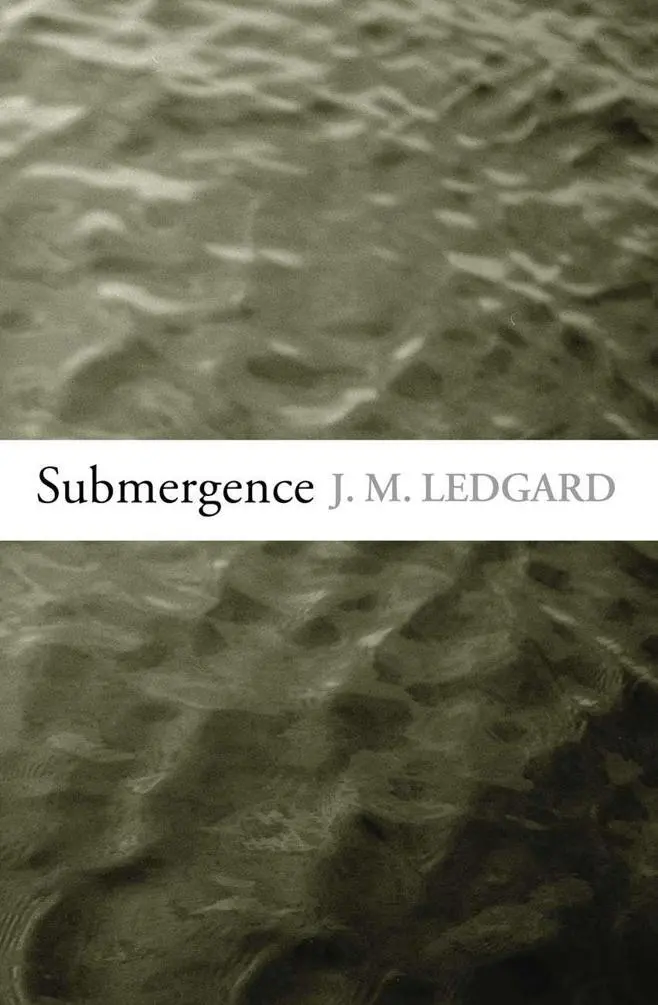
- Название:Submergence
- Автор:
- Издательство:Random House UK
- Жанр:
- Год:2011
- ISBN:9781446496831
- Рейтинг книги:5 / 5. Голосов: 1
-
Избранное:Добавить в избранное
- Отзывы:
-
Ваша оценка:
Submergence: краткое содержание, описание и аннотация
Предлагаем к чтению аннотацию, описание, краткое содержание или предисловие (зависит от того, что написал сам автор книги «Submergence»). Если вы не нашли необходимую информацию о книге — напишите в комментариях, мы постараемся отыскать её.
Both are drawn back to the previous Christmas, and to a French hotel on the Atlantic coast, where a chance encounter on the beach led to an intense and enduring romance. For James, his mind escapes to utopias both imagined and remembered. Danny is drawn back to beginnings: to mythical and scientific origins, and to her own. It is to each other and to the ocean that they most frequently return: magnetic and otherworldly, a comfort and a threat.
Submergence — читать онлайн бесплатно полную книгу (весь текст) целиком
Ниже представлен текст книги, разбитый по страницам. Система сохранения места последней прочитанной страницы, позволяет с удобством читать онлайн бесплатно книгу «Submergence», без необходимости каждый раз заново искать на чём Вы остановились. Поставьте закладку, и сможете в любой момент перейти на страницу, на которой закончили чтение.
Интервал:
Закладка:
There was a bookshelf on one side of her study on which she had placed and spot-lit several Sumerian antiquities: a signet ring, a clay tablet and a pot for bringing up water from a well. On rare occasions she would take the ring out of its glass box and turn it over in her hand.
She had become fascinated with the Sumerians because the Sumerians were fascinated with the ocean. They had invented the city-state, representative government, and writing (because their heralds were heavy of mouth). Greek and Roman law were rooted in Sumerian law. It was the Sumerians who called into being the religion of the divine word, in which a god says it is so and it is so. Why were these farmers of the fertile and landlocked lands between the Euphrates and the Tigris so interested in seawater? Why was this first urban civilisation, characterised by its ability to shape land, to plough it, to build on it, so diverted by the Hadal deep?

Six millennia ago, the air god Enlil and the sea god Enki settled themselves in the pantheon of Sumerian deities. The Sumerians believed the world was something like a snow globe. Enlil kept the air in the world together with lil, a mingling atmosphere that also lent luminosity to the sun and stars embellished on the inside of the snow globe. Behind the firmament was a deep sea, and Enki’s house was on the sea floor — a place called Abzu. It was a house made of colours which could not be seen, tiles of lapis lazuli, and encrustations of gems, most especially ruby and cornelian, that could not be crushed at those depths. The bowed cedar doors were hammered right with gold no brine could corrode. In this house Enki created a man. He mixed clay over the volcanic furnace, shaped it with heavy water, and swam it to the world. He breathed air into it there. The man failed. His body was weak. So was his spirit. According to the translation of Samuel Kramer of the University of Pennsylvania, the man was offered a piece of bread: ‘He does not reach out for it. He can neither sit nor stand nor bend his knees.’
What is the lesson? That a man-creature created in the deep should stay there: in a house without light, without a hearth.
His family had been enriched by whaling, and when he dwelled on confinement he came back to the story of his forebear, Captain John More, who as a young man served William Scoresby in the Greenland Sea aboard the whaler Resolution . John was a living Jonah. This is not to say he sucked down the storm with him until the ship was becalmed, or that the good captain was a prophet punished by God. He in no way brought bad luck on his crew, but made them a fortune with his judicious mix of sober fellowship and new industrial methods. The bad luck John More had was his alone and it made him famous in his day. In the austral summer of 1828, John’s whaler, Silver Star , chased a sperm whale through a tempest off Patagonia’s Isle of Desolation. The whale entered a bay from which there was no escape. John jumped down into a whaleboat with his harpooner and two others. Just like in Moby-Dick , though years earlier, the whale rose up and smashed the whaleboat, throwing John and his men into the sea. The men were found. John was lost, presumed drowned. The whale was killed and brought alongside the Silver Star , where it floated for a day and a night as the crew mourned their captain. It was only when the whale’s stomach was hoisted above the deck that one of the flensers saw it pulse. They cut it open and found John wide-eyed and coughing in the gastric juices. The whale had swallowed him. There was mucus over his body and his hands. One of his feet was partly digested where the stocking had come off. He was otherwise physically unharmed.
He went mad for a week and suffered claustrophobia. He would not sleep in his cabin, but instead laid himself down on the deck. His eyes would not focus. He repeated in his speech a groaning about the celerity of the whale in rising and its rows of white teeth. When the fog closed over the Silver Star he took his blankets and sealskins and climbed the mast. The madness burned off him with the sun, and what he remembered in his later life was
the fleeting hold, aye, I had on Leviathan’s face, which was carved in deep cuts like them tattoos on the face of South Sea whaleman, those greasy teeth knocking me, the tunnel of a throat, aye, and of the stomach I can say it was more a tomb than was ever my mother’s womb.
He lived until old age and never again wanted to be alone in small rooms or to wake in the dark. A whaler’s voyage was always brightly lit. There was oil and wax enough to keep a constant lambency and there was more learning than on modern vessels. Forever after he had many lamps lit before he went to sleep. He had a ladder put through the ceiling of his bedroom in the Regency house by the North Sea and in his infirmity retreated up it to the roof whenever he felt confined.
James had no such ladder. He wished for a spermaceti candle, even if it would also show the insects, the cardboard and the trench. He was desperate for something far away. A hare. Some colour in the sky. Everything etched. The fields, the hedgerows. The hare runs into the next field, into trees, then up a hill. On and on. How it runs!
Suddenly, the door swung open.
Extreme cold enables strange things to happen. For example, at the Helsinki University of Technology’s low temperature lab, in 2001, a Bose-Einstein condensate cooled near to the absolute zero of minus 273 °Celsius stopped dead a beam of light travelling at 978 million kilometres per hour.
There were drifts of snow up against the walls and fences, while in other places the ground was bare and glassy as obsidian. The dunes and beach were grey with frost. Purple heather stood out and gorse. The sea was wild. A few surfers in coloured wetsuits rode the waves. She walked with her head down. It was that cold wind which searched with fingers for the rot in a jawbone. It touched a tooth she refused to have drilled. Trieste. She had visited Trieste with her parents and their guide had spoken of how the winter wind rapped at James Joyce’s broken and infected teeth when he wandered the seafront during his long exile in the city. The guide pronounced rapped ‘rapid’.
The lighthouse stood in the distance. It was a sleeping creature, leaving no sign in the day. About it were a few villas, boarded up like wooden boats. A more modern hotel, the Ostende, stood on a promontory beyond.
A man ran past her. She watched him become smaller and smaller until he disappeared in the distance. She walked briskly in the same direction. She wanted to work up an appetite. She was determined to eat the winter menu at the hotel, which was Etruscan: golden, sweet fat of suckling pig in the afternoon; oxtail dishes, bread and wine and cake under a burnished chandelier in the evenings.
The man was running back towards her, becoming bigger, more possible. She was following his tracks and he was returning the same way. He stopped a few steps in front of her. He put his hands on his hips and breathed hard, as if coming up for air. Breath steamed calf-like from his mouth and nostrils. She caught him as he passed. He was possibly shy and she did not want to miss him.
‘Good morning,’ she said.
‘Hello,’ he said.
‘You’re English, aren’t you?’
‘Yes, you?’
Читать дальшеИнтервал:
Закладка:
Похожие книги на «Submergence»
Представляем Вашему вниманию похожие книги на «Submergence» списком для выбора. Мы отобрали схожую по названию и смыслу литературу в надежде предоставить читателям больше вариантов отыскать новые, интересные, ещё непрочитанные произведения.


Обсуждение, отзывы о книге «Submergence» и просто собственные мнения читателей. Оставьте ваши комментарии, напишите, что Вы думаете о произведении, его смысле или главных героях. Укажите что конкретно понравилось, а что нет, и почему Вы так считаете.