J. Ledgard - Submergence
Здесь есть возможность читать онлайн «J. Ledgard - Submergence» весь текст электронной книги совершенно бесплатно (целиком полную версию без сокращений). В некоторых случаях можно слушать аудио, скачать через торрент в формате fb2 и присутствует краткое содержание. Год выпуска: 2011, ISBN: 2011, Издательство: Random House UK, Жанр: Современная проза, на английском языке. Описание произведения, (предисловие) а так же отзывы посетителей доступны на портале библиотеки ЛибКат.
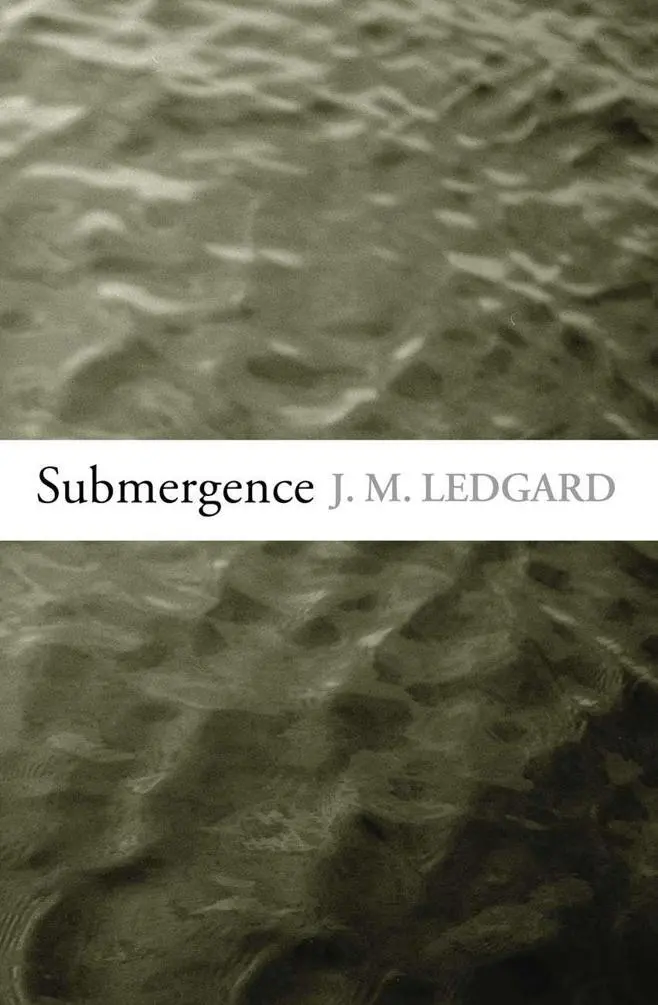
- Название:Submergence
- Автор:
- Издательство:Random House UK
- Жанр:
- Год:2011
- ISBN:9781446496831
- Рейтинг книги:5 / 5. Голосов: 1
-
Избранное:Добавить в избранное
- Отзывы:
-
Ваша оценка:
Submergence: краткое содержание, описание и аннотация
Предлагаем к чтению аннотацию, описание, краткое содержание или предисловие (зависит от того, что написал сам автор книги «Submergence»). Если вы не нашли необходимую информацию о книге — напишите в комментариях, мы постараемся отыскать её.
Both are drawn back to the previous Christmas, and to a French hotel on the Atlantic coast, where a chance encounter on the beach led to an intense and enduring romance. For James, his mind escapes to utopias both imagined and remembered. Danny is drawn back to beginnings: to mythical and scientific origins, and to her own. It is to each other and to the ocean that they most frequently return: magnetic and otherworldly, a comfort and a threat.
Submergence — читать онлайн бесплатно полную книгу (весь текст) целиком
Ниже представлен текст книги, разбитый по страницам. Система сохранения места последней прочитанной страницы, позволяет с удобством читать онлайн бесплатно книгу «Submergence», без необходимости каждый раз заново искать на чём Вы остановились. Поставьте закладку, и сможете в любой момент перейти на страницу, на которой закончили чтение.
Интервал:
Закладка:
‘From London,’ she said, in English.
He guessed who she was. He had seen her name and title when he had signed in. Professor of what?
He held out his hand. ‘James More.’
She shook it. A big hand, chilled, the blood deep inside, but soft.
‘Danielle … Danny Flinders.’
‘Danny the champion of the world.’
Despite herself, despite the familiarity, she shone in that moment. For her it was simple. A hermit crab finds its shell, and is accommodated — so lovers meet.
It was before breakfast and the sky was slate, darker than the dunes, descending with the weight of the forecast snowstorms. The first words they spoke to each other were rounded and slurred by the cold.
‘Only an Englishman would wear shorts in this weather,’ she said.
He was more distracted. ‘You’re right,’ he said. ‘It’s cold. I’m going back.’
‘Shall I see you later?’
She could have said something less definite.
He smiled. ‘Yes,’ he said.
Then he was gone, sprinting for the cover of the pines.
She walked all the way to the Hotel Ostende and back and bumped into him when she came into the lobby. It was awkward. But then life is never neat, it is made up of doors and trapdoors. You move down baroque corridors, and even when you think you know which door to open, you still need to have the courage to choose.
‘I have some work to do,’ she said, hastily. ‘I’m going to have breakfast in my room.’
‘Lunch?’ he said. He had showered and dressed. He was more winsome than he had been on the beach.
‘Would one thirty be too late?’
He batted a copy of the International Herald Tribune against his leg. ‘See you then,’ he said, and was gone.
The first thing she did when she got to her room was to order breakfast. She bathed. When she came out of the bathroom the food was waiting for her on a table under a silver dome. Room service was a kind of magic.
A maid was in the doorway.
‘May I make the fire, madame?’
‘Please.’
Fire was important to her. It wasn’t just that the snow had arrived outside, hiding the sky, making the room more precious. A fireplace was a focus. There was no focus in the abyss, not really. Enki’s house had no hearth. Where magma burned in seawater it did so without colour or note. It was a volcanic heat which would burn through your craft, melt rock; it was a wellspring of life, as we shall see, but it was not fire the way fire existed at the surface; with air, the flames having shapes, volumes, and shades according to their heat.
She had the desk moved so it stood in front of the blazing logs, and not the snowstorm. She worked on equations pertaining to the speed of duplication of microbial life. Of course she worked. It was compelling, monumental. She hardly looked up when the coffee was served at the precise hour she had requested. She did not think of the man she had met on the beach and again in the reception. She jotted notes and numbers on filing cards with a fountain pen in green ink. At the end of the week she would have a stack of cards. She would arrange the cards into an order in London and when she had transcribed what was valuable from them she would shut them in a wooden drawer of the kind formerly used in libraries. Occasionally, she took a pencil and worked through calculations on large sheets of paper.
He knocked on her door a few minutes earlier than they had agreed; perhaps he was curious to see her at work. She let him in. He stood by the window, saying nothing, waiting for her to finish.
She asked him to lock the door behind them, and walked down the corridor in front of him. The carpet was soft over the boards. She felt his eyes on her. She welcomed the attention. Winter was the time to be with men. Summer days were floaty, but men were engorged, blown up with themselves and oiled. A man was more engaging in the winter, more manly and available, even if he was reduced and melancholy. There came another feeling, more significant. She felt it before she reached the staircase. Time was folded tightly, it was wadded like origami, yet she had a sense that this had happened before. More precisely, that this was meant to happen at that moment.
*
They took lunch in the hall of mirrors. French windows ran the length of the room. In summer they opened out onto the lawns to make a veranda. Large gilt mirrors hung from an opposing cream-coloured wall, in the centre of which was a marble fireplace. The fire roared. Candlesticks flickered on the mantle. Also on the mantle was a portrait of César Ritz and the hotel staff in the year 1900. All of Ritz’s workers were milling about without show on the beach, the cooks still in their hats, the gardeners in shirts and braces; the sea caught in motion behind them, capturing the position of such a hotel in a patron’s life and the lives of its staff and guests. It was best described by the tired expression a home away from home. For a few days it gave its guests a quality of life that was higher than they could expect at home, because it was pared down the way some novels were pared down.
There were so many fires burning in the hotel that day. The storm rattled the French windows. The view was bleak. It was possible to make out the pines and the dunes, but not the sea. The snow fell more thickly, furiously, covering footprints on the lawn and making pristine the land in a way that was never possible in Africa. The windows reflected the candles, larger snowflakes fell on the other side, and more logs were put on the fire. All of it came together deliciously.
How beautiful she looked, in that wintry way of new hazards. He felt he might have a place in her life, yet it was Saturday, and he would be gone by Wednesday. A waiter moved to seat them. She felt the slightest wind through the French windows on her hand like a breath.
‘After you, professor,’ he said, courteously.
She turned. ‘How did you know that?’
‘I saw your name in the register. What are you a professor of?’
‘Take a guess.’
He blushed. ‘Must I?’
‘I’m curious.’
‘Music?’
‘No.’
‘Anthropology?’
‘Please.’
‘Law?’
‘Wrong again.’
‘What then?’
‘Maths. I apply mathematics to the study of life in the ocean.’ She studied his expression. There was nothing of academia about him, nothing comical. Except that he was square-jawed with strong zygomatic muscles, clean-shaven, imperial somehow, with fine blood vessels on his cheekbones; when he smiled it was as if his face was illuminated.
He smiled. ‘You’re an oceanographer!’
She was already spreading butter on bread. She jabbed the air with her blunt knife. ‘There’s no such discipline as oceanography,’ she said. ‘It’s just the working of sciences to whatever is in the sea.’
‘Or under the sea.’
She looked up. It was strange he said that. ‘Precisely,’ she said.
‘Which is your ocean?’
‘Sorry?’
‘Which ocean do you like the best?’
‘Oh, I see. That’s easy.’ She gestured towards the windows. ‘It has to be that one — the Atlantic.’
‘Why’s that?’
‘Scientifically, or otherwise?’
‘Otherwise, I suppose,’ he said, cautiously. He sensed he was being measured.
‘Well, the Atlantic links the halves of the Western world. It is the ocean of the slave trade, also of the steam ship. The sea of constant doom, the Phoenicians called it. It has the Gulf Stream. There are the colours. The greys and greens. The seabird colonies. Apart from that it’s a cold and representative body of water, dropping down to submarine mountain ranges.’
‘How deep?’
‘An average depth of 3600 metres.’
‘Mrs Memory!’
‘ The 39 Steps ?’
Читать дальшеИнтервал:
Закладка:
Похожие книги на «Submergence»
Представляем Вашему вниманию похожие книги на «Submergence» списком для выбора. Мы отобрали схожую по названию и смыслу литературу в надежде предоставить читателям больше вариантов отыскать новые, интересные, ещё непрочитанные произведения.




Обсуждение, отзывы о книге «Submergence» и просто собственные мнения читателей. Оставьте ваши комментарии, напишите, что Вы думаете о произведении, его смысле или главных героях. Укажите что конкретно понравилось, а что нет, и почему Вы так считаете.