J. Ledgard - Submergence
Здесь есть возможность читать онлайн «J. Ledgard - Submergence» весь текст электронной книги совершенно бесплатно (целиком полную версию без сокращений). В некоторых случаях можно слушать аудио, скачать через торрент в формате fb2 и присутствует краткое содержание. Год выпуска: 2011, ISBN: 2011, Издательство: Random House UK, Жанр: Современная проза, на английском языке. Описание произведения, (предисловие) а так же отзывы посетителей доступны на портале библиотеки ЛибКат.
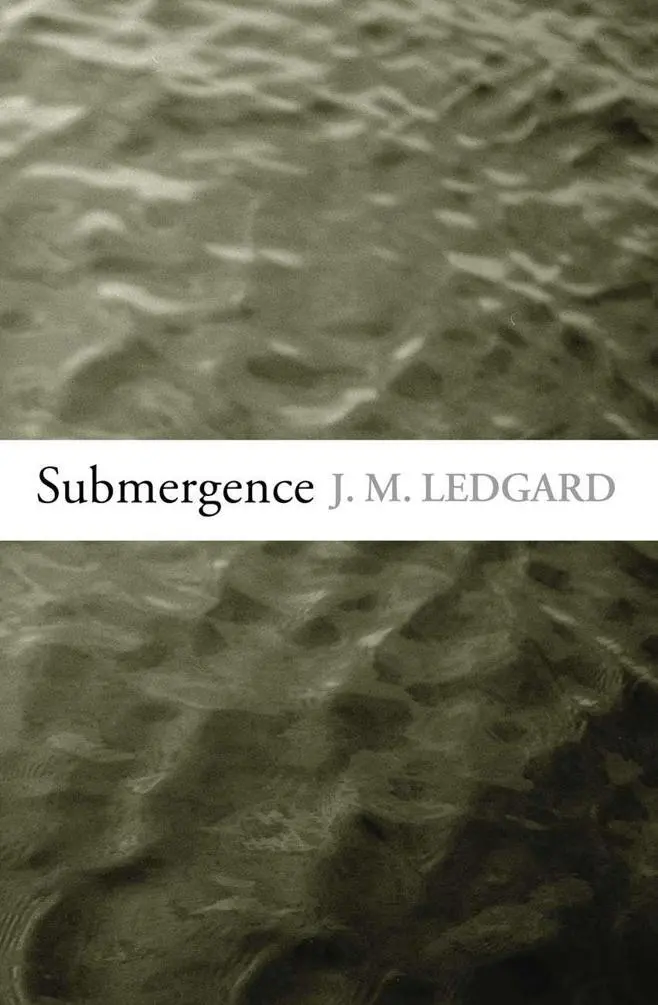
- Название:Submergence
- Автор:
- Издательство:Random House UK
- Жанр:
- Год:2011
- ISBN:9781446496831
- Рейтинг книги:5 / 5. Голосов: 1
-
Избранное:Добавить в избранное
- Отзывы:
-
Ваша оценка:
Submergence: краткое содержание, описание и аннотация
Предлагаем к чтению аннотацию, описание, краткое содержание или предисловие (зависит от того, что написал сам автор книги «Submergence»). Если вы не нашли необходимую информацию о книге — напишите в комментариях, мы постараемся отыскать её.
Both are drawn back to the previous Christmas, and to a French hotel on the Atlantic coast, where a chance encounter on the beach led to an intense and enduring romance. For James, his mind escapes to utopias both imagined and remembered. Danny is drawn back to beginnings: to mythical and scientific origins, and to her own. It is to each other and to the ocean that they most frequently return: magnetic and otherworldly, a comfort and a threat.
Submergence — читать онлайн бесплатно полную книгу (весь текст) целиком
Ниже представлен текст книги, разбитый по страницам. Система сохранения места последней прочитанной страницы, позволяет с удобством читать онлайн бесплатно книгу «Submergence», без необходимости каждый раз заново искать на чём Вы остановились. Поставьте закладку, и сможете в любой момент перейти на страницу, на которой закончили чтение.
Интервал:
Закладка:
He was full of his job and of Nairobbery. The morning commute between Muthaiga and Upper Hill had done him in. It was good to be away from it. He had flown business class on Kenya Airways from Nairobi to Paris then taken the morning train to La Roche-sur-Yon. He missed his connection in La Roche and had to wait an hour. It was bitter on the platform, while in the station waiting room it was warm. There was a wood-burning stove. The walls were hung with the heads of tiny deer. The benches were varnished. In one corner was a café with a small curved counter serving coffees, cognac, freshly made soups, stews and crème caramel. A merriment prevailed with the season. It made him sad in a way: life was so much more equable than Africa.
He boarded a country train. Its single headlight shone like the eye of a Cyclops. There was a Mercedes taxi with a sign on its roof to meet him at his destination. It was a new car with black leather seats, still with a new-car smell. An unopened packet of cigarettes sat in a tray by the gearstick. A compact disc with Koranic verses twirled from the mirror. The driver was Algerian. James struck up a conversation in Arabic. The driver turned around and rubbed his stubble and stared: it was as if the passenger had materialised in the back seat. They exited the station past a kiosk, then off on smaller roads, under beeches, thence into a parkland, past other twisted tree trunks, metal railings, sheep. It was clear. He could see dunes in the distance, the sea, boats on the water, whitecaps. There was something of Biarritz, something of the Isle of Mull, the sky, the sea, and when he stepped inside the Hotel Atlantic, the quality of the tapestries, uniforms, and the attention to detail in the flowers and other arrangements reminded him of the Hotel Bernini in the Piazza Barberini in Rome.
He went directly to dinner. It was some special occasion. The guests were asked to serve themselves bisque in the hotel kitchen. He went in there. The floor was tiled with white and black diamonds. The high windows were steamed up. It was possible to sense but not to see the snow falling thickly outside. Dozens of copper-bottomed pots hung above the gas stoves. The chef in white uniform unhurriedly chopped and diced.
There were eight other guests in the dining room. Their chatter and forms were vaguely realised to him in the way the chef had been. It was his tendency to stand himself down in every safe place, to blot out what was peripheral, and recover some sense of his own self. In addition to the bisque were dishes of pheasant, goose, tripe, salted bass, vegetables, puddings, fondants, fruit and cheeses. The tables were set with white linen, candles and gold cutlery. There were photographs of famous guests hung on the applewood panelling. Among them were Mozaffar ad-Din Shah of Persia tossing coins to the local children and Henrik Ibsen eating a goose in the Christmas of 1899. Mark Twain was photographed in the same dining room a decade later. There was the mezzo-soprano Giulietta Simionato, mouth open, chest bursting, and a colour photo of President François Mitterand in his suite in the hotel, looking out into the night at the sea bounding France.
He was restless. There was a flaw in him which urged him to catalogue rather than enjoy. He picked up a fork. See it for what it is. It is gold-plated, just that.
*
His room was on the third floor, facing up the hill to the parkland and the wood. When he opened the window there was the shriek of gulls. He considered asking for a larger room. Perhaps in the morning. Hotel rooms in Europe were always smaller than you hoped. You were initially disappointed, though so what, that was life, the longer you spent in the room, the more accommodating it became. What you did not like distinguished it. He had a sense that perhaps it was that tolerance of the distinctive which separated Europe from America. The United States talked about individuality, but delivered the unvaried and replicated. In his experience, American hotels were prefabricated, with piped music, airless corridors, tinted windows that would not open, circulated air that could not be shut off, a small plastic bathtub, chlorinated water — tepid, never hot — a plastic cup in a plastic wrapper. Who would drink that? Whereas in Africa there was always a bottle of water and a glass at the bedside, and there was often a hallway opening onto a garden, and there were swimming pools in the better hotels where you could swim to the moon at night, stopped only by the electric fence at the edge of the compound, and so you floated in the deep end above the mess of lights of an African city in the valley below — disordered clumps, wrongly beautiful, like a scan of a damaged brain.
Besides, there was nothing wrong with the room he had been given. It had two desks, a balcony, a fireplace, an expensive bed, a nicely arranged series of engravings of the regiment of Aquitaine. The bathroom had windows, an iron bath with lion feet and a shower whose ingenious chrome fittings had no visible pipes.
After unpacking, he went down to the bar. He ordered a large whisky. The barman — Marcel, he found out — was the chef’s cousin. He was fresh-faced, but with the telltale cauliflower ears of a rugby player. He radiated a professionalism that invited candour. That made James cautious.
‘You play rugby.’
‘I used to.’
‘What made you stop?’
‘Oh, you know, I broke my neck.’
They talked for a while, about the state of France, whiskies, Kenyan rugby, then James excused himself and sat at an old table in front of a large brick fireplace. Drilled into the wall above the hearth was a large flat-screen television. It was turned off. He stared at it.
‘Just for Bastille Day and sports, my friend,’ said Marcel, bringing over another whisky.
He read the newspapers on his electronic tablet. He travelled lightly, precisely. He had a steel IWC watch, one bag, no printed books, and yet dozens of volumes on the tablet: it was 2011, and the works he kept close were a few novels, poetry collections and journals recommended to him, all of them fitting onto a device lighter than a magazine. It surprised him how quickly he had been won over to electronic ink. Words were shapes. You entered them, they entered you. It was true the device ended the relationship between book and reader, but that was no matter in return for having a library to hand, and the ability to hide codes within it.
When he lay in bed later that night his tablet was bright in the otherwise unlit room. The snow fell thickly outside. Oblivious to the guests, whiteness seized the building in the darkness. There were spectres. The gulls were faintly heard through the curtainfolds. He highlighted with a sweep of his finger some 700-year-old lines of William Langland’s Piers Plowman and stored them with another sweep in a folder on the device:
And so I went travelling far and wide, walking alone through a wild, uncultivated region, following the edges of a wood. The jubilant songbirds caused me to linger, and I lay back for a little while in a clearing, under a lime tree, listening to the delicious carolling of these birds. The cheerful sounds that came from their throats worked on me, till I drifted off to sleep there.

A Saturday in July in London. All the windows in her flat were thrown open. She forced herself to watch the evening news. Even at that hour there were sunbathers in the garden in the square. She took a cold shower then sat at her desk by the window with a cup of coffee and a cigarette. It was a week before her voyage to the Greenland Sea. She picked up a piece of paper that had been left in her pigeonhole at the university by her unbalanced Polish colleague, Tomaszewski.
Читать дальшеИнтервал:
Закладка:
Похожие книги на «Submergence»
Представляем Вашему вниманию похожие книги на «Submergence» списком для выбора. Мы отобрали схожую по названию и смыслу литературу в надежде предоставить читателям больше вариантов отыскать новые, интересные, ещё непрочитанные произведения.




Обсуждение, отзывы о книге «Submergence» и просто собственные мнения читателей. Оставьте ваши комментарии, напишите, что Вы думаете о произведении, его смысле или главных героях. Укажите что конкретно понравилось, а что нет, и почему Вы так считаете.