J. Ledgard - Submergence
Здесь есть возможность читать онлайн «J. Ledgard - Submergence» весь текст электронной книги совершенно бесплатно (целиком полную версию без сокращений). В некоторых случаях можно слушать аудио, скачать через торрент в формате fb2 и присутствует краткое содержание. Год выпуска: 2011, ISBN: 2011, Издательство: Random House UK, Жанр: Современная проза, на английском языке. Описание произведения, (предисловие) а так же отзывы посетителей доступны на портале библиотеки ЛибКат.
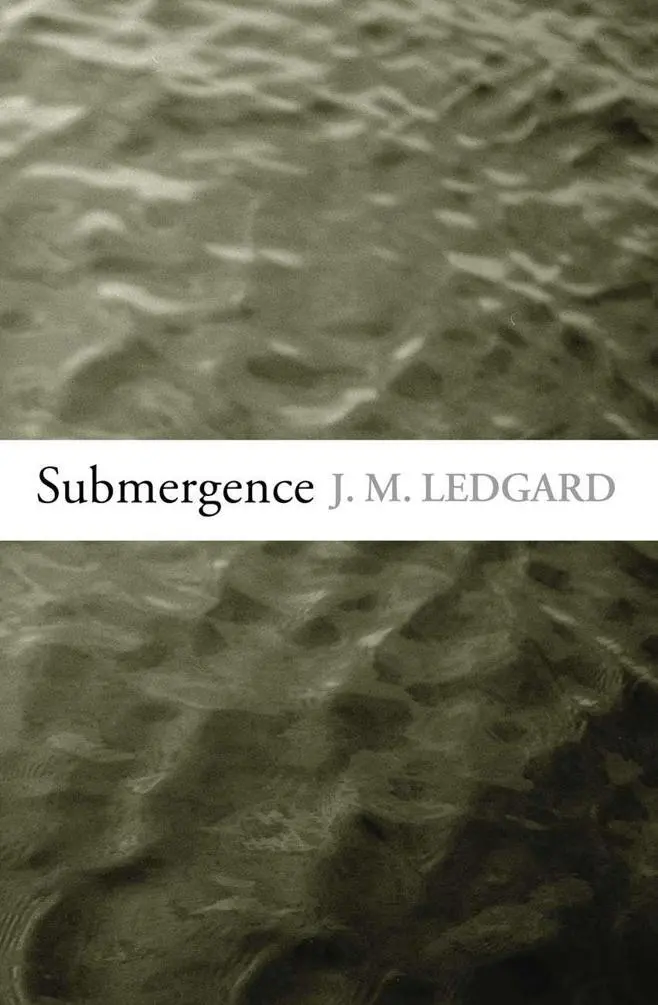
- Название:Submergence
- Автор:
- Издательство:Random House UK
- Жанр:
- Год:2011
- ISBN:9781446496831
- Рейтинг книги:5 / 5. Голосов: 1
-
Избранное:Добавить в избранное
- Отзывы:
-
Ваша оценка:
Submergence: краткое содержание, описание и аннотация
Предлагаем к чтению аннотацию, описание, краткое содержание или предисловие (зависит от того, что написал сам автор книги «Submergence»). Если вы не нашли необходимую информацию о книге — напишите в комментариях, мы постараемся отыскать её.
Both are drawn back to the previous Christmas, and to a French hotel on the Atlantic coast, where a chance encounter on the beach led to an intense and enduring romance. For James, his mind escapes to utopias both imagined and remembered. Danny is drawn back to beginnings: to mythical and scientific origins, and to her own. It is to each other and to the ocean that they most frequently return: magnetic and otherworldly, a comfort and a threat.
Submergence — читать онлайн бесплатно полную книгу (весь текст) целиком
Ниже представлен текст книги, разбитый по страницам. Система сохранения места последней прочитанной страницы, позволяет с удобством читать онлайн бесплатно книгу «Submergence», без необходимости каждый раз заново искать на чём Вы остановились. Поставьте закладку, и сможете в любой момент перейти на страницу, на которой закончили чтение.
Интервал:
Закладка:
To many of her acquaintances it was not clear which country Professor Danielle Flinders belonged to, or if she was the sort of woman who would ever find space in her life for a long-term relationship. There was something obscure about Danny, they said, something hard, something striated. There was some truth in this assessment, not least the fact that, arresting as she was, she enjoyed sex on her own terms and was inclined to regard her sexual partners as to some degree disposable, like squash partners. But on the broader point of belonging, it is fairer to say that, as the youngest tenured professor at Imperial College in London with a visiting lectureship at ETH in Zurich, she was representative of those modern achievers who have lived in so many places there is none they can call home. It can be further said that any friend who thought her inconstant was no friend at all, because loyalty was one of the traits she inspired. Her mobility was not in any case a question of running away from the past, abandoning an ill-fitting childhood, being emotionally unstable, or anything like that. On the contrary, it was her parents who had set her in motion. Her father was an Australian, her mother a Martiniquan. She had brothers. It was a happy and close-knit family. She had grown up in London, on the Côte d’Azur and in Sydney, and had been formed by all these places. In her complexion and variety of dress and habits and manners there was something of her mother’s Creole background. Language was important to her. She would have considered it a betrayal to choose English over French for the sake of convenience. She was broadly scientific, in the Enlightenment sense of requiring the humanities to touch upon her thinking. Her detractors must never have seen her at work, for what she lacked in rootedness she made up for in vocation. Many individuals struggle to know how to apply their minds to existence, but Danny was dedicated to a branch of maths called biomathematics. By way of abbreviation it is enough to say that she was trying to understand the pullulating life in the dark parts of the planet at a time when, up above, mankind was itself becoming a swarm and setting off in ever more artfully constructed but smaller and more mindless circles. She might have admitted that the perspective she sought to bring was too complicated and threatening to command a wide audience, but not there, on the railway platform, on the first day of her Christmas holidays.
A horse and cart entered the gravel car park behind the platform. A young man jumped down and waved. She walked out to him. He took her luggage and helped her up and arranged a blanket over her knees. His breath was milky, his cheeks pocked. She could not remember him from last year.
‘We will journey slowly,’ he said. ‘Now. Off we go.’
She breathed in the air. It was softer, earthier. ‘It’s good to be back.’
‘For someone else we would have sent a taxi, but the manager said, no, Madame Flinders will enjoy the cart. See, we even have the shopping in the back.’
She turned and looked. There were pheasants, a boar, sacks of coal and post. They went out onto the main road. The young man held the reins loosely. She decided she knew him, she just could not remember his name. She was a regular guest at the Hotel Atlantic, arriving after the departmental Christmas party and returning to London by Eurostar on Christmas Eve. It was hardly past lunchtime, but the sky was dark. It began to sleet. A Renault with yellow headlights came at them, passed them, ploughing slush. Its wipers were moving too fast, she thought.
They turned onto a frozen rutted track between fields. The furrows were filled with snow. After some long quiet way they crossed a metalled road and past a sign bearing the hotel’s name. Down they went, down a drive with sheep fenced into large meadows on either side in the English parkland style, and oaks and a drystone wall shooting into a wood like an arrow. A fog had closed in, obscuring the sea. She gave a hurrah when they came to the hotel. She got down, then hesitated. The first decision of the holiday was important. Everything in London was paid for in time, as well as money. She made do with showers in London. Here, her hands and face already numb with cold, she decided to walk to the beach. She would check in on her return, then go to her room and run a hot bath. No work. No, she said to herself. After the bath she would watch a film and take an early dinner in the dining room.
‘Would you take my bags in, Phillipe,’ she said, remembering his name. ‘I am going for a walk.’
‘Shall we light the fire in your room?’
‘Yes, thank you. And could I have tea’ — she looked at her watch — ‘in about an hour?’
‘Of course, madame. We will look for you returning.’
She tied her scarf, zipped her black wax jacket to the collar and went down over the lawns to the pines. They were a spare stand of trees, prettier and more vulnerable than last year, with climate change, with storms, the salt on resin. She liked the sensation of the frost giving under her boots in the shadows. At the far side were towering dunes in shades of yellow. She scrambled up them and saw the beach stretching out of sight below. It was curved, tan. There was a dark slab of rock in the centre of it which she adored. She ran down and walked the length of it. She thought of it as an altar, or else the lips of the beach. The edges of it cut into her wellies. I forgot that, she said to herself. She had remembered the swirling around the rock, not its sharpness — the way it sliced and defined. She took a half-step into childhood and tried to see the rock pools through childlike eyes. She saw starfish and crabs and refused to name them. Her knowledge of marine life was such that she had to be careful to block out the details: the way the saltwater leeches articulated head over tail, or the colours indicating the numberless microbial lives undertaken in each fold of the rock.
The sand thereabout was coarse sugar and the footsteps she made down to the sea were demerara. The water’s edge was turbid and swirling with gravel and shells and seaweed. There must have been a storm. She felt the need to touch the Atlantic again. She pulled off her gloves, got down, and set her hands in it until they lost feeling. The depths of the oceans filled her working mind, but for that moment she was determined just to look at the play of wind on it and the gulls wheeling above it. She had come to see the sea, not the ocean.
A log fire blazed in the reception. An ancient computer with an apricot badge sat unused behind the desk like a piece of treasure, a reminder of when computing machines were generously built and slow-witted and not taken for granted, and a statement of how the establishment endured through technological revolutions. A Christmas tree filled the hall beyond, decorated in the local style with dried flowers, glinting ornaments, and golden candles. She sipped clear hot tea while they conducted the formalities. She signed her name in a ledger with a fountain pen and was given a room key made of brass. A porter led her through the hall and smoking lounge to an old lift with the English word UP illuminated above the cage door. She asked to take the stairs. Her suite was at the back of the hotel on the second floor, as she had requested. There was a bedroom and a living room with a large silk Turcoman rug. It was a part of the hotel dating back to the days of the manor, the part where the ceiling beams had been soaked in milk for a year to harden them. The views were of the lawns, the pines, and the beach beyond. At night it was possible to see the lighthouse. There was a handwritten note on her bed stating that it was the third Sunday in Advent and by hotel tradition guests were invited to serve themselves lobster bisque and other foods in the hotel kitchen at no additional charge. The bisque was to be served from a blue and white Meissen bowl and the tables in the dining room set with gold cutlery. She put the note on her side table and undressed.
Читать дальшеИнтервал:
Закладка:
Похожие книги на «Submergence»
Представляем Вашему вниманию похожие книги на «Submergence» списком для выбора. Мы отобрали схожую по названию и смыслу литературу в надежде предоставить читателям больше вариантов отыскать новые, интересные, ещё непрочитанные произведения.




Обсуждение, отзывы о книге «Submergence» и просто собственные мнения читателей. Оставьте ваши комментарии, напишите, что Вы думаете о произведении, его смысле или главных героях. Укажите что конкретно понравилось, а что нет, и почему Вы так считаете.