Reif Larsen - I Am Radar
Здесь есть возможность читать онлайн «Reif Larsen - I Am Radar» весь текст электронной книги совершенно бесплатно (целиком полную версию без сокращений). В некоторых случаях можно слушать аудио, скачать через торрент в формате fb2 и присутствует краткое содержание. Год выпуска: 2015, Издательство: Penguin Press, Жанр: Современная проза, на английском языке. Описание произведения, (предисловие) а так же отзывы посетителей доступны на портале библиотеки ЛибКат.
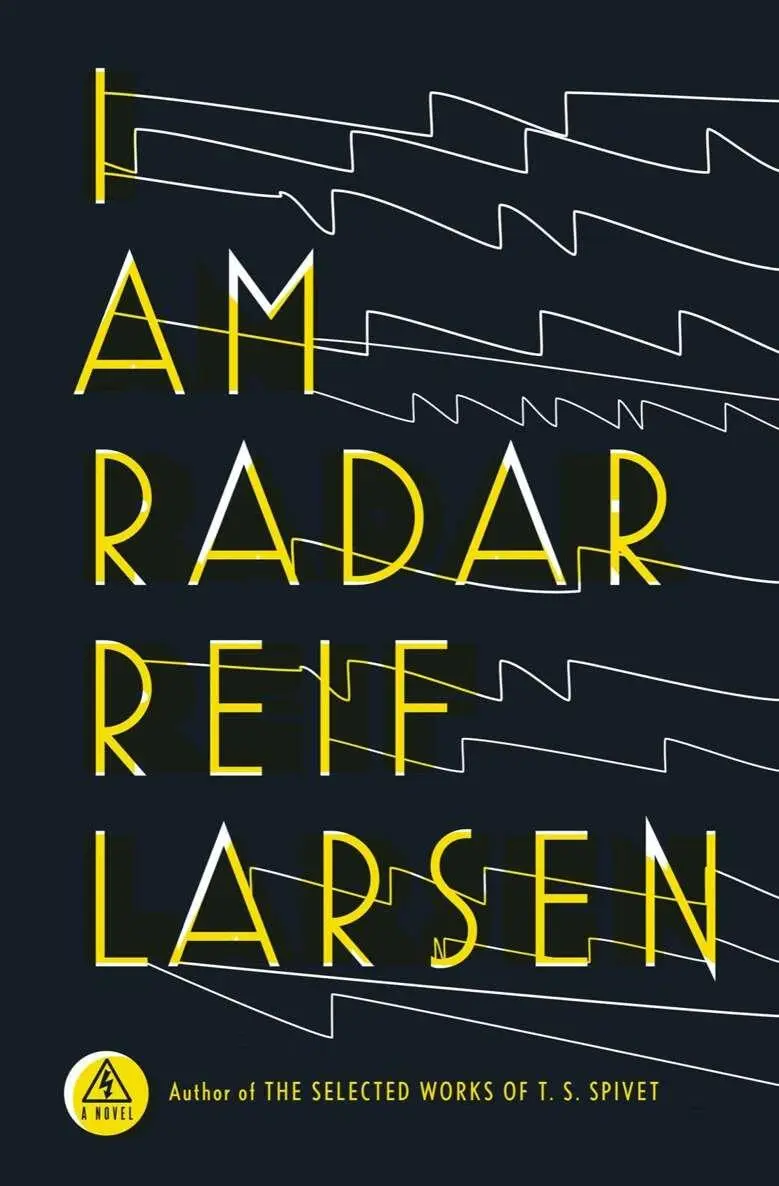
- Название:I Am Radar
- Автор:
- Издательство:Penguin Press
- Жанр:
- Год:2015
- ISBN:нет данных
- Рейтинг книги:3 / 5. Голосов: 1
-
Избранное:Добавить в избранное
- Отзывы:
-
Ваша оценка:
I Am Radar: краткое содержание, описание и аннотация
Предлагаем к чтению аннотацию, описание, краткое содержание или предисловие (зависит от того, что написал сам автор книги «I Am Radar»). Если вы не нашли необходимую информацию о книге — напишите в комментариях, мы постараемся отыскать её.
I Am Radar Deep in arctic Norway, a cadre of Norwegian schoolteachers is imprisoned during the Second World War. Founding a radical secret society that will hover on the margins of recorded history for decades to come, these schoolteachers steal radioactive material from a hidden Nazi nuclear reactor and use it to stage a surreal art performance on a frozen coastline. This strange society appears again in the aftermath of Cambodia’s murderous Khmer Rouge regime, when another secret performance takes place but goes horrifically wrong. Echoes of this disaster can be heard during the Yugoslavian wars, when an avant-garde puppeteer finds himself trapped inside Belgrade while his brother serves in the genocidal militia that attacks Srebrenica. Decades later, in the war-torn Congo, a disfigured literature professor assembles the largest library in the world even as the country around him collapses. All of these stories are linked by Radar — now a gifted radio operator living in the New Jersey Meadowlands — who struggles with love, a set of hapless parents,and a terrible medical affliction that he has only just begun to comprehend.
I Am Radar — читать онлайн бесплатно полную книгу (весь текст) целиком
Ниже представлен текст книги, разбитый по страницам. Система сохранения места последней прочитанной страницы, позволяет с удобством читать онлайн бесплатно книгу «I Am Radar», без необходимости каждый раз заново искать на чём Вы остановились. Поставьте закладку, и сможете в любой момент перейти на страницу, на которой закончили чтение.
Интервал:
Закладка:
Tien bowed. His heart sank. As he feared, the blood would now be on his hands. He turned away, sheltering the child, who had suddenly grown quiet, as if sensing the imminence of his doom.
It was then that Jean-Baptiste emerged from the main house. He was carrying a wireless, intently swinging its long, spindly antenna toward the sky, fishing for an elusive, invisible signal.
“Why ever did we get this thing? I wasn’t worried about receiving the news before,” he said. “But now I can’t seem to live without it.”
Jean-Baptiste saw the crowd of workers around Renoit.
“This heat’s miserable. Even the radio waves have wilted.” He paused. “Did someone die?”
“Not yet,” said Renoit.
Tien’s hopes rose. He offered the baby, still wrapped in his scarf, to the master of the house.
Jean-Baptiste studied Tien closely.
“Whose child is this?” he said. He put down the radio, still expelling its plush blanket of static, and took the small creature in his hands.
“Whose child is this?” he said again.
Tien bowed. “He is yours, Monsieur de Broglie.”
2
As Tofte-Jebsen points out, it might at first seem curious that Jean-Baptiste de Broglie, reluctant sovereign of La Seule Vérité, would be one of the last remaining kmaoch sbaek sor (“white ghosts”) in the twilight of a dying empire, especially considering his almost total indifference to the actual business of running a plantation. But dig beneath the surface and you will discover an uncommon resolve; Jean-Baptiste, willingly or unwillingly, had inherited that strange but effective colonial alchemy of nostalgia, loyalty, and imperial duty.
Jean-Baptiste’s grandfather, Henri de Broglie, had been part of the first wave of eager settlers to the newly formed French Protectorate of Cambodia in the 1870s. Henri was an early champion of the magnificent ruins of Angkor, and through a series of articles in respected periodicals such as Le Globe and Le Petit Parisien, he had helped to popularize their “rediscovery” among Western audiences. At the time, the temples still fell under the jurisdiction of the Kingdom of Siam, and Henri was part of the diplomatic delegation that had negotiated their successful return to the Cambodian people.
“The Khmers are a friendly but short-sighted race,” he wrote in an editorial in Le Petit Journal . “If they are to achieve anything in the future, they must see what magnificence was possible in the past.”
Along the way, Henri had forsaken Catholicism for his own Westernized version of the local Theravada Buddhism: he borrowed selectively from Khmer traditions but also subtly aligned spiritual enlightenment alongside the tenets of Rousseau’s rational enlightenment. For Henri, ascendancy to nirvana meant total mastery of one’s own domain using the latest advances in technology. It was a convenient alteration: such cultural blending allowed him to shirk responsibility for his actions by locating himself in the ethically ambiguous space between the colonizer and the colonized.
While on a tour of Brazil in 1882, Henri visited a rubber plantation and witnessed the cultivation of hevea trees. He watched in fascination as the men made a V-shaped incision into the soft bark of the plant and then siphoned the milky sap through a half-moon spout into the hollow shell of a coconut. Later, Henri would dip his hand into a great steel drum of warm latex, the rubber coating him like a second skin. Sensing his guest’s great admiration, the plantation owner gave Henri a pair of black rubber boots that smelled of wet ash.
“I am certain that nearly all of man’s inventions in the next 100 years will be made of this material,” he later recorded in his journal. “There is a life to its texture that brings me great comfort.”
He brought back a jar full of hevea seeds and a notebook of instructions for its cultivation, and founded La Seule Vérité in the heart of the colony, on the banks of the Mekong, the great river that would deliver his crop to the world. The plot was expansive but perhaps two hundred kilometers farther upstream than it needed to be. This choice, like all others, was made defiantly, un défi du cœur.
“The river is the spine of the colony, from which all life comes and goes,” he wrote. “My house is built between the fourth and fifth vertebrae. . And the view does not disappoint.”
Sometimes the surface of the river was so calm and wide, one could not believe there was any movement at all — it resembled not a river but a thousand-year-old lake. This curving stretch of the Mekong, like the bend of a woman’s knee, inevitably affected all those who passed through it. Either they fell in love with the way les heures bubbled and moaned here or else they urged their capitaine to push through to the next turn, wondering who would ever choose to live in such a place.
The house itself was a lavish, two-story affair built of Italian marble and local rosewood, surrounded by rolling bushes of bougainvillea. It was one of the first rubber plantations in all of Indochine, and for years it stumbled along, producing little from immature trees for a nearly nonexistent Asian market. Henri, undeterred, continued plotting his rise to wealth and fame, writing at length of rubber’s sturdy flexibility, extolling the great rubber farms of Brazil, Java, and the newly formed Congo Free State in Africa.
Henri was a notorious cataloger. He recorded nearly everything that went on at La Seule Vérité in obsessive detail, documenting tree height, wages, temperature, flooding, bird species, even his own bowel movements. Fearful that someone might get hold of these notes and decode his secrets, Henri kept the large calfskin tomes locked in a vault. Years later, when his son and then grandson were able to glimpse their contents, such worries seemed superfluous: the ledgers did indeed contain a wealth of information, but their system of organization was beyond mortal comprehension. Columns of numbers, labeled only with a series of initials, would intersect graphs and tables of equally opaque figures. An unidentified chart could just as easily have been referring to kilograms of rubber output as to kilograms of excrement produced. Henri’s system existed only in the world of the system itself.
Henri married a Khmer woman from the north named Kolthida. Unlike in the British colonies, where race lines were drawn quite clearly, such intermarriages were not unheard of in French Indochina, but the union did not help Henri’s reputation in Saigon as a rogue colonist who had lost himself with the natives upriver. Yet Koko, as she came to be known, would quietly prove her detractors wrong: she spoke good, clean French and quickly mastered the intricate art of judging the world from beneath a parasol. Her wardrobe featured full-length corsets, ordered specially slim and narrow from Paris, and she subtly inflected her formal ensembles with a touch of tasteful local flair — a bright Khmer scarf or a snail shell bracelet that clicked and tinkled as she strolled the paths. On the mantel in the drawing room she installed two traditional Lakhon Khol masks from the Reamker epic: Sophanakha, the demon seductress, and Hanuman, the noble monkey warrior. The masks smelled of blood, but Henri eventually grew accustomed to this.
Like her husband, Koko managed to toe the finest of lines between the exploiteur and exploité: she ran her house with an iron first, commandeering the servants in a stiff mixture of French and Khmer, and surprised their respected visitors from Phnom Penh by playing a repertoire of jigs on a piano that was always slightly out of tune from the constant damp. These visitors would later remark in private to Henri what an admirable job he had done with the native woman. He accepted their congratulations — for him, the miracle was not that Koko had adapted so well, but why such adaptation did not take place all across the colony.
Читать дальшеИнтервал:
Закладка:
Похожие книги на «I Am Radar»
Представляем Вашему вниманию похожие книги на «I Am Radar» списком для выбора. Мы отобрали схожую по названию и смыслу литературу в надежде предоставить читателям больше вариантов отыскать новые, интересные, ещё непрочитанные произведения.












Обсуждение, отзывы о книге «I Am Radar» и просто собственные мнения читателей. Оставьте ваши комментарии, напишите, что Вы думаете о произведении, его смысле или главных героях. Укажите что конкретно понравилось, а что нет, и почему Вы так считаете.