Reif Larsen - I Am Radar
Здесь есть возможность читать онлайн «Reif Larsen - I Am Radar» весь текст электронной книги совершенно бесплатно (целиком полную версию без сокращений). В некоторых случаях можно слушать аудио, скачать через торрент в формате fb2 и присутствует краткое содержание. Год выпуска: 2015, Издательство: Penguin Press, Жанр: Современная проза, на английском языке. Описание произведения, (предисловие) а так же отзывы посетителей доступны на портале библиотеки ЛибКат.
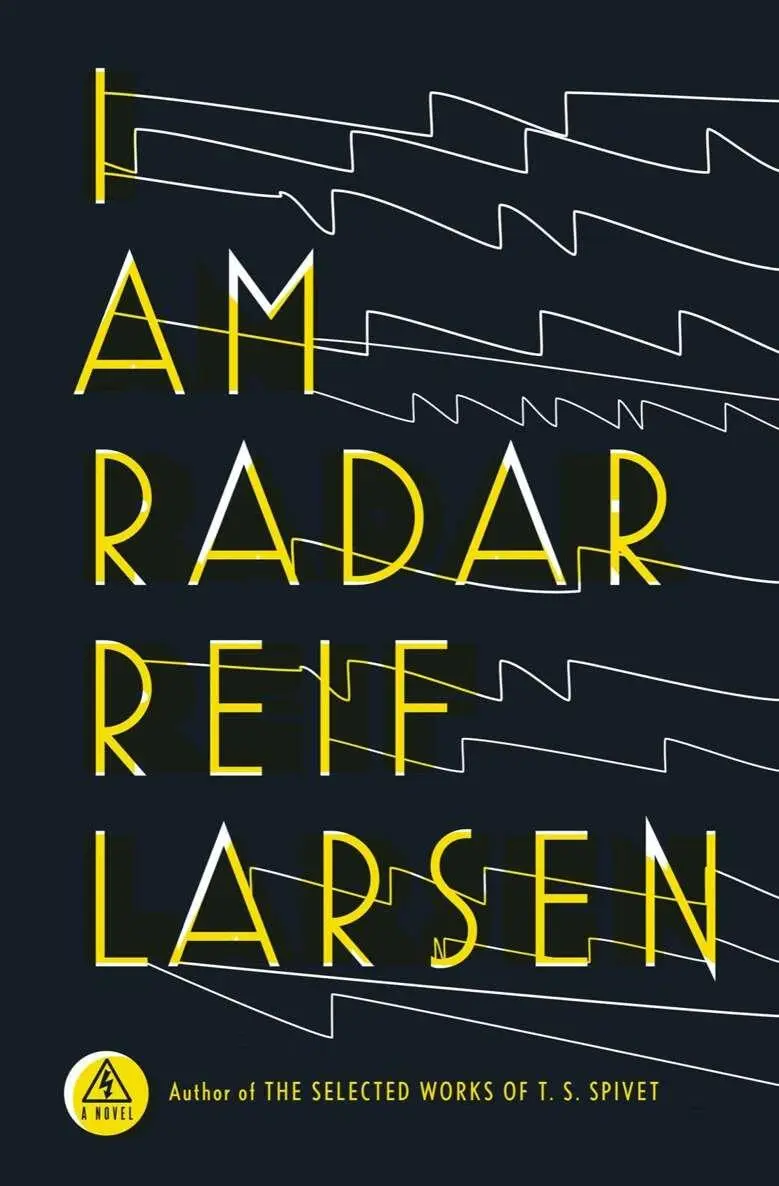
- Название:I Am Radar
- Автор:
- Издательство:Penguin Press
- Жанр:
- Год:2015
- ISBN:нет данных
- Рейтинг книги:3 / 5. Голосов: 1
-
Избранное:Добавить в избранное
- Отзывы:
-
Ваша оценка:
I Am Radar: краткое содержание, описание и аннотация
Предлагаем к чтению аннотацию, описание, краткое содержание или предисловие (зависит от того, что написал сам автор книги «I Am Radar»). Если вы не нашли необходимую информацию о книге — напишите в комментариях, мы постараемся отыскать её.
I Am Radar Deep in arctic Norway, a cadre of Norwegian schoolteachers is imprisoned during the Second World War. Founding a radical secret society that will hover on the margins of recorded history for decades to come, these schoolteachers steal radioactive material from a hidden Nazi nuclear reactor and use it to stage a surreal art performance on a frozen coastline. This strange society appears again in the aftermath of Cambodia’s murderous Khmer Rouge regime, when another secret performance takes place but goes horrifically wrong. Echoes of this disaster can be heard during the Yugoslavian wars, when an avant-garde puppeteer finds himself trapped inside Belgrade while his brother serves in the genocidal militia that attacks Srebrenica. Decades later, in the war-torn Congo, a disfigured literature professor assembles the largest library in the world even as the country around him collapses. All of these stories are linked by Radar — now a gifted radio operator living in the New Jersey Meadowlands — who struggles with love, a set of hapless parents,and a terrible medical affliction that he has only just begun to comprehend.
I Am Radar — читать онлайн бесплатно полную книгу (весь текст) целиком
Ниже представлен текст книги, разбитый по страницам. Система сохранения места последней прочитанной страницы, позволяет с удобством читать онлайн бесплатно книгу «I Am Radar», без необходимости каждый раз заново искать на чём Вы остановились. Поставьте закладку, и сможете в любой момент перейти на страницу, на которой закончили чтение.
Интервал:
Закладка:
Otik came over and looked at the image with them. “It changed my life when I see this,” he said. “I remember someone showed me this photo and I think, ‘Ah, okay, everything is possible now. I must work like son of bitch.’”
Radar stared at the image of the thin little puppet-man with the circular television screen for a head. So simple, yet captivating, even in this black-and-white iteration. He imagined the puppet-man moving, eyes blinking on the screen. The slow bend of his arm, the nod of the head. His father had made this. Something approximate to pride stirred inside of him.
“So then?” he said. “What happened in Cambodia?”
“Oh,” said Otik, returning to the workbench.
“Oh?” said Radar. He looked over at Lars and saw a slight grimace pass over his face. The mood in the room shifted.
“Why do you always ask these questions?” said Otik. “You are like child with all of your questions.”
“I’m sorry,” said Radar. “I didn’t mean to—”
Lars held up his hand.
“It’s okay. Of course you didn’t.” He sighed, running a finger around the rim of his mug. When he looked up again his eyes were heavy. “It wasn’t good.”
“It was beautiful,” said Otik.
“Only in theory.”
“In more than theory. Anlong Veng was most important event in twentieth-century performance.”
“It was a human catastrophe,” said Lars. “The only thing we can be grateful for is that your father wasn’t there. Only his work.”
Radar was silent. The music on the radio encountered a brief batch of static. Strings evaporating.
After a moment, Lars began speaking again. His gaze had moved to some distant point, far away from the room. “We got in. It was a bloody miracle that we got in at all, thanks to Raksmey.”
“Raksmey?” He had heard this name somewhere.
“Raksmey Raksmey,” murmured Lars. He stopped and closed his eyes.
“You see?” Otik said to Radar. “You see what you do?”
Lars shook his head. He took a sip of coffee. “I lost everything that night,” he said quietly.
“I’m sorry,” said Radar. “I didn’t mean to bring it up.”
Lars looked up and smiled weakly. “Of course, everyone assumed it was the end. I mean, there’s no way to recover from something like that. And your poor father. . he had no idea what had happened. I was stuck in Thailand in government custody. I turned eleven while I was there. And then, out of nowhere, Brusa Tofte-Jebsen reappeared. He’d been out of the picture for years. He’d been writing his articles about Kirkenesferda, of course, but I’d never met him before. And he just swooped into Bangkok and got me out of there. I don’t know how he did it. . Per claims he paid a one-hundred-thousand-dollar bribe, but Brusa always denied it. As you can imagine, I was in complete shock. For years. After losing both of my parents like that. . There was talk about sending me to live with Dagna and Jens’s old family. But the relationship wasn’t good with her, so in the end, Brusa ended up adopting me. He was also the one who contacted Kermin and told him what had gone down in Cambodia. I think it was hard for your father, being so distant, not knowing what to do. . He had put so much energy into a show that had ended with all of these people getting killed.”
Radar’s throat went dry. He wanted to ask what had happened in Cambodia but didn’t dare.
“So that was it?” he said. “The group was finished?”
“No,” said Lars. “You would think so, but no. Years later, I attended school at Columbia University, in New York. I was studying Portuguese literature, of all things. Writing a thesis on Fernando Pessoa and all of his heteronyms. But who should walk into my dorm room one afternoon? Kermin Radmanovic. I don’t know how he found me, but he just appeared in my doorway and said, ‘I want to do another show.’ No ‘Hello, how are you? By the way, I’m sorry about your parents, I’m sorry about Cambodia.’ Just this announcement. And of course, I was angry. You can imagine. I mean, who the hell was this fucker, and why was he bringing up all this painful shit that I had tried so hard to forget? Truthfully, I wanted to punch him in the face. I think I almost did. But he was insistent. He stayed, and we began to discuss his ideas. He came back the next day, and the next. And after several weeks I realized that I had been waiting for him to come through that door ever since Anlong Veng. It was my destiny to perform another movement.”
“And then your father called me,” said Otik.
“Otik was not Otik back then. His name was Miroslav Danilovic.” Lars looked over at Otik. “Am I revealing too much?”
“Yes.” Otik shrugged.
“Your name is Miroslav?” asked Radar.
“Not anymore,” said Otik. “Names can die like people.”
“Okay,” said Radar. “So how did you first meet my father?”
“I was living in Belgrade during the war,” said Otik. “I was at university working on some little performance here and there. Mostly like street shows. Your father has seen my work in some magazine or something like this, and when I hear he was one who did show in Cambodia, I was excited, because he is my hero. So we become pen pals. And then he explain what he want to do in Sarajevo and I think, Oh, man, he is so crazy, but good crazy, you know? And he want to pull off this something that is so unbelievable — like no shit unbelievable. So I just said, ‘Why not? Of course I work with you, you crazy motherfucker.’”
Lars nodded. “Your father proposed a performance in the Bosnian National Library, in Sarajevo. The library had already been gutted by firebombs several years earlier. At the time, Sarajevo was still under siege, so you can imagine it was an incredibly complex production and a wildly dangerous performance. Just to get the equipment in there was a ridiculous undertaking. We had to bring our own electricity, everything. It’s true that Kermin never went halfway on anything.”
Radar tried to decide if this was true. “When was this?” he said.
“Back in 1995.”
Radar remembered that the summer before his sophomore year in college, Kermin had left on an extended trip to Europe. He had supposedly been visiting friends in Italy who were displaced by the Yugoslavian war. At the time, Radar had been worried because his mother was in one of her depressions, and he didn’t want her sitting around the house alone. So he had moved back home while Kermin was away. Radar tried to imagine Kermin caught in the middle of a war, staging a show in a bombed-out library in Sarajevo, while he and Charlene sat at home playing Scrabble. Why hadn’t he shared any of this? He had come back tired, bearing some sad Italian gifts of biscotti and cheese, but otherwise none the worse.
“He never mentioned anything to us,” said Radar.
“I’m sure he had his reasons,” said Lars. “There were security issues, particularly coming on the heels of Anlong Veng.”
“And Sarajevo? Did it happen?”
Lars looked at Otik. “In many ways it was the masterwork. Per said as much in his book. Brusa agreed. Otik brought a level of technical complexity we’d never seen before. He works in miniature. Otik, would you show him the. . Oh, never mind. We’ll show you later. It will blow your mind,” said Lars. “But the other big difference with Kirk Fire was that we had a public . We had an actual audience. . for the first time in Kirkenesferda’s history. The public came the first four nights of the run, despite the sniper fire and the shelling. They risked their lives to sneak into this destroyed library to see our show about superstring theory. So in this respect it was—”
“It was bad,” Otik said suddenly, looking up from his birds. “I screwed it up, and Thorgen was killed by sniper. Then there was bombing in Markale. No. We had to stop. It was too much.”
Читать дальшеИнтервал:
Закладка:
Похожие книги на «I Am Radar»
Представляем Вашему вниманию похожие книги на «I Am Radar» списком для выбора. Мы отобрали схожую по названию и смыслу литературу в надежде предоставить читателям больше вариантов отыскать новые, интересные, ещё непрочитанные произведения.







Обсуждение, отзывы о книге «I Am Radar» и просто собственные мнения читателей. Оставьте ваши комментарии, напишите, что Вы думаете о произведении, его смысле или главных героях. Укажите что конкретно понравилось, а что нет, и почему Вы так считаете.