Reif Larsen - I Am Radar
Здесь есть возможность читать онлайн «Reif Larsen - I Am Radar» весь текст электронной книги совершенно бесплатно (целиком полную версию без сокращений). В некоторых случаях можно слушать аудио, скачать через торрент в формате fb2 и присутствует краткое содержание. Год выпуска: 2015, Издательство: Penguin Press, Жанр: Современная проза, на английском языке. Описание произведения, (предисловие) а так же отзывы посетителей доступны на портале библиотеки ЛибКат.
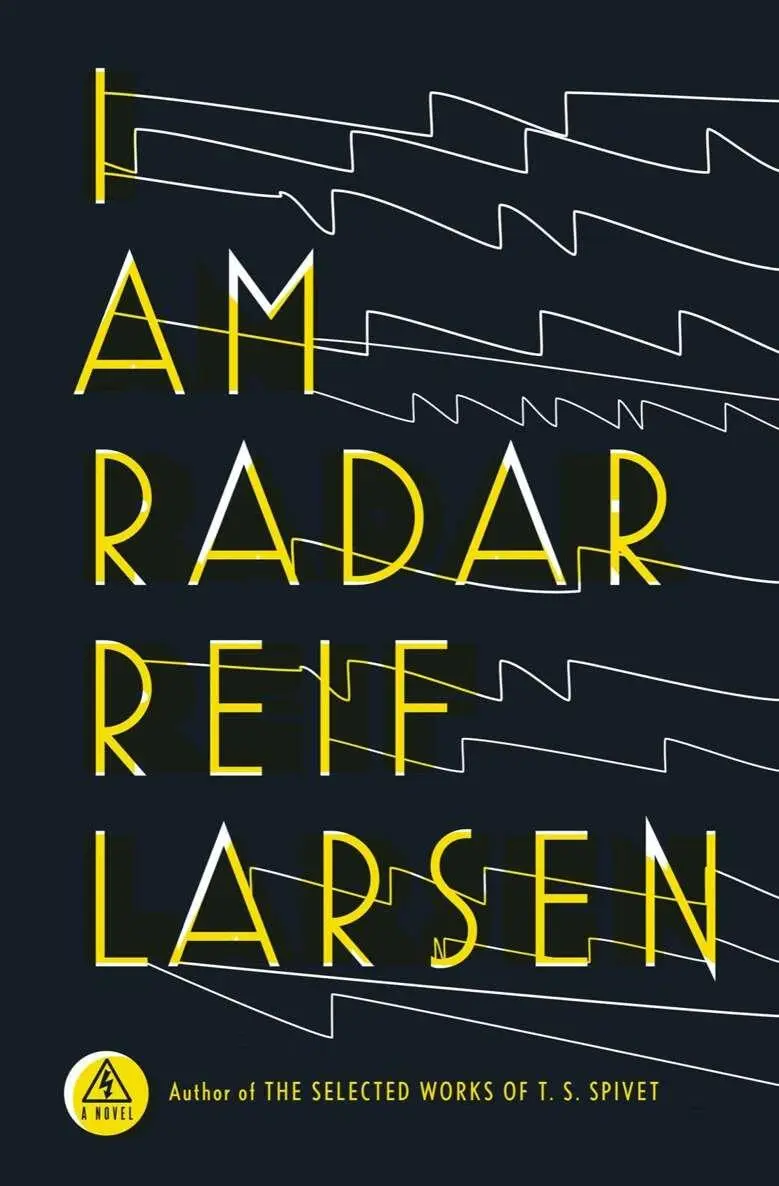
- Название:I Am Radar
- Автор:
- Издательство:Penguin Press
- Жанр:
- Год:2015
- ISBN:нет данных
- Рейтинг книги:3 / 5. Голосов: 1
-
Избранное:Добавить в избранное
- Отзывы:
-
Ваша оценка:
I Am Radar: краткое содержание, описание и аннотация
Предлагаем к чтению аннотацию, описание, краткое содержание или предисловие (зависит от того, что написал сам автор книги «I Am Radar»). Если вы не нашли необходимую информацию о книге — напишите в комментариях, мы постараемся отыскать её.
I Am Radar Deep in arctic Norway, a cadre of Norwegian schoolteachers is imprisoned during the Second World War. Founding a radical secret society that will hover on the margins of recorded history for decades to come, these schoolteachers steal radioactive material from a hidden Nazi nuclear reactor and use it to stage a surreal art performance on a frozen coastline. This strange society appears again in the aftermath of Cambodia’s murderous Khmer Rouge regime, when another secret performance takes place but goes horrifically wrong. Echoes of this disaster can be heard during the Yugoslavian wars, when an avant-garde puppeteer finds himself trapped inside Belgrade while his brother serves in the genocidal militia that attacks Srebrenica. Decades later, in the war-torn Congo, a disfigured literature professor assembles the largest library in the world even as the country around him collapses. All of these stories are linked by Radar — now a gifted radio operator living in the New Jersey Meadowlands — who struggles with love, a set of hapless parents,and a terrible medical affliction that he has only just begun to comprehend.
I Am Radar — читать онлайн бесплатно полную книгу (весь текст) целиком
Ниже представлен текст книги, разбитый по страницам. Система сохранения места последней прочитанной страницы, позволяет с удобством читать онлайн бесплатно книгу «I Am Radar», без необходимости каждый раз заново искать на чём Вы остановились. Поставьте закладку, и сможете в любой момент перейти на страницу, на которой закончили чтение.
Интервал:
Закладка:
All of which is to say that Radar could not help but feel a needle of jealousy when he spotted Otik in this most spectacular of rooms, sweating away at the workbench in his Rambo Amadeus T-shirt. Mr. Mirosavic had again beaten him to the punch.
“I didn’t know it was you on the line, Otik,” said Radar. “I would’ve been a little nicer.”
“I didn’t know it was you, either.”
“I said it was me.”
“Yes, but who can we trust this days? You say it’s you, but who are you? I cannot know—”
“All right, Otik,” said Lars. “Let’s be gracious hosts. Consider the circumstances.”
“I’m not egregious, I just explain—”
“Otik, enough, ” said Lars. He turned to Radar. “He means well, really. He’s just a bit gruff, that’s all.”
“I understand. My father’s the same way.”
“Your father.” Otik shook his head. “ Ispario je . I will miss him. I will miss his bones.”
“What?” said Radar.
“Please, sit,” said Lars.
“What did he say?”
“Ignore him. He has a flair for the dramatic,” said Lars. “I’m afraid all I can offer you is some cold coffee. We can stick on a fresh pot if you’d like.”
“I’m fine, thanks,” said Radar, glaring at Otik. He looked around for a place to sit, though there was none.
Seeing his confusion, Lars took up a bucket of parts, dumped them loudly on the floor, and handed the bucket to Radar.
“I’m terribly sorry,” he said. “We don’t usually have visitors.”
“You weren’t easy to find,” said Radar. “P4 D26?”
“We like it that way,” said Lars. “The management company doesn’t bother us. We don’t bother them. It’s a nice little arrangement.”
“Do they know you’re here?”
“ Someone knows we’re here.”
Radar sat down awkwardly on his bucket before he remembered his cargo.
“I brought you some birds,” he said, removing his backpack.
“Oh, good,” said Lars. “Good. Otik will be pleased. Did you hear that, Otik? He brought us some birds.”
Otik looked pleased. He leaped up as best his body would allow and trundled over.
Radar opened the backpack. “I wasn’t sure which one to get, so I just grabbed a couple.”
He carefully handed each bird over to Lars, fearful that they had somehow been damaged in transit, but Lars did not even look at the birds before passing them on to Otik.
“Can I ask what these are for?” said Radar.
“They’re for the next bevegelse, ” said Lars. “The next movement.”
“The next what ?”
Lars look surprised. “Your father never told you?”
“Told me what?”
“About Kirkenesferda?”
“Kirkenesferda? What’s that?”
Otik clapped his hands. “You see? Kermin says nothing. I told you. So we say nothing.”
“My dear Otik,” said Lars. “It’s not possible—”
“Wait, what do you mean, movement ?” said Radar. “What was that word you used? Bay vay ghoulsa ?”
Lars looked at him sympathetically. “ Bevegelse. It’s what we call our shows,” he said. “These birds you so kindly brought over represent years and years of work.”
“They are bitch to make one,” Otik agreed. “They are really bitch to make two thousand.”
“It’s true. Your father has done an exemplary job,” said Lars. “You see, about five years ago, Otik here finally figured out how to entangle particles.” He gestured toward a tube on Otik’s workbench that looked like a smaller replica of the pulse generator in Kermin’s workshop. “We place these entangled particles into a chip inside each of the bird’s heads. Once it’s in place, the birds will be forever linked.”
Radar blinked. “I’m not sure I follow.”
“The birds are puppets,” said Lars. “Entangled puppets.”
“They are entangled, ” said Otik.
“Yes, you keep using that word, but I have no idea what it means,” said Radar.
“You know: entangled, ” Otik said again.
“I actually don’t know. Like strings entangled?”
Lars sighed. “Of course. I apologize. We get so caught up in our little world.” He picked up one of the bird heads. “Entanglement is a quantum phenomenon. Two particles interact and become linked in perpetuity, even if the two particles are millions of light-years apart.”
“How?” said Radar.
“Yes, How? is the question. Einstein shared your skepticism. He called it ‘spukhafte Fernwirkung’ —‘spooky action at a distance’—and when people proposed the existence of entanglement, he said it was impossible. But here’s the thing: entanglement does exist. Scientists have proven this to be true. They’ve managed to entangle particles in the lab, although they’re not very good at it. In fact, they’re quite clumsy,” said Lars. “But recently scientists have discovered that all kinds of quantum reactions actually happen in nature. . It’s how photosynthesis works, it’s how our smell works—”
“Our smell ?” said Radar.
“Olfaction operates via quantum electron tunneling — we actually smell a molecule’s vibration and not the molecule itself. But what’s particularly interesting for our project is that we’ve discovered how birds navigate the magnetic field of the earth using a form of organic quantum entanglement inside their eyes.”
“Inside their retinae, ” Otik chimed in.
“We’ve known for a long time that birds have this ability to sense the earth’s magnetism, but we haven’t known the mechanism for how they can sense this magnetism, particularly because the earth’s magnetic field is so weak. . You would need very precise equipment to measure it. Well, it turns out birds have a series of special cells in their eyes—”
“Retinae,” said Otik.
“In their retinae, in which photons — that is, light —will excite a pair of electrons into a state of entangled superimposition. These two entangled electrons then act like a very sensitive compass, and this is how the birds navigate the poles. They can actually see geomagnetism.” He paused. “So. This was the secret. Why reinvent the wheel when nature has provided the apparatus for you? We extracted the protein from the bird’s eye, modified it using a fiber-optic coupler, and then placed it into the microchip. In essence, Otik has managed to build a rudimentary organic quantum computer. The secret was to put a part of the bird into the machine. Quite elegant, yes? The bird in the machine. For our purposes, it’s really all we need. Our show relies on building a flock of puppets that all move in conversation, no matter where they are in the world. One is entangled with the next, who is also entangled with the next, who is entangled with the next and so on. It is a kind of collective consciousness. A bounded swarm, if you will.”
Radar glanced at the birds, lying inert on the table. “They can actually fly?” he said. “I mean, really fly?”
“They can. But flying’s really the least of our worries. A purely mechanical problem. People have been building flying machines for ages. Our dilemma is one of groupthink .”
“And you can control them?”
“Only initially. We control the first input, the spark— ‘Tilt up 68, bearing 128, thrust 4.’ And then they’re set free and must discover their own path after that. The question will be if we can train them en masse to participate in the movement. But in the end, the birds will decide together.”
“So they control themselves.”
“There’s been much debate in Kirkenesferda over the years about what constitutes a puppet, whether we must be in constant control of the object for it to be called a puppet, whether a robot or an automaton is a puppet even if it moves under its own volition. Much has been written about this distinction — by my stepbrother and others. This is the kind of thing that keeps me up at night. We’re testing the boundaries of control. Of who controls what. About what control is . About whether control is even possible .”
Читать дальшеИнтервал:
Закладка:
Похожие книги на «I Am Radar»
Представляем Вашему вниманию похожие книги на «I Am Radar» списком для выбора. Мы отобрали схожую по названию и смыслу литературу в надежде предоставить читателям больше вариантов отыскать новые, интересные, ещё непрочитанные произведения.









Обсуждение, отзывы о книге «I Am Radar» и просто собственные мнения читателей. Оставьте ваши комментарии, напишите, что Вы думаете о произведении, его смысле или главных героях. Укажите что конкретно понравилось, а что нет, и почему Вы так считаете.