Reif Larsen - I Am Radar
Здесь есть возможность читать онлайн «Reif Larsen - I Am Radar» весь текст электронной книги совершенно бесплатно (целиком полную версию без сокращений). В некоторых случаях можно слушать аудио, скачать через торрент в формате fb2 и присутствует краткое содержание. Год выпуска: 2015, Издательство: Penguin Press, Жанр: Современная проза, на английском языке. Описание произведения, (предисловие) а так же отзывы посетителей доступны на портале библиотеки ЛибКат.
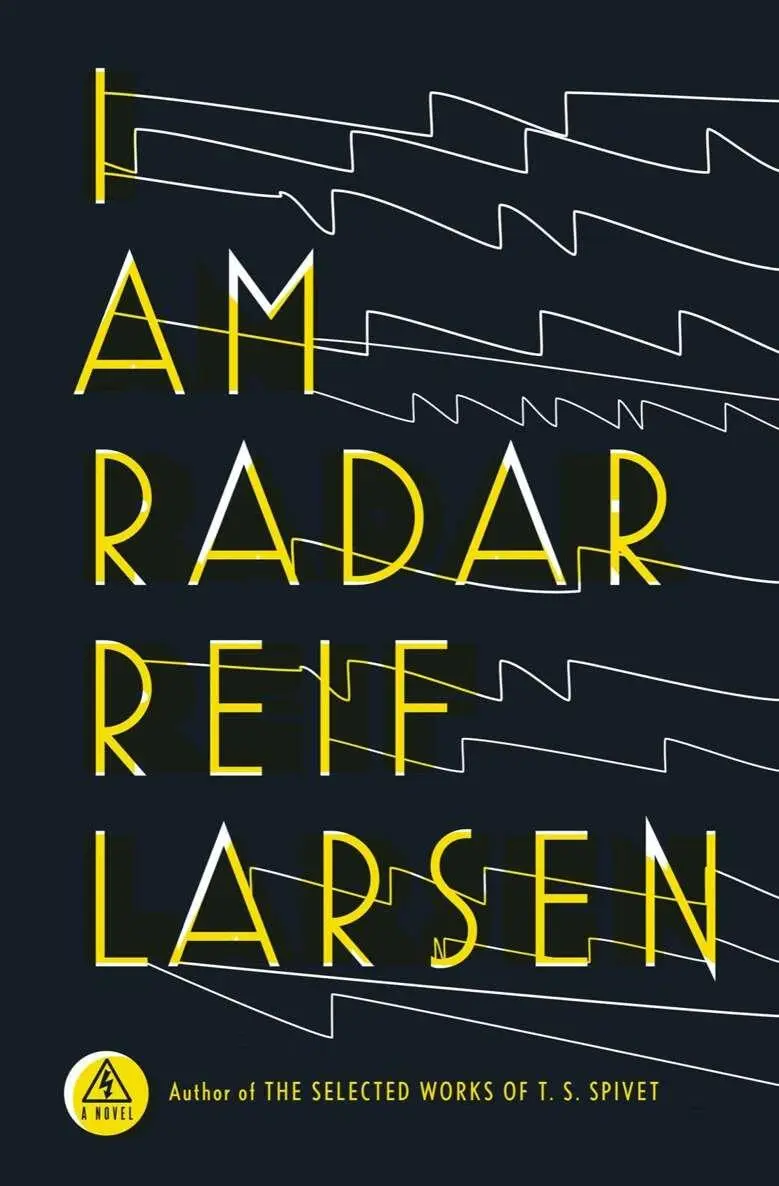
- Название:I Am Radar
- Автор:
- Издательство:Penguin Press
- Жанр:
- Год:2015
- ISBN:нет данных
- Рейтинг книги:3 / 5. Голосов: 1
-
Избранное:Добавить в избранное
- Отзывы:
-
Ваша оценка:
I Am Radar: краткое содержание, описание и аннотация
Предлагаем к чтению аннотацию, описание, краткое содержание или предисловие (зависит от того, что написал сам автор книги «I Am Radar»). Если вы не нашли необходимую информацию о книге — напишите в комментариях, мы постараемся отыскать её.
I Am Radar Deep in arctic Norway, a cadre of Norwegian schoolteachers is imprisoned during the Second World War. Founding a radical secret society that will hover on the margins of recorded history for decades to come, these schoolteachers steal radioactive material from a hidden Nazi nuclear reactor and use it to stage a surreal art performance on a frozen coastline. This strange society appears again in the aftermath of Cambodia’s murderous Khmer Rouge regime, when another secret performance takes place but goes horrifically wrong. Echoes of this disaster can be heard during the Yugoslavian wars, when an avant-garde puppeteer finds himself trapped inside Belgrade while his brother serves in the genocidal militia that attacks Srebrenica. Decades later, in the war-torn Congo, a disfigured literature professor assembles the largest library in the world even as the country around him collapses. All of these stories are linked by Radar — now a gifted radio operator living in the New Jersey Meadowlands — who struggles with love, a set of hapless parents,and a terrible medical affliction that he has only just begun to comprehend.
I Am Radar — читать онлайн бесплатно полную книгу (весь текст) целиком
Ниже представлен текст книги, разбитый по страницам. Система сохранения места последней прочитанной страницы, позволяет с удобством читать онлайн бесплатно книгу «I Am Radar», без необходимости каждый раз заново искать на чём Вы остановились. Поставьте закладку, и сможете в любой момент перейти на страницу, на которой закончили чтение.
Интервал:
Закладка:
He put his crocodile boot into the pedal clip and pushed forward. His headlight bounced slightly, spooling forth its little patch of light, and he followed, soothed by the simple feeling of movement through space and time. After hearing such a vastly revised version of his birth, his questionable lineage, his apparent electrocution, the true source of his condition, he had expected to feel overwhelmed, askew, for his elemental sense of balance to be forever changed. But in truth, he did not actually feel all that different. Rather, he felt like himself — only more so, as if he had just come up for air after holding his breath for a very long time.
He glided down the darkened street, following his little bouncing patch of light. Rule #4: We will be what we are, and what we are is what we will be. No matter if his parents had electrocuted him in Norway. No matter if he had lost his hair, had developed epilepsy and an eternal sense of inadequacy. No matter if Kermin was not his real father. All that mattered right now was following this little patch of light to Xanadu. Everything would work out if he could only get to Xanadu.
He had been bicycling for only a minute when he came upon a red-and-blue blur of lights strobing across the neighborhood. Two police cars were parked nose to nose. A roadblock.
An officer got out of one of the cars and motioned for Radar to stop.
“There’s a curfew,” the officer said. “You can’t be outside right now.”
He could see, against the psychedelic wash of the police lights, that the officer was a black man.
“All right,” said Radar. He felt a very strong impulse to tell this man everything that had just happened — how he had just found out that he was also black, or at least had been born black. He knew such a declaration would most likely not go over very well and possibly get him into a lot of trouble, so he just stood there, slack-jawed, staring at the man.
“Did you hear me? You can’t be outside right now,” the officer repeated, a hint of irritation in his voice. “You’ve got to get home.”
“All right,” Radar said again. Do not say that you are black! You may want to say this right now, but this is not how people talk about these kinds of things.
“Sir, did you hear what I said? You cannot be out right now. You’ve got to go home.”
“I’m going home,” Radar said suddenly. “I’m headed there right now.”
“What were you doing?”
“Me? I was. . buying a chicken. For my mother.”
“A chicken?”
“Yes. My mother loves chicken.” Oh no.
Radar had always been a terrible liar. The effort of fabricating even the smallest of untruths immediately sent him into a surreal tailspin. His lies could never be simple; they quickly ballooned into elaborate explanations that soon popped under the weight of their own flawed logic. When he was six years old, he had told his first real lie after shoplifting a pack of size-C batteries from the Korean bodega down the road. Kermin had caught him guiltily stroking the alkaline wonders on their porch.
“Where’d you get those?” his father had asked, standing very tall and still.
“From. . the battery man,” Radar said without thinking.
“Battery man? What is that?”
“It’s a man. . He gives you batteries. He gives batteries to everyone.” The lie grew and grew before their eyes, yet even little Radar knew the world couldn’t sustain such a character. Batteries were a precious commodity, not something that could be gifted to strangers by some Peter Pan of electricity.
Now, as the red and blue lights illuminated the police officer’s expression of blatant incredulity, Radar felt the same sinking feeling in his loins. He knew he would crumple under the lightest of cross-examinations. He would never be able to sustain a narrative in which his mother loved chicken so much that she would send him out on a long excursion in the middle of a blackout. It was hopeless. They might as well arrest him right now for perjury, libel, and slander.
Much to Radar’s surprise, however, the officer seemed to relax and then waved him on.
“You better get the old lady some chicken,” he said. “But be careful, you hear? Lot of ways to get hurt right now.”
“Yes, sir. Of course, sir,” Radar said. He wanted to hug the officer, and again had this dangerous impulse to declare his newfound identity as a black man who was no longer black. Again, he resisted the urge and instead asked, “Did they figure out what happened yet?”
The officer shrugged. “I’m just doing what they tell me.”
“But do they think it was a terrorist?”
“Look, I don’t know any more than you, son. And frankly, I don’t give a damn if it was al-Qaeda or the Russians or who now. I’m going on my seventeenth straight hour.”
“I don’t think it was a terrorist,” said Radar. “I think it was an accident.”
“Well, that’s some kind of accident,” the officer said. “How ’bout we just keep moving and keep this street clear, all right?”
“Yes, sir,” said Radar. He wheeled his bike a couple of paces and then turned back.
“I’m with you,” he said.
“All right, son,” said the officer. “We’re with you, too. God bless.”
“God bless.”
After this, Radar switched off his headlight and rode on, commando style. Whenever he saw a blockade or an emergency vehicle, he would veer onto a different block, weaving his way northward. At some point he realized he did not actually know how to get to Xanadu and East Rutherford. In his haste to leave the house, he had consulted neither map nor atlas to untangle the web of highways and byways that knitted the Meadowlands into an impenetrable tapestry of cloverleafs and interchanges. Once he got far enough north, there was actually no way to safely cut east across the swamps by bike. Xanadu mall was not a biking destination. There were no bike paths in this land of automobiles, NJ Transit, and the occasional Boston Whaler.
He had actually been to East Rutherford only once, when, as a twenty-four-year-old, he had attended a Bruce Springsteen concert at the Continental Airlines Arena. He had gone alone, and from the highest possible point in the stadium he had watched the Boss roll and tumble and sweat and stir that magical Jersey elixir with his golden Telecaster, and afterwards, streaming out of the stadium with the rest of the blissful New Jerseyans, he had felt a great pride for his home, as if this were the one true place on earth. The concertgoers had a dazed look on their faces, as though they had just witnessed Jesus turning water into wine, and maybe they had. For one night, at least, the Boss had transformed those swamps into a paradise. After that show, Radar never had the desire to go see another concert. Sometimes, glimpsing the divine just once was enough.
But now, trapped by the constricting geography of wetland and darkness, he was not sure which way to go. He tried to conjure a mental map of the Meadowlands, tried to picture Bruce’s voice calling out to him from somewhere in the middle of all that night.
He rode on, blindly, past rows and rows of darkened homes, past a cemetery, past a silent gas station, through an intersection filled with stalled cars, past an empty city bus frozen like a submarine in the middle of the road. Everything and nothing looked familiar — it was all part of a long and endless Jersey sprawl.
He was just about on the verge of giving up and seeking help from some bystander when out of the darkness he saw an oasis of red light appear. It looked at first as if an alien ship had landed, but as he got closer he saw that it was in fact the sign for Medieval Times, that beloved Lyndhurst medieval-themed dinner theater that featured live jousts as you downed your mutton and gruel. The sign was such a startling sight, after he had seen no lights at all, that Radar nearly crashed from the beauty of it. He felt like a caveman witnessing fire for the first time.
Читать дальшеИнтервал:
Закладка:
Похожие книги на «I Am Radar»
Представляем Вашему вниманию похожие книги на «I Am Radar» списком для выбора. Мы отобрали схожую по названию и смыслу литературу в надежде предоставить читателям больше вариантов отыскать новые, интересные, ещё непрочитанные произведения.










Обсуждение, отзывы о книге «I Am Radar» и просто собственные мнения читателей. Оставьте ваши комментарии, напишите, что Вы думаете о произведении, его смысле или главных героях. Укажите что конкретно понравилось, а что нет, и почему Вы так считаете.