Reif Larsen - I Am Radar
Здесь есть возможность читать онлайн «Reif Larsen - I Am Radar» весь текст электронной книги совершенно бесплатно (целиком полную версию без сокращений). В некоторых случаях можно слушать аудио, скачать через торрент в формате fb2 и присутствует краткое содержание. Год выпуска: 2015, Издательство: Penguin Press, Жанр: Современная проза, на английском языке. Описание произведения, (предисловие) а так же отзывы посетителей доступны на портале библиотеки ЛибКат.
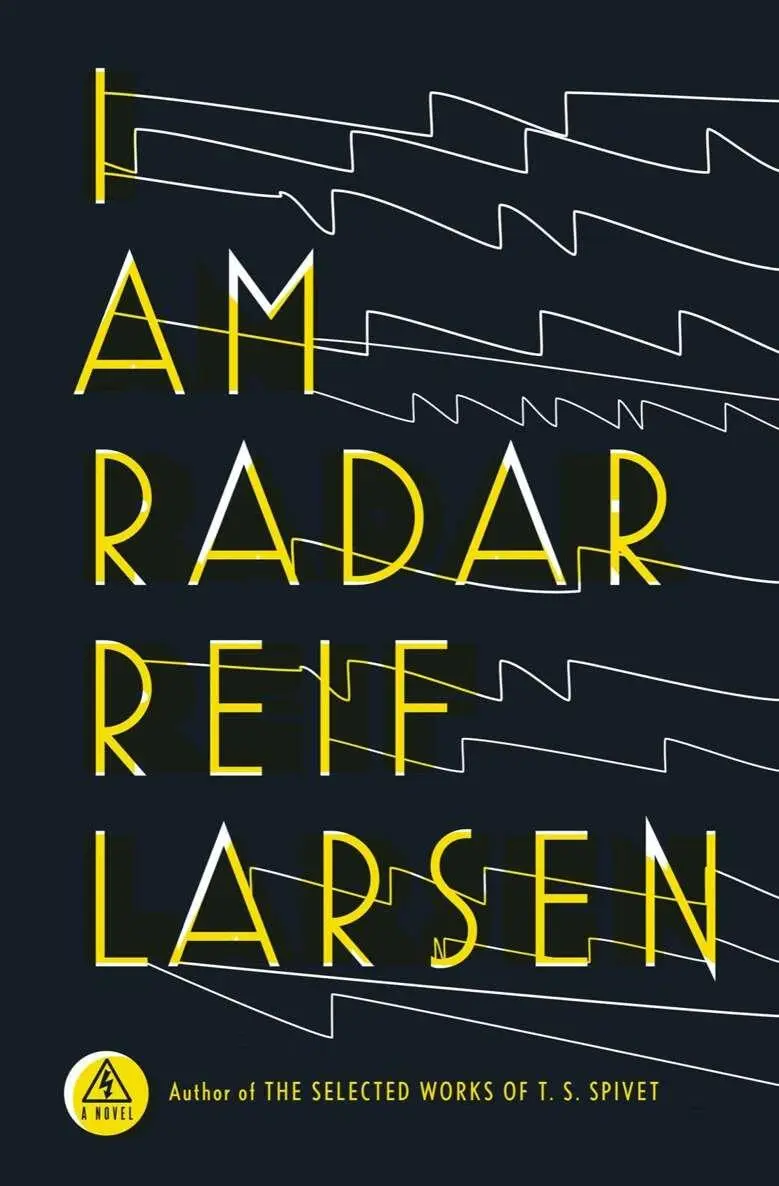
- Название:I Am Radar
- Автор:
- Издательство:Penguin Press
- Жанр:
- Год:2015
- ISBN:нет данных
- Рейтинг книги:3 / 5. Голосов: 1
-
Избранное:Добавить в избранное
- Отзывы:
-
Ваша оценка:
I Am Radar: краткое содержание, описание и аннотация
Предлагаем к чтению аннотацию, описание, краткое содержание или предисловие (зависит от того, что написал сам автор книги «I Am Radar»). Если вы не нашли необходимую информацию о книге — напишите в комментариях, мы постараемся отыскать её.
I Am Radar Deep in arctic Norway, a cadre of Norwegian schoolteachers is imprisoned during the Second World War. Founding a radical secret society that will hover on the margins of recorded history for decades to come, these schoolteachers steal radioactive material from a hidden Nazi nuclear reactor and use it to stage a surreal art performance on a frozen coastline. This strange society appears again in the aftermath of Cambodia’s murderous Khmer Rouge regime, when another secret performance takes place but goes horrifically wrong. Echoes of this disaster can be heard during the Yugoslavian wars, when an avant-garde puppeteer finds himself trapped inside Belgrade while his brother serves in the genocidal militia that attacks Srebrenica. Decades later, in the war-torn Congo, a disfigured literature professor assembles the largest library in the world even as the country around him collapses. All of these stories are linked by Radar — now a gifted radio operator living in the New Jersey Meadowlands — who struggles with love, a set of hapless parents,and a terrible medical affliction that he has only just begun to comprehend.
I Am Radar — читать онлайн бесплатно полную книгу (весь текст) целиком
Ниже представлен текст книги, разбитый по страницам. Система сохранения места последней прочитанной страницы, позволяет с удобством читать онлайн бесплатно книгу «I Am Radar», без необходимости каждый раз заново искать на чём Вы остановились. Поставьте закладку, и сможете в любой момент перейти на страницу, на которой закончили чтение.
Интервал:
Закладка:
Radar saw himself lying in the bed, saw the two of them in this little dim room surrounded by a great, dark city. As if every moment in his life had merely been a prelude to this moment. All at once, the world felt right. Knowable.
“I just didn’t want it to be a secret anymore,” he heard her say. “It all seems so pointless now. What was I trying to do?”
“It’s not pointless, Mom,” he said. He sat up. His arms felt limber. He felt as if he could scale a mountain. He reached for her wet face and kissed her on the forehead. “Thank you.”
She looked bewildered. “You aren’t mad?”
“I don’t know,” he said. “I feel like I was asleep. And now I’m awake.”
She studied him. “I could’ve so easily killed you,” she said. “Oh, I can’t even think about it.”
“I’m not dead.”
She nodded, biting her lip. “I know.”
“I’m alive.” He felt alive. More alive than he’d ever been before.
“I know.”
“Mom.”
He hugged her, and she fell into him. They were like this for some time, listening to the hollow click of the record player, the scents of lily around them, and then he broke their embrace.
“Listen, I’m going to go find him. I promise I’ll come back, okay?”
“I don’t think you’ll find him.”
“ I will. I’ll be back in a couple of hours, I promise. Just stay here and don’t go anywhere.”
“You’ll be careful?” she said. “You want to take my car?”
As soon as she said it, she winced. Radar had never gotten a license because of his epilepsy.
“Thanks, but I’ll bike,” he said.
“I’m sorry,” she said. “I forgot.”
“It’s okay,” he said. “It’s probably easier to bike at this point anyway. They’ll never find me.”
He reached into his backpack. “Here. Here’s a flashlight. And I’ll light some more candles.”
“It’s okay. I can do it.”
“You’re sure?”
“I’ve managed this long. I can fend off the beasts for one more night.” She picked up the figurine and placed it on the bedside table, next to the sniffing bottles. “He’ll protect me.”
Radar gathered up the folder, aware again of the hole still looming in the floor.
“Can I keep this for a little bit?”
“Of course. It’s yours. I’ve been saving it for you.”
He went over and placed a hand on her shoulder. She took hold of it.
“Come back, please,” she said. “Don’t leave me alone.”
“Mom.”
“You promise you don’t hate me?” she whispered.
“I wouldn’t change a thing,” he said. “Not one thing.”
7
Out on Forest Street, Radar emerged into a darkness he did not recognize. He realized he had never seen his neighborhood in such a state, released from the angular confines of the streetlights. Above, he could see stars, stars that had never been there before. But no: they had always been there; they had just been hidden by a scrim of light. To see the stars, you must be able to first see the night.
“Hello,” he whispered heavenward. “Welcome to New Jersey.” And when he said this, he knew he was actually talking to himself.
To the east, a faint, withered glow. So. The city had already gotten its power back, while they were left to suffer in the dark. But what a dark it was. A dark beyond reproach. The kind of dark that was, is, and always will be.
Since he was little, he had maintained a fraught relationship with the dark. Darkness had come to represent not the cyclical arrival of the night, but rather his periodic forced flights from consciousness. To feel the darkness creep into the edges of his vision meant that an involuntary departure from his body must soon follow. Darkness meant the absence of time. Or, more precisely: the absence of him from time. The world continued to spin without him, he hanging suspended between this universe and the next, waiting for the darkness to beat back its retreat and the light to take hold of him again. He had thought a lot about that world — the world that continued to spin while he was gone, the world that did not include him. It was almost impossible to comprehend. The observed could not exist without the observer. If he removed himself from the equation, what remained? The equation could not hold.
Once, when he was five, while they were waiting in the emergency room after one of his grand mals, Radar had turned to his mother.
“Why do I disappear like that?” he asked.
It was a complicated question. Or maybe it was a simple question. Regardless, Charlene had not prepared an answer. The query triggered the first of what would become a long series of awkward explanations that his mother revised and honed over the years. These explanations hinged upon the continuous misuse of phrases like “You’re such a special child” and “There’s no one quite like you” and, worst of all, “It was God’s choice.” Radar could sniff the stink of these answers but could not decipher why his mother was being so shifty. Kermin never ventured into such fraught territory. He had a habit of leaving the room when questions arose about Radar’s condition. Finally, Charlene’s explanations had culminated in that glass cathedral of a term, “Radar’s syndrome.” His syndrome. When she stumbled upon this conceit, she immediately put all of her eggs into this basket, realizing its genius, for the diagnosis was essentially a tautological conversation stopper. Everything could be blamed on the syndrome. The syndrome could explain all, and yet the syndrome itself could not be explained.
Alone in the middle of Forest Street, Radar shivered. There was no such thing as Radar’s syndrome. There had never been a syndrome. There was only him. He was free.
He switched on a flashlight and split open the darkness. Using a bit of duct tape, he strapped the light onto the front of Houlihan’s dashboard. A droopy, but serviceable, headlight.
He took out Kermin’s portable transceiver and clicked it two slots to AM mode. After checking to see if WCCA was up and running (it was not), he trolled the frequencies until a woman’s voice sprouted from out of the bed of static:
Jersey City, Newark, and several other towns in Essex, Bergen, and Hudson counties continue to reel from the baffling blackout that has plagued northern New Jersey today. Experts are now calling the incident “not an accident” and a “deliberate attack.” Authorities are still mystified as to why all electronics in the affected zone have also failed, leading some to believe a so-called e-bomb was detonated in the region. Members of the police and fire departments would not comment on the source of the blackout, saying their primary task was to keep people safe and help return essential services to operation. But as National Guard troops flood into Newark this evening, many government agencies, including the FBI and Homeland Security, have sent in representatives to help solve the mystery of why and how the electrical grid was so paralyzed in today’s incident. A warehouse in Paterson was briefly surrounded by law enforcement officials, but this turned out to be a false alarm—
Radar clipped off the radio.
Jesus Christ. They were coming. They were coming, and he was abandoning his mother alone with a stick figure. How could he do such a thing? He needed to defend her against the troops. He stopped and turned the bike around. A soft glow emanated from the bedroom window upstairs. The distant cajolement of Caruso hitting a high note.
No. He had to keep going. If he didn’t, he would never know.
She would have to fend for herself.
“I’m sorry, Mom,” he said. “Stay safe.”
Читать дальшеИнтервал:
Закладка:
Похожие книги на «I Am Radar»
Представляем Вашему вниманию похожие книги на «I Am Radar» списком для выбора. Мы отобрали схожую по названию и смыслу литературу в надежде предоставить читателям больше вариантов отыскать новые, интересные, ещё непрочитанные произведения.










Обсуждение, отзывы о книге «I Am Radar» и просто собственные мнения читателей. Оставьте ваши комментарии, напишите, что Вы думаете о произведении, его смысле или главных героях. Укажите что конкретно понравилось, а что нет, и почему Вы так считаете.