Reif Larsen - I Am Radar
Здесь есть возможность читать онлайн «Reif Larsen - I Am Radar» весь текст электронной книги совершенно бесплатно (целиком полную версию без сокращений). В некоторых случаях можно слушать аудио, скачать через торрент в формате fb2 и присутствует краткое содержание. Год выпуска: 2015, Издательство: Penguin Press, Жанр: Современная проза, на английском языке. Описание произведения, (предисловие) а так же отзывы посетителей доступны на портале библиотеки ЛибКат.
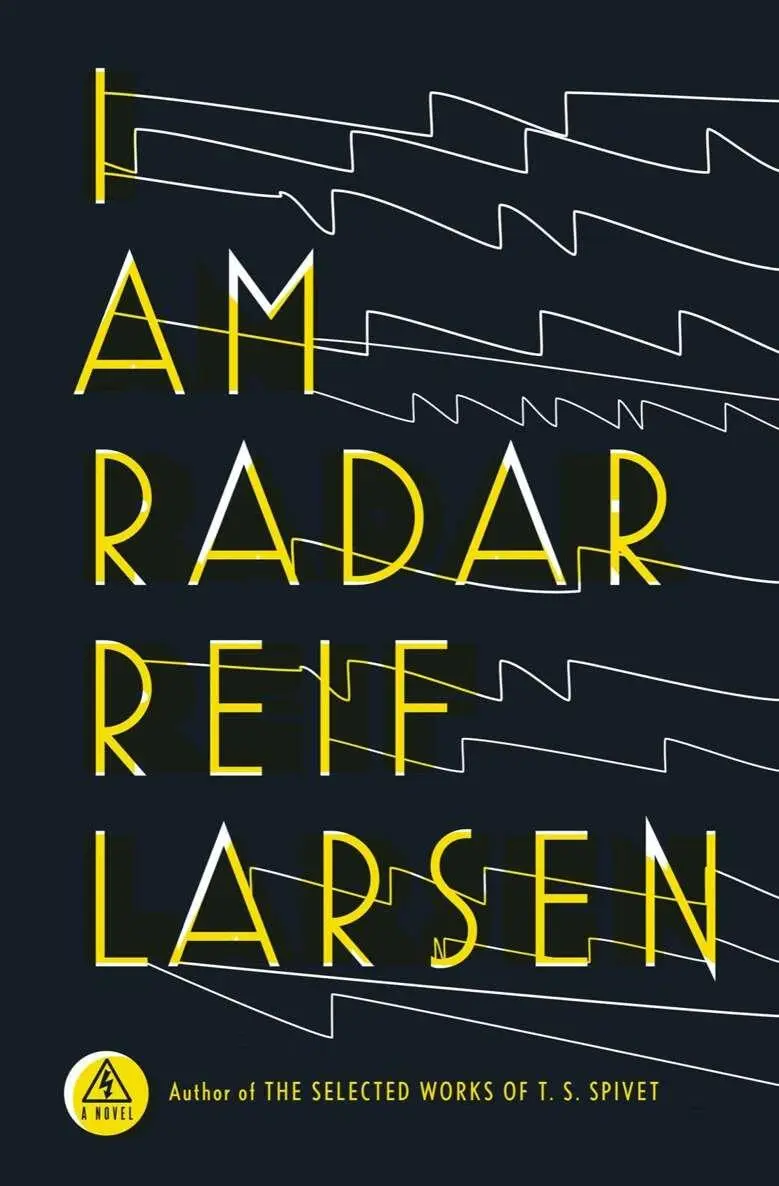
- Название:I Am Radar
- Автор:
- Издательство:Penguin Press
- Жанр:
- Год:2015
- ISBN:нет данных
- Рейтинг книги:3 / 5. Голосов: 1
-
Избранное:Добавить в избранное
- Отзывы:
-
Ваша оценка:
I Am Radar: краткое содержание, описание и аннотация
Предлагаем к чтению аннотацию, описание, краткое содержание или предисловие (зависит от того, что написал сам автор книги «I Am Radar»). Если вы не нашли необходимую информацию о книге — напишите в комментариях, мы постараемся отыскать её.
I Am Radar Deep in arctic Norway, a cadre of Norwegian schoolteachers is imprisoned during the Second World War. Founding a radical secret society that will hover on the margins of recorded history for decades to come, these schoolteachers steal radioactive material from a hidden Nazi nuclear reactor and use it to stage a surreal art performance on a frozen coastline. This strange society appears again in the aftermath of Cambodia’s murderous Khmer Rouge regime, when another secret performance takes place but goes horrifically wrong. Echoes of this disaster can be heard during the Yugoslavian wars, when an avant-garde puppeteer finds himself trapped inside Belgrade while his brother serves in the genocidal militia that attacks Srebrenica. Decades later, in the war-torn Congo, a disfigured literature professor assembles the largest library in the world even as the country around him collapses. All of these stories are linked by Radar — now a gifted radio operator living in the New Jersey Meadowlands — who struggles with love, a set of hapless parents,and a terrible medical affliction that he has only just begun to comprehend.
I Am Radar — читать онлайн бесплатно полную книгу (весь текст) целиком
Ниже представлен текст книги, разбитый по страницам. Система сохранения места последней прочитанной страницы, позволяет с удобством читать онлайн бесплатно книгу «I Am Radar», без необходимости каждый раз заново искать на чём Вы остановились. Поставьте закладку, и сможете в любой момент перейти на страницу, на которой закончили чтение.
Интервал:
Закладка:
5
Tofte-Jebsen sums it up nicely: “The child, as only a child can do, changed everything in an instant” (122).
After Tien had turned over the baby and left with the other men for the afternoon collection, Renoit and Jean-Baptiste sat on the veranda, sipping the remarkable cognac and staring at the tiny infant. They had placed him in a fruit bowl, because they did not know where else to put him. Perhaps sensing a shift in the mood, Eugenia shuffled outside from her telegraph studio and saw the baby squirming among the tangerines.
“What is that?” she signed.
“That? That’s a baby,” said Jean-Baptiste. “A human baby,” he added.
“To whom does he belong?” She carefully lifted the child into her arms.
“He’s mine, apparently,” said Jean-Baptiste.
“He’s sick,” she signed to him with one hand. “Where did he come from?”
“From there.” Jean-Baptiste pointed to the rubber trees. Or the sky. It was not clear.
“He’s going to die, you know,” said Renoit. “I wouldn’t get too attached. It will only lead to suffering.”
“We’re all going to die.”
“ Touché, my friend,” Renoit said, conducting a finger through the heat. “She is brief, this life, and then she leaves us when she realizes her mistake.”
“What shall I call him?” Jean-Baptiste asked.
“Something native,” said Renoit. “Something easily said and easily forgotten.”
“André,” Eugenia said aloud.
Jean-Baptiste was briefly caught off guard by hearing the name of the patriarch spoken in his mother’s curious, flattened speech. André .
He shook his head slowly. “No,” he said. “Raksmey.”
“Raksmey?” said Renoit. “Isn’t that a woman’s name?”
“There was a student named Raksmey. Leila often spoke of him. I believe it means ‘ray of light.’”
“Ray of light?”
“He needs a doctor,” Eugenia signed. “I’ll get on the wireless and summon Dr. Moreau.”
“Raksmey de Broglie?” said Renoit.
“It doesn’t sound right, does it?” said Jean-Baptiste.
“Are you listening to me?” Eugenia signed.
“Anything can sound right if you say it enough,” Renoit laughed. “The French have learned this over many years.”
“Then he’ll be Raksmey Raksmey,” said Jean-Baptiste. “He came from himself.”
He looked around for the subject in question, but the baby had already disappeared with Eugenia into the coolness of the great hall.
• • •
FOR THE FIRST WEEK, the child did not eat. Bound to the fate of his discovery, Tien came by every morning to check on Raksmey’s progress. On the third day, he arrived bearing a cradle that he and the others had fashioned from rubber wood. Leila’s old dressing room, unused for years, was hastily converted into a makeshift nursery. Suong came in the mornings with her cousin to breast-feed the infant, but he still would not take her milk.
“He won’t survive,” she said. “He doesn’t want this world. He’s waiting for the next.”
Yet he did not die. He did not eat, but he did not die. He persisted — a silent newt, wriggling, only now and then emitting his shrieking whistle that raised goose bumps and brought everyone in the house to a standstill. Who was this creature? And from where had he come?
Eugenia’s bond with the little one was instantaneous and deep. She slept beside him on a rickety cot and connected a string between his ankle and the first knuckle of her pinkie. When she felt a tug in the darkness, she would come to him and hum songs without pitch, deep songs, songs that slept in the marrow of her bones. Her previous indifference to Leila’s infecundity melted away as her heart was thawed by that peculiarly intimate distance of grandparenthood. It was true: all she had wanted was this.
“At some point during the first of those long nights,” writes Tofte-Jebsen, “with the string stretched taut between them, the question of who Raksmey Raksmey belonged to, a question that would linger on in the patronymic repetition of his name, became irrelevant. He was theirs. He was hers. He was all she had” (123).
The child floundered at the brink of death’s door, and Jean-Baptiste lost his lifelong ability to sleep soundly through the night. When he did manage to doze off, he found himself dreaming of Bohr inside that humid Copenhagen pub, drops of condensation swelling and descending upon them. Bohr, who had finally escaped Nazi-occupied Denmark in the middle of the war, who had fled to America, where he reluctantly consulted with Oppenheimer on the bomb that was to be dropped halfway across the world, thirty-five hundred kilometers northeast of La Seule Vérité on a bustling port city in southern Japan shaped like the tail of a bird. Jean-Baptiste thought he had felt his teacup tremble that day, felt the earth wobble and wander on its axis. What had gone through Bohr’s mind when he heard the news? When he saw the images of shirts burned into backs, of faces removed, of the miles and miles and miles of torn wood and concrete rubble? Of the single domed building at the epicenter that had somehow managed to survive the godly forces at work? What had he thought then? That the hands of men had banished indeterminacy? That from that point forth, nothing would be left to chance? Once again, we had become the masters of our own world. There was nothing we could not know.
Or maybe he had thought: Now we can know nothing .
One night he was awoken from one of these dreams — of Bohr, of mushroom clouds, of what exactly he could not remember — by the child’s cries. He went to the nursery and found Eugenia still asleep. The string had fallen from Raksmey’s ankle. He thought of waking his mother but instead went to the baby, scooped up all of that uncertainty with both hands. The baby fell quiet. He could feel its warmth, feel its breath against his neck. He thought: This boy is breathing. This boy is alive. One day he will become a man like me. And it was then that the idea first came to him. He held the baby and walked out to the veranda and listened to the insects calling open the night. A flash of heat lightning. He brought a finger to the child’s cheek. Raksmey. Raksmey Raksmey. The idea circling in his mind. After a while, he returned his son to the nursery, retied the string, and fell back into a restless sleep, believing the idea would fade into the darkness.
Except that when he awoke the next morning, the idea was still there. It lingered. And grew. He was haunted by its possibility. He could not look at the child without being consumed by everything that could be done. He paced the veranda, sweating, mumbling beneath his breath. So taken was he that he could not sleep a wink the following night. He knew that the window to make such a decision was narrow, that time was already being wasted, and so the next evening he went to the hilltop where Leila lay beside his father and his grandfather and watched as the first stars appeared. He asked for his wife’s permission. He did not say anything aloud, but asked in his mind. He waited. He heard nothing. Felt nothing. There was no one there. Just him and the stars, emergent. It was enough.
Jean-Baptiste hurried back to his study. Under the light of a single candle, he wrote the following on a sheet of La Seule Vérité letterhead.
I, Jean-Baptiste de Broglie, on this date, 27 August 1953, do hereby declare my intentions for the child Raksmey Raksmey, found on the property of the rubber plantation La Seule Vérité in the French Protectorate and Kingdom of Cambodia:
1) If the child survives, it shall be my ambition to train and nurture him with a singular goal: to become Cambodia’s first native quantum physicist, in the humanist mold of Niels Bohr. This will be an exercise in testing the boundaries of predetermination, and, while being far from conclusive on the absolute nature of free will, shall at least form a body of evidence that will allow us to debate what is bound to chance and what can be dictated a priori.
Читать дальшеИнтервал:
Закладка:
Похожие книги на «I Am Radar»
Представляем Вашему вниманию похожие книги на «I Am Radar» списком для выбора. Мы отобрали схожую по названию и смыслу литературу в надежде предоставить читателям больше вариантов отыскать новые, интересные, ещё непрочитанные произведения.








Обсуждение, отзывы о книге «I Am Radar» и просто собственные мнения читателей. Оставьте ваши комментарии, напишите, что Вы думаете о произведении, его смысле или главных героях. Укажите что конкретно понравилось, а что нет, и почему Вы так считаете.