Reif Larsen - I Am Radar
Здесь есть возможность читать онлайн «Reif Larsen - I Am Radar» весь текст электронной книги совершенно бесплатно (целиком полную версию без сокращений). В некоторых случаях можно слушать аудио, скачать через торрент в формате fb2 и присутствует краткое содержание. Год выпуска: 2015, Издательство: Penguin Press, Жанр: Современная проза, на английском языке. Описание произведения, (предисловие) а так же отзывы посетителей доступны на портале библиотеки ЛибКат.
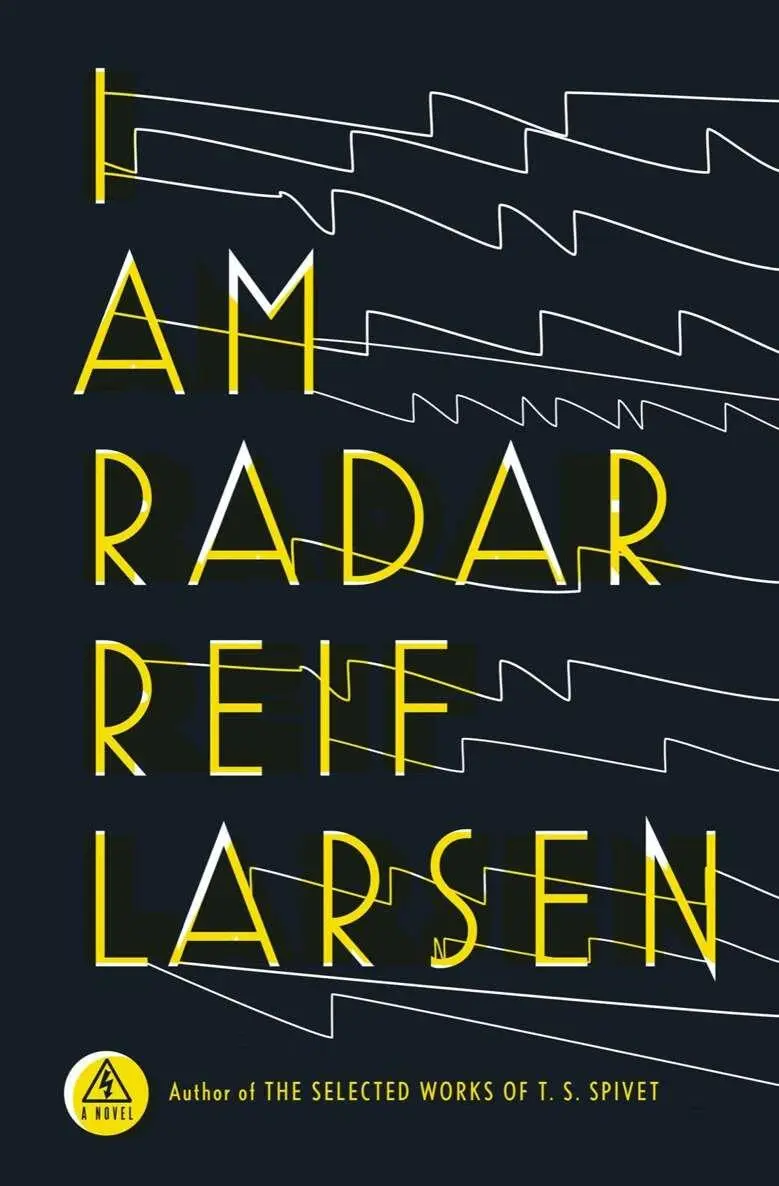
- Название:I Am Radar
- Автор:
- Издательство:Penguin Press
- Жанр:
- Год:2015
- ISBN:нет данных
- Рейтинг книги:3 / 5. Голосов: 1
-
Избранное:Добавить в избранное
- Отзывы:
-
Ваша оценка:
I Am Radar: краткое содержание, описание и аннотация
Предлагаем к чтению аннотацию, описание, краткое содержание или предисловие (зависит от того, что написал сам автор книги «I Am Radar»). Если вы не нашли необходимую информацию о книге — напишите в комментариях, мы постараемся отыскать её.
I Am Radar Deep in arctic Norway, a cadre of Norwegian schoolteachers is imprisoned during the Second World War. Founding a radical secret society that will hover on the margins of recorded history for decades to come, these schoolteachers steal radioactive material from a hidden Nazi nuclear reactor and use it to stage a surreal art performance on a frozen coastline. This strange society appears again in the aftermath of Cambodia’s murderous Khmer Rouge regime, when another secret performance takes place but goes horrifically wrong. Echoes of this disaster can be heard during the Yugoslavian wars, when an avant-garde puppeteer finds himself trapped inside Belgrade while his brother serves in the genocidal militia that attacks Srebrenica. Decades later, in the war-torn Congo, a disfigured literature professor assembles the largest library in the world even as the country around him collapses. All of these stories are linked by Radar — now a gifted radio operator living in the New Jersey Meadowlands — who struggles with love, a set of hapless parents,and a terrible medical affliction that he has only just begun to comprehend.
I Am Radar — читать онлайн бесплатно полную книгу (весь текст) целиком
Ниже представлен текст книги, разбитый по страницам. Система сохранения места последней прочитанной страницы, позволяет с удобством читать онлайн бесплатно книгу «I Am Radar», без необходимости каждый раз заново искать на чём Вы остановились. Поставьте закладку, и сможете в любой момент перейти на страницу, на которой закончили чтение.
Интервал:
Закладка:
We must all be in a mood of forgiveness these days as ordinary men have been pressed to make extraordinary decisions. Many of the physicists have already fled to London and the United States. Bohr’s still in Denmark — he refuses to leave despite the German occupation. There are rumors that the United States and Britain are already developing a powerful bomb built on the process of irradiating atoms. The Germans may build one too, and no one wants to be forced to work for them. I do not doubt if it will be built — it is only a question of when. Once it gets the bit between its teeth, there’s no stopping the horse.
What a mess we’ve created in this gentle world we used to call home.
Well, take care. God bless & best of luck. May we all make it out of this alive.
Yours, faithfully,
Luc Jeunet
It would be the last letter he received from Paris for nearly six years. One month later, the Nazis were marching past the London plane trees on the Champs-Élysées.
Perhaps Jean-Baptiste should have left then, and given up on an enterprise he had never believed in. But he did not leave, and he did not give up, not as the war in Europe spread across the world and the Japanese lay claim to the peninsula. The news of the silent takeover came in rumors and hearsay from the perpetually cheery boatmen who plied the Mekong. It did not seem to matter to them who was in charge. The French colons were still running the day-to-day operations in the capital, but the Japanese were the new masters. “Sdech muoyothngai,” the locals called them. “King for a day.”
At La Seule Vérité, the world remained unchanged. Their little patch of earth remained. Day fell into night and back into day. The trees were cut and bled, the latex collected, pressed, dried into strips, and stored in the warehouse.
Jean-Baptiste began to smoke. The opium was brought up the river from the Kampong Cham poppy fields by a toothless man who laughed at every utterance Jean-Baptiste made. Sensing his mother’s disapproval, he never smoked in the house, only in a remote hut on the outskirts of the property where he couldn’t hear the sound of the machines or the tap, only the birds and the rain and the beat of his own heart. Occasionally a worker would join him with a pipe, but most often it was just him and the trees and the dull sense that what had begun had already ended.
The monotony was broken one day when a military patrol boat hushed around the bend of the Mekong, the imperial flag of the red-spoked sun flapping damply at its stern. A Japanese naval officer wearing a peaked hat bowed formally to Jean-Baptiste as he mounted their dock and introduced himself in polite but halting French as Lieutenant Sakutaro Matsuo. Jean-Baptiste returned the bow and invited the lieutenant to take a brandy with him on the porch.
As they sat sipping the Darroze Bas-Armagnac from Château de La Brise, their bodies enveloped by the jungle heat, Jean-Baptiste studied his guest. Matsuo refused to take off his hat, even as sweat began to run down the arrowhead of his temples and along the thin eave of his jawline. The slim mustache balanced on his upper lip could not hide the rawness of his youth. Jean-Baptiste sensed a lingering, misplaced terror beneath the lieutenant’s pristine movements, beneath the tightness of that button-snap collar. It was the kind of terror men spent their entire lives trying to ignore.
Matsuo straightened, as if remembering his duties, and laid out the demands of the occupying forces: Jean-Baptiste must hand over his entire rubber supply to the Japanese army and continue to produce for them indefinitely or else face certain arrest.
“They will send you away to work on the Burmese Railway,” said Matsuo. “It is a long railway. It is never finished.”
“Excellent,” said Jean-Baptiste. “I love projects that have no end.”
The man’s pinkie had begun to quiver. Jean-Baptiste wanted to reach across the table and still this tremor.
He smiled, assuring the officer of their cooperation.
“We don’t want trouble,” he said. “I don’t care who flies the flag, just as long as we’re able to make our beautiful rubber. I live only to make that rubber. We’ll do what we can. Here, have some more Darroze. They say it opens the heart. God knows when we’ll get it again.”
“Thank you,” said Matsuo, though he looked as if he had had quite enough.
The lieutenant sweated into his uniform as Jean-Baptiste, with great flourish, signed all the requisite documents.
“I see the Japanese are as fastidious with their documentation as they are with their own mortality.”
“Pardon?”
“Tell me,” said Jean-Baptiste. “Do you think you’ll ever see Japan again?”
The young man look startled.
“I do not know what you mean,” he said.
“Japan, your home.”
“This is Japan.”
“Is it?” Jean-Baptiste laughed. “I hadn’t heard. Maybe you’ll do better here than we have done.”
“What have you done?”
“Too much,” said Jean-Baptiste. “Or perhaps not enough. Well, my dear Sakutaro, if this is your home already, then I insist you spend the night.”
“My orders—”
“To hell with your orders. You’re in the jungle, my friend. There are different rules here.”
The lieutenant seemed to be weighing his options. “My boatman—” he said.
“We’ll take care of him. He’ll get on with the workers. They like news that they don’t make up themselves.”
In the end, Matsuo reluctantly relented. After dinner was served, Eugenia excused herself, sensing that this dance did not include her. Jean-Baptiste and the lieutenant sat long into the night. Jean-Baptiste did most of the talking, recounting the story of his life, of other lives, of lives never lived, placating the young man with the last of the Darroze and, when this ran out, some half-turned merlot, and, when this was gone, an old bottle of Cordon Bleu that he found in his laboratory. When there was nothing left to say or drink, the two men, having come to an unspoken understanding, stumbled up to Jean-Baptiste’s room, where they shared a pipe of opium and spent the rest of the night together.
The next morning, Lieutenant Matsuo, eyes bloodshot and uniform askew, skipped the elaborate array of quail eggs and split pomelo for breakfast, hurriedly boarded his boat without further comment, and disappeared down the channels of the Mekong to wherever he had come from.10
The rubber they produced for the Japanese during the war years was weak and unstable: Jean-Baptiste had ordered his men to interrupt the coagulation process by pouring in a peroxide solution so that the latex would snap under any sort of duress.
“They’ll never land their planes on tires made from this,” Jean-Baptiste said to Tien as they stood over the bubbling vats of latex. “But then, I suppose their planes were never designed to land, were they?”
“Why do we make this if it is no good?” Tien asked.
“Sometimes when something is bad, it can be good,” he said. “You understand?”
Tien rolled his head slowly from one shoulder to the other, an ambiguous gesture of comprehension. “And when something is good, it can be bad,” he said.
Jean-Baptiste laughed. “Yes, Tien, that is probably more the truth of it.”
• • •
TOWARD THE END of the war, the Japanese, sensing their own demise, briefly turned over power in Cambodia and Vietnam to local governments. Cambodia became “Kampuchea” and roman lettering was abandoned for Khmer script. The arrangement lasted less than a year, however, before the French colons finally managed to reestablish control of the peninsula. Yet the damage was already done. In Vietnam, the Viet Minh, having tasted independence, and now backed by a steady stream of armaments from China and the Soviet Union, refused to fall back into imperialisme as usual, and so another war began. Grenades were thrown into movie theaters, roads attacked at night, garrisons shelled from the safety of the jungle. The slow noose began to tighten. All wars end badly, but with this war there could be no doubt of its outcome.
Читать дальшеИнтервал:
Закладка:
Похожие книги на «I Am Radar»
Представляем Вашему вниманию похожие книги на «I Am Radar» списком для выбора. Мы отобрали схожую по названию и смыслу литературу в надежде предоставить читателям больше вариантов отыскать новые, интересные, ещё непрочитанные произведения.









Обсуждение, отзывы о книге «I Am Radar» и просто собственные мнения читателей. Оставьте ваши комментарии, напишите, что Вы думаете о произведении, его смысле или главных героях. Укажите что конкретно понравилось, а что нет, и почему Вы так считаете.