Reif Larsen - I Am Radar
Здесь есть возможность читать онлайн «Reif Larsen - I Am Radar» весь текст электронной книги совершенно бесплатно (целиком полную версию без сокращений). В некоторых случаях можно слушать аудио, скачать через торрент в формате fb2 и присутствует краткое содержание. Год выпуска: 2015, Издательство: Penguin Press, Жанр: Современная проза, на английском языке. Описание произведения, (предисловие) а так же отзывы посетителей доступны на портале библиотеки ЛибКат.
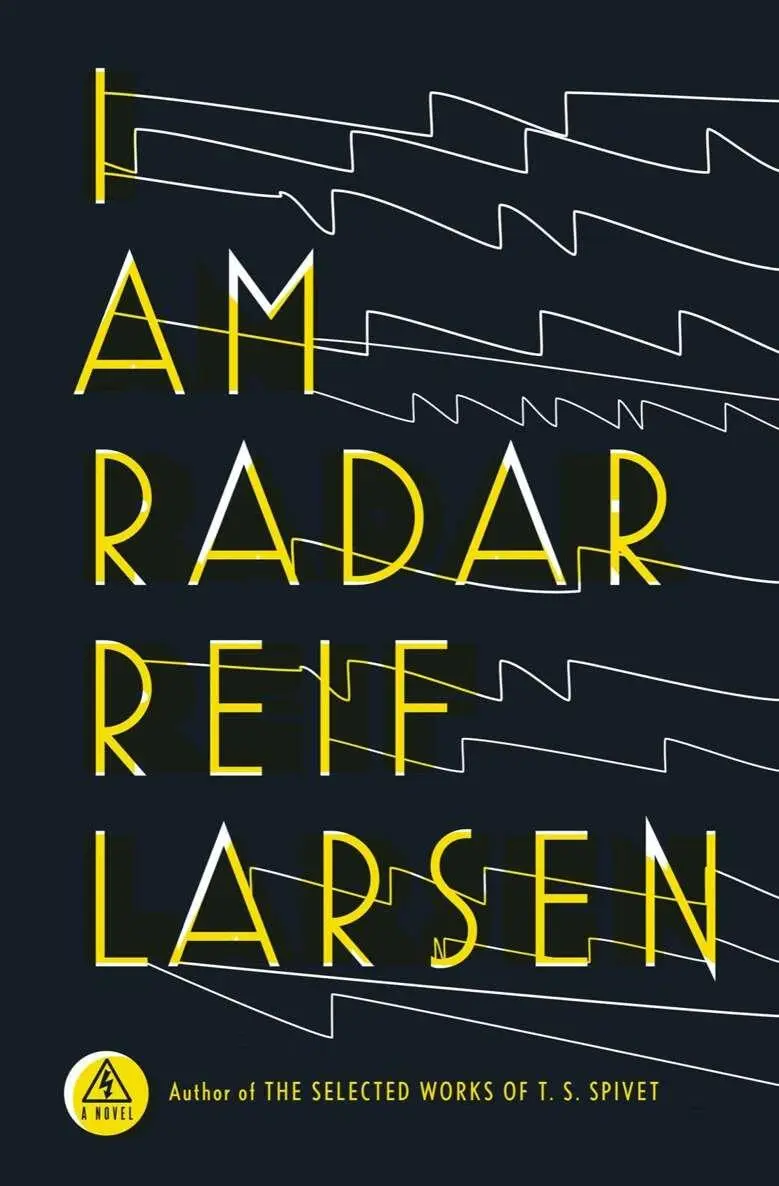
- Название:I Am Radar
- Автор:
- Издательство:Penguin Press
- Жанр:
- Год:2015
- ISBN:нет данных
- Рейтинг книги:3 / 5. Голосов: 1
-
Избранное:Добавить в избранное
- Отзывы:
-
Ваша оценка:
I Am Radar: краткое содержание, описание и аннотация
Предлагаем к чтению аннотацию, описание, краткое содержание или предисловие (зависит от того, что написал сам автор книги «I Am Radar»). Если вы не нашли необходимую информацию о книге — напишите в комментариях, мы постараемся отыскать её.
I Am Radar Deep in arctic Norway, a cadre of Norwegian schoolteachers is imprisoned during the Second World War. Founding a radical secret society that will hover on the margins of recorded history for decades to come, these schoolteachers steal radioactive material from a hidden Nazi nuclear reactor and use it to stage a surreal art performance on a frozen coastline. This strange society appears again in the aftermath of Cambodia’s murderous Khmer Rouge regime, when another secret performance takes place but goes horrifically wrong. Echoes of this disaster can be heard during the Yugoslavian wars, when an avant-garde puppeteer finds himself trapped inside Belgrade while his brother serves in the genocidal militia that attacks Srebrenica. Decades later, in the war-torn Congo, a disfigured literature professor assembles the largest library in the world even as the country around him collapses. All of these stories are linked by Radar — now a gifted radio operator living in the New Jersey Meadowlands — who struggles with love, a set of hapless parents,and a terrible medical affliction that he has only just begun to comprehend.
I Am Radar — читать онлайн бесплатно полную книгу (весь текст) целиком
Ниже представлен текст книги, разбитый по страницам. Система сохранения места последней прочитанной страницы, позволяет с удобством читать онлайн бесплатно книгу «I Am Radar», без необходимости каждый раз заново искать на чём Вы остановились. Поставьте закладку, и сможете в любой момент перейти на страницу, на которой закончили чтение.
Интервал:
Закладка:
Eugenia watched for some time, long enough for the masks to come off, long enough to know how far this had come. She felt oddly calm, filled with a sense of the familiar, as if she were watching a ritual she had witnessed many times before. She left only after Leila was asleep and he had risen and was moving toward the door. She ran then, not caring if they saw or heard, tripping once, the leaves in her hair, her boot unlaced, her elbow bleeding into the silk of her dress. She jumped in the boat and pushed off, and she did not paddle, but let the river take her back home as she breathed and stared at the grey silence of the sky.
That evening, a storm moved in. The three of them ate dinner on the porch as the rain hammered at the corrugated tin roof. Leila seemed unusually nervous. She apologized, claiming she was not feeling well, and requested to be excused early, but Eugenia put a hand on her arm and signed that she had something to say. Leila’s eyes smoldered in the candlelight. She looked back and forth between husband and mother.
“It occurred to me today,” Eugenia signed, “that we should start our own school.”
“A school?” Jean-Baptiste signed. “Here? ”
Leila’s eyes widened with surprise. An uncontrolled shiver passed over her.
“Yes. Right here. Leila’s no doubt developing considerable expertise at the lycée, but why not utilize her talents closer to home? Where she could have more control over the lessons and would not have to travel so far every day?”
A silence filled the room. Outside, the rain drummed at the roof.
“Well,” said Jean-Baptiste, looking at his wife.
“We certainly have the space,” Eugenia reminded them.
“I think it’s a brilliant idea,” said Jean-Baptiste. “I love it. What do you think, Leila? Could you manage?”
Leila looked down at her hands. Her cheeks were flushed.
“I’m not sure,” she said. “They need me up there. I couldn’t just abandon—”
Eugenia rapped the table, catching them both off guard. “I’m sure they’ll make do,” she signed. “Just think of the possibilities!”
“She’s right, you know. This could be a great opportunity. No offense against your lycée, but the French colonial education system’s a failure.”
“On what grounds can you say that?” said Leila.
“The great mistake of the French is to re-create France in Indochina,” said Jean-Baptiste. “We must instead teach them éléments of science and rationalism, yet modify the course in such a way that the Khmer might understand. We’ll use their terms. We’ll use their beliefs. We’ll make the course of study relevant. This is how you reach and change the native mind.”
“We already have a little revolutionary on our hands, don’t we?” Eugenia signed. “Maybe there’ll be room for my son at this school. That is, if she agrees to it.”
A gust of wind rose and extinguished one of the candles, a thin thread of smoke curling and dissolving into itself.
“How can you be so sure you can change a native mind?” Leila said, her face now in half shadow.
“You can always change a mind,” Eugenia signed. “A mind is there to be changed.”
“Please excuse me,” Leila said, laying down her napkin. “I’m not well.”
After she left, Jean-Baptiste sipped cognac in the library while his mother worked on her embroidery. Outside, the storm had begun to fade.
“I’m sure she’ll come round once she feels better,” he signed. “It’s a wonderful opportunity to make a real difference. We should have thought of this long ago.”
“Good ideas take time,” Eugenia signed as she tautened the thread.
“About that man who takes her to work. .” she signed.
“Tien?”
“I’ve caught him thieving. The masks on the mantel. I think we should fire him.”
“Thieving?” Jean-Baptiste got up to look. The masks were indeed gone. “Are you sure, Mother? Tien has been with us since birth. This place is his home.”
“Maybe he’s become too comfortable.”
“But where would we send him? This is the only life he knows. And he cares for Leila so.”
“That is precisely the problem.”
“Mother, you mustn’t always take your misery out on others,” he signed.
The needle stopped in midair.
“I’m sorry,” he said aloud.
“I’m only reporting what I see. I’m not telling you how to run your own plantation.” The needle plunged again.
“I appreciate your candor, Mother. It’s true. Sometimes we may lose our way. God knows I have.”
He lit a cigar and studied the empty mantel, listening to the last of the rain and the quiet thrush of the needle and thread.
• • •
THE NEXT DAY, Jean-Baptiste called Tien into his cluttered office.
“I have been informed of your theft,” he said.
Tien bowed his head. Slowly, he fell to one knee and then the other. He brought his hands together in prayer but said nothing, simply remaining motionless in this position.
“Oh, for heaven’s sake, stand up, Tien,” said Jean-Baptiste. “I’m not going to punish you. We all make mistakes. And I’m not going to ask why you did it. You know it’s wrong. But this place cannot run without you. If there’s something you need, please just ask me. I will give you anything within my power.”
Tien looked at him, stunned. “You will not kill me?”
“Kill you?” Jean-Baptiste laughed. “Are you mad? We aren’t barbarians. No, Tien, your conscience will provide all the punishment required.”
Tien began to quietly weep into his hands.
“Pull yourself together, man. It’s all right. Forgive and forget,” said Jean-Baptiste. “Listen, we’re starting a school. Here at the plantation. So Leila will no longer need your ferry services. You’ll have more time for your work here.”
Tien bowed, wiping at his face with the back of his sleeve.
“And Tien? Return the bloody masks. They have some sentimental value, I think, though I can’t recall what that is.”
Tien left the office, bewildered and teary-eyed. He promised to work hard, to do good, and to never betray his master again. The next day, the masks were returned, smelling of a scent that would gradually fade with time.
• • •
AFTER SOME ENCOURAGEMENT, Leila eventually warmed to and even embraced the idea of a school on the plantation grounds. They made a clearing in the forest next to the rubber house and built a one-room schoolhouse — LA SEULE ÉCOLE, read the wooden sign that hung over its entrance. Thirty-five little desks and a chalkboard arrived from Saigon by riverboat. The first day, there were already too many children for the desks; those who could not sit stood patiently in the back as Leila drew out the French alphabet and gestured at the letters’ bulbs and cursive tails. When she came to the S, Leila wiggled her index finger like a snake, hissing conspiratorially, and the children covered their mouths and laughed. She already had them. She spoke their language and the children loved her, and she loved them back.
That first semester before the rainy season, word spread quickly of the smiling white woman with two different-colored eyes whose school was open to all. Soon, a hundred children were crowding into the small room, struggling to get a glimpse of the board. Eventually the desks were cast aside and the children sat in neat little rows on the floor. Jean-Baptiste’s grand visions of a Khmer rationalism were never quite realized, but nonetheless, in only a few short months, the students made great strides in their writing and arithmetic. Some began to read. Even Tien and the men would come to listen to her during their lunch break, a look of amusement covering up the awe at what they were witnessing.
Читать дальшеИнтервал:
Закладка:
Похожие книги на «I Am Radar»
Представляем Вашему вниманию похожие книги на «I Am Radar» списком для выбора. Мы отобрали схожую по названию и смыслу литературу в надежде предоставить читателям больше вариантов отыскать новые, интересные, ещё непрочитанные произведения.










Обсуждение, отзывы о книге «I Am Radar» и просто собственные мнения читателей. Оставьте ваши комментарии, напишите, что Вы думаете о произведении, его смысле или главных героях. Укажите что конкретно понравилось, а что нет, и почему Вы так считаете.