Reif Larsen - I Am Radar
Здесь есть возможность читать онлайн «Reif Larsen - I Am Radar» весь текст электронной книги совершенно бесплатно (целиком полную версию без сокращений). В некоторых случаях можно слушать аудио, скачать через торрент в формате fb2 и присутствует краткое содержание. Год выпуска: 2015, Издательство: Penguin Press, Жанр: Современная проза, на английском языке. Описание произведения, (предисловие) а так же отзывы посетителей доступны на портале библиотеки ЛибКат.
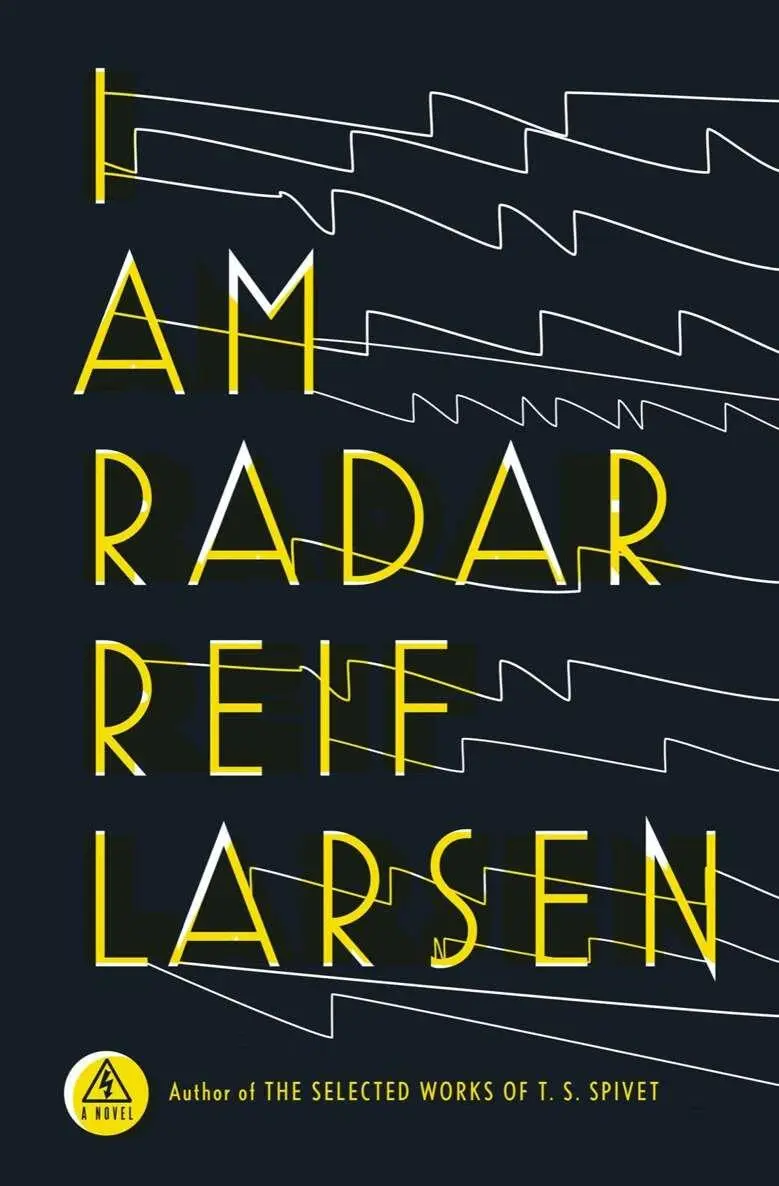
- Название:I Am Radar
- Автор:
- Издательство:Penguin Press
- Жанр:
- Год:2015
- ISBN:нет данных
- Рейтинг книги:3 / 5. Голосов: 1
-
Избранное:Добавить в избранное
- Отзывы:
-
Ваша оценка:
I Am Radar: краткое содержание, описание и аннотация
Предлагаем к чтению аннотацию, описание, краткое содержание или предисловие (зависит от того, что написал сам автор книги «I Am Radar»). Если вы не нашли необходимую информацию о книге — напишите в комментариях, мы постараемся отыскать её.
I Am Radar Deep in arctic Norway, a cadre of Norwegian schoolteachers is imprisoned during the Second World War. Founding a radical secret society that will hover on the margins of recorded history for decades to come, these schoolteachers steal radioactive material from a hidden Nazi nuclear reactor and use it to stage a surreal art performance on a frozen coastline. This strange society appears again in the aftermath of Cambodia’s murderous Khmer Rouge regime, when another secret performance takes place but goes horrifically wrong. Echoes of this disaster can be heard during the Yugoslavian wars, when an avant-garde puppeteer finds himself trapped inside Belgrade while his brother serves in the genocidal militia that attacks Srebrenica. Decades later, in the war-torn Congo, a disfigured literature professor assembles the largest library in the world even as the country around him collapses. All of these stories are linked by Radar — now a gifted radio operator living in the New Jersey Meadowlands — who struggles with love, a set of hapless parents,and a terrible medical affliction that he has only just begun to comprehend.
I Am Radar — читать онлайн бесплатно полную книгу (весь текст) целиком
Ниже представлен текст книги, разбитый по страницам. Система сохранения места последней прочитанной страницы, позволяет с удобством читать онлайн бесплатно книгу «I Am Radar», без необходимости каждый раз заново искать на чём Вы остановились. Поставьте закладку, и сможете в любой момент перейти на страницу, на которой закончили чтение.
Интервал:
Закладка:
“Sometimes one simply cannot,” the doctor said over tea. “It’s the way of things.”
Jean-Baptiste became intent on fixing the problem, not necessarily because he wanted a child but because there was a problem to be fixed. Having heard the amazing tales of traditional medicine passed among the workers, he eventually sought advice from a kru Khmer, a local shaman. Jean-Baptiste was not enthusiastic about the fact that their inability to conceive would almost certainly become common knowledge among the workers, but in his mind the potential for success outweighed this invasion of privacy. The kru Khmer, after visiting with Leila one afternoon, prescribed a fertility tea made of palm root and Psychotria bark.
Even Raouf weighed in on the matter: “You must have more sex.”
“Thank you, Raouf, but this is none of your concern.”
“You must have much more sex.”
Tien, a hardworking young foreman whom Jean-Baptiste had come to trust, delivered the shaman’s tea to Leila each morning, laying down a paper-thin orange tablecloth and pouring the kettle with much formality. He would sit with her while she sipped the tea and nibbled the lemon cakes that were baked to temper the bitter taste of the bark. In this way, Leila began to learn Khmer. The mornings were marked by Tien’s lilting singsong voice entwining with her laughter. She was a fast learner, and soon they spoke only in his native tongue, the tea left to simmer, untouched.
“Khnhom sraleanh anak,” she said to Jean-Baptiste. “This means ‘You look like a beautiful flower.’”
After encountering a group of young students walking upstream to the regional lycée, Leila became excited at the idea of using her newly acquired language skills to teach the children French. Jean-Baptiste, relieved that his wife had expressed interest in anything besides the Normandy postal system, arranged for Tien to shuttle her by riverboat up to the school three days a week.
It was an instant revelation. Her whole demeanor changed. She began standing upright, carrying herself with a newfound determination. Her eyes burned, full of life. Once again she started to dress smartly, taking particular care with her hair and makeup. She was now often gone late into the evening, returning home exhausted and content.
“They know so little,” she breathed beside him in bed. “But then, they also know so much. Sometimes I don’t know who’s learning more — me or them.”
“My darling,” he said. “I am so glad.”
His wife now taken care of, Jean-Baptiste turned back to his own projects. He briefly flirted with the idea of building a cyclotron like the one he had seen during the conference in Copenhagen, but after some investigations, he resolved himself to the impossibility of its creation in such a remote location. Soon after this, the telegraph line to Saigon stopped working. Somewhere in that vast jungle, there had been a breach in the wire. The telegraph room in the main hall fell silent. When an engineer was sent out to ride the entire length of the line and came back without locating the rupture, Jean-Baptiste resigned himself to defeat. If the world would not have him, he would not have it.
• • •
“HOW’S SHE GETTING on at the school?” Eugenia signed to Jean-Baptiste as they all sat at the dinner table one evening.
“Mother,” Jean-Baptiste signed. “Really, how am I supposed to know this?” He turned to Leila, who was sitting beside him. “She wants to know how you are faring at the lycée?”
“Oh,” said Leila. “Fine.”
“Very well, thank you,” she signed to her mother-in-law, though Eugenia looked on blankly.
“That is, the children are wonderful,” she said aloud.
“Ask her which child holds the most promise,” Eugenia signed to her son.
“Mother,” Jean-Baptiste signed back. “Ask her yourself. She can sign. You know this.”
“They are all clever,” Leila signed helpfully. “They make me happy.”
Eugenia shook her head, swallowing a small bite of pork shoulder. “There’s always one who stands above the rest,” she signed to her son. “Tell her to be truthful with us.”
“I couldn’t follow,” said Leila. “What did she say?”
“I said you must not lie to us. We are your family,” Eugenia signed.
“What’s she saying?” said Leila. “I can’t follow when she goes so fast. Something about the family?”
Jean-Baptiste sighed. “She’s excited for you. She said she wishes she had your patience.”
Eugenia bristled but said nothing. Leila, aware that she was being sheltered, resorted to her nervous habit of turning her wedding ring in circles. Jean-Baptiste rose from the table and switched on the Zenith. A symphony by Schubert came on, full blast. The strings pulled and churned. The radio had become an instrument of retaliation, a playground beyond his mother’s perception.
• • •
IT WAS NOT LONG after this that Eugenia followed her daughter-in-law to work. She waited for Leila to disappear down the river, then unmoored one of the dugouts and paddled after them. She had never been out in the river alone before, and she found navigating the boat difficult, for she could not balance her strokes to make it travel in a straight line. The bow always wanted to go one way or the other. Though the red waters appeared glassy, the current was deceptively strong. By the time she had rounded the bend, she was already sweating into her dress, and her boots were soaked with river water brought in by the bite of the paddle.
She looked for Leila’s boat at the school’s dock but could not find it, nor did she see Tien coming back her way. She continued slowly upriver, past the school and its overgrown landing strip, and she was just about to turn around, thinking she had simply missed them in passing, when she saw the boat, tucked into a little cove, half hidden by the sagging branches of a river palm. With some trouble, she beached her dugout close by and stepped out into the muck. She saw no sign of Leila or Tien anywhere, so she carefully followed the path up from the cove some ways into the forest. Thinking she had made a wrong turn, she decided to turn back to her boat, but then she spotted the outline of a hut through the dense foliage. She approached, quietly, pausing outside. Lacking any aural faculties, she did what she always did: she turned to her other senses. Eugenia sniffed and smelled it immediately: the distant, sweet fragrance of opium, a scent she had not smelled since her days in Saigon. Above her, the forest moved, birds twittered, twigs crackled, but inside her head there was only the silence and the wet fragrance of the drug, and she closed her eyes and she was a small girl again, staring at her mother lying on the bed next to a man who was not her father. The heat, the stillness of the room, the light from the blinds streaming across their bodies.
The walls of the hut were made of dried leaves wrapped tightly into bundles using a kind of vine. Finding a small gap in the wall, Eugenia hiked up her dress and leaned in close. Her vision adjusted to the darkness of the interior. Shapes emerged — forming, unforming, forming again. She blinked and returned her eye to the peephole. There was Leila, lying on a blanket, the hourglass of her buttocks white against the hut’s soft gloom. A candle flickered. Eugenia shifted her position to gain a better view. She gave a little gasp. Leila was wearing a mask. Eugenia recognized it as the mask from the drawing room, the black Sophanakha demoness, grotesquely missing both ear and nose. The dark head was much too large for her slender white frame; occasionally her head swayed with the weight of the wood. In front of her, he moved, shirtless and also masked, dancing, a monkey warrior, his simian face frozen in a horrible grin. The man glided around the room and then came to her and grasped the end of a long pipe. Delicately, he twisted the bowl flush into the candle’s flame, working at the white glob of opium with a pin before swinging the mouthpiece to her, like a flute. The pipe disappeared into the mouth of the mask. She pulled, released, her shoulders shrinking with the exhalation, and again that elemental smell rose up and took hold of Eugenia’s consciousness — strong and sweet, seemingly everywhere and nowhere at once. The silence in her head roared.
Читать дальшеИнтервал:
Закладка:
Похожие книги на «I Am Radar»
Представляем Вашему вниманию похожие книги на «I Am Radar» списком для выбора. Мы отобрали схожую по названию и смыслу литературу в надежде предоставить читателям больше вариантов отыскать новые, интересные, ещё непрочитанные произведения.












Обсуждение, отзывы о книге «I Am Radar» и просто собственные мнения читателей. Оставьте ваши комментарии, напишите, что Вы думаете о произведении, его смысле или главных героях. Укажите что конкретно понравилось, а что нет, и почему Вы так считаете.