Reif Larsen - I Am Radar
Здесь есть возможность читать онлайн «Reif Larsen - I Am Radar» весь текст электронной книги совершенно бесплатно (целиком полную версию без сокращений). В некоторых случаях можно слушать аудио, скачать через торрент в формате fb2 и присутствует краткое содержание. Год выпуска: 2015, Издательство: Penguin Press, Жанр: Современная проза, на английском языке. Описание произведения, (предисловие) а так же отзывы посетителей доступны на портале библиотеки ЛибКат.
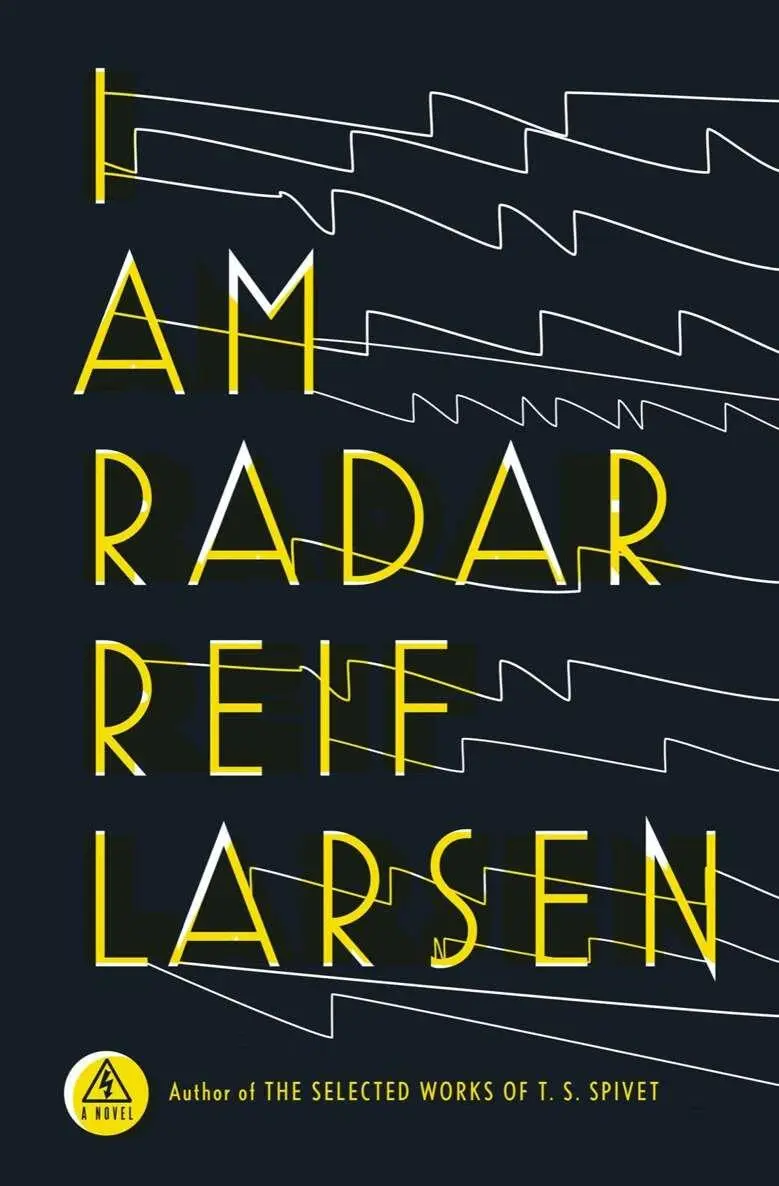
- Название:I Am Radar
- Автор:
- Издательство:Penguin Press
- Жанр:
- Год:2015
- ISBN:нет данных
- Рейтинг книги:3 / 5. Голосов: 1
-
Избранное:Добавить в избранное
- Отзывы:
-
Ваша оценка:
I Am Radar: краткое содержание, описание и аннотация
Предлагаем к чтению аннотацию, описание, краткое содержание или предисловие (зависит от того, что написал сам автор книги «I Am Radar»). Если вы не нашли необходимую информацию о книге — напишите в комментариях, мы постараемся отыскать её.
I Am Radar Deep in arctic Norway, a cadre of Norwegian schoolteachers is imprisoned during the Second World War. Founding a radical secret society that will hover on the margins of recorded history for decades to come, these schoolteachers steal radioactive material from a hidden Nazi nuclear reactor and use it to stage a surreal art performance on a frozen coastline. This strange society appears again in the aftermath of Cambodia’s murderous Khmer Rouge regime, when another secret performance takes place but goes horrifically wrong. Echoes of this disaster can be heard during the Yugoslavian wars, when an avant-garde puppeteer finds himself trapped inside Belgrade while his brother serves in the genocidal militia that attacks Srebrenica. Decades later, in the war-torn Congo, a disfigured literature professor assembles the largest library in the world even as the country around him collapses. All of these stories are linked by Radar — now a gifted radio operator living in the New Jersey Meadowlands — who struggles with love, a set of hapless parents,and a terrible medical affliction that he has only just begun to comprehend.
I Am Radar — читать онлайн бесплатно полную книгу (весь текст) целиком
Ниже представлен текст книги, разбитый по страницам. Система сохранения места последней прочитанной страницы, позволяет с удобством читать онлайн бесплатно книгу «I Am Radar», без необходимости каждый раз заново искать на чём Вы остановились. Поставьте закладку, и сможете в любой момент перейти на страницу, на которой закончили чтение.
Интервал:
Закладка:
“Why do you let that fraud into our house?” she signed.
Yet the shaman returned the next day, this time accompanied by Tien. He brought with him a small pouch of bark and roots that, despite Eugenia’s protestations, they concocted into a thick soup. The room became filled with a decaying, earthen odor. Leila tilted her head up to meet the bowl. She struggled to take only a few sips of the foul-tasting brew. Then the shaman removed a series of small glass cups from his bag. He lit a match inside each, heating the air within before bringing one of the cups to each of Leila’s lesions.
“What is he doing?” Eugenia signed from the corner of the room. “How can you let him do this?”
“The cups,” Jean-Baptiste pointed. “What are they for?”
“She is too hot,” said Tien. “He is making her cool.”
Eugenia blew out a sound of disapproval.
“How do they expect to make her cool with hot bark soup and matches against her skin?” she signed.
The shaman produced a coin from his pocket, said some words in his language, and began dragging it across Leila’s forehead, between her breasts, down her arms.
“She is hot,” Tien said. “She has the hot wind inside her. We must release the wind.”
Eugenia could not take it anymore.
“Stop this at once!” she said aloud. She seized the shaman’s hand and pushed him away. The coin fell to the ground, rolling beneath the bed. He stared at her with a look of curious amusement and then carefully bowed and left the room.
“Mother,” Jean-Baptiste said, stooping down to retrieve the fallen coin, “this is their way. They have been doing this forever.”
“It isn’t our way,” she signed. “I won’t let my daughter be scraped to death by some witch doctor.”
“The coin’s French,” he said, holding it up to the light.
“I don’t care what it is. This cannot go on any longer.”
“Please,” he said. “Please. We need all the assistance we can find right now. Let them do what can be done.”
After this, Tien came every day with the shaman’s soup. Under Eugenia’s disapproving eye, he rubbed the coin against Leila’s forehead and the space between her shoulder blades. Yet Tien was painstakingly tender with his ministrations: he would speak to each part of her body and carefully roll her over, as if turning over a very delicate manuscript. Her body emaciated and weak, Leila could no longer eat the soup, but he served it to her anyway, in careful little spoonfuls. The soup dribbled down her chin, coming to rest in the hollow of her neck before he wiped it away with a small cloth he kept in his back pocket, all the while singing lullabies to her in Khmer.
“Send him away,” Eugenia signed angrily. “We all know his coin does nothing. I’m fine managing her myself.”
“He cares for her,” Jean-Baptiste signed to his mother. “He brings her hope. He brings me hope. And maybe this is enough.”
“I don’t trust him. I’ve never trusted that one,” she signed. “There are things you don’t know.” She stopped, glancing over to Leila’s bed.
“You think me a fool,” he said. “I am not a fool.”
The next day, a monk dressed in saffron and umber robes arrived from upstream. He was standing at the bow of a small boat, carrying a gnarled stick in his hands. Thin as a rail, he looked nearly a hundred years old, but his gaze was steady and clear. Tien greeted the monk at the dock and led him by the arm to the main house. They talked quietly, as if they had known each other for a long time.
“It is a great honor,” Tien said to Jean-Baptiste. “He has come a long way.”
“Why is he here?” asked Jean-Baptiste.
The monk settled in by Leila’s bedside with his eyes closed, sitting very still. Eugenia watched him wearily, several times shooting an exasperated glance in Jean-Baptiste’s direction. And then the monk took Leila’s thin, yellowing hand. He looked up at Eugenia and smiled.
“She is at peace,” he said. “She is ready for the wheel to turn.”
The following morning, as the sun rose over the vast rows of rubber trees, the wheel turned. At the exact moment of her death, she was alone, and when the living returned to her bedside shortly thereafter, they found the faintest smile on her lips, as if she had known this would happen all along.
4
Though local custom dictated that the body be put on display for seven days before being cremated, Jean-Baptiste made arrangements to have Leila buried immediately, next to the de Broglie men on the hilltop by the observatory. A large crowd had gathered for the ceremony. The plantation workers were there, but so were the schoolchildren, and more came from the forest, streaming in from every direction. The monk mingled among them, chattering softly, clearly displeased with the break from tradition.
“He says her soul will not be able to escape if we put her in the ground,” Tien said to Jean-Baptiste.
“What do you think, Tien?”
He put his hands together and bowed. “Madame has her own beliefs.”
“And she’s my wife. Tell him that. She’s my wife, Tien. Tell him we’re not like you. Tell him we don’t believe in reincarnation. Tell him we only believe in what we can see.”
Jean-Baptiste read a passage from Corinthians and a short excerpt from one of Darwin’s notebooks. (Tofte-Jebsen does not identify which.) He gestured for the monk to say a prayer. The monk stepped forward and bowed, but did not speak. He began to make slow, lazy motions with his hands, like birds coming to roost.
“What’s he saying?” Jean-Baptiste signed to his mother.
“He doesn’t speak with his hands,” his mother signed. “I don’t understand.”
It was conveyed that the children would like to sing a song. They gathered shyly, the littlest ones in front. A nervous silence. And then they began. A lullaby: “Au clair de la lune.” The volume was all wrong, words were mispronounced, the thread was lost and verses repeated, but the effect was instant and unmistakable. It melted those assembled like a great wave. Jean-Baptiste wept openly. Next to him, Eugenia leaned into her son, trembling. After the children were finished, they heard a commotion behind them. The crowd parted and revealed Tien on the ground, inconsolable. Tears were streaming down his face. Two workers with scarves wrapped around their heads took him by the waist and led him away.
Jean-Baptiste drafted a letter to his wife’s family. It would be the second most difficult letter he ever wrote. He apologized for taking their daughter to a foreign land. He told them about the school that she had started. How much the children had loved her. About their song at her funeral. He told them she had not died alone. He said he would send them a small pension as long as he was able. He mentioned nothing of the radiation, of the machine in the basement that could see through their daughter into the worlds within, of the baby that had not come into the world. Inside the envelope he enclosed the small French coin the kru Khmer had used to treat her.
After only two days, a letter from Paris arrived on the mail boat. At first he thought Leila’s parents were already replying, that somehow the laws of space and time and steamship had collapsed, but then he realized the letter was not from them but from his friend Luc, the doctor. The letter began with a description of the chaos in the city, the sense of an imminent Nazi invasion.
I envy you to be so far away from this mess in your little jungle paradise, but then I hesitate to call it a paradise with this news of your wife’s illness. The list of symptoms you describe match those we have seen in our patients exposed to a high level of radiation. Radium used to be a commonly prescribed treatment, but as we have learned more of its effects, we now know how serious acute radiation poisoning can be. You are correct in asserting that the severity of the poisoning usually corresponds with the length and amount of exposure, and so I think this good news in your wife’s case. Her exposure was not prolonged, and if radiation is indeed the culprit, I see no reason why she won’t recover. Regardless, I would not be too hard on yourself. You did not know of its effects, just as many before you did not know.
Читать дальшеИнтервал:
Закладка:
Похожие книги на «I Am Radar»
Представляем Вашему вниманию похожие книги на «I Am Radar» списком для выбора. Мы отобрали схожую по названию и смыслу литературу в надежде предоставить читателям больше вариантов отыскать новые, интересные, ещё непрочитанные произведения.











Обсуждение, отзывы о книге «I Am Radar» и просто собственные мнения читателей. Оставьте ваши комментарии, напишите, что Вы думаете о произведении, его смысле или главных героях. Укажите что конкретно понравилось, а что нет, и почему Вы так считаете.