Mavis Gallant - Paris Stories
Здесь есть возможность читать онлайн «Mavis Gallant - Paris Stories» весь текст электронной книги совершенно бесплатно (целиком полную версию без сокращений). В некоторых случаях можно слушать аудио, скачать через торрент в формате fb2 и присутствует краткое содержание. Год выпуска: 2002, Издательство: NYRB Classics, Жанр: Современная проза, на английском языке. Описание произведения, (предисловие) а так же отзывы посетителей доступны на портале библиотеки ЛибКат.
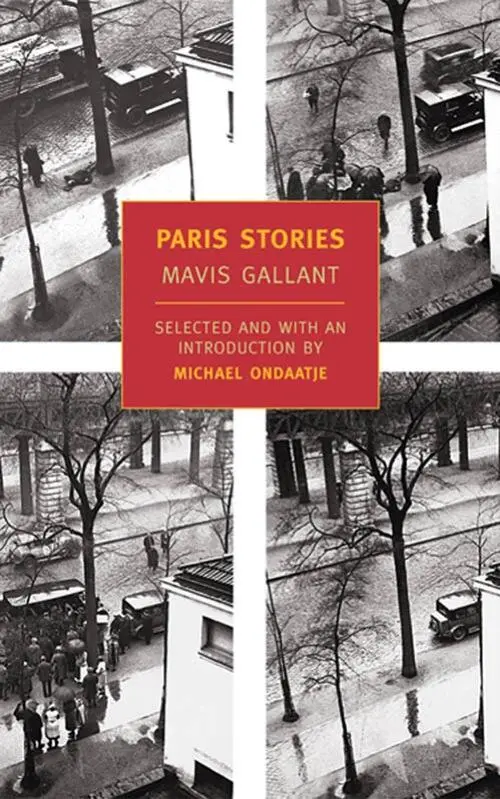
- Название:Paris Stories
- Автор:
- Издательство:NYRB Classics
- Жанр:
- Год:2002
- ISBN:нет данных
- Рейтинг книги:5 / 5. Голосов: 1
-
Избранное:Добавить в избранное
- Отзывы:
-
Ваша оценка:
Paris Stories: краткое содержание, описание и аннотация
Предлагаем к чтению аннотацию, описание, краткое содержание или предисловие (зависит от того, что написал сам автор книги «Paris Stories»). Если вы не нашли необходимую информацию о книге — напишите в комментариях, мы постараемся отыскать её.
Paris Stories — читать онлайн бесплатно полную книгу (весь текст) целиком
Ниже представлен текст книги, разбитый по страницам. Система сохранения места последней прочитанной страницы, позволяет с удобством читать онлайн бесплатно книгу «Paris Stories», без необходимости каждый раз заново искать на чём Вы остановились. Поставьте закладку, и сможете в любой момент перейти на страницу, на которой закончили чтение.
Интервал:
Закладка:
His uncle wrote that he had liquidated his holdings at a loss and was thinking of settling in South Africa. He must have changed his mind, for a subsequent letter described him retired and living near a golf course, looked after by the housekeeper he had often told Gabriel about — his first mention of any such person. A heart attack made it tiring for him to write. The housekeeper sent news. Gabriel, who did not know Spanish, tried to get the drift. She signed “Anna Meléndes,” then “Anna Baum.”
Gabriel was playing a Brecht season in a suburban cultural center when word came that his uncle had died. The Caucasian Chalk Circle and Mother Courage alternated for an audience of schoolchildren and factory workers brought in by the busload, apparently against their will. Gabriel thought of Uncle August, his obstinacy and his pride, and truly mourned him. His uncle had left him an envelope he did not bother to open, being fairly certain it did not contain a check.
No Baum memorial existed, and so he invented one. Upon its marble surface he inscribed:
Various Baums: Gone
Father: 1909–1943 (probably)
Mother: 1912–1943 (probably)
Uncle: 1899-1977
Gabriel B.: 1935-( )
Beneath the last name he drew a line, meaning to say this was the end. He saw, however, that the line, far from ending the Baum question, created a new difficulty: It left the onlooker feeling that these dates and names were factors awaiting a solution. He needed to add the dead to the living, or subtract the living from the dead — to come to some conclusion.
He thought of writing a zero, but the various Baums plus four others did not add up to nothing. His uncle by dying had not diminished the total number of Baums but had somehow increased it. Gabriel, with his feet on the finish line and with uncounted Baums behind him, was a variable quantity: For some years he had been the last of the Baums, then there had been two of them. Now he was unique again.
Someone else would have to work it out, he decided — someone unknown to him, perhaps unborn. In the meantime he had the memorial in his head, where it could not be lost or stolen.
GABRIEL'S LISELOTTE
Soon after Gabriel's uncle's visit, a generation of extremely pretty German girls suddenly blossomed in Paris. There would be just that one flowering — that one bright growth. They came because their fathers were dead or exiled under unremarkable names. Some of them were attracted to Gabriel — Gabriel as he was, with the dark locks, the serene brow — and he was drawn in turn, as to a blurred reflection, a face half recalled.
Gabriel at that time still imagined that everyone's life must be about the same, something like a half-worked crossword puzzle. He was always on the lookout for definitions and new solutions. When he moved close to other people, however, he saw that their lives were not puzzles but problems set in code, no two of which ever matched.
The pretty girls went home, finally, whistled back by solemn young men with solemn jobs. They had two children apiece, were probably rinsing the gray out of their hair now. (Gabriel cut his own as short as possible as it grew scarce.) He remembered Freya, who had thrown herself in the Seine over a married man, but who could swim, and Barbara, whose abortion two or three of them had felt bound to pay for, and Marie, who had gone to Alsace and had nearly been crowned Miss Upper Rhine before they found out she was a foreigner. Gabriel's memory dodging behind one name after the other brought him face-to-face with his Liselotte. Daughter of a dead man and a whore of a mother (which seemed to be a standard biography then), embarked on the au-pair adventure, pursuing spiritual cleanness through culture, she could be seen afternoons in Parc Monceau reading books of verse whose close print and shoddy bindings seemed to assure a cultural warranty. There was something meek about the curve of her neck. She had heard once that if one were arrested and held without trial it was an aid to sanity to have an anthology of poems in one's head. Poor Liselotte, whose aid to sanity never got beyond “Le ciel est, par-dessus le toit, Si bleu, si calme!” held the book flat on her knees, following the words with her finger.
“Who would want to arrest you?” Gabriel asked.
“You never know.”
Well, that was true. Thinking there might be a better career for her he gave her lines to try. She practiced, “Is it tonight that you die?” “Is it tonight that you die?” Gabriel counted six, seven, eight shades of green around the place in Parc Monceau, where she sat asking this. He used to take the No. 84 bus to see her — he who never went out of Montparnasse unless he had to, who had never bothered to learn about bus routes or the names of streets. For the sake of Liselotte he crossed the Seine with prim, gloved women, with old men wearing slivers of ribbon to mark this or that war. Liselotte, now seeking improvement by way of love, made him speak French to her. She heard, memorized, and recited back to him without flaw his life's story. He had promised the child-Gabriel he would never marry a German, but it was not that simple; in an odd way she did not seem German enough.
She had learned her lines for nothing. The director he introduced her to also thought she did not look German. She was one of the brown-eyed Catholic girls from around Speyer. She prayed for Gabriel, but his life after the prayers was the same as before. She had a catch in her voice, almost a stammer; she tried to ask Gabriel if he wanted to marry her, but the word caught. He said to himself that she might not enjoy being Liselotte Baum after having been Liselotte Pfligge. Her stepfather, Wilhelm Pfligge — of Swiss origin, she said — had tried to rape her; still, she had his name. Gabriel thought that if the custom of name-changing had been reversed and he had been required, through marriage, to become Gabriel Pfligge, he might have done so without cringing, or at least with tact. Perhaps he would have been expected to call Wilhelm Pfligge “Papa.” He saw Papa Pfligge with a mustache, strangely mottled ears, sporty shoes, a springy walk, speaking with his lips to Gabriel's ear: “We both love Liselotte so much, eh?”
While Gabriel continued to develop this, giving Papa Pfligge increasingly preposterous things to say, Liselotte gave up on love and culture and the au-pair adventure and went home. He accompanied her to the Gare de l'Est and lifted her two cases to the overhead rack. Then he got down and stood on the gray platform and watched her being borne away. The train was blurred, as if he were looking at it through Liselotte's tears.
For a time her letters were like the trail of a child going ever deeper into the woods. He could not decide whether or not to follow; while he was still deciding, and not deciding, the trail stopped and the path became overgrown behind her.
THE INTERVIEW
Until he could no longer write letters, Gabriel's uncle nagged him with useless advice. Most of it was about money. Owing to Gabriel's inability to produce his father's marriage certificate (in fact, he never tried), his uncle could not in all conscience leave him Baum possessions. It was up to Gabriel, therefore, to look after his own future. He begged Gabriel to find a job with some large, benevolent international firm. It would give him the assurance of money coming in, would encourage French social-security bureaucrats to take an interest in him, and would put him in the way of receiving an annuity at the age of sixty-five.
“Sixty-five is your next step,” his uncle warned, for Gabriel's thirtieth birthday.
He counseled Gabriel to lay claim to those revenues known as “German money,” but Gabriel's parents had vanished without trace; there was no way of proving they had not taken ship for Tahiti. And it would not have been in Gabriel's power to equate banknotes to a child's despair. His uncle fell back on the Algerian War. Surely Gabriel was entitled to a pension? No, he was not. War had never been declared. What Gabriel had engaged in was a long tactical exercise for which there was no compensation except experience.
Читать дальшеИнтервал:
Закладка:
Похожие книги на «Paris Stories»
Представляем Вашему вниманию похожие книги на «Paris Stories» списком для выбора. Мы отобрали схожую по названию и смыслу литературу в надежде предоставить читателям больше вариантов отыскать новые, интересные, ещё непрочитанные произведения.









Обсуждение, отзывы о книге «Paris Stories» и просто собственные мнения читателей. Оставьте ваши комментарии, напишите, что Вы думаете о произведении, его смысле или главных героях. Укажите что конкретно понравилось, а что нет, и почему Вы так считаете.