Mavis Gallant - Paris Stories
Здесь есть возможность читать онлайн «Mavis Gallant - Paris Stories» весь текст электронной книги совершенно бесплатно (целиком полную версию без сокращений). В некоторых случаях можно слушать аудио, скачать через торрент в формате fb2 и присутствует краткое содержание. Год выпуска: 2002, Издательство: NYRB Classics, Жанр: Современная проза, на английском языке. Описание произведения, (предисловие) а так же отзывы посетителей доступны на портале библиотеки ЛибКат.
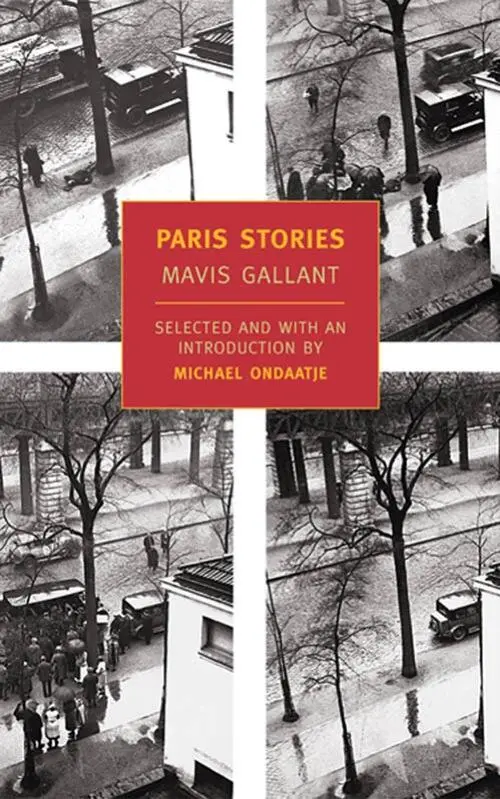
- Название:Paris Stories
- Автор:
- Издательство:NYRB Classics
- Жанр:
- Год:2002
- ISBN:нет данных
- Рейтинг книги:5 / 5. Голосов: 1
-
Избранное:Добавить в избранное
- Отзывы:
-
Ваша оценка:
Paris Stories: краткое содержание, описание и аннотация
Предлагаем к чтению аннотацию, описание, краткое содержание или предисловие (зависит от того, что написал сам автор книги «Paris Stories»). Если вы не нашли необходимую информацию о книге — напишите в комментариях, мы постараемся отыскать её.
Paris Stories — читать онлайн бесплатно полную книгу (весь текст) целиком
Ниже представлен текст книги, разбитый по страницам. Система сохранения места последней прочитанной страницы, позволяет с удобством читать онлайн бесплатно книгу «Paris Stories», без необходимости каждый раз заново искать на чём Вы остановились. Поставьте закладку, и сможете в любой момент перейти на страницу, на которой закончили чтение.
Интервал:
Закладка:
The Algerian-pension affair rankled with Gabriel. He had to fill out employment forms that demanded assurance that he had “fulfilled his military obligations.” Sometimes it was taken for granted he had been rejected out of hand. There was no rational basis for this; he supposed it must be because of “Profession: Actor.” After his return he continued to take an interest in the war. He was like someone who has played twenty minutes of a match and has to know the outcome. As far as he could make out, it had ended in a draw. The excitement died down, and then no one knew what to put in the magazines and political weeklies anymore. Some journalists tried to interest Gabriel in Brittany, where there was an artichoke glut; others hinted that the new ecumenicity beginning to seep out of Rome was really an attack on French institutions. Gabriel doubted this. Looking for news about his pension, he learned about the Western European consumer society and the moral wounds that were being inflicted on France through full employment. Between jobs, he read articles about people who said they had been made unhappy by paper napkins and washing machines.
Most of the customers in La Méduse were waiting for a television call. The rest were refugees, poets' widows, and foreign students looking for work to supplement their scholarships. Up at the bar, where drinks were cheaper, were clustered the second-generation émigré actors Gabriel thought of as bachelor orphans. Unlike Gabriel, they had been everywhere — to Brazil, where they could not understand the language, and to New York, where they complained about the climate, and to Israel, where they were disappointed with the food. Now they were in Paris, where they disliked the police.
Sometimes Dieter Pohl shared Gabriel's table. He was a Bavarian Gabriel's age — thirty — who played in films about the Occupation. Dieter had begun as a private, had been promoted to lieutenant, and expected to become a captain soon. He had two good facial expressions, one for victory and one for defeat. Advancing, he gazed keenly upward, as if following a hawk to the vanishing point. Sometimes he pressed binoculars to his eyes. Defeat found him staring at his boots. He could also be glimpsed marching off into captivity with a bandage around his head. The captivity scene took place in the last episode. Gabriel, enrolled as a victim, had generally been disposed of in the first. His rapid disappearance was supposed to establish the tone of the period for audiences too young to recall it.
It was around this time, when French editorial alarm about the morally destructive aspect of Western prosperity was at its most feverish, that a man calling himself Briseglace wandered into the bar and began asking all the aliens and strangers there if they were glad to be poor. He said that he was a journalist, that his wife had left him for a psychiatrist, and that his girlfriend took tickets in a cinema farther along the street. He said that the Montparnasse railway station was to be torn down and a dark tower built in its place; no one believed him. He wore a tie made of some yellow Oriental stuff. His clothes looked as if they had been stitched by nuns on a convent sewing machine. Gabriel and his generation had gone into black — black pullovers, black leather jackets, soft black boots. Their haircuts still spoke of military service and colonial wars. Briseglace's straggling, grayish locks, his shapeless and shabby and oddly feminine-looking overcoat, his stained fingers and cheap cigarettes, his pessimism and his boldness and his belief in the moral advantages of penury all came straight from the Latin Quarter of the 1940s. He was the Occupation; he was the Liberation, too. The films that Dieter and Gabriel played in grew like common weeds from the heart of whatever young man he once had been. Gabriel's only feeling, seeing him, was disgust at what it meant to grow old.
The dark garments worn in La Méduse gave the place the appearance of a camp full of armed militia into which Briseglace, outdated civilian, had stumbled without cause. Actually, the leather jackets covered only perpetual worry. Some people thought Briseglace was with the CIA, others saw a KGB agent with terrifying credentials. The orphans were certain he was an inspector sent to see if their residence permits were forgeries. But his questions led only to one tame conclusion, which he begged them to ratify: It was that being poor they were free, and being free they were happy.
Released from immediate danger, a few of the aliens sat and stood straighter, looked nonchalant or offended, depending on how profound their first terrors had been. Dieter declared himself happy in a profession that had brought him moral satisfaction and material comfort, and that provided the general public with notions of history. Some of those at the bar identified themselves as tourists, briefly in Paris, staying at comfortable hotels. Someone mentioned the high prices that had to be paid for soccer stars. Another recalled that on the subject of personal riches Christ had been ambiguous yet reassuring. Briseglace wrote everything down. When he paid for his coffee he asked for the check, which he had to turn in for expenses. Gabriel, who had decided to have nothing to do with him, turned the pages of Paris-Match.
Six weeks later Gabriel emerged in the pages of a left-wing weekly as “Gabriel B., spokesman for the flotsam of Western Europe.”
“His first language was German,” Gabriel read. “Lacking the rudder of political motivation, his aimless wanderings have cast him up in Montparnasse, in the sad fragrance of coffee machines. Do you think he eats in the Jewish quarter, at Jo Goldenberg's, at La Rose d'Or? Never. You will find Gabriel B. gnawing veal cutlets at the Wienerwald, devouring potato dumplings at the Tannhauser. For Gabriel B. this bizarre nourishment constitutes a primal memory, from infancy to age twelve.” “Seven,” Gabriel scrupulously corrected, but it was too late, the thing was in print. “This handsome Prince of Bohemia has reached the fatal age of thirty. What can he do? Where can he go? Conscience-money from the wealthy German republic keeps him in cigarettes. A holdover from bad times, he slips through the good times without seeing them. The Western European consumer society is not so much an economic condition as a state of mind.”
Gabriel read the part about the Prince of Bohemia two or three times. He wondered where the Wienerwald was. In the picture accompanying the article was Dieter Pohl, with his eyes inked over so that he could not be identified and use the identification as an excuse for suing the magazine.
There was no explaining it; Dieter was sure he had not sat for a portrait; Gabriel was positive he had not opened his mouth. He thought of posting the article to Uncle August, but his uncle would take it to be a piece of downright nonsense, like the clockwork bear. Dieter bought half a dozen copies of the magazine for his relatives in Bavaria; it was the first time that a picture of him had ever been published anywhere.
Gabriel's escape from annihilation in two real wars (even though one had been called something else) had left him with reverence for unknown forces. Perhaps Briseglace had been sent to nudge him in some new direction. Perhaps the man would turn up again, confessing he had never been a journalist and had been feigning not in order to harm Gabriel but to ensure his ultimate safety.
Nothing of the kind ever happened, of course. Briseglace was never seen again in La Méduse. The only reaction to the interview came from a cousin of Dieter's called Helga. She did not read French easily and had understood some of it to mean that Dieter was not eating enough. She sent him a quantity of very good gingerbread in a tin box and begged him, not for the first time, to pack his things and come home and let a woman look after his life.
Читать дальшеИнтервал:
Закладка:
Похожие книги на «Paris Stories»
Представляем Вашему вниманию похожие книги на «Paris Stories» списком для выбора. Мы отобрали схожую по названию и смыслу литературу в надежде предоставить читателям больше вариантов отыскать новые, интересные, ещё непрочитанные произведения.










Обсуждение, отзывы о книге «Paris Stories» и просто собственные мнения читателей. Оставьте ваши комментарии, напишите, что Вы думаете о произведении, его смысле или главных героях. Укажите что конкретно понравилось, а что нет, и почему Вы так считаете.